Help with car accident claims in Scotland: 2026 guide

TL;DR:
- Getting the right help after a car accident in Scotland involves understanding your legal rights, collecting evidence promptly, and working with a specialist solicitor to secure fair compensation. Scottish law offers protections and a structured claims process for both drivers and passengers, emphasizing the importance of immediate action and proper documentation. Acting quickly, gathering detailed evidence, and consulting legal experts significantly increase your chances of a successful claim within the three-year deadline.
Getting the right help with a car accident in Scotland means understanding your legal rights, gathering evidence promptly, and working with a specialist personal injury solicitor to secure the compensation you deserve. Whether you were injured as a driver or passenger, Scottish law provides clear protections and a structured claims process. Knowing where to turn immediately after a crash can be the difference between a strong claim and a weakened one. This guide walks you through every stage, from the scene of the accident to final settlement, with practical advice tailored specifically for accident victims in Scotland.
Your first priority at the scene is safety. Check yourself and any passengers for injuries before anything else, and call 999 if anyone requires emergency medical attention. Move vehicles out of traffic only if it is safe to do so. Never admit fault at the scene, even if you feel you may have contributed to the collision.
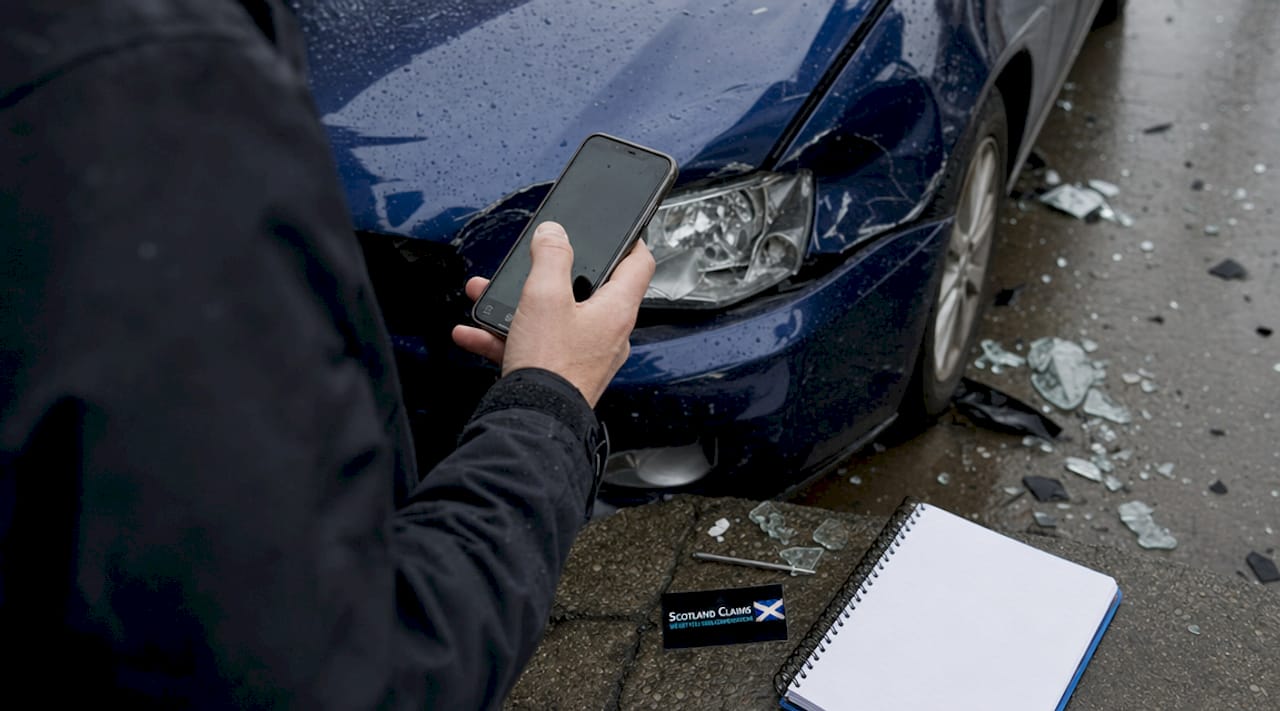
Once immediate safety is secured, gathering scene evidence becomes your most critical task. Photographs of vehicle damage, road markings, traffic signals, and any visible injuries are powerful tools when building a compensation claim. Scene evidence significantly strengthens your position by establishing fault and documenting medical impacts from the outset.
Collect the following at the scene:
- Full name, address, and contact details of all drivers involved
- Insurance company names and policy numbers
- Vehicle registration numbers, makes, and models
- Contact details of any independent witnesses
- The name and badge number of any attending police officer
In Scotland, you must report a road traffic accident to Police Scotland within 24 hours if injuries are involved and police were not present at the scene. You are also legally required to notify your insurer, even if you do not intend to make a claim yourself.
Pro Tip: Note the weather conditions, road surface, lighting, and time of day immediately after the accident. These environmental details can prove decisive when liability is disputed later.
How do you claim compensation after a car accident in Scotland?
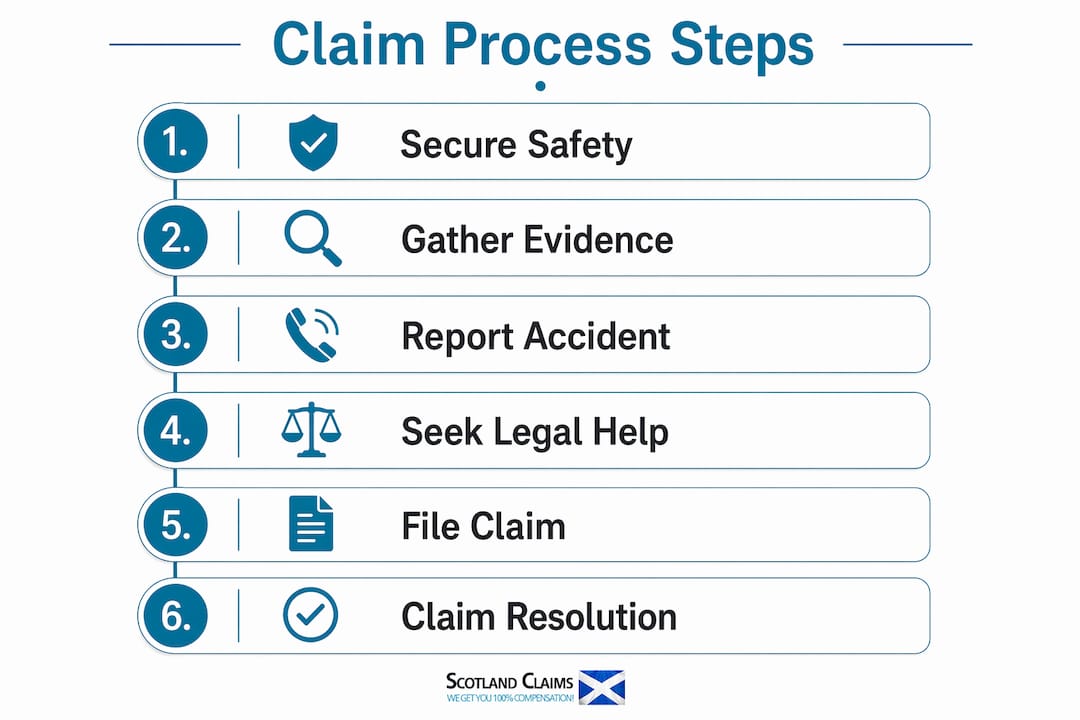
Claiming compensation after a car accident in Scotland is formally known as a personal injury claim, and the process follows a defined sequence from initial contact to settlement or court action.
- Contact a personal injury solicitor. The claims process begins when you instruct a solicitor who specialises in road traffic accidents. They manage all communications with insurers and build your case on your behalf.
- Medical assessment. Your solicitor will arrange for an independent medical examination. This report documents your injuries, prognosis, and any long-term effects, forming the backbone of your claim.
- Letter of claim. Your solicitor sends a formal letter of claim to the at-fault driver’s insurer, setting out the circumstances of the accident and the injuries sustained.
- Liability investigation. The insurer investigates and either admits or disputes liability. This stage can take several weeks to several months depending on the complexity of the case.
- Valuation and negotiation. Once liability is established, your solicitor calculates the full value of your claim and negotiates a settlement with the insurer.
- Settlement or court action. Most claims settle through negotiation without going to court. If the insurer disputes liability or offers an inadequate sum, court proceedings may be raised.
“Solicitors evaluate the full impact of injuries beyond immediate medical costs, including long-term care, home adaptations, and future financial losses.”
Compensation in Scotland falls into two categories. General damages cover pain and suffering, psychological distress, and loss of amenity. Special damages cover financial losses such as lost income, medical expenses, travel costs, and vehicle repair or replacement.
| Compensation type |
What it covers |
| General damages |
Pain, suffering, psychological harm, and loss of enjoyment of life |
| Special damages |
Lost earnings, medical costs, travel expenses, vehicle repair |
| Future losses |
Long-term care, home adaptations, projected loss of earnings |
Establishing fault is central to every claim. If you are found to share partial responsibility for the accident, a concept known as contributory negligence, your compensation is reduced proportionally. It does not eliminate your right to claim entirely.
What challenges might you face during a car accident claim?
Car accident claims in Scotland carry several common pitfalls that can significantly reduce the compensation you receive. Being aware of them in advance puts you in a far stronger position.
The most frequent problem is accepting an early settlement offer from the at-fault driver’s insurer. Early insurer offers rarely reflect the true long-term medical and financial impact of your injuries. Insurers make these offers quickly, before the full extent of your injuries is known, because it saves them money. Never accept any offer without first consulting a specialist solicitor.
Other common challenges include:
- Disputed liability. The other driver or their insurer may deny responsibility entirely, requiring your solicitor to gather additional evidence such as CCTV footage, accident reconstruction reports, or expert witness testimony.
- Inadequate medical evidence. Claims without thorough medical documentation are vulnerable to undervaluation. Expert medical assessment is not optional. It is the foundation of a credible claim.
- Delayed reporting. Waiting too long to report the accident to police or your insurer can be used against you. Gaps in the timeline raise questions about the severity of your injuries.
- Poor evidence from the scene. If you did not photograph the scene or collect witness details, your solicitor will need to work harder to establish the facts. This can slow the process and weaken your position.
Pro Tip: Never post about your accident or injuries on social media. Insurers routinely monitor claimants’ social media profiles and use posts to challenge the severity of injuries.
Prompt legal advice after a car accident protects you from these risks. A solicitor can advise you on what to say to insurers, what evidence to gather, and how to avoid actions that could compromise your claim.
How long do car accident compensation claims take in Scotland?
Realistic expectations about timelines help you plan your recovery without unnecessary stress. Personal injury claims for car accidents in Scotland typically resolve within 12 to 18 months. This means the majority of straightforward cases, where liability is not seriously disputed and medical evidence is clear, conclude within that window.
More complex cases take longer. Disputed liability, serious or life-changing injuries, and delays in court availability can extend a claim to several years. The table below outlines typical timeframes by case type.
| Case type |
Typical resolution timeframe |
| Straightforward, liability admitted |
6 to 12 months |
| Moderate complexity, some dispute |
12 to 18 months |
| Seriously disputed liability or severe injury |
2 to 4 years or more |
The most critical legal deadline in Scotland is the triennium. Claimants have three years from the date of their injury to commence a personal injury claim. Miss this deadline and your claim becomes time-barred, regardless of how strong it might have been. There are very limited exceptions, such as cases involving children or those who lack legal capacity.
Acting quickly after an accident is not just about building a stronger case. It is about protecting your right to claim at all. Evidence degrades, witnesses become harder to trace, and medical records become less contemporaneous the longer you wait.
Key takeaways
Securing fair compensation after a car accident in Scotland requires prompt action, thorough evidence gathering, and specialist legal representation from the outset.
| Point |
Details |
| Act immediately at the scene |
Photograph damage, collect witness details, and report to Police Scotland within 24 hours if injuries occurred. |
| Seek legal advice before accepting offers |
Early insurer settlements rarely reflect the true value of your injuries and long-term losses. |
| Know your compensation types |
Claims cover general damages for pain and suffering, and special damages for financial losses including lost income. |
| Respect the three-year deadline |
Scotland’s triennium means you must start your claim within three years of the accident date or lose the right entirely. |
| Contributory negligence reduces but does not end claims |
Partial fault adjusts your compensation proportionally but does not eliminate your eligibility to claim. |
What I have learned from years of watching accident claims succeed and fail
After working closely with accident victims across Scotland, one pattern stands out above all others: the cases that succeed are not always the ones with the most serious injuries. They are the ones where the claimant acted quickly, documented everything, and trusted a specialist rather than trying to handle the insurer alone.
The biggest mistake I see repeatedly is people engaging directly with the at-fault driver’s insurer in the days after a crash. Insurers are experienced negotiators. Their job is to settle claims for as little as possible. A claimant without legal representation is at a significant disadvantage from the first phone call.
I have also seen claims undermined by something as simple as a social media post or a gap in medical treatment. If you stop attending physiotherapy or GP appointments, insurers argue your injuries cannot be that serious. Consistency in medical care is not just good for your recovery. It is evidence.
The most encouraging thing I can tell you is that the process, while not quick, is manageable with the right support. Specialist solicitors handle the insurer communications, the medical appointments, the paperwork, and the negotiations. Your job is to focus on getting better and to be honest and thorough with your legal team. Transparency with your solicitor is not optional. It is what builds a case that holds up.
— Roger
How Scotland Claims Injury Lawyers can support your car accident claim
Scotland Claims Injury Lawyers connects accident victims in Scotland with specialist personal injury solicitors who understand the claims process inside out. For whiplash injuries and road traffic accident injuries where you are not at fault, as either a driver or passenger, you keep 100% of your compensation. Nothing is deducted. For all claim types, including more serious injuries, Scotland Claims Injury Lawyers deducts no success fee whatsoever - you keep 100% of your compensation. Most other large and national firms charge up to 20% including VAT.
You can use the compensation calculator to get an estimate of what your claim may be worth before you speak to anyone. When you are ready to take the next step, Scotland Claims Injury Lawyers offers a no win no fee arrangement, meaning you pay nothing upfront and nothing at all if your claim is unsuccessful.
FAQ
What should I do first after a car accident in Scotland?
Call emergency services if anyone is injured, then gather evidence including photographs, witness details, and insurance information. Report the accident to Police Scotland within 24 hours if injuries occurred and officers were not present at the scene.
How much compensation can I claim after a car accident?
Compensation covers general damages for pain and suffering and special damages for financial losses such as lost income and medical costs. The amount depends on injury severity, recovery time, and the financial impact on your life.
Do I need a solicitor to claim after a car accident?
You are not legally required to use a solicitor, but doing so significantly improves your outcome. Solicitors manage insurer communications, gather expert medical evidence, and negotiate settlements that reflect the true value of your claim.
How long do I have to make a car accident claim in Scotland?
Scotland’s triennium gives you three years from the date of your injury to start a personal injury claim. Missing this deadline means your claim is time-barred and cannot proceed regardless of its merits.
Will I receive less compensation if I was partly at fault?
Contributory negligence reduces your compensation proportionally based on your share of responsibility, but it does not eliminate your right to claim. A specialist solicitor can assess the liability position and advise on the likely impact on your award.
Recommended