How to claim car accident compensation in Scotland
TL;DR:
- Being injured in a car accident in Scotland involves complex procedures that require thorough evidence collection and proper legal guidance.
- A well-prepared claim, including medical reports, photographs, witness statements, and financial records, significantly enhances the chances of successful compensation.
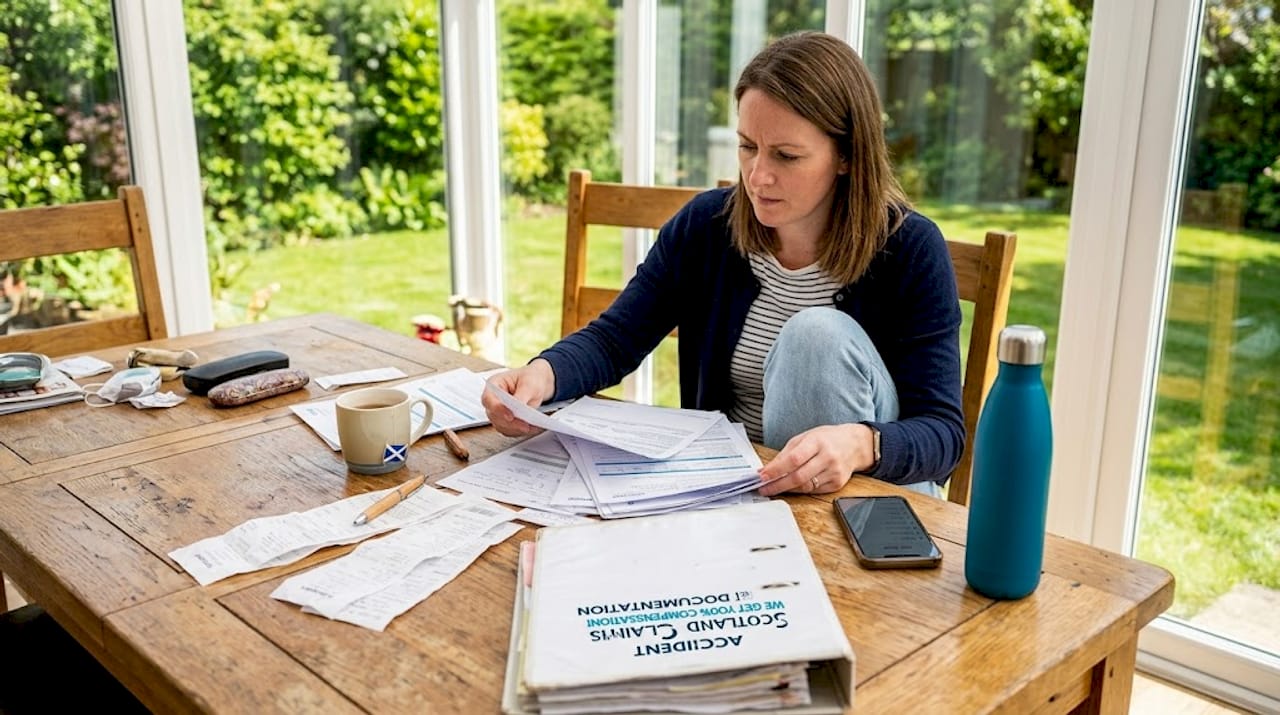
Being injured in a car accident is distressing enough. Then comes the paperwork, the insurer phone calls, the medical appointments, and the creeping worry that you might not receive what you actually deserve. If you are trying to claim car accident compensation in Scotland, the process can feel overwhelming without clear guidance. This article walks you through every stage, from gathering evidence at the scene to understanding your legal rights under a No Win No Fee arrangement, so you can pursue your claim with confidence and keep every penny you are owed.
Table of Contents
Key Takeaways
| Point |
Details |
| Immediate reporting |
Report the accident quickly to protect your claim and begin the compensation process promptly. |
| Gather evidence |
Collect detailed photos, witness contacts, and medical records to build a strong claim. |
| Avoid admitting fault |
Never admit fault at the scene, as this can harm your chances of full compensation. |
| Understand compensation |
Compensation includes both financial losses and pain and suffering damages. |
| Use legal support |
No Win No Fee solicitors ensure expert assistance without upfront costs and greater claim success. |
What you need to prepare before making a car accident claim
Having a clear picture of what you need is the essential first step before making your claim. The quality of your preparation directly determines the strength of your case. Solicitors can only work with what you give them, and insurers will look for any gap in your evidence to reduce what they pay out.
Start by collecting the following as soon as possible after the accident:
- Medical records and GP or hospital reports confirming your injuries
- A copy of the police report if one was filed at the scene
- Photographs of vehicle damage, road conditions, and visible injuries
- Contact details of any witnesses who saw the accident happen
- Details of the other driver, including name, address, insurer, and registration number
- Proof of financial losses, such as payslips showing lost wages, repair quotes, and receipts for medical treatment
As the car accident insurance claim process makes clear, “Your priorities are simple: stay safe, gather evidence, and report the incident correctly. These actions build the foundation for a successful claim.” This is not advice to file away and forget. It is the practical sequence that separates strong claims from weak ones.
One point many people overlook is the importance of not admitting fault at the scene, even casually. A simple “I’m sorry” to the other driver can be recorded and used against you. Stay calm, exchange information, and let the evidence speak.
| Document |
Why it matters |
| Medical report |
Links your injuries directly to the accident |
| Police report |
Provides an independent account of events |
| Photographs |
Visual proof of damage and scene conditions |
| Witness statements |
Corroborates your version of events |
| Financial records |
Quantifies your special damages |
Pro Tip: Take timestamped photos at the scene using your phone. The metadata showing the date, time, and location can serve as independent verification of when and where the accident occurred.
When starting your injury claim, the quality of your documentation will set the pace for everything that follows. Proper documenting of accident evidence is not optional. It is the difference between a settled claim and a disputed one.
Step-by-step process to file your car accident claim in Scotland
With preparation complete, the next step is knowing exactly how to proceed with your claim. The car accident claim process in Scotland follows a clear sequence, and understanding each stage prevents costly delays.

Step 1: Report the accident to your insurer
Contact your insurance company promptly. As the claims process guidance explains, you should “report the accident to your insurance company as soon as you can to assign a claims adjuster and start the process.” Do this even if you were not at fault.
Step 2: Seek medical attention and document your injuries
Visit your GP or A&E immediately if you have not already. A medical record created close to the accident date is far more credible than one made weeks later.
Step 3: Instruct a specialist solicitor
This is where many claimants gain a significant advantage. Expert help with car accident claims in Scotland means having someone who understands Scottish personal injury law, knows how insurers operate, and will negotiate on your behalf.
Step 4: Complete and submit your claim forms
Your solicitor will guide you through the accident claim forms required under Scottish procedure. Errors or omissions on these forms can delay your claim significantly.
Step 5: Gather repair estimates and financial evidence
Obtain at least one written repair estimate from an authorised garage. Compile all receipts, invoices, and payslips that demonstrate your financial losses.
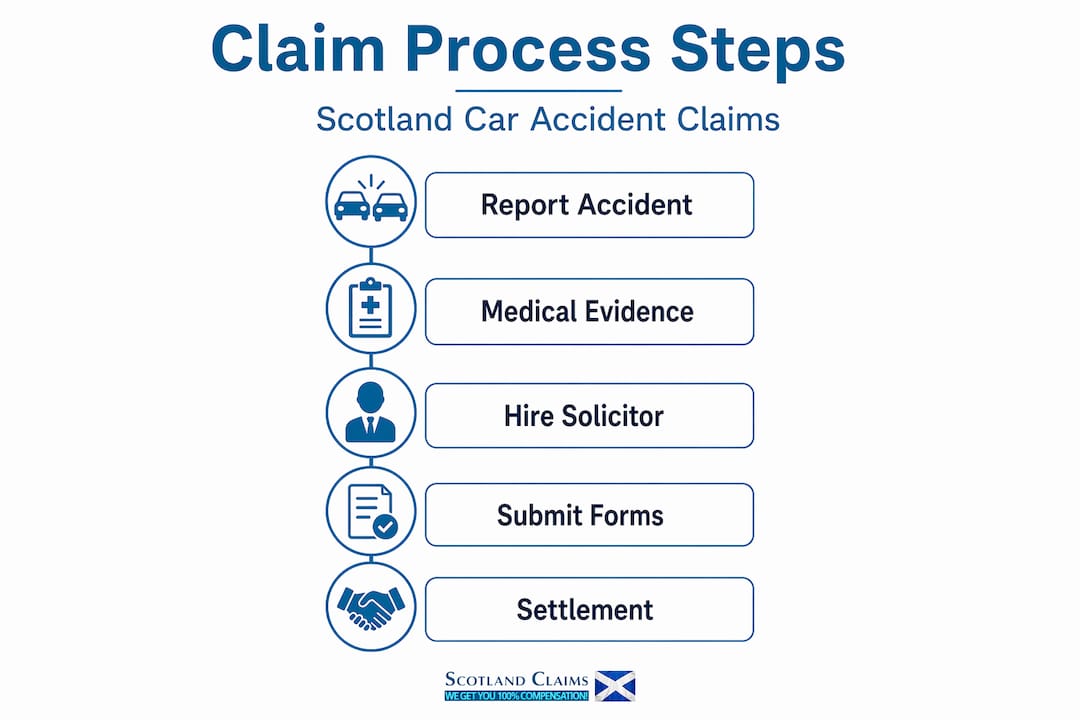
Step 6: Negotiate the settlement
Once liability is established, your solicitor will negotiate with the insurer. Do not accept the first offer. Early settlement figures are often well below what you are actually entitled to.
| Stage |
Typical timeframe |
| Reporting to insurer |
Within 24 to 48 hours |
| Instructing a solicitor |
Within the first week |
| Medical assessment |
Within 2 to 4 weeks |
| Claim submission |
Within 4 to 8 weeks |
| Settlement negotiation |
3 to 9 months depending on complexity |
Under No Win No Fee claims, you pay nothing upfront at any of these stages. The financial risk is removed entirely, which means you can pursue your claim without worrying about legal costs.
Pro Tip: Never give a recorded statement to the other driver’s insurer without your solicitor present. Adjusters are trained to ask questions that can inadvertently shift blame onto you.
Common mistakes to avoid when claiming car accident compensation
Avoiding these pitfalls keeps your claim on track and strengthens your case. Many perfectly valid claims are weakened or lost entirely because of errors made in the hours and days immediately following the accident.
The most damaging mistakes include:
- Delaying your report to the insurer or solicitor. As the claims guidance warns, “waiting too long to report the incident, not taking photos, admitting fault at the scene, and misunderstanding policy coverage are common mistakes leading to claims denial.” Time erodes evidence and weakens credibility.
- Admitting fault or apologising at the scene. Even a casual remark can be documented and used against you during negotiations.
- Failing to seek medical attention promptly. If you delay treatment, insurers will argue your injuries were not serious or were caused by something else entirely.
- Accepting an early settlement offer. Insurers often make quick, low offers hoping you will accept before understanding the full extent of your injuries or losses. Some injuries, particularly soft tissue damage, take weeks to fully manifest.
- Not understanding your rights or coverage. Many claimants do not realise they are entitled to claim for pain and suffering, not just vehicle damage and medical bills.
Understanding the claim time limits in Scotland is also essential. Missing a deadline does not just delay your claim. It can end it entirely.
Pro Tip: Keep a daily diary of your symptoms, pain levels, and how your injuries affect your daily life. This contemporaneous record is powerful evidence when preparing injury evidence for your claim and is something many claimants only wish they had started sooner.
What compensation can you expect and how is it calculated
Once you understand how compensation works, it is important to realise your legal rights and options. Car accident compensation in Scotland falls into two broad categories.
Special damages cover your quantifiable financial losses:
- Vehicle repair or replacement costs
- Medical treatment and physiotherapy fees
- Lost earnings during recovery
- Travel expenses to medical appointments
- Future care costs if injuries are long-term
General damages cover non-financial losses, primarily pain, suffering, and loss of amenity. These are assessed using guidelines from the Judicial College and vary based on injury type, severity, and recovery time.
If you were not at fault in the accident, Scotland Claims ensures you receive 100% of your compensation with no deductions taken by solicitors under No Win No Fee arrangements. For whiplash and road traffic accident injuries where you are not at fault, you keep every penny awarded.
For all claim types, including accidents at work or slips and trips, Scotland Claims charges no success fee whatsoever, meaning you keep 100% of your compensation. Most large national firms charge up to 20% including VAT, so the difference is significant when compensation amounts are substantial.
| Injury type |
Solicitor fee |
Client keeps |
| Whiplash or RTA (not at fault) |
0% |
100% |
| Serious injury (e.g. workplace, slip) |
0% |
100% |
| Typical large national firm |
Up to 20% including VAT |
80% or less |
Use the compensation calculator to get an early estimate of what your claim could be worth. It takes only a few minutes and gives you a realistic starting point before speaking to a solicitor.
Pro Tip: Do not undervalue your general damages. Many claimants focus entirely on their financial losses and forget to fully account for the emotional impact, disruption to relationships, and inability to enjoy hobbies. These are legitimate and often substantial components of your award.
The No Win No Fee terms are clear and transparent. There are no hidden charges and no nasty surprises at the end of your claim.
Key legal deadlines and how to ensure your claim meets them
Meeting deadlines is critical to claim success and avoiding common pitfalls. In Scotland, the law is unambiguous on this point.
As outlined in the claim time limits in Scotland, there is a three-year limitation period for personal injury claims arising from car accidents, and missing it can forfeit your right to compensation entirely. Three years sounds generous. In practice, it passes quickly, especially when injuries require ongoing treatment and life feels disrupted.
Key points to keep in mind:
- The three-year clock typically starts from the date of the accident
- For children, the three years begin from their 18th birthday
- If you only became aware of your injury later (for example, a delayed diagnosis), the clock may start from the date of knowledge
- Early submission preserves evidence quality and keeps insurer notification requirements intact
- A specialist solicitor will monitor all relevant deadlines on your behalf
The danger of waiting is not just legal. Evidence degrades. Witnesses become harder to trace. Medical records grow less specific. The longer you wait, the more ammunition an insurer has to dispute your account.
Pro Tip: Even if you are unsure whether your claim is worth pursuing, contact a solicitor well within the three-year window. An initial consultation costs you nothing under a No Win No Fee arrangement, and it keeps your options open.
Why legal support and no win no fee arrangements are vital in Scottish car accident claims
Here is something the standard advice rarely says plainly: insurance companies are not on your side. Their adjusters are experienced professionals whose job is to settle claims for as little as possible. You are dealing with them at one of the most stressful points in your life, often while injured, without legal training, and without a clear sense of what your claim is actually worth.
That imbalance is the real reason specialist legal support matters. It is not about distrust of the system. It is about recognising that the system has professionals on both sides, and you deserve one too.
No Win No Fee arrangements change the dynamic entirely. They mean that access to quality legal representation is not determined by your bank balance. An injured driver in Inverness has the same access to specialist legal support as anyone else, without risking a penny if the claim does not succeed.
What good legal support actually looks like in practice: your solicitor handles all insurer correspondence, ensures your medical evidence is properly framed, monitors deadlines, and negotiates from a position of knowledge rather than desperation. That last point matters more than most people realise. Claimants who negotiate alone, without understanding what their claim is worth, almost always accept less than they should.
The injury lawyers in Scotland who specialise in this area know how Scottish courts assess damages, how insurers behave at each stage, and when to push back on a low offer. That expertise is not a luxury. For serious injuries, it can be the difference between a settlement that covers your recovery and one that leaves you out of pocket for years.
Choose a firm with transparent fees, clear agreements, and a track record in Scottish personal injury law. The lowest fees in Scotland are meaningless if the legal support behind them is not genuinely specialist.
Get expert legal help for your car accident claim in Scotland
Now that you know how to claim and why legal help matters, take the next step with trusted expert solicitors. At Scotland Claims, our specialist solicitors handle every stage of your car accident claim, from gathering evidence to negotiating your final settlement, with no upfront costs and no financial risk to you.
Whether your claim is for whiplash, a road traffic accident, or any other injury type, you keep 100% of your compensation with nothing deducted - Scotland Claims never charges a success fee on any claim. Most other large national firms charge up to 20% including VAT, making the difference to your payout substantial. Our injury lawyers in Scotland know Scottish personal injury law inside out and manage all insurer communication on your behalf. Use our compensation calculator to estimate your potential payout in minutes. If you are also dealing with financial issues related to your vehicle, you may find it useful to read this guide on legal advice on claiming car finance compensation for additional context.
Frequently asked questions
How soon must I report a car accident claim in Scotland?
Report your accident to your insurer within 24 to 48 hours and contact a solicitor as early as possible. While the three-year limitation period applies in Scotland, early reporting protects your evidence and strengthens your case considerably.
Can I claim compensation if I was not at fault in the accident?
Yes. If you were not at fault, you are entitled to 100% of your compensation under Scottish law, with no deductions taken by your solicitor under a No Win No Fee arrangement.
What common mistakes should I avoid when making a car accident claim?
Avoid delaying your report, admitting fault at the scene, failing to document your injuries, and accepting early settlement offers. As the claims guidance confirms, these errors are among the most common reasons claims are denied or undervalued.
What types of compensation can I receive from a car accident claim in Scotland?
You can claim for financial losses such as medical costs, vehicle repairs, and lost earnings, as well as general damages for pain, suffering, and emotional distress. The Scotland Claims compensation guidance explains both categories in detail.
How do No Win No Fee arrangements work for car accident claims in Scotland?
Under a No Win No Fee agreement, you pay nothing upfront and owe no solicitor’s fee if your claim is unsuccessful. If you were not at fault in a road traffic accident, you keep every penny of your compensation with no deductions.
Recommended