
When you’re injured in an accident in Scotland, navigating the claims process can feel overwhelming. Unlike England, there’s no standard accident claim form to complete. Instead, Scotland operates under a compulsory Pre-Action Protocol that requires specific legal steps, starting with a solicitor-issued Letter of Claim. Understanding this distinct process is essential for securing fair compensation. This guide explains exactly what you need, the steps to follow, and how to avoid common pitfalls that could jeopardise your claim.
Table of Contents
Key Takeaways
| Point |
Details |
| Letter of Claim Starts |
The claim begins with a solicitor issued Letter of Claim rather than a standard accident form. |
| Pre Action Protocol |
The protocol covers personal injury claims up to £25,000 and imposes strict deadlines including a 21 days’ acknowledgement and a three month full response period. |
| Alternative Dispute Resolution |
Parties must genuinely attempt mediation or other ADR before court, often leading to faster settlements and lower costs. |
| QOCS Protection |
The scheme provides Qualified One Way Costs Shifting to protect claimants from adverse costs. |
| Local Incident Reports |
There is no standard accident form and you may need to file a local incident report to create an official record. |
Understanding Scotland’s accident claim process
Scotland’s personal injury claims system differs fundamentally from England’s approach. There’s no standardised accident claim form to fill out. Instead, your claim begins when a solicitor sends a formal Letter of Claim to the party responsible for your injury. This letter initiates the compulsory Pre-Action Protocol that governs all personal injury claims valued up to £25,000.
The protocol establishes clear procedural steps designed to encourage early settlement and avoid unnecessary court proceedings. After your solicitor issues the Letter of Claim, the defender must acknowledge receipt within 21 days. They then have three months to provide a full response, including whether they admit liability and their position on compensation. During this period, both parties exchange medical evidence and attempt negotiation.
Alternative dispute resolution plays a central role in Scotland’s system. Before proceeding to court, parties must genuinely attempt to resolve disputes through mediation or other ADR methods. This approach often leads to faster settlements and reduced legal costs. Understanding these steps is crucial because missing deadlines or failing to comply with protocol requirements can weaken your claim or even result in dismissal.
The Scottish system emphasises early engagement and transparency. Your solicitor must provide detailed information about your injuries, losses, and the circumstances of the accident from the outset. This front-loaded approach differs from systems where information gradually emerges through litigation. For a comprehensive overview of how to navigate this process, review our step-by-step injury claim guide which breaks down each stage in detail.
Key features of Scotland’s protocol include:
- Letter of Claim initiates the formal process with detailed accident and injury information
- 21-day acknowledgement deadline followed by three-month full response period
- Mandatory exchange of medical reports and financial loss documentation
- Required attempts at alternative dispute resolution before court proceedings
- Qualified One Way Costs Shifting (QOCS) protecting claimants from adverse costs
Preparing your accident claim: what you need
Thorough preparation strengthens your claim and prevents costly delays. Before your solicitor issues the Letter of Claim, you’ll need to gather comprehensive evidence about the accident, your injuries, and resulting losses. The quality of this initial evidence often determines whether defenders admit liability quickly or contest your claim.

Start by documenting every detail about the accident itself. Record the exact date, time, and location. Write down how the accident occurred whilst the memory remains fresh. If the incident happened on council property or involved a third party, check whether you need to file a local incident report. Whilst these reports aren’t the formal claim, they create an official record that supports your case.
Witness statements provide powerful corroboration. Collect contact details from anyone who saw the accident. Their independent accounts can prove crucial if the defender disputes your version of events. Photographs of the accident scene, hazards, and your injuries also carry significant weight. Take multiple images from different angles as soon as possible.
Medical evidence forms the foundation of your compensation claim. Visit your GP immediately after the accident, even if injuries seem minor. Some conditions worsen over time, and gaps in medical records raise questions about causation. Your solicitor will arrange an independent medical examination to assess the full extent of your injuries and prognosis. Early solicitor involvement maximises claim value through proper evidence gathering and QOCS cost protection.
Financial documentation proves your losses. Keep receipts for all accident-related expenses: prescription costs, travel to medical appointments, damaged clothing, and care assistance. If you’ve lost income, obtain letters from your employer confirming missed work and lost wages. Self-employed individuals should gather invoices and accounts demonstrating income reduction.
Pro Tip: Engage a specialist personal injury solicitor within days of your accident. They’ll guide evidence collection from the start, ensuring nothing crucial gets overlooked. Under QOCS rules, you’re protected from paying the defender’s costs if you lose, making early legal advice virtually risk-free.
Essential documents for your claim preparation:
- Detailed accident report including date, time, location, and circumstances
- Witness contact information and written statements
- Photographs of accident scene, hazards, and injuries
- Complete medical records from GP, hospital, and specialists
- Financial documentation: receipts, wage slips, employer letters
- Any incident reports filed with local authorities or employers
For detailed guidance on gathering and organising this evidence, visit our resource on injury compensation claim preparation.
Filing the claim and what happens next
Once you’ve gathered sufficient evidence, your solicitor drafts and issues the Letter of Claim. This formal document marks the official start of your claim and must contain specific information required by the Pre-Action Protocol. The letter details the accident circumstances, explains how the defender’s negligence caused your injuries, and quantifies your losses to date.
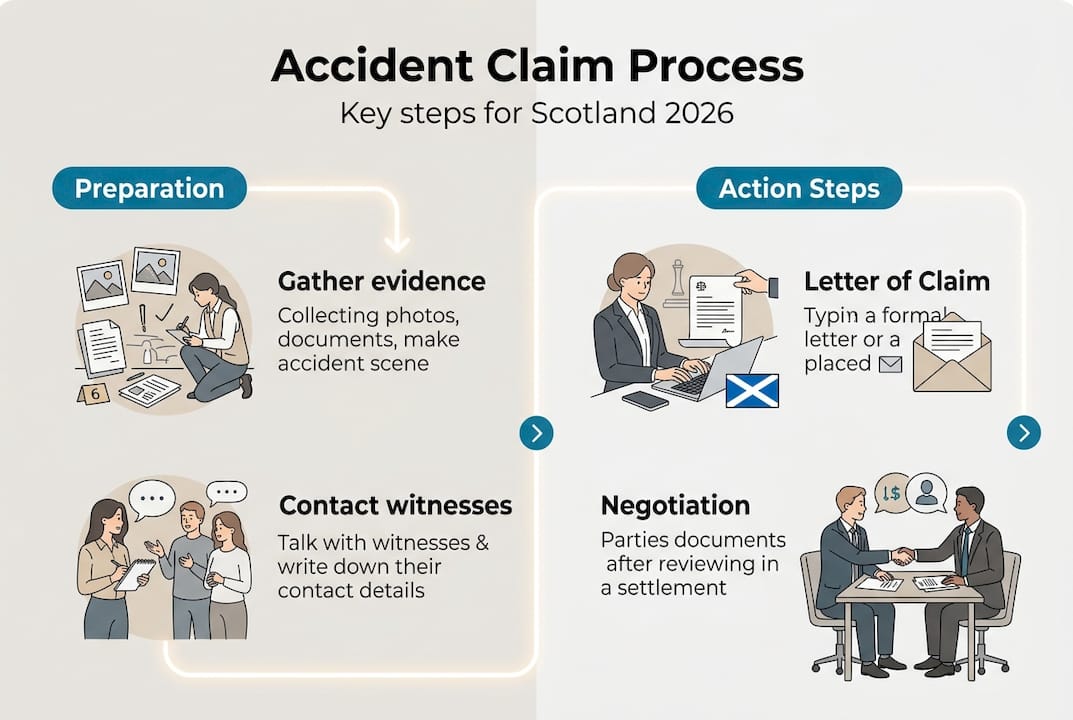
The protocol establishes strict timelines that both parties must follow. Understanding these deadlines helps you track progress and identify when delays occur.
Step 1: Letter of Claim issued
Your solicitor sends the comprehensive Letter of Claim to the defender or their insurer. This letter must include sufficient detail for the defender to investigate liability properly. It should outline the accident, identify the legal basis for the claim, describe your injuries, and provide an initial estimate of losses.
Step 2: Acknowledgement and investigation
The defender must acknowledge receipt within 21 days. This acknowledgement confirms they’ve received the letter and are investigating. They then have three months from acknowledgement to provide a full response. During this investigation period, they’ll examine the accident circumstances, review their records, and assess liability.
Step 3: Full response and negotiation
The defender’s full response must state whether they admit liability, partially admit it, or deny it entirely. If they admit liability, negotiations focus on compensation value. Both parties exchange medical reports and updated financial loss schedules. Your solicitor and the defender’s representatives negotiate settlement terms, often through written offers and counteroffers.
Step 4: Alternative dispute resolution
If initial negotiations stall, parties must genuinely attempt ADR before court proceedings. Mediation sessions bring both sides together with a neutral mediator who facilitates compromise. Many claims settle at this stage, avoiding court costs and delays.
Step 5: Court proceedings if necessary
When settlement proves impossible, your solicitor initiates court proceedings. The court may order a procedural hearing to manage the case timeline and identify disputed issues. Full trials remain relatively rare, as most claims settle even after court proceedings begin.
| Timeline stage |
Deadline |
Action required |
| Letter of Claim |
Day 0 |
Solicitor issues detailed claim letter |
| Acknowledgement |
Within 21 days |
Defender confirms receipt and investigation |
| Full response |
Within 3 months |
Defender states liability position |
| Medical reports |
Ongoing |
Both parties exchange evidence |
| ADR attempt |
Before court |
Mediation or negotiation sessions |
| Court proceedings |
If unresolved |
Formal litigation begins |
Pro Tip: Track every deadline meticulously. Missing protocol deadlines can weaken your negotiating position or provide grounds for the defender to challenge your claim. Your solicitor should provide regular updates, but maintaining your own timeline helps ensure nothing slips through. For detailed information about deadlines and the claim process, review our guide on the Scotland accident claim process and deadlines.
Common challenges and ensuring a successful claim
Even with careful preparation, personal injury claims can encounter obstacles. Recognising potential problems early allows you to address them before they jeopardise your compensation.
Delayed or missing acknowledgements create the first common challenge. If the defender fails to acknowledge your Letter of Claim within 21 days, your solicitor must follow up promptly. Silence doesn’t mean your claim has failed, but it requires active management. Sometimes defenders dispute they received the letter, making proof of delivery essential.
Incomplete or insufficient evidence weakens claims significantly. Defenders exploit gaps in medical records, missing witness statements, or inadequate financial documentation. Expert advice highlights how missing acknowledgements, insufficient evidence, and misunderstanding QOCS protections can jeopardise claims. This underscores why thorough initial preparation matters so much.
Misunderstanding QOCS protection leads some claimants to abandon valid claims. Qualified One Way Costs Shifting means if you lose, you generally won’t pay the defender’s legal costs. However, QOCS has exceptions, particularly for claims deemed fundamentally dishonest. Understanding your protection level gives confidence to pursue legitimate claims without excessive financial fear.
Timeline confusion causes unnecessary stress. The three-year limitation period for personal injury claims in Scotland differs from the Pre-Action Protocol’s shorter timelines. You must issue court proceedings within three years of the accident, but the protocol’s 21-day and three-month deadlines apply once the Letter of Claim is sent. Confusing these timeframes can lead to missed opportunities or rushed decisions.
“Procedural errors, incomplete evidence, and misunderstanding cost protections represent the most common reasons valid claims fail. Early engagement with specialist solicitors who understand Scotland’s unique protocol dramatically reduces these risks and maximises compensation outcomes.”
Maintaining clear communication throughout the process prevents misunderstandings. Respond promptly to your solicitor’s requests for information or documentation. Keep them informed of any changes to your medical condition or financial circumstances. Document all correspondence with the defender or their representatives, noting dates, times, and conversation content.
Common pitfalls to avoid:
- Missing protocol deadlines through poor case management
- Providing inconsistent accounts of the accident across different documents
- Failing to attend medical examinations or follow treatment plans
- Accepting early settlement offers without proper valuation
- Not disclosing pre-existing conditions that may affect your claim
- Posting about your accident or injuries on social media
Maximising your compensation requires strategic thinking beyond simply following protocol. Act quickly after your accident, as fresh evidence proves more compelling. Provide complete, accurate information from the outset rather than drip-feeding details. Follow all medical advice and attend appointments, as non-compliance suggests injuries aren’t serious. Consider the full scope of your losses, including future care needs and long-term earning capacity impacts.
The importance of evidence in injury claims cannot be overstated. Quality evidence gathered early, presented clearly, and supported by expert medical opinion forms the difference between adequate compensation and maximum recovery. For detailed analysis of common challenges and practical solutions, consult personal injury claim challenges and tips from experienced practitioners.
Get expert help for your accident claim in Scotland
Navigating Scotland’s accident claim process alone puts you at a significant disadvantage. Specialist solicitors understand the Pre-Action Protocol’s nuances, know how to value claims accurately, and negotiate effectively with insurers who handle these cases daily. Their expertise transforms a complex legal process into a manageable path toward fair compensation.
No win no fee arrangements eliminate financial barriers to quality legal representation. You pay nothing upfront and nothing if your claim fails. When you win, the fee comes from your compensation, but you keep 100% of your awarded damages. This structure aligns your solicitor’s interests with yours, they succeed only when you do.
Before engaging a solicitor, estimate your potential compensation using our compensation calculator. This tool provides a realistic range based on your injury type and circumstances. Whether you’ve suffered a back injury or another accident-related harm, understanding potential values helps you make informed decisions.
Early legal advice dramatically increases your chances of maximum compensation. Solicitors identify evidence you might overlook, ensure protocol compliance from day one, and prevent tactical errors that weaken claims. Connect with experienced injury lawyers in Scotland who specialise in cases like yours. Their knowledge of Scottish law, local court procedures, and insurer tactics gives you the strongest possible position throughout negotiations and any court proceedings.
Frequently asked questions
Scotland doesn’t use standard accident claim forms. Instead, your solicitor issues a formal Letter of Claim under the Pre-Action Protocol, detailing the accident, injuries, and losses. This letter initiates the legal process and must comply with specific content requirements.
How long do I have to make a personal injury claim in Scotland?
You generally have three years from the accident date to raise court proceedings. However, some exceptions apply for children or cases where injuries weren’t immediately apparent. Starting the process early ensures you don’t lose your right to compensation.
What is a Letter of Claim and why is it important?
The Letter of Claim is a detailed legal document your solicitor sends to the defender, formally starting your claim. It must contain specific information about the accident, liability grounds, injuries, and losses. This letter triggers the Pre-Action Protocol’s strict timelines and sets the foundation for your entire claim.
Can I make a claim without a solicitor?
Technically yes, but it’s strongly inadvisable. The Pre-Action Protocol requires specific legal knowledge, and insurers employ experienced lawyers. Without representation, you’ll likely undervalue your claim, miss crucial evidence, or make procedural errors that jeopardise your compensation.
What does QOCS mean for my claim?
Qualified One Way Costs Shifting protects you from paying the defender’s legal costs if you lose your claim. This protection applies to most personal injury cases, meaning you can pursue legitimate claims without fear of massive cost awards against you. However, exceptions exist for fundamentally dishonest claims, so always provide truthful information.
Recommended