Do you need a police accident report in Scotland?
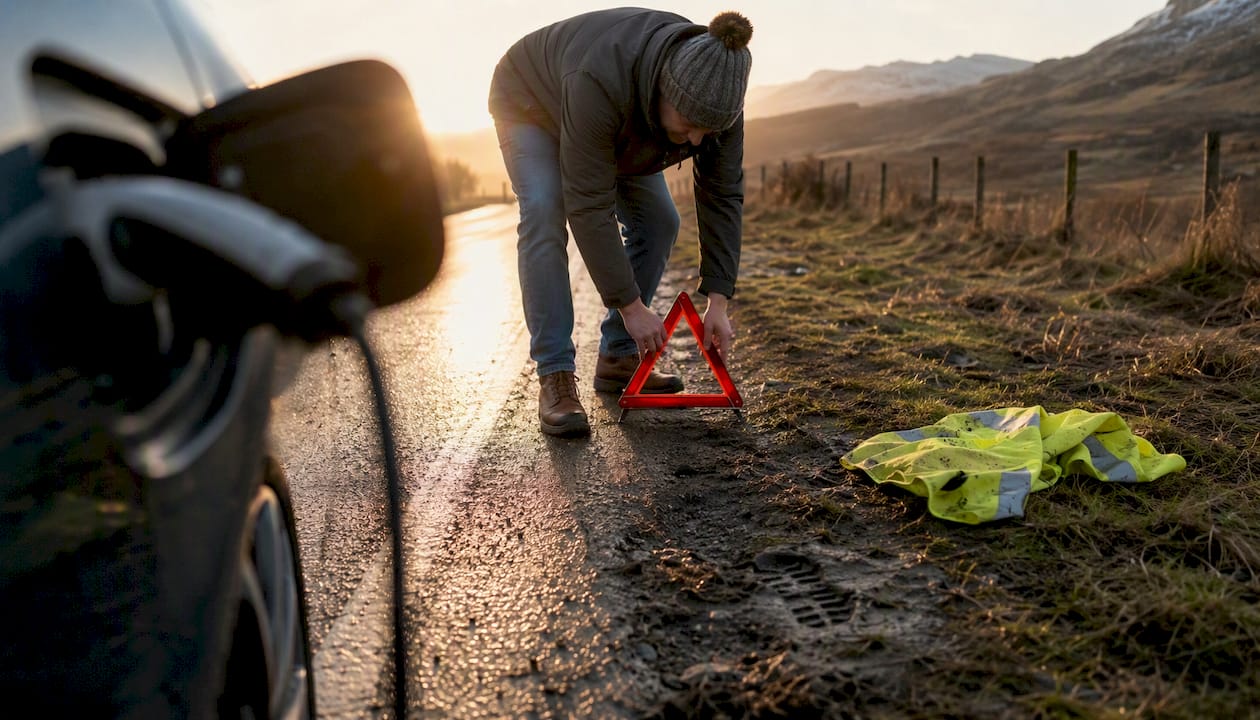
If your accident caused injury, damage above a trivial amount, or you couldn’t exchange details at the scene, you’re legally required to report it under section 170 of the Road Traffic Act 1988. If you already reported it, or need proof of what Police Scotland holds on file, you request the official record through Police Scotland’s Provision of Reports service by emailing CJSDCrashEnquiries@scotland.police.uk. Reports are sent back securely through Egress, a paid search fee applies, and neither individuals nor solicitors can request one by post or phone.
Here’s the short version before we get into the detail:
- Injured, or couldn’t exchange details? You must report it to a constable or police station within a legally required period.
- Exchanged details with no injury and only minor damage? No legal duty to report, but keep your own records anyway.
- Want the official record for a claim or insurance? Email CJSDCrashEnquiries@scotland.police.uk with your reference, date, location, and vehicle registration, and pay the search fee in advance.
- Pursuing compensation? Scotland Claims Injury Lawyers can request the report on your behalf and run your claim on a no win no fee basis, keeping 100% of any compensation you’re awarded.
Key Takeaways
Whether you must report a Scottish road accident depends on section 170 of the Road Traffic Act 1988, and getting the official record afterwards means emailing Police Scotland’s Provision of Reports service directly.
| Point |
Details |
| Reporting duty is conditional |
You must report under section 170 only if there’s injury, damage without an exchange of details, or a driver who left the scene. |
| Emergencies always mean 999 |
Non-urgent reports go through 101 or the online form, which Police Scotland processes “in slow time.” |
| Requests go to one address |
Official collision reports come only through CJSDCrashEnquiries@scotland.police.uk, delivered via Egress, never by post. |
| Search fees are non-refundable |
A “No Trace” outcome still costs the fee, so confirm details are accurate before applying. |
| SARs are a different tool |
A Subject Access Request returns your personal data, not the collision file used in a claim. |
| Scotland Claims can handle it for you |
Scotland Claims Injury Lawyers requests the report and runs the claim no win no fee, with 100% compensation retained. |
Table of Contents
When you must report a road traffic accident in Scotland
The law doesn’t require you to report every bump and scrape to the police. It requires you to report when one of two things happens: someone is injured, or damage occurs and you can’t give your details to everyone entitled to them at the scene.
Under section 170 of the Road Traffic Act 1988, a driver involved in an accident causing injury or damage must stop, and either give their name and address on request, or report the accident to a constable or at a police station as soon as reasonably practicable and, in any case, within a legally required period. Failing to do so is a criminal offence.
That 24 hour window is a backstop, not a target. Crown Prosecution Service guidance on road traffic summary offences makes clear that “as soon as reasonably practicable” usually means the same day, not the following afternoon. Two scenarios show how this plays out in practice:
- Minor car park scrape, details exchanged. You and the other driver swap names, addresses, and insurance details on the spot. No injury, no argument about fault. There’s no statutory duty to report this to Police Scotland at all.
- Damage caused, other driver drives off, or someone’s hurt. You couldn’t get the other party’s details, or an ambulance was called. This must be reported. Waiting until you “see how it goes” is exactly the situation section 170 was written to prevent.
A practitioner note on the same provision is worth taking seriously: damage that looks trivial in daylight can be missed entirely at night, and solicitors routinely advise clients to report when there’s any doubt, because a later prosecution for failing to report is far harder to defend than the ten minutes it takes to phone it in.
What to do at the scene: who to call and what to collect
Safety comes first, always. Get people away from moving traffic, call 999 immediately if anyone is injured, if a vehicle is blocking a live carriageway, or if there’s a genuine risk to life. For anything that doesn’t involve injury or immediate danger, and where you simply need to log the incident or report a driver who’s left the scene, use 101 or Police Scotland’s online reporting form instead.
That online form matters more than most people realise. It’s designed for non-urgent reports and is processed “in slow time,” meaning it isn’t monitored in real time the way a 999 call is. Use it for the wrong situation and you could be waiting hours for a response to something that needed an officer at the scene there and then.
Once the immediate danger is dealt with, start collecting information. This is the checklist that protects both a future compensation claim and your own legal position:
- Names, addresses, and phone numbers of every driver, passenger, and witness present.
- Vehicle registration marks for every vehicle involved, plus make and model.
- Insurance details for each driver, including policy number and insurer name if available.
- Time, date, and precise location of the collision, ideally with a photo of any street sign or landmark.
- Photographs of vehicle damage, road conditions, weather, and the overall scene from several angles.
- Dashcam or phone footage, saved off the device immediately rather than left to be overwritten.
- The police reference or CRN if an officer attends and one is issued on the spot.
Pro Tip: Dashcam footage on a loop recorder can be overwritten within hours, sometimes minutes on cheaper models. Pull the footage off the card and onto your phone or a cloud folder the same day, and do the same with any doorbell or CCTV footage a nearby property might hold. Once it’s gone, it’s gone.
How Police Scotland decides whether to record a collision
Not every incident where details get exchanged ends up as an official record. Police Scotland logs qualifying collisions into a system called CRaSH (Collision Recording and Sharing), which feeds both operational files and, separately, national road traffic collision statistics. Getting a report from Provision of Reports means asking for an extract from that same system.
A recorded collision file typically includes:
- Location, date, and time of the incident
- Names and vehicle details of all parties involved
- Whether injuries were reported, and their apparent severity
- Attending officer’s notes and any actions taken at the scene
- Whether any offence was suspected or reported
Where Police Scotland is likely to decline to create a formal record is fairly predictable. Guidance on collision reporting confirms that where everyone involved stopped, swapped details, no one was injured, and no offence was alleged, officers often won’t attend or open a file at all. That’s the scenario from earlier, the minor car park scrape, and it’s precisely why a Provision of Reports search can come back with nothing to give you. If nobody called it in and no officer attended, there’s often simply no CRaSH entry to extract.
How to get an official police accident report
For a formal record you can hand to an insurer, a solicitor, or use as evidence, you go through Police Scotland’s Provision of Reports service. It’s open to individuals directly affected by the collision, solicitors acting for a claimant, and insurance companies handling the claim.
The process runs in a fixed order:
- Confirm the incident was recorded. If police attended, or you reported it by phone or online, there’s likely a CRaSH entry. If details were simply exchanged with no police involvement, there may be nothing to request.
- Gather your reference details. You’ll need the date, time, and location of the collision, the vehicle registration mark, and the crime reference number (CRN) if one was issued.
- Pay the search fee in advance. Payment is required before Police Scotland will run the search, and the fee is charged regardless of outcome.
- Email the request to CJSDCrashEnquiries@scotland.police.uk, including all the reference details, your payment confirmation, and a return email address.
- Receive the report via Egress, Police Scotland’s secure file transfer system.
A few operational points trip people up regularly:
- Police Scotland do not accept postal applications for Provision of Reports. Everything goes through the email address above.
- Reports arrive through Egress, a secure delivery platform, not as a standard email attachment. Check your inbox can receive Egress links before applying, particularly with strict corporate spam filters.
- The service can issue different types of extract depending on what happened: a short abstract report confirming basic facts, a fuller occurrence report, or, for serious collisions, material from a formal crash investigation file.
- Third-party requests submitted without proper authorisation, or sent from an address that isn’t clearly linked to the claimant or their solicitor, tend to cause delays.
Subject Access Request or collision report: which do you need?
These two routes get confused constantly, and they’re not interchangeable. A Subject Access Request (SAR) gives you your own personal data held by Police Scotland, things like a list of incidents you’ve reported, custody records, or contact logs. A Provision of Reports request gives you the structured collision record itself, the document insurers and solicitors actually use to evidence a claim.
| Feature |
Subject Access Request (SAR) |
Provision of Reports (Collision Report) |
| Purpose |
Access to your own personal data held by police |
Official extract of a recorded collision |
| Typical content |
Incident logs, contact history, personal records |
Location, parties, injuries, officer notes, CRN |
| Who can apply |
The individual only (with ID) |
Individuals, solicitors, and insurers |
| Best used for |
Checking what police hold about you personally |
Supporting an insurance or compensation claim |
| Cost |
No search fee |
Non-refundable search fee payable in advance |
If you’re pursuing compensation, the collision report is almost always what your solicitor needs first. A SAR occasionally comes into play afterwards, for instance if there’s a dispute over what you personally told an officer at the scene, but it’s the exception rather than the rule.
What to include in your report request
Missing a single detail is the most common reason a Provision of Reports request gets delayed or bounced back for clarification. Before you email, have the following to hand:
- Crime reference number or CRN, if one was given at the scene
- Exact date and time of the collision
- Precise location, including road name and nearest junction or landmark
- Vehicle registration mark for every vehicle involved
- Your full name and current address as the applicant
- Payment reference confirming the search fee has been paid
- Name of the solicitor or claims handler, if you’re not applying personally
- A return email address that can accept Egress secure files
It’s also worth attaching anything that speeds up matching your request to the right file: photographs from the scene, witness contact details, or your insurer’s own claim reference number. None of these are mandatory, but they help Police Scotland’s records team locate the correct entry faster, particularly for busy junctions where multiple incidents happen in the same week.
A short, direct email works best. Something along these lines covers everything required:
“I am requesting a copy of the collision report for an incident on [date] at approximately [time], at [location]. The vehicle registration involved was [reg]. The crime reference number, if issued, is [CRN]. I have arranged payment of the search fee via [payment reference]. Please send the report to this email address via Egress. I am the [claimant / solicitor acting for the claimant / insurer].”
Fees, timelines, and what happens after you apply
Provision of Reports charges a search fee that is non-refundable, payable before Police Scotland begins looking for the record. If the search finds nothing, you don’t get your money back. Instead, you receive a formal “No Trace” response confirming that no matching collision was recorded.
Statistic callout: Police Scotland treats the search fee as a fixed administrative charge covering the cost of locating and preparing the record, whether or not one exists. A “No Trace” outcome is still an official response you can show an insurer or solicitor, it just isn’t the collision file itself.
Typical fee bands and outcomes look like this:
| Outcome |
What happens |
Refund? |
| Report found |
Full or abstract collision record issued via Egress |
Not applicable, fee covers the search |
| No Trace |
Formal letter confirming no record exists |
No, the search fee is non-refundable |
| Incomplete details supplied |
Request delayed pending clarification |
No refund, fee already applied to the search |
On timing, don’t expect same-day turnaround. Non-urgent requests and online forms are, in Police Scotland’s own words, processed “in slow time.” That phrase does a lot of work: it means genuine emergencies must go through 999, not the Provision of Reports inbox, and administrative requests can take days to weeks depending on demand. If your claim has a deadline attached, factor that lag into your planning rather than assuming the report will land within 48 hours.
If you get a “No Trace” response and you’re certain the incident should have been logged, don’t just accept it. Check the date and location details you submitted for accuracy, confirm whether an officer actually attended, and consider whether the incident falls into that “details exchanged, no injury, no offence” category that Police Scotland often doesn’t record at all.
How a solicitor uses a police report in your claim
An official collision report does more than confirm an accident happened. It corroborates the time, location, and parties involved, and it often includes an attending officer’s initial assessment of injuries, all of which carries real weight when an insurer is disputing liability or downplaying the severity of what occurred.
Solicitors handling road traffic claims typically follow a consistent pattern once instructed:
- Request the collision report early, often within days of taking on the case, using the same Provision of Reports channel described above.
- Cross-reference the report against medical records and any witness statements gathered independently.
- Use officer notes and recorded injury details to support the chronology when an insurer challenges fault or timing.
- Where the report comes back “No Trace,” pivot to gathering independent evidence, dashcam footage, witness testimony, CCTV from nearby premises, rather than relying on a police file that doesn’t exist.
- Occasionally request a SAR alongside the collision report where there’s a dispute over what was said to an officer at the scene.
Pro Tip: A “No Trace” result isn’t a dead end for a claim, it’s a signal to act faster elsewhere. Solicitors who see that outcome early tend to move quickly on witness statements and CCTV requests, because that evidence degrades fast and there’s no police file to fall back on.
Getting this right from day one matters more than most claimants expect. Our guide on the road traffic accident checklist for Scotland covers the wider evidence-gathering picture beyond just the police report itself.
What most people in Scotland should actually do next
If you or a passenger were injured, the priority is straightforward: call 999, get medical attention, and let the reporting duty follow naturally from that. Section 170 exists precisely for this situation, and delaying it to “see how you feel” only creates problems later.
If it was a minor knock and details were exchanged calmly at the scene, there’s genuinely no legal obligation to report it to Police Scotland. Keep your own written record anyway, names, photos, the time and place, because insurers occasionally ask for detail months after the fact when memories have faded.
If you’re unsure, if the other driver left, if you couldn’t get their details, or if damage only became obvious later, report it. The cost of reporting something that turns out to be trivial is a phone call. The cost of not reporting something that turns out to matter is a potential prosecution under section 170. That asymmetry is why solicitors almost universally advise reporting when in doubt.
If a claim looks likely, whether for vehicle damage, injury, or both, a free assessment with a specialist solicitor early on tends to save time later, particularly around getting the collision report requested before evidence starts to age.
How we can help with your report and your claim
Chasing Police Scotland for a collision report while also dealing with an injury, a written-off car, and an insurer that’s in no hurry to help is a lot to carry alone.
Here’s what that looks like in practice:
- Free claim assessment with a specialist solicitor to establish whether you have a valid claim.
- Solicitor instructed on a no win no fee basis, so there’s nothing to pay upfront.
- Police report requested through the correct Provision of Reports channel, with the right reference details included the first time.
- Evidence gathered, including witness statements and medical records, alongside the police file.
- Claim managed end to end, with you keeping all of your compensation if the claim succeeds.
Start with our compensation calculator to get a sense of what your claim could be worth, or head straight to our injury lawyers page to request a free assessment today.
Sources
This article is general information, not a substitute for advice from a qualified lawyer. Consult a qualified legal professional about your own circumstances before acting on anything here.
FAQ
How do I get a police incident report in Scotland?
Email Police Scotland’s Provision of Reports service at CJSDCrashEnquiries@scotland.police.uk with your reference details and payment confirmation, and the report will be issued securely through Egress.
Can I look up my own police incident report myself?
You can request your personal data through a Subject Access Request, but the official collision report used for claims comes from the separate Provision of Reports service instead.
Do I need to report a minor car accident to the police in Scotland?
Only if there’s injury, damage where you couldn’t exchange details, or a driver who left the scene; if everyone stopped and swapped details with no injury, there’s no statutory duty to report under section 170.
Can I make a police report online in Scotland?
Yes, using Police Scotland’s online reporting form for non-urgent matters, though emergencies involving injury or danger must be reported by calling 999 instead.
Will Scotland Claims Injury Lawyers request the police report for me?
Yes, as part of a claim, Scotland Claims Injury Lawyers requests the official collision report through Police Scotland’s Provision of Reports service and manages the claim on a no win no fee basis with no deduction from your compensation.
Recommended