Traffic accidents in Scotland: 2026 causes, law, and claims
TL;DR:
- Traffic accidents in Scotland are classified as road traffic collisions, involving incidents that cause injury or damage on public roads. Despite record-low fatalities in 2025, young drivers still face high risks due to speeding, distraction, and alcohol, necessitating behavioral changes and potential licensing reforms. Victims can claim full compensation within three years, with no success fee required, ensuring they keep 100% of their settlement.
Traffic accidents in Scotland are formally classified as road traffic collisions, a term used by Police Scotland and Transport Scotland to cover any incident on a public road resulting in injury or damage. Scotland recorded 134 road deaths in 2025, the lowest figure in any non-pandemic year. Total injuries fell 3% to 5,535, with serious casualties dropping 4% to 1,906. These numbers represent real people, and understanding what causes them, what the law requires, and how to claim compensation is the most practical thing you can do after an incident.
What are the main causes of traffic accidents in Scotland?
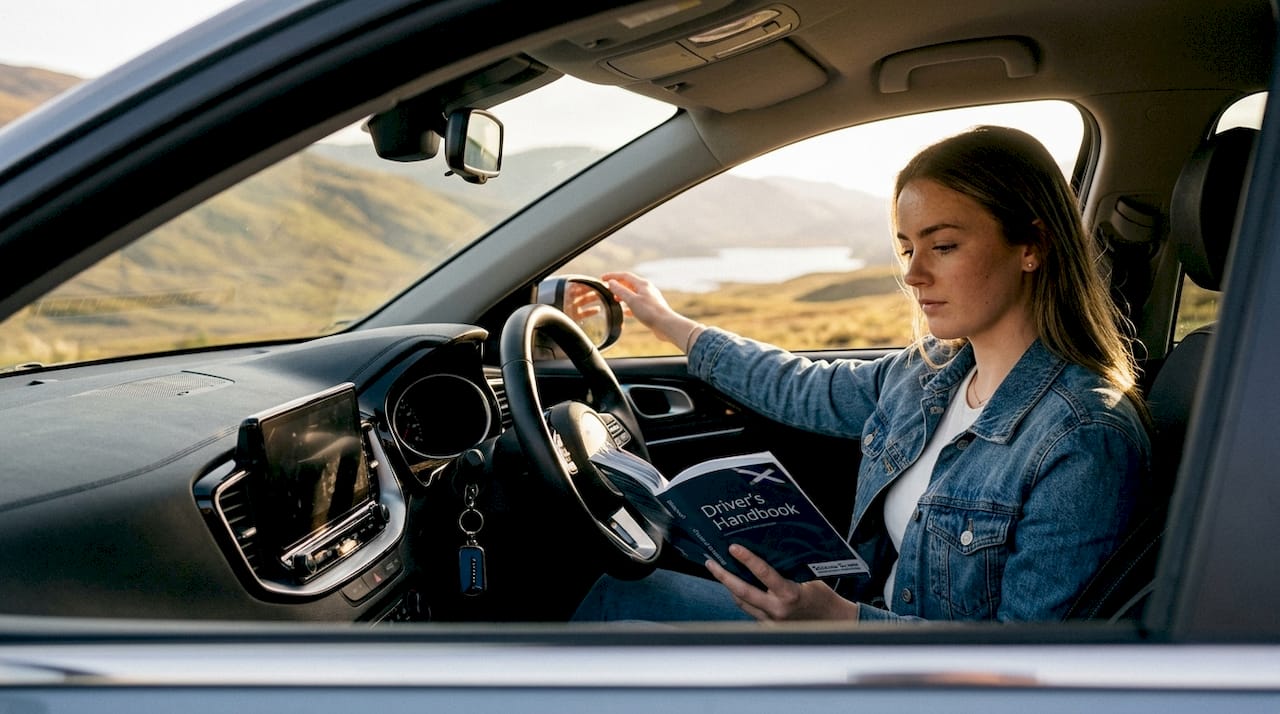
Young and newly qualified drivers carry the highest risk on Scottish roads. One in five newly qualified drivers in Scotland are involved in a collision within their first year. Young males face double the risk compared with other groups.
The causes behind these figures are well documented:
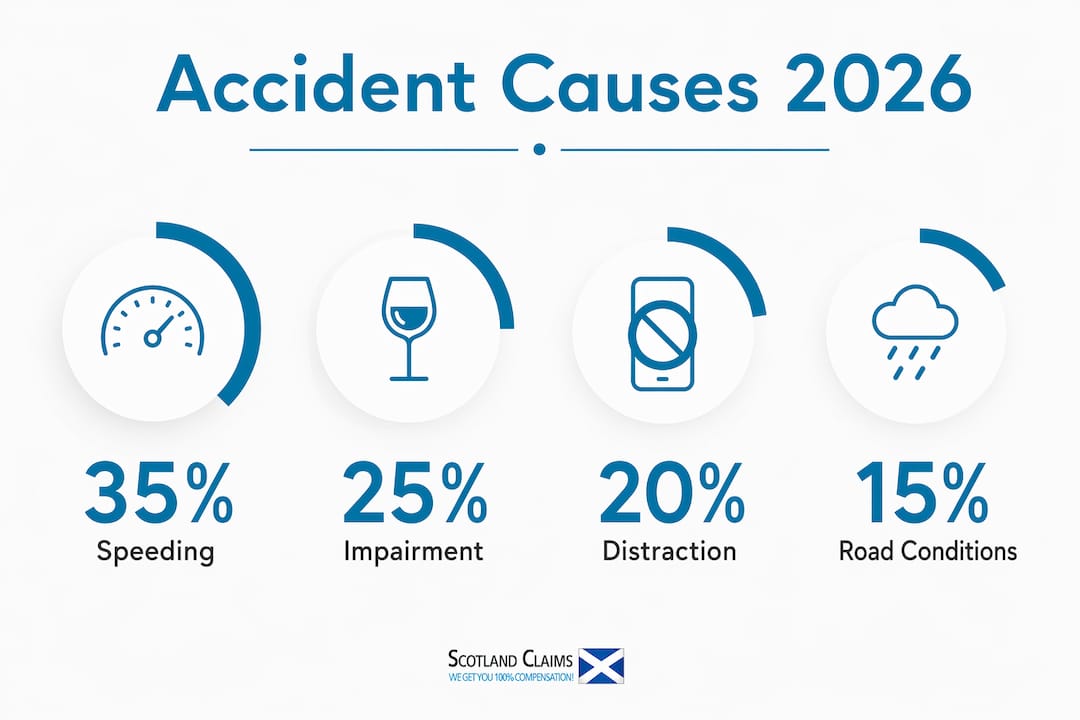
- Speeding. Exceeding posted limits, particularly on rural A-roads, remains the single most common factor in fatal collisions.
- Driver distraction. Mobile phone use, in-car entertainment, and passenger conversation all reduce reaction time significantly.
- Alcohol and drugs. Impaired driving continues to feature in a disproportionate share of serious and fatal crashes.
- Poor road conditions. Ice, standing water, and poorly lit rural roads amplify the consequences of any lapse in concentration.
- Passenger influence. Carrying peers increases risk-taking behaviour in young drivers, a pattern consistently identified by Road Safety Scotland research.
Young drivers often normalise risky behaviours early. Road Safety Scotland describes a pattern where new drivers treat the road as a game rather than a hazard, which accelerates the likelihood of a serious collision. That attitude, not just inexperience, is what makes the first year so dangerous.
There is growing political pressure to introduce graduated driving licences in Scotland. These would impose night-time and passenger restrictions on newly qualified drivers. Discussions around graduated licences are underway, though political obstacles have slowed progress.
Pro Tip: If you are a new driver or have one in your household, review your driving habits after every journey. Identifying small risks early, such as checking your phone at lights or carrying multiple passengers, prevents the normalisation that leads to serious accidents.
How have accident statistics and Scotland road safety changed recently?
Scotland’s road safety record has improved meaningfully over the past decade, but the pace of progress is uneven. The 134 fatalities recorded in 2025 represent a genuine milestone. That figure is the lowest outside of pandemic years, when traffic volumes were artificially suppressed.
| Casualty type |
2025 figure |
Year-on-year change |
| Fatalities |
134 |
Record low (non-pandemic) |
| Total injuries |
5,535 |
Down 3% |
| Serious casualties |
1,906 |
Down 4% |
Despite these improvements, Scotland remains behind schedule on its 2030 target to halve deaths and serious injuries. Meeting that target requires more than road upgrades. Behaviour change is the missing piece.
The Scottish Government allocated over £14 million in 2025/2026 for local road safety improvements. That funding covers junction upgrades, motorcycle-friendly barriers, and traffic calming measures across Scotland’s local road network. The investment is significant, but infrastructure alone cannot close the gap between current figures and the 2030 goal.
The 2050 vision is even more ambitious: a target of zero road deaths. Achieving it will require sustained changes in driver attitudes alongside continued capital investment.
What legal responsibilities do drivers face after a road collision in Scotland?
The law is clear on what you must do immediately after a collision. Failing to follow these steps can result in criminal charges, even if you were not at fault.
- Stop the vehicle. Leaving the scene before emergency services arrive is a criminal offence under Scottish law.
- Exchange details. You must provide your name, address, and vehicle registration to any other party involved.
- Report to Police Scotland. If injury is involved or details cannot be exchanged at the scene, you must report the collision to Police Scotland within 24 hours.
- Do not admit liability. Anything said at the scene can be used in subsequent legal proceedings.
- Preserve evidence. Photograph the scene, note road conditions, and record witness details before leaving.
Leaving the accident scene before sharing details or waiting for emergency services can lead to criminal charges in Scotland. This applies regardless of fault. Police Scotland prosecutes these cases actively.
Dashcam footage has become a decisive tool in Scottish road collision investigations. Dashcam evidence from witnesses is regularly requested by police and can determine liability in both criminal proceedings and compensation claims. Severe accidents on major routes often result in road closures lasting over ten hours while evidence is gathered.
Newly qualified drivers face particular scrutiny after collisions. Police investigations involving new drivers examine speed, passenger presence, and licence conditions carefully. This scrutiny directly affects insurance assessments and any subsequent liability decisions.
Pro Tip: Fit a dashcam before you need one. In a disputed claim, footage from your own vehicle or a witness’s camera can be the difference between a successful claim and a rejected one.
How can you prevent car crashes in Scotland?
Prevention starts with personal choices, not waiting for infrastructure to improve. The following steps are specific to conditions and risks on Scottish roads.
- Respect the 20mph zones. Scotland has expanded 20mph limits across residential and town centre roads. These limits exist because the survival rate for pedestrians struck at 20mph is dramatically higher than at 30mph.
- Manage passenger risk. If you are a young driver, limit the number of passengers you carry, particularly at night. Peer pressure in the car is a documented cause of risk-taking behaviour.
- Practise defensive driving. Anticipate the actions of other road users rather than reacting to them. Leave a greater stopping distance on wet or icy Scottish roads.
- Check your vehicle before long journeys. Tyre pressure, tread depth, and brake condition all affect stopping distances on rural roads where recovery times are longer.
- Use Road Safety Scotland resources. Road Safety Scotland runs targeted campaigns for young drivers, motorcyclists, and rural road users. Their materials are free and evidence-based.
- Never drive impaired. Scotland’s drink-drive limit is 50mg of alcohol per 100ml of blood, lower than the rest of the UK. The drug-driving law applies to both illegal and prescription substances.
- Plan for fatigue. Long drives on Scotland’s rural A-roads, particularly the A9 and A82, carry elevated fatigue risk. Stop every two hours on extended journeys.
Road Safety Scotland’s campaigns aim to shift young drivers’ perceptions from casual to responsible. The emphasis is on the permanence of consequences. A collision at 60mph on a rural road does not offer second chances.
How can victims of traffic accidents in Scotland claim compensation?
Victims of road traffic collisions in Scotland have the right to claim compensation if another party’s negligence caused their injury. The process is more straightforward than most people expect.
- Time limit. You have three years from the date of the accident to bring a personal injury claim in Scotland. Missing this deadline ends your right to claim.
- No fault required on your part. If you were a passenger, pedestrian, or cyclist injured by a negligent driver, you can claim regardless of your own actions.
- Evidence matters. Medical records, police reports, witness statements, and dashcam footage all strengthen a claim.
- No win no fee. You can pursue a claim without paying anything upfront. If the claim is unsuccessful, you pay nothing.
The most important financial detail is the success fee. Most solicitors in Scotland deduct up to 20% of your compensation as a success fee when your claim succeeds. Scotland Claims Injury Lawyers charges no success fee at all. You keep 100% of your compensation. On a £10,000 settlement, that difference is £2,000 in your pocket.
Scotland Claims Injury Lawyers specialises in road traffic accident claims and handles the entire process on your behalf. You can use the compensation calculator on the Scotland Claims website to get an estimate of what your claim may be worth before you commit to anything.
Key takeaways
Scotland’s road collision figures are improving, but the legal, behavioural, and financial consequences of an accident remain serious and require clear, immediate action.
| Point |
Details |
| Record low fatalities in 2025 |
Scotland recorded 134 road deaths, the lowest non-pandemic figure, with total injuries down 3% to 5,535. |
| Young drivers carry the highest risk |
One in five newly qualified drivers crash in their first year; young males face double the risk of other groups. |
| Legal duties are strict |
Drivers must stop, exchange details, and report to Police Scotland; leaving the scene early risks criminal charges. |
| Dashcam footage is decisive |
Police and insurers regularly use dashcam evidence to determine liability in Scottish collision investigations. |
| 100% compensation is possible |
Scotland Claims Injury Lawyers charges no success fee, meaning victims keep their full settlement rather than losing up to 20%. |
Scotland’s road safety progress: what the numbers don’t tell you
The 134 fatalities recorded in 2025 is genuinely good news. I have followed Scotland’s road safety data for years, and that figure represents real effort from Transport Scotland, Police Scotland, and road safety campaigners. But the headline number obscures something uncomfortable.
Scotland is still behind on its 2030 target. The infrastructure investment is real. The £14 million allocated for local road improvements will save lives. But the data consistently shows that behaviour, not tarmac, is the primary driver of serious collisions. Young male drivers, in particular, are not being reached by current interventions at the scale needed.
The graduated driving licence debate frustrates me. The evidence from countries that have implemented it is clear. Restricting night driving and passenger numbers for newly qualified drivers reduces casualties. The political hesitation in Scotland is not based on evidence. It is based on the perception that restrictions are unpopular with young voters.
What I find most encouraging is the shift in how Road Safety Scotland frames its campaigns. Moving away from fear-based messaging toward consequence-based storytelling is the right approach. Young drivers do not respond to statistics. They respond to real stories about real people.
If you have been injured in a collision that was not your fault, the legal system in Scotland is on your side. The three-year time limit is generous, but claims are stronger when evidence is fresh. Do not wait.
— Roger
Scotland Claims Injury Lawyers: no success fee, 100% compensation
If you have been injured in a road traffic collision in Scotland, Scotland Claims Injury Lawyers offers specialist legal support with no upfront costs and no success fee deducted from your settlement. Most solicitors take up to 20% of your compensation when your claim succeeds. Scotland Claims takes nothing. Every penny of your settlement stays with you.
The team handles claims for drivers, passengers, cyclists, and pedestrians injured through no fault of their own. You can speak to a specialist, request a callback, or use the compensation calculator to estimate your claim value today. For dedicated legal representation, visit the injury lawyers Scotland page and start your claim with complete financial confidence.
FAQ
What is the time limit for a road accident claim in Scotland?
You have three years from the date of the accident to make a personal injury claim in Scotland. Missing this deadline means you lose the right to claim compensation entirely.
Stop your vehicle, exchange details with all parties involved, and report the collision to Police Scotland within 24 hours if injury occurred or details could not be exchanged at the scene.
Can a passenger claim compensation after a car crash in Scotland?
Yes. Passengers injured in a road traffic collision can claim compensation against the at-fault driver’s insurance, regardless of their own actions during the incident.
How does no win no fee work for road accident claims in Scotland?
Under a no win no fee arrangement, you pay nothing if your claim is unsuccessful. Scotland Claims Injury Lawyers also charges no success fee on winning claims, so you receive 100% of your compensation.
Are newly qualified drivers treated differently after a collision in Scotland?
Police Scotland applies closer scrutiny to newly qualified drivers following collisions, examining speed, passenger presence, and licence conditions. This can affect insurance assessments and liability outcomes.
Recommended