Table of Contents
Last Updated: August 8, 2026
What Are Road Traffic Accidents in Scotland?
Road traffic accidents in Scotland are collisions involving one or more vehicles on public roads that result in injury, death, or property damage. These incidents range from minor bumps requiring basic insurance claims to serious crashes causing multiple casualties. Understanding what constitutes a road traffic accident is essential for anyone involved in a collision, as it determines your rights to compensation and the legal procedures you'll need to follow.
In Scotland, road traffic accidents are monitored by Police Scotland and tracked through the national collision reporting system. Every accident involving injury must be reported to the police, whilst property-only incidents may be handled through insurance claims alone. The distinction matters significantly when pursuing compensation, as injury-related accidents trigger specific legal protections and claim procedures.
The trunk road network and motorway system across Scotland see thousands of incidents annually. From minor fender-benders in Glasgow city centre to serious multi-vehicle pile-ups on the M8, the severity and circumstances vary enormously. However, the legal framework governing claims remains consistent: if another party's negligence caused your injury, you have the right to claim compensation.
Scotland Claims Injury Lawyers has helped individuals understand their position after a road traffic accident. Whether you're unsure whether your case is worth pursuing or you've already decided to claim, knowing the basics about how accidents are classified, reported, and investigated will strengthen your position throughout the claims process.
Understanding Police Scotland Collision Statistics 📊
Police Scotland maintains detailed records of all reported road traffic collisions. These Police Scotland collision statistics form the backbone of road safety analysis across the country and provide crucial data for understanding where accidents happen most frequently. The statistics cover injury severity, vehicle types involved, weather conditions, and time of day, all factors that influence both accident prevention and compensation claims.
Collision data is collected at the scene by attending officers and compiled into national databases. This raw data becomes essential evidence in compensation claims, as it provides an independent, official record of how the accident occurred. When you're pursuing a claim, Police Scotland's collision report can be a powerful piece of evidence, particularly if it clearly establishes fault or documents the circumstances of the incident.
The statistics reveal patterns that matter for safety and claims alike. Certain roads in Scotland experience higher accident rates than others, weather conditions significantly increase collision risk, and specific times of day show clustering of incidents. These patterns help insurance companies and legal teams assess liability and predict outcomes.
Accessing your collision report is straightforward. You can request a copy from Police Scotland using the incident number from the initial report. This document will form part of your evidence bundle if you pursue a compensation claim. Scotland Claims Injury Lawyers can guide you through obtaining these records and interpreting what they mean for your case.
Live Traffic Updates and Real-Time Incident Monitoring 🚗
Live traffic updates provide real-time visibility of incidents, congestion, and hazards across Scotland's road network. These updates are crucial during active incidents, helping drivers avoid affected areas and emergency services reach collision sites quickly. Understanding how traffic monitoring works also helps explain how accidents are documented and what evidence becomes available immediately after a crash.
Transport Scotland operates the traffic information service, broadcasting live updates via radio, mobile applications, and digital signs on major roads. When a road traffic accident occurs, the incident is logged, and traffic management systems begin directing vehicles away from the affected area. This real-time monitoring creates a timestamped record of when the accident was reported and how long the road remained disrupted.
For anyone involved in a collision, these live updates create an additional evidence trail. The time you see recorded in traffic systems, combined with emergency service logs and witness accounts, builds a comprehensive picture of the incident. Insurance companies and legal teams use this timeline to verify claims and establish the sequence of events.
Journey time data is particularly valuable in serious accidents. If a major route was closed for several hours following your collision, that closure time is documented in traffic systems. This evidence supports claims involving serious injury, as it demonstrates the severity of the incident and validates the emergency response. Checking archived traffic data from the date and time of your accident can provide supporting evidence for your claim.
How to Report a Road Traffic Accident in Scotland 📋
Reporting a road traffic accident in Scotland involves specific steps that must be followed to protect your legal position and gather evidence. Immediate actions at the scene determine what information becomes available later and influence the strength of any compensation claim you might pursue.
If you've been involved in a collision, your first priority is safety. Move to a safe location if possible, switch on hazard lights, and ensure all occupants are accounted for. Call emergency services (999) if anyone is injured or if there's a danger to other road users. Never attempt to move seriously injured people unless there's an immediate threat.
Once the scene is secure, gather information systematically. Collect names, addresses, telephone numbers, and insurance details from all other drivers involved. Note vehicle registration numbers, makes, and models. Take photographs of vehicle damage, road conditions, weather, and the general scene, these images are invaluable evidence. If there are witnesses, ask for their contact details immediately; people often leave before police arrive, and you won't be able to contact them later.
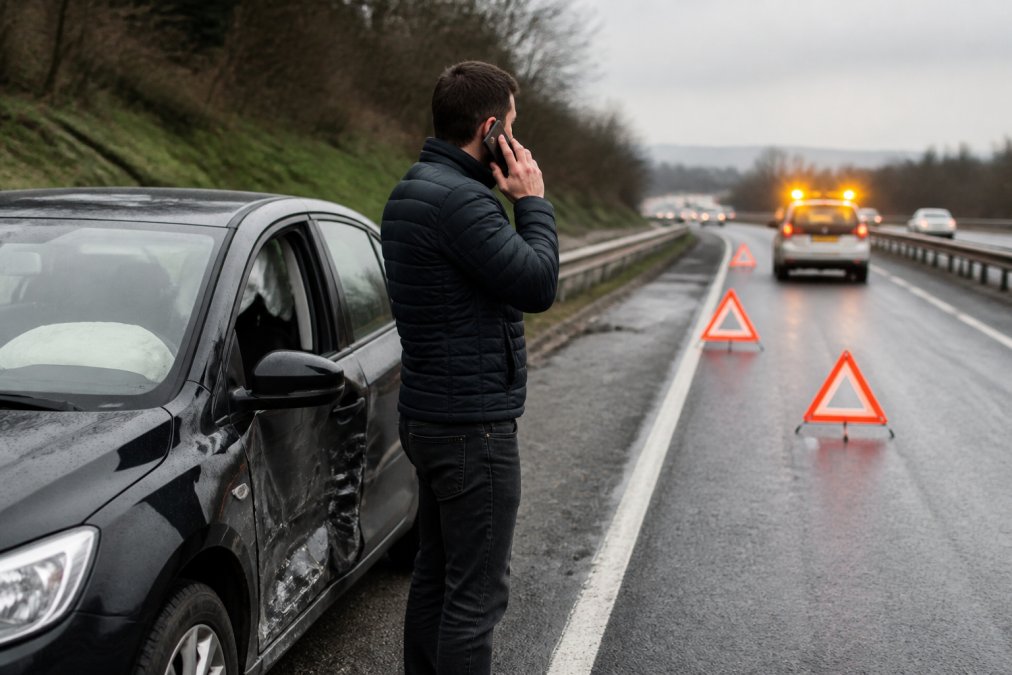 Driver standing beside damaged vehicle on Scottish motorway, using mobile phone to contact emergency services, with warning triangles and hazard lights visible in background
Police attendance is required for injury accidents. When officers arrive, provide a clear, factual account of what happened. Don't admit fault or speculate about what the other driver was thinking, simply describe what you saw and did. Request the incident number and the name of the attending officer; you'll need these to obtain the collision report later.
Report the accident to your insurance company within the timeframe specified in your policy, typically within 30 days. Provide them with the police incident number, witness details, and photographs. Keep copies of all correspondence with your insurer.
If you've suffered injury, seek medical attention promptly, even if you feel fine initially. Some injuries develop over hours or days, and a medical record created close to the accident date strengthens any future claim. Document all medical appointments, treatments, and expenses, these form the basis of your compensation claim.
Trunk Road Network and Motorway Safety 🛣️
Scotland's trunk road network includes the major routes connecting cities and regions: the M8, M9, M80, A9, and A1(M) are among the busiest. These high-speed routes carry substantial traffic volumes, and whilst safety standards are high, collisions on motorways tend to be more severe than on minor roads due to the speeds involved.
The trunk road network is maintained by Transport Scotland, which oversees safety improvements, maintenance schedules, and incident response. Understanding the responsibilities of road authorities matters for compensation claims, particularly if poor road conditions, inadequate signage, or maintenance failures contributed to your accident.
Motorway accidents often involve multiple vehicles and complex liability questions. A single collision can trigger a pile-up as following traffic fails to stop in time. In these situations, establishing the sequence of events and identifying the initial cause becomes critical. Police collision reports and traffic monitoring data are essential in untangling these complex incidents.
If your accident occurred on a motorway or trunk road, several factors may strengthen your claim. High-speed collisions often produce clear injury evidence, witness counts are usually higher due to traffic density, and road authority records may show prior incidents or maintenance issues at that location. These factors can support arguments for compensation, particularly if negligence is clear.
Weather conditions have a significant impact on trunk road safety. Rain, fog, and ice reduce grip and visibility, increasing collision risk. If adverse weather was a factor in your accident, this context helps explain how the collision occurred and may influence liability assessments. However, weather alone doesn't excuse poor driving, drivers must adjust their speed and following distance accordingly.
Adverse Weather and Seasonal Accident Hotspots ❄️
Adverse weather conditions create hazardous driving environments across Scotland, and certain seasons see predictable increases in collision rates. Winter months bring ice, snow, and reduced visibility; autumn brings wet leaves and flooding; spring can bring sudden weather changes. Understanding seasonal patterns helps explain accident causes and informs safety discussions.
Winter presents the greatest challenge. Icy roads, snow, and reduced daylight hours combine to increase collision risk significantly. Scottish roads, particularly in highland and rural areas, are vulnerable to ice formation, especially on bridges and exposed sections. Many accidents in winter occur at lower speeds than summer collisions, yet result in serious injury due to the loss of vehicle control on slippery surfaces.
Drivers have a legal duty to adapt their driving to prevailing conditions. Travelling at motorway speeds on an icy road, failing to increase following distance in fog, or not using headlights in poor visibility can all constitute negligence. If another driver failed to adjust their driving to weather conditions and caused your accident, this strengthens your compensation claim.
Get Started Today →
Certain routes in Scotland are notorious for weather-related incidents. The A83 Rest and Be Thankful pass closes regularly during winter due to snow. The A9 through the Cairngorms experiences frequent ice-related collisions. The M8 through Glasgow sees increased incidents during heavy rain when drainage systems struggle. If your accident occurred at a known hazard location during adverse conditions, this context supports your claim.
Seasonal patterns also influence accident investigation and evidence preservation. Winter collisions often leave skid marks and debris that weather quickly ceases. Photographing the scene immediately becomes even more critical. Traffic monitoring data from adverse weather incidents is usually comprehensive, as authorities track conditions closely during high-risk periods.
Post-Accident Legal and Safety Procedures ⚖️
Following a road traffic accident, a series of legal and safety procedures protect your interests and establish the foundation for any compensation claim. Understanding these procedures helps you navigate the claims process confidently and avoid actions that might undermine your position.
The first 72 hours after an accident are critical. Seek medical attention for any injuries, no matter how minor they seem. Report the accident to police if injury is involved or if you haven't already done so. Notify your insurance company and provide them with all available information. Take photographs of injuries if visible, and request contact details from any witnesses you haven't already obtained.
 Legal professional in office reviewing accident documentation and injury claim paperwork with client across desk, natural lighting
Within the following weeks, obtain copies of the police collision report, medical records, and insurance correspondence. These documents form your evidence bundle. If you believe you've suffered injury due to another's negligence, this is the time to seek legal advice. Scotland Claims Injury Lawyers can review your circumstances and advise whether a compensation claim is viable.
The legal process in Scotland involves establishing negligence: the other party owed you a duty of care, they breached that duty, and their breach caused your injury. Road traffic accidents typically involve clear duty of care (all drivers have a duty to drive safely), so the focus is usually on whether the other driver breached that duty and whether their breach caused your injury.
Documentation is your strongest asset throughout this process. Medical records create a timeline of your injuries and treatment. Photographs of vehicle damage and the accident scene support your account of what happened. Witness statements corroborate your version of events. Police reports provide official documentation of the incident. Together, these materials build a compelling case for compensation.
Insurance companies will investigate the accident from their perspective, assessing liability and damages. If liability is clear and injuries are straightforward, settlements often occur within months. If liability is disputed or injuries are complex, the process may take longer. Throughout, maintaining detailed records and following legal advice protects your interests.
Emergency Roadside Assistance and Hazard Management 🚨
When a road traffic accident occurs, immediate hazard management is essential to prevent further collisions and protect all parties involved. Emergency roadside assistance, both from emergency services and from breakdown recovery organisations, plays a crucial role in managing the incident and protecting evidence.
Emergency services (999) should be called immediately if anyone is injured or if the accident poses a danger to other road users. Police, ambulance, and fire services coordinate to manage the scene, treat injuries, and clear the road. Their attendance creates official records and establishes the incident timeline, critical documentation for any subsequent claim.
Breakdown recovery services assist with vehicle removal and storage. If your vehicle is undriveable after the accident, your insurance policy typically includes recovery cover, or you can contact a recovery service directly. The vehicle should be photographed before removal to preserve evidence of damage. Once recovered, the vehicle is usually stored at a recovery yard, where it remains available for inspection by insurers and legal teams.
Hazard warning equipment, triangles, cones, and flares, should be deployed immediately at the accident scene to alert approaching traffic. These simple measures prevent secondary collisions and protect everyone at the scene. On motorways and fast roads, hazard management is particularly critical due to high speeds and heavy traffic volumes.
Road authorities and traffic management services work to clear incidents and restore traffic flow. This process is documented in traffic monitoring systems, creating a timestamped record of the incident duration. For serious accidents, road closures may last several hours, generating significant traffic disruption. This evidence of severity supports claims involving serious injury.
Your Right to Claim Compensation After a Road Traffic Accident 💷
If you've been injured in a road traffic accident caused by another party's negligence, you have a legal right to claim compensation. This right exists regardless of whether the accident was minor or serious, provided you can establish that someone else's breach of duty caused your injury.
Compensation claims in Scotland are typically handled through the civil courts system, though the vast majority settle before reaching court. The goal is to restore you to the position you would have been in had the accident not occurred, a principle known as restitution. This includes compensation for medical treatment, lost earnings, pain and suffering, and any lasting disability.
The process begins with establishing negligence. In road traffic accidents, this usually involves showing that the other driver failed to exercise reasonable care, perhaps by speeding, failing to look properly, or driving whilst distracted. Police collision reports, witness statements, and expert analysis of vehicle damage all contribute to establishing negligence.
Compensation is divided into two categories: special damages (quantifiable losses like medical bills and lost wages) and general damages (pain, suffering, and loss of amenity). Special damages are calculated by totalling your actual expenses and lost income. General damages vary depending on injury severity, duration of recovery, and impact on your life.
Scotland Claims Injury Lawyers operates on a No Win No Fee basis, meaning you pay no upfront costs and retain 100% of your compensation if your claim succeeds. This arrangement removes financial risk from pursuing a claim, allowing you to focus on your recovery whilst your legal team handles the claim process.
The timeline for compensation claims varies. Minor injuries with clear liability may settle within weeks. Serious injuries requiring ongoing treatment may take months or years to resolve, particularly if long-term prognosis is uncertain. Your legal team will advise on realistic timescales based on your specific circumstances.
Road traffic accidents in Scotland create complex legal and practical challenges for those involved. Whether your accident occurred on a Glasgow city street, a trunk road, or a motorway, understanding your rights and the procedures involved protects your interests and maximises your chances of fair compensation.
If you've suffered injury in a road traffic accident, Scotland Claims Injury Lawyers can provide the expert guidance you need. With a No Win No Fee arrangement and a commitment to keeping 100% of your compensation, you can pursue your claim without financial risk. Contact Scotland Claims Injury Lawyers today for impartial advice on your circumstances and a clear assessment of your claim's potential. Your recovery matters, let specialist injury lawyers handle the legal complexities whilst you focus on healing.
Frequently Asked Questions
How many road traffic accidents happen in Scotland each year?
Police Scotland records thousands of road traffic collisions annually across the country. Exact figures vary by year and are published in Police Scotland's official collision statistics. These figures include incidents ranging from minor damage-only collisions to serious injury crashes. To access the most current data, visit the Police Scotland website or contact your local road safety officer for detailed regional breakdowns.
How do I report a road traffic accident to Police Scotland?
If you're involved in a road traffic accident in Scotland, call 999 immediately if anyone is injured or the road is blocked. For damage-only incidents with no injuries, you can report online through the Police Scotland website or visit your local police station. Provide vehicle details, location, time, and witness information. Keep photographic evidence and obtain the other driver's insurance details. Report the incident to your insurer within the timeframe specified in your policy.
What should I do immediately after a road traffic accident?
First, ensure everyone's safety by moving to a safe location away from traffic if possible. Switch on hazard lights and use warning triangles if available. Call 999 if anyone is injured. Exchange contact and insurance information with other parties involved. Take photographs of vehicle damage, road conditions, and the accident scene. Collect witness details and contact numbers. Don't admit fault at the scene. Report the incident to your insurer and Police Scotland as required, then seek medical advice even if you feel uninjured.
Can I claim compensation after a road traffic accident in Scotland?
Yes, if you've been injured through no fault of your own in a road traffic accident, you may be entitled to compensation. This can cover medical expenses, lost wages, and pain and suffering. You'll need to establish that another party was negligent and caused your injury. A qualified injury lawyer can assess your claim's strength and guide you through the process. Many claims are settled without court proceedings. Contact a specialist solicitor for a free consultation to understand your options and potential compensation.