
Table of Contents
Last Updated: August 10, 2026
What Is a No Win No Fee Agreement in Scotland? 🏴
A no win no fee agreement is a legal arrangement where your solicitor only receives payment if your personal injury claim is successful. Under this conditional fee arrangement, you pay nothing upfront and no legal fees if the case is lost. This fundamentally changes the risk profile for claimants, instead of worrying about accumulating legal costs whilst pursuing compensation, you retain complete financial protection.
In Scotland, no win no fee arrangements have become the standard way individuals access specialist injury solicitors. The model aligns the solicitor's interests directly with yours: they only profit when you win. This creates genuine incentive to pursue strong cases vigorously and avoid weak ones that would waste both parties' time and resources.
Scotland Claims Injury Lawyers operates entirely on this no win no fee basis, meaning clients never face upfront legal fees regardless of case complexity. The arrangement covers solicitor time, initial investigations, and legal advice, removing the traditional barrier that prevented many injured people from accessing proper legal representation.
The key distinction in Scotland is that unlike some jurisdictions, the no win no fee model here operates within strict professional guidelines set by the Law Society of Scotland. This ensures transparency about what happens to your compensation if you win and protects you from hidden costs.
How the Scottish Personal Injury Claim Process Works 📋
The Scottish personal injury claim process follows a structured pathway designed to maximise your chances of securing fair compensation whilst minimising unnecessary court involvement. Understanding each stage helps you anticipate timescales and know what to expect at every step.
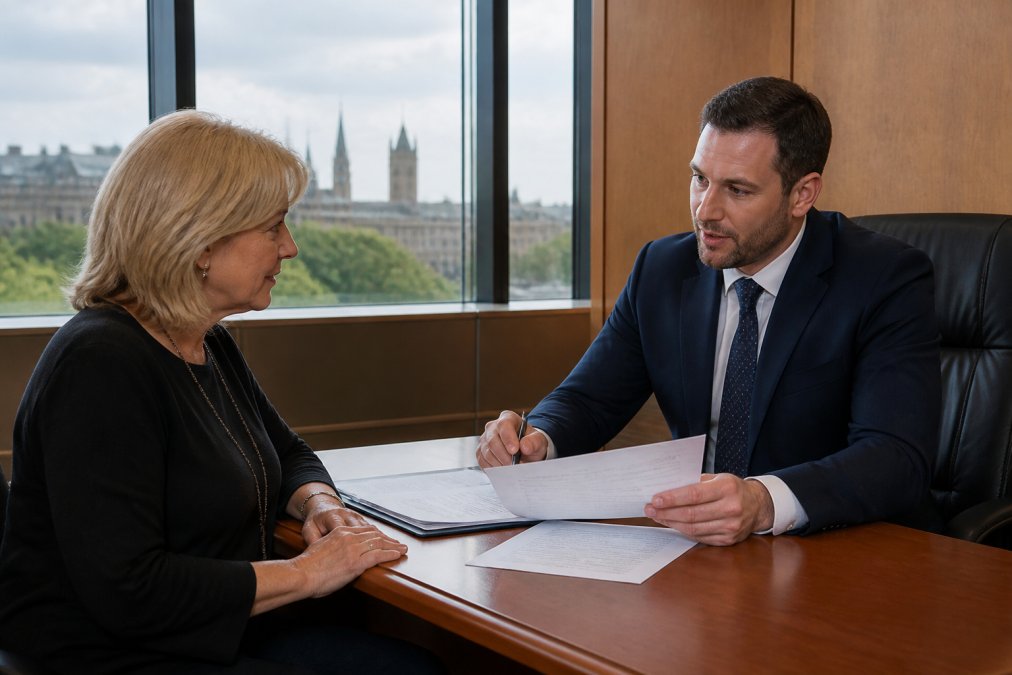 Professional solicitor and client sitting at wooden desk reviewing personal injury claim documents together in modern Glasgow law office with natural window lighting
Initial Assessment and Legal Advice
Your claim begins with a thorough initial assessment where a solicitor evaluates whether you have a viable case. This involves discussing the circumstances of your injury, identifying who might be liable, and understanding the strength of evidence available. The solicitor will explain the legal concept of liability, essentially, whether another party's negligence or breach of duty caused your injury.
During this stage, the solicitor gathers preliminary information about your accident. For workplace injuries, they'll ask about safety procedures, training, and whether proper precautions were in place. For slip and trip accidents, they'll investigate the conditions that led to your fall and whether the property owner had reasonable duty to prevent such incidents. This assessment is crucial because it determines whether pursuing the claim makes financial sense, solicitors under no win no fee arrangements won't pursue cases they assess as unlikely to succeed.
The solicitor will also discuss the likely compensation range based on similar cases. This gives you realistic expectations about potential outcomes rather than inflated promises. They'll explain the distinction between general damages (compensation for pain, suffering, and loss of amenity) and special damages (quantifiable costs like medical expenses and lost wages).
Gathering Evidence and Medical Reports
Once you've instructed a solicitor, the evidence-gathering phase begins in earnest. This typically involves obtaining medical records, accident reports, witness statements, and photographic evidence of the accident scene. For workplace injuries, the solicitor will request COSHH assessments, risk assessments, and accident book entries. For road traffic accidents, they'll obtain police reports and dashcam footage where available.
Medical reports form the backbone of your claim's value. The solicitor arranges for you to be examined by an independent medical expert who provides a detailed report on your injuries, prognosis, and impact on daily life. This expert report carries significant weight in settlement negotiations, it's not your opinion about your injuries, but a qualified professional's assessment. The cost of these medical reports is typically covered as a disbursement, meaning you don't pay it upfront; it's recovered from your compensation if you win.
Gathering evidence can take several weeks depending on how quickly medical professionals respond and how complex your injuries are. The solicitor manages this process, chasing responses and ensuring nothing delays your claim unnecessarily.
Negotiation and Settlement
With evidence compiled, the solicitor sends a detailed claim letter to the defendant's insurer. This letter outlines the facts, establishes liability, and quantifies your losses with supporting evidence. The insurer then has a period to respond, typically they'll make a counter-offer if they accept liability but dispute the amount.
Most personal injury claims settle during this negotiation phase without reaching court. The solicitor will advise whether settlement offers are reasonable or whether rejecting them and pursuing litigation makes sense. This negotiation requires skill and experience, solicitors who understand Scottish court precedents and typical award ranges can often secure better settlements than claimants negotiating alone.
If settlement seems unlikely, the solicitor will advise on the next steps, which may include formal court proceedings. However, the vast majority of claims resolve through negotiated settlement, meaning you receive compensation without the stress and expense of a trial.
How Long Do Personal Injury Claims Take in Scotland? ⏱️
Personal injury claims in Scotland typically take between 6 months and 2 years from initial instruction to final settlement, though timescales vary significantly depending on claim complexity and whether court proceedings become necessary.
Straightforward claims with clear liability and minor injuries often settle within 6-12 months. The insurer accepts responsibility quickly, medical evidence is gathered efficiently, and negotiation proceeds smoothly. These are the ideal scenarios where everyone's interests align in reaching swift resolution.
More complex claims, those involving serious injuries, disputed liability, or multiple defendants, commonly take 18-24 months. Gathering comprehensive medical evidence for serious injuries takes longer. Disputes about liability mean more detailed investigation and potentially expert reports on causation. Multiple defendants mean coordinating with several insurers simultaneously.
The Scottish personal injury claim process includes mandatory pre-litigation steps designed to encourage settlement before court involvement. This means most claims never reach trial stage, which would extend timescales considerably. However, if your claim does proceed to litigation, you should anticipate additional 12-18 months for court procedures.
Several factors influence how quickly your specific claim progresses. Medical professionals' responsiveness directly impacts timescales, if consultants are slow providing reports, your claim slows. The complexity of establishing liability matters too. Clear-cut cases where negligence is obvious move faster than those requiring detailed investigation. The defendant's insurer's approach also influences speed; some insurers prioritise settling claims efficiently whilst others contest everything.
What Happens If Your Claim Is Unsuccessful? ❌
If your personal injury claim is unsuccessful, you pay nothing under a no win no fee arrangement. This is the core protection these agreements provide, you face no financial penalty for losing. Your solicitor absorbs the cost of their time and expertise. This fundamental principle removes the financial risk that would otherwise prevent people pursuing legitimate claims.
However, "unsuccessful" requires clarification. If your solicitor assesses your case as non-viable from the outset, they won't accept your instructions under no win no fee terms. They'll explain that pursuing the claim would be unlikely to succeed and therefore not worth either party's time. This protects you from wasting months on a hopeless case.
If your claim proceeds but ultimately fails, perhaps because a court finds the defendant not liable despite your injuries being genuine, then you pay no solicitor fees. However, there's an important distinction regarding disbursements. Disbursements are third-party costs like medical reports, court fees, and expert witness fees. Under most no win no fee arrangements, you're responsible for disbursements even if you lose, though many solicitors arrange After the Event insurance to cover these costs.
After the Event insurance is crucial to understand. This insurance protects you against liability for the defendant's legal costs if you lose. Scottish courts can award costs against the losing party, meaning the defendant's solicitor fees could be recoverable from you. ATE insurance covers this exposure, so you're protected even in defeat. The cost of ATE insurance is typically recovered from your compensation if you win, meaning it doesn't come out of your pocket upfront.
Understanding Success Fees and Costs 💷
 Close-up of hands holding pen and reviewing legal document with calculator and cost breakdown sheet on mahogany desk in professional office setting
What You Actually Pay Under No Win No Fee
Under a no win no fee arrangement, you pay nothing if you lose. If you win, your solicitor receives a success fee, a percentage uplift on their standard hourly rate. This success fee compensates them for the risk they've taken in pursuing your claim without upfront payment.
The success fee structure in Scotland is regulated to protect claimants. Solicitors cannot charge unlimited percentages; there are practical limits to what constitutes reasonable success fees. Many firms in Scotland charge success fees, though these figures aren't fixed by law, they're negotiated between you and your solicitor.
Scotland Claims Injury Lawyers operates on a transparent basis regarding success fees. The firm's approach differs significantly from firms that charge a success fee. This transparency about fee structures from the outset means no surprises when settlement arrives.
Your solicitor will clearly explain the success fee percentage before you instruct them. This isn't hidden in small print, it's a fundamental part of the retainer agreement. You should understand exactly what percentage will be deducted from your compensation before agreeing to proceed.
After the Event Insurance and Disbursements
After the Event insurance protects you against paying the defendant's legal costs if you lose. This is separate from your solicitor's fees but equally important. If you lose without ATE insurance, Scottish courts could order you to pay the defendant's solicitor fees, potentially running into thousands of pounds. ATE insurance prevents this catastrophic outcome.
The cost of ATE insurance is typically a few hundred pounds depending on claim complexity and value. Crucially, you don't pay this upfront. Your solicitor arranges it, and the cost is recovered from your compensation if you win. If you lose, the insurance covers the defendant's costs, protecting you from financial disaster.
Get Started Today →
Disbursements are the third-party costs mentioned earlier, medical reports, court fees, expert witness fees, and similar expenses. These are genuine costs incurred by your solicitor on your behalf. Under no win no fee arrangements, you're typically responsible for these even if you lose, though ATE insurance often covers them. Again, if you win, these disbursements are recovered from your compensation.
Understanding this distinction is vital. Your solicitor's time is free if you lose. Third-party costs and ATE insurance may not be. However, good solicitors will discuss these potential costs upfront and often arrange insurance to protect you. Scotland Claims Injury Lawyers' approach emphasises transparency about all potential costs before you proceed.
Types of Personal Injury Claims Covered 🔍
The Scottish personal injury claim framework covers a broad range of injuries resulting from negligence or breach of duty. Road traffic accidents represent the largest category, whether you're a driver, passenger, cyclist, or pedestrian injured through another road user's negligence. These claims cover injuries from minor whiplash to severe traumatic brain injuries.
Workplace injuries form another substantial category. If you've been injured at work through your employer's failure to provide safe systems of work, inadequate training, faulty equipment, or breach of health and safety regulations, you can claim. This includes injuries from machinery, chemical exposure, falls from height, and repetitive strain injuries. Importantly, you can claim even if you were partly at fault, Scottish law allows claims where you're partially responsible as long as you weren't more than 50% at fault.
Slip and trip accidents on someone else's property are common personal injury claims. If you've fallen due to a hazard the property owner should have identified and remedied, wet floors, broken pavements, poor lighting, or obstacles, you can claim. This applies to shops, restaurants, offices, or private properties where the owner had duty to maintain safe conditions.
Professional negligence claims arise when professionals, solicitors, accountants, surveyors, architects, fail to exercise reasonable care in their work, causing you financial loss. Medical negligence claims cover situations where healthcare providers breach the duty of care, though these require careful assessment of whether treatment fell below accepted standards.
Public liability claims cover injuries caused by council negligence, such as poorly maintained pavements or dangerous public spaces. Assault and personal violence claims are possible where someone else's deliberate actions cause injury, though these require careful legal assessment.
Why Choose a Specialist Solicitor for No Win No Fee? ⭐
Specialist personal injury solicitors in Glasgow and across Scotland bring expertise that significantly improves your claim's outcome. They understand Scottish court precedents, know how sheriffs and judges typically award damages for specific injuries, and have established relationships with medical experts and insurers. This expertise translates into better settlements and faster resolution.
A specialist solicitor knows the difference between how Scottish courts value claims versus English courts, damages awards can differ significantly. They understand the specific procedural requirements of Scottish litigation and the pre-action protocol that applies in Scotland. This local knowledge prevents costly mistakes and ensures your claim follows the most effective pathway.
Specialist firms also have established networks with medical experts, barristers, and other professionals needed for complex claims. They know which consultants provide thorough reports efficiently, which barristers are most effective in particular injury types, and which insurers are most likely to settle reasonably. These relationships accelerate your claim.
Experience with no win no fee arrangements specifically matters too. Solicitors who regularly work on this basis understand how to structure claims cost-effectively, knowing which expenses are essential and which can be avoided. They've refined their processes to maximise efficiency without compromising quality.
Scotland Claims Injury Lawyers operates as a specialist firm focused exclusively on personal injury claims within Scotland. This specialisation means the team understands Scottish legal nuances, has established relationships with local medical experts and courts, and can advise confidently on realistic timescales and compensation ranges specific to your circumstances.
Common Concerns About No Win No Fee Arrangements 🤔
Will Your Solicitor Push Hard Without Upfront Payment?
A legitimate concern, if solicitors aren't paid upfront, what incentivises them to work hard on your case? The answer lies in the success fee structure. Your solicitor only profits if you win and receive compensation. This creates direct alignment between your interests and theirs. If they don't push hard and lose, they earn nothing. If they secure a better settlement, they earn a larger success fee. The financial incentive actually encourages thorough work.
However, this also means solicitors are selective about which cases they accept. They won't pursue cases they assess as unlikely to succeed because doing so would waste their time earning nothing. This selectivity is actually protective for you, it means if a solicitor accepts your case, they genuinely believe it's winnable.
The no win no fee model has operated successfully in Scotland for years, proving that solicitors can work effectively without upfront payment. Professional standards and the Law Society of Scotland's oversight ensure solicitors meet their obligations regardless of payment structure. They're bound by professional conduct rules that require them to act in clients' interests.
Can You Switch Solicitors Mid-Claim?
Yes, you can switch solicitors during your claim, though timing matters. Early in the process, switching is straightforward, your new solicitor simply takes over. The first solicitor may claim costs for work completed, which your new solicitor can dispute if they believe the work was unnecessary or excessive.
Switching mid-claim after substantial work has been done is more complicated. The original solicitor may claim a proportion of the success fee for work they completed, even if another solicitor finalises the claim. This is why choosing the right solicitor initially is important, it avoids the disruption and potential cost implications of switching.
If you're dissatisfied with your solicitor's progress or approach, you have every right to seek alternative representation. However, discuss your concerns with them first. Many perceived delays are actually normal claim progression, gathering medical evidence genuinely takes time. If your solicitor genuinely isn't performing, switching is possible, but do so early rather than after months of work.
Time Limits for Making a Claim in Scotland ⏰
In Scotland, the time limit for making a personal injury claim is three years from the date of injury. This is the prescriptive period within which you must raise legal proceedings if settlement negotiations haven't concluded. Missing this deadline means losing your right to claim entirely, regardless of the claim's merit.
However, the three-year period doesn't mean you have three years to instruct a solicitor casually. Practically speaking, you should contact a solicitor within months of your injury. Early instruction allows time for medical evidence gathering, investigation, and settlement negotiations before the three-year deadline approaches. Leaving it until year three creates unnecessary pressure and limits your solicitor's ability to investigate thoroughly.
For claims involving minors, the three-year period doesn't begin until they turn 16. This means a child injured at age 10 has until age 19 to raise proceedings. However, parents should still instruct solicitors promptly to preserve evidence and begin the claims process.
There are limited exceptions to the three-year rule. If you didn't know you had a claim, perhaps because the injury's connection to negligence wasn't immediately obvious, the period might be extended. However, relying on these exceptions is risky. The safest approach is instructing a solicitor promptly after injury.
Pursuing a personal injury claim in Scotland shouldn't mean facing financial risk or uncertainty about costs. A no win no fee arrangement removes these barriers, allowing you to access specialist legal representation based on the strength of your case rather than your ability to pay upfront. The process, from initial assessment through evidence gathering, negotiation, and potential settlement, follows a structured pathway designed to maximise your compensation fairly and efficiently.
Scotland Claims Injury Lawyers specialises in exactly this type of claim across Glasgow and throughout Scotland. The firm's no win no fee basis means you retain every penny of your compensation when you win, with transparent fee structures explained from your first consultation. Get in touch for a free initial assessment of your claim, and discover what compensation you might recover without any financial risk.
Frequently Asked Questions
Do I have to pay anything if my no win no fee claim is unsuccessful?
No. Under a genuine No Win No Fee agreement in Scotland, you pay nothing if your claim fails. Your solicitor covers the risk, not you. However, you may be liable for the other party's legal costs if they win, which is why After the Event insurance is typically put in place to protect you. This insurance covers those costs if your claim is lost, so you remain protected financially.
How does a success fee work in Scottish personal injury claims?
A success fee is a percentage of your compensation that your solicitor takes only if you win. This replaces upfront hourly charges. The fee is calculated as a percentage of your damages award. Scotland Claims Injury Lawyers does not charge a success fee—you keep 100% of your compensation. Many other firms charge around 20% of your settlement, which significantly reduces what you receive. Always ask your solicitor about their exact fee structure before proceeding.
What types of personal injury claims are covered under no win no fee in Scotland?
No Win No Fee typically covers road traffic accidents, workplace injuries, slip and trip accidents, and professional negligence claims. These are all claims based on someone else's liability. The key requirement is that there must be a clear defendant whose negligence or breach caused your injury. Your solicitor will assess whether your specific circumstances meet these criteria during the initial consultation, and they'll be honest about the strength of your case.
What is After the Event insurance and why do I need it?
After the Event (ATE) insurance protects you financially if your claim is unsuccessful. It covers the other party's legal costs that you'd otherwise have to pay. Under a No Win No Fee arrangement, ATE insurance is usually arranged by your solicitor and paid from your compensation if you win—you don't pay upfront. This means you have complete financial protection: if you lose, ATE pays their costs; if you win, your compensation covers the insurance premium. It's a crucial part of the no win no fee model.