Legal consultation workflow for personal injury claims

TL;DR:
- Scottish personal injury claims follow a structured, no-risk consultation process from first contact to case completion.
- Preparation of detailed accident, medical, and financial information streamlines claim assessment and speeds up progress.
- Clear communication and transparent workflow are essential for client confidence and achieving fair settlements.
Not knowing where to start is one of the biggest reasons people delay pursuing compensation after an injury in Scotland. You may have a genuine claim, but without a clear picture of how the process works, it is easy to assume it will be complicated, costly, or simply not worth the effort. The good news is that personal injury consultations in Scotland follow a structured, repeatable workflow that removes most of that uncertainty. This guide walks you through every stage, from your very first contact with a solicitor to verifying your claim’s progress, so you can move forward with confidence and no financial risk.
Table of Contents
Key Takeaways
| Point |
Details |
| Clear workflow reduces stress |
A defined process makes it easier and less stressful to pursue your injury claim. |
| Preparation improves results |
Having all your documents ready saves time and increases your chance of success. |
| Risk-free consultations are standard |
Most Scottish solicitors offer a free or no win, no fee consultation for personal injury claims. |
| Ongoing updates keep you in control |
Solicitors should provide regular updates, letting you monitor progress and stay informed. |
Understanding the legal consultation workflow
A legal consultation workflow is simply the organised sequence of steps that takes you from initial enquiry through to formal legal representation. Think of it as a roadmap. Without it, both you and your solicitor are navigating blind. With it, every party knows what to expect and when.
In Scottish personal injury cases, free legal advice for injury claims is commonly available, which means the first step of the workflow costs you nothing. This single fact removes the financial barrier that stops many people from ever picking up the phone.
The people involved in your workflow typically include:
- You, the client: Providing the facts, documents, and instructions
- The solicitor: Assessing the legal merits of your claim and advising on strategy
- Admin and intake staff: Managing communications, scheduling, and paperwork
- Medical experts: Supplying independent evidence of your injuries
Law firms that invest in optimising client intake consistently report faster case progression and higher client satisfaction. Structure is not just convenient; it genuinely improves outcomes.
Here is a simplified overview of what the workflow typically looks like:
| Stage |
What happens |
Who leads it |
| First contact |
Enquiry submitted online or by phone |
Client |
| Initial assessment |
Basic eligibility check |
Admin/solicitor |
| Formal consultation |
Full case review and legal advice |
Solicitor |
| Instruction to act |
You agree for the firm to represent you |
Both parties |
| Claim progression |
Evidence gathering and negotiations |
Solicitor |
A structured process like this is especially valuable under a no win, no fee arrangement, where transparency about each stage builds the trust needed to move forward confidently.
Preparing for your consultation: What you need
With an understanding of the workflow, let’s focus on what you should gather ahead of your first legal consultation. Preparation is not just helpful; it is often the difference between a quick, clear assessment and a drawn-out back-and-forth.
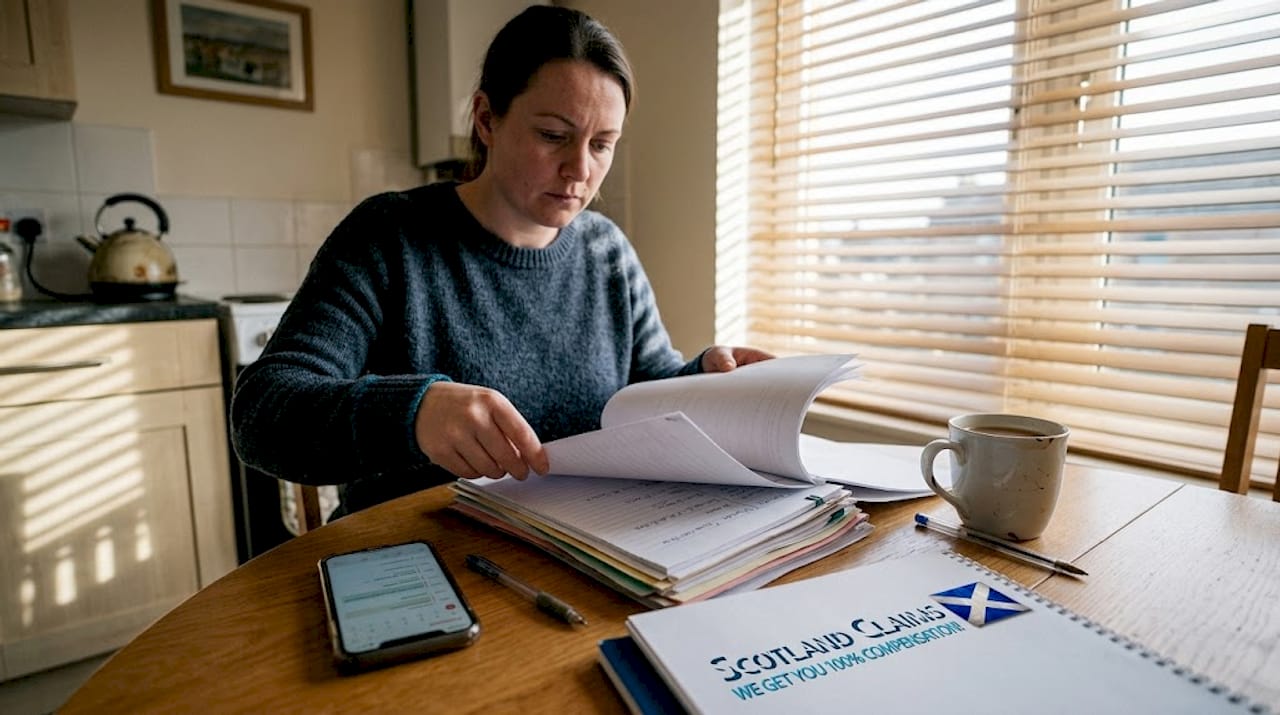
Having the right information at hand can streamline your claim process and save significant time. Solicitors can assess your case far more accurately when you arrive with complete details rather than fragments.
Here is what to pull together before your appointment:
- Accident details: Date, time, location, and a written account of exactly what happened
- Medical records: GP notes, hospital discharge letters, or specialist reports
- Photographs: Images of injuries, the scene, or any hazard that caused the accident
- Witness information: Names and contact details of anyone who saw the incident
- Insurance correspondence: Any letters or emails from insurers on either side
- Proof of financial loss: Payslips, sick notes, or receipts for out-of-pocket costs
Full transparency with your solicitor is vital. Holding back information, even details you think are unhelpful, can weaken your case later. Solicitors work better when they see the complete picture, including the parts that seem less favourable.
One point that catches many claimants off guard is time limits. In Scotland, you generally have three years from the date of the accident (or the date you became aware of your injury) to raise a claim. Missing this deadline almost always ends your chances of compensation.
Pro Tip: Write a simple timeline of events before your consultation. Even a rough chronological list helps your solicitor identify key legal moments and assess liability more quickly.
Step-by-step process for a legal consultation
Once you have everything prepared, here is exactly what will happen during your legal consultation.
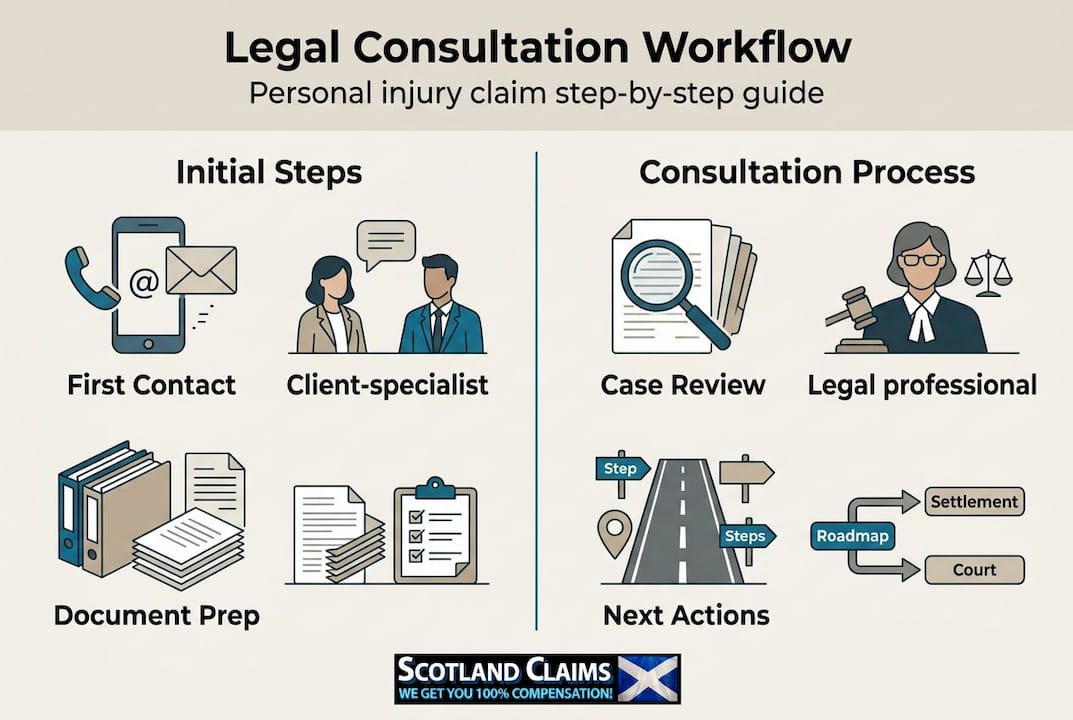
Most Scottish injury lawyers offer a systematic, no-obligation consultation process, with finding free injury lawyer consultations now easier than ever thanks to online platforms. Law firms increasingly use digital tools and client engagement best practices to make each touchpoint smooth and accessible, including AI chatbots for law firms that handle out-of-hours enquiries instantly.
Here is the step-by-step sequence you can expect:
- Submit your initial enquiry via an online form, phone call, or callback request. Keep it brief; just the basics of what happened and when.
- Receive a pre-consultation call or questionnaire. An admin team member or junior solicitor gathers key facts to ensure the formal session is productive.
- Attend the formal consultation. This is where a qualified solicitor reviews your case in full. Expect questions about liability (who was at fault), causation (did the fault directly cause your injury), and your losses.
- Receive an honest assessment. A good solicitor will tell you clearly whether your claim has merit, what it might be worth, and what the likely challenges are.
- Discuss the no win, no fee agreement. If you choose to proceed, the solicitor explains the Conditional Fee Agreement (CFA) in plain terms before you sign anything.
- Formally instruct the firm. Once you agree, the solicitor begins building your case file and gathering evidence.
“The goal of any good legal consultation is not to impress the client with legal jargon; it is to leave them feeling informed, respected, and clear about their next step.”
Pro Tip: Prepare two or three specific questions before your consultation. Asking about the solicitor’s experience with similar cases, typical timelines, and how often they communicate gives you a solid basis for deciding whether to proceed.
Verifying progress and outcomes in your claim
After your consultation, staying informed and proactive helps you secure the best outcome. The relationship with your solicitor does not end when you sign the agreement; that is actually when it begins.
Reliable communication and transparent updates are markers of a well-managed personal injury claim. Law firms that use structured lead nurturing for law firms approaches tend to communicate proactively rather than waiting for clients to chase them.
Here is how good solicitors keep you in the loop:
- Regular phone or email updates at agreed intervals
- Access to a client portal where you can check case status at any time
- Clear explanations whenever a significant development occurs
- Prompt responses to your queries, typically within one to two working days
Use this comparison to spot the difference between solid and poor legal communication:
| Quality communication |
Poor communication |
| Updates every few weeks without prompting |
You only hear news when you call |
| Clear explanation of next steps |
Vague answers about timelines |
| Prompt replies to emails or calls |
Days pass with no response |
| Written confirmation of key decisions |
Verbal-only updates with no record |
If you spot the warning signs in the right-hand column, do not simply accept it. First, contact your solicitor directly and ask for a written progress summary. If there is no improvement, you have the right to request a new solicitor within the same firm, or transfer your case to a different firm entirely. No win, no fee arrangements do not lock you in forever.
Why a transparent workflow is your greatest asset
Stepping back, here is a perspective that most articles on this topic miss entirely.
Many claimants spend considerable time comparing solicitor reputation or chasing firms with the flashiest advertising. What they overlook is that the quality of a firm’s internal workflow matters far more to your day-to-day experience. A brilliant solicitor who communicates poorly will leave you frustrated, confused, and anxious for months. A methodical team with a clear, structured process will keep you calm and confident, even when the case hits obstacles.
From everything we have seen in insights on claim management across Scottish personal injury cases, the claims that reach fair settlements most efficiently are almost always the ones where the client understood the process from day one. Clarity breeds patience, and patience gives solicitors the space to negotiate properly rather than rushing to settle.
Our honest advice: before you choose a solicitor, ask them directly to describe their consultation workflow. The quality of that answer tells you everything you need to know about how they will handle your claim.
Start your risk-free personal injury claim today
Ready to put these steps into action? Here is the simplest next move for personal injury claimants in Scotland.
At Scotland Claims, we connect you with local injury lawyers who follow a clear, structured consultation workflow from the very first contact. There are no upfront costs, no confusing jargon, and absolutely no fees unless your claim succeeds. If you want a quick sense of what your claim could be worth before you even speak to anyone, use our tool to estimate your compensation in minutes. Whether you were injured in a road accident, at work, or in a public place, our team is ready to guide you through every stage with full transparency.
Frequently asked questions
What is a legal consultation workflow in Scotland?
A legal consultation workflow sets out the step-by-step process for meeting with a solicitor about your injury claim, from enquiry to case assessment and advice. Free consultations help clarify this legal process so you know exactly where you stand before committing to anything.
What documents should I prepare for a personal injury consultation?
Prepare accident details, medical records, witness statements, and any insurance correspondence for the most effective consultation. Preparation with documents speeds up the claim process and allows your solicitor to give a more accurate assessment from the outset.
Are initial legal consultations truly risk-free?
Most Scottish personal injury lawyers offer a no win, no fee or free consultation, so there is no cost unless you proceed with a case and win. No win, no fee consultations reduce risk for claimants significantly, making it straightforward to explore your options without financial pressure.
How do I know if my claim is progressing properly?
You should receive regular updates from your solicitor and have clear next steps explained at each stage of your claim. Transparent communication is key to good legal service, and if you are not receiving it, you are fully entitled to ask for a written progress report.
Recommended