How to request a callback for your injury claim in Scotland

TL;DR:
- Requesting a callback offers faster, more personalized legal guidance for Scottish injury claims.
- Preparing detailed information and questions ensures a productive, efficient initial consultation.
- Callback requests empower claimants by providing control, reducing delays, and eliminating costs.
Suffering a personal injury is stressful enough without the added frustration of waiting days to speak to someone who can actually help. Many injured people across Scotland find themselves stuck in a loop of unanswered emails, lengthy hold times, and vague online forms that feel like shouting into the void. Requesting a callback cuts through all of that. It puts you in control of the timing, keeps the process moving, and connects you with a specialist who can give you real, personalised guidance on your compensation claim from the very first conversation.
Table of Contents
Key Takeaways
| Point |
Details |
| Prepare all claim details |
Having your information ready before a callback makes the process faster and more productive. |
| Use the right channels |
Request callbacks through official online forms or phone routes to ensure a quick response. |
| Avoid common mistakes |
Double-check your details and be clear about your case to prevent unnecessary delays. |
| Follow up promptly |
Monitor emails or calls after submitting a request so you don’t miss your callback slot. |
Understanding callback requests for claims
A callback request is exactly what it sounds like: you submit your contact details and a brief summary of your situation, and a legal specialist rings you back at a time that suits you. It is a simple but powerful tool, and in the context of personal injury claims, it can genuinely change how quickly and smoothly your case gets moving.
Traditional routes, such as phoning a firm directly or sending an email and hoping for the best, have real drawbacks. Cold calls often result in being transferred between departments, repeating yourself multiple times, and sometimes speaking to someone who is not best placed to advise you. Emails can sit unread for days. A callback request, by contrast, creates a scheduled, documented touchpoint where you know a specialist will be ready to discuss your specific case.
The role of solicitors in guiding claimants through Scotland’s legal system is substantial, which is precisely why the first point of contact matters so much. Getting that initial conversation right sets the tone for everything that follows.
Why callback requests work better for claimants
- You choose a time when you are calm, free, and ready to talk
- Your details are documented before the call, so less time is wasted on introductions
- You avoid being put on hold or transferred mid-enquiry
- A record of your request exists, which can help with case continuity
- You reduce the risk of miscommunication that can happen in rushed or unexpected calls
“The first conversation with a legal professional after an injury is often the most important. Being prepared and in control of when that happens can make all the difference to the quality of advice you receive and the confidence you feel going forward.”
Here is a quick comparison between callback requests and traditional contact methods:
| Method |
Flexibility |
Wait time |
Documentation |
Preparation possible? |
| Callback request |
High |
Low to moderate |
Yes |
Yes |
| Direct phone call |
Low |
Often high |
Minimal |
Rarely |
| Email enquiry |
Moderate |
Often high |
Yes |
Yes |
| Walk-in or office visit |
Low |
Variable |
Minimal |
Possible |
The callback request clearly offers the best balance of speed, convenience, and quality. For anyone navigating the uncertainty of a personal injury claim in Scotland, that balance matters enormously.
Preparing to request a callback: what you need
Understanding what a callback involves is only the start. Being well-prepared can make all the difference to the quality of advice you receive during that first conversation. Think of it like attending a medical appointment: the more clearly you can describe your symptoms, the more targeted and useful the guidance becomes.
The legal consultation workflow for personal injury claims in Scotland typically begins the moment you submit your callback request. What you include in that initial request shapes how efficiently the specialist can prepare for your call.
Information to have ready before you request a callback
| Category |
Details to gather |
| Personal information |
Full name, best contact number, email address |
| Incident details |
Date, time, and location of the injury |
| Injury description |
Type of injury and current medical status |
| Evidence available |
Photos, witness names, incident reports |
| Medical records |
GP or hospital visit dates, diagnosis details |
| Insurance information |
Employer or third-party insurance policy numbers |
| Previous correspondence |
Any letters, emails, or responses from insurers or employers |
Having these details to hand before you submit your request means the specialist who calls you back is already briefed and ready to give meaningful advice rather than spending the first ten minutes asking basic questions.
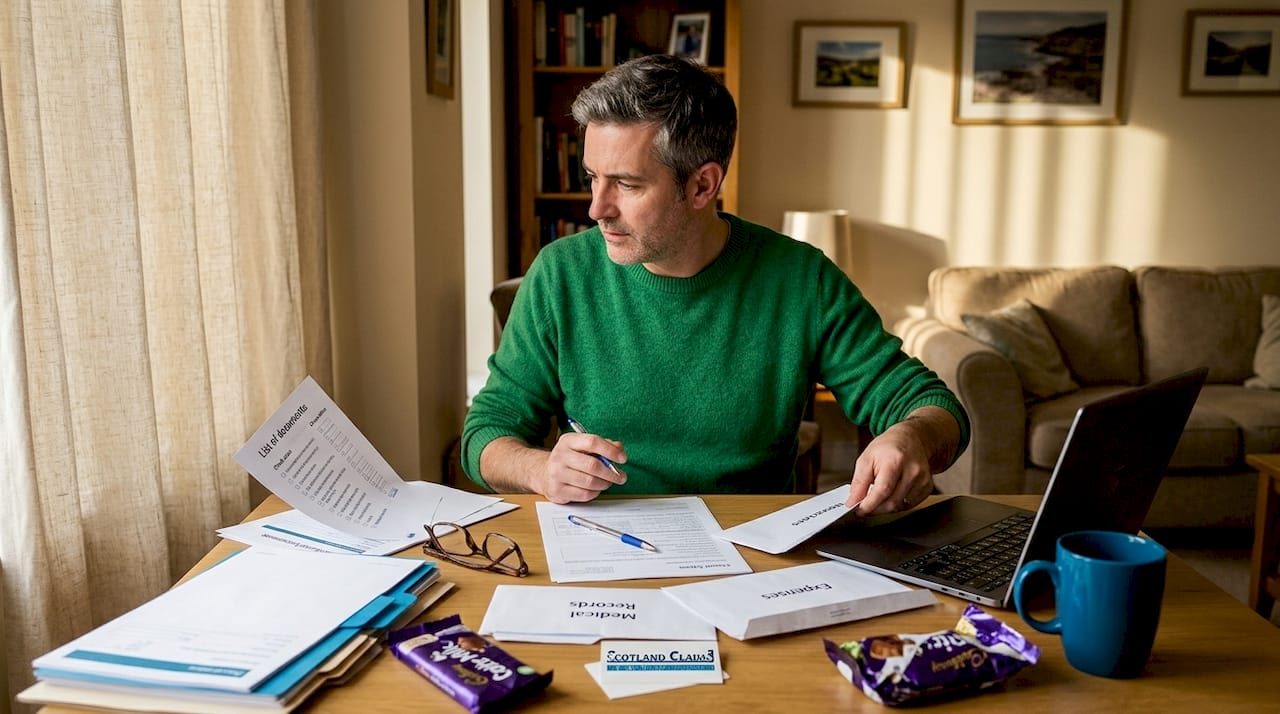
It is also worth consulting a compensation guide beforehand so you arrive at the call with a general sense of what your claim might involve. This gives you a foundation for asking the right questions and understanding the answers you receive.
Key details to include in your callback request form
- A clear, factual description of how the injury occurred
- The date the incident happened and any relevant deadlines you are aware of
- Whether you have already reported the incident to an employer or authority
- Any financial losses you have experienced as a result, such as lost wages or medical expenses
- Your preferred callback time and day, including any days or times you are unavailable
Pro Tip: Write a short list of three to five questions you want answered during the callback. This keeps the conversation focused and ensures you do not forget anything important when the specialist calls. Questions like “Am I eligible to claim?”, “How long will the process take?”, and “What compensation could I receive?” are excellent starting points.
Step-by-step: how to request a callback for your claim
Once equipped with your essential information, you are ready to take practical steps for your callback request. The process itself is straightforward, but following it carefully ensures you get a swift response and the most useful conversation possible.
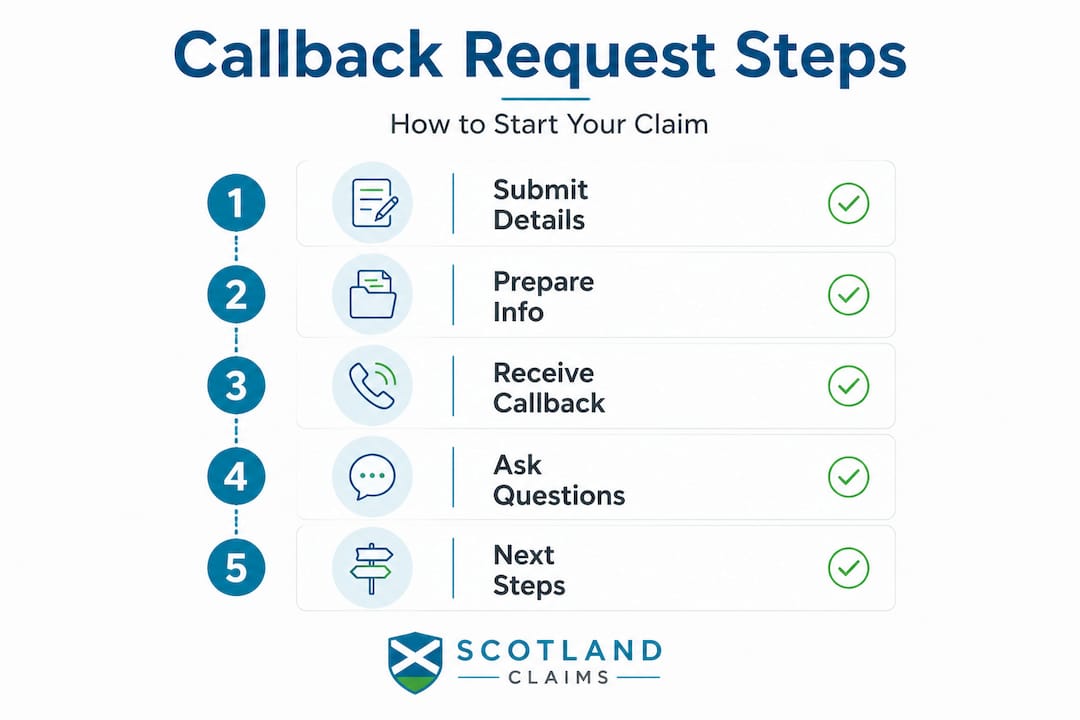
Here is the step-by-step process for submitting a callback request:
-
Visit the callback request page. Go to the Scotland Claims website and locate the callback or contact form. Most injury claim websites display this prominently on the homepage or in the navigation menu.
-
Enter your personal details. Provide your full name, the best phone number to reach you on, and your email address. Double-check the phone number before submitting. A single digit error here means the specialist cannot reach you at all.
-
Summarise your injury and incident. Use the description field to briefly explain what happened, when it occurred, and what injuries you sustained. Keep it factual and concise. Two to four sentences is usually sufficient at this stage.
-
Indicate your preferred callback time. Most forms allow you to select a preferred date and time window. Choose a time when you will be in a quiet place, free from distractions, with your notes to hand.
-
Review and submit. Before submitting, read through your entries carefully. Correct any errors, particularly in your contact number and email, then submit the form.
-
Wait for a confirmation message. A confirmation email or on-screen message should appear immediately after submission. This confirms your request has been received and gives you a reference or summary of what you submitted.
-
Prepare for the call. In the time between submitting and receiving your callback, gather any supporting documents, review your notes, and write down your questions.
According to the steps after making a claim, most Scottish claimants typically receive a callback within 24 to 48 hours of submitting their request. This is considerably faster than waiting for a formal appointment slot or chasing an email thread.
Stat to note: The majority of personal injury callback requests submitted during business hours in Scotland are followed up on the same working day, making this one of the fastest ways to get specialist legal advice without any upfront commitment.
Pro Tip: If your injury occurred recently, submit your callback request as soon as possible. Personal injury claims in Scotland are generally subject to a three-year time limit from the date of the incident, but acting quickly means evidence is fresher, witnesses remember more, and your case is easier to build.
Avoiding common mistakes and what happens next
Now that you have sent your callback request, it is important to know what to avoid and what comes next. Even a well-intentioned request can go wrong if certain details are overlooked, and a missed step early on can slow everything down considerably.
Common mistakes claimants make when requesting callbacks
- Providing an incorrect or frequently missed phone number
- Leaving the incident description vague or incomplete
- Choosing a callback time when they know they will be busy or unavailable
- Forgetting to include information about previous correspondence with insurers
- Submitting a request without reviewing it, leading to typos in key fields
- Failing to mention relevant medical treatment already received
Each of these errors creates friction. A missing digit in a phone number means the specialist cannot reach you. A vague case summary means the call starts from scratch rather than moving quickly into actionable advice. These are avoidable problems, and the fix is simply taking an extra two minutes before pressing submit.
The claimant representatives guide for Scotland outlines how solicitors and case handlers prepare for initial consultations, and it is clear that the more detail you provide upfront, the more productive that first call will be.
What happens after you submit your request
Once your callback request is received, here is the typical sequence of events:
- A case handler reviews your submission and assigns it to an appropriate specialist
- You receive a confirmation (usually by email) acknowledging your request
- The specialist reviews your case summary before the call
- You receive your callback at or near your chosen time
- During the call, your eligibility is assessed, key facts are confirmed, and next steps are outlined
- If your case is taken forward, you will receive details of the no win no fee arrangement in writing
“Keeping a simple written note of what you submitted, including the date, time, and key details in your request, gives you a reliable reference point if any confusion arises later in the process.”
Pro Tip: After submitting your request, create a dedicated folder (on your phone or computer, or even a physical folder) for all your claim-related documents. Store your confirmation email, any medical letters, photos of injuries, and correspondence with your employer or insurers there. This habit saves significant time further down the line.
A fresh perspective: why callbacks empower Scottish claimants
The practical steps above are important, but there is a bigger point worth making here. Many people across Scotland hesitate to contact a personal injury solicitor because they assume the process will be formal, intimidating, or costly. They imagine a stern legal office, complex paperwork, and fees they cannot afford. The callback request model quietly dismantles all of those assumptions.
When you request a callback, you are not walking into a solicitor’s office uninvited. You are not committing to anything. You are simply asking someone knowledgeable to ring you at a convenient time. That shift in dynamic is significant. It gives you control over the conversation before it even begins, and it removes much of the power imbalance that has historically made legal advice feel inaccessible to ordinary people.
There is also a widespread misconception among injured Scots that free legal advice is somehow inferior or comes with hidden obligations. In reality, that first callback is genuinely free and genuinely confidential. The solicitors’ impact on claims is well documented, and specialists in this field are motivated to give honest, accurate assessments because their success depends on taking on cases they can win.
Here is the insight that most articles miss: callbacks do not delay the claims process. They actually accelerate it. When a specialist knows your situation before picking up the phone, they can move from introduction to advice within minutes. Compare that to a walk-in enquiry or a cold email exchange that takes days to arrive at the same point. The callback model was designed for speed, and it delivers.
If you have been putting off making contact because it feels like too large a step, reframe it. Requesting a callback is one of the smallest possible actions you can take. It costs nothing, obligates you to nothing, and could set your entire recovery, financial and physical, on a much better course.
Connect with Scotland’s injury claim specialists today
If you are ready to get the support you deserve, here is how to make the next steps simple and stress-free. Scotland Claims connects injured people across Scotland with experienced injury lawyers Scotland who understand the local legal landscape and are focused entirely on getting you the compensation you are entitled to. The process begins with a single callback request, and from there, a specialist handles the complexity so you do not have to. With no win no fee claims available, there are no upfront costs and no financial risk. If your claim is unsuccessful, you pay nothing. Getting expert advice has never been more accessible or more straightforward.
Frequently asked questions
How long does it take to receive a callback after making a request?
Most claimants in Scotland receive a callback within 24 to 48 hours of submitting their request, with many hearing back on the same working day.
What if I miss my scheduled callback from the legal team?
If you miss your callback, you can reschedule by contacting the firm directly or submitting a fresh request, and most providers accommodate this promptly as outlined in the claims process steps.
Do I need to provide medical documents when requesting a callback?
You do not need to submit medical documents at the callback request stage, but having key details ready will help the legal team understand your situation quickly, as explained in the consultation workflow guide.
Can I request a callback outside normal business hours?
Some Scottish firms offer flexible callback slots, including evenings or weekends, to suit claimant schedules, so it is worth checking available time options when you submit your initial contact details.
What should I ask during my callback?
Prepare questions about your eligibility to claim, the likely compensation amount, the timeline for your specific type of injury, and how the no win no fee arrangement works to make the most of your conversation.
Recommended