Claimant representatives in Scotland: injury claims guide

If you’ve been injured through someone else’s fault, the legal process can feel overwhelming before you’ve even started. One term that often causes confusion is “claimant representative”, and many people aren’t sure whether they need one, who qualifies, or how it differs from simply hiring a solicitor. Getting this wrong can cost you time, money, and in some cases your entire claim. This guide explains exactly what a claimant representative is within the Scottish personal injury system, when you need one, what they do, and how to choose the right person for your situation.
Table of Contents
Key Takeaways
| Point |
Details |
| Clear definition |
A claimant representative handles personal injury claims when the injured party cannot or chooses not to do so alone. |
| Range of roles |
Representatives may be solicitors, family members, or specially appointed litigation friends depending on the situation. |
| Appointment process |
Appointment can be informal or ordered by the court, with legal obligations differing by role. |
| Expert advantage |
Skilled representatives help maximise compensation and avoid costly mistakes in Scottish claims. |
What is a claimant representative?
A claimant representative is anyone who acts on behalf of a person making a legal claim, particularly when that person cannot, or chooses not to, handle the process themselves. In personal injury cases across Scotland, this role becomes important when the injured party is unable to manage their own claim due to age, injury severity, or diminished mental capacity.
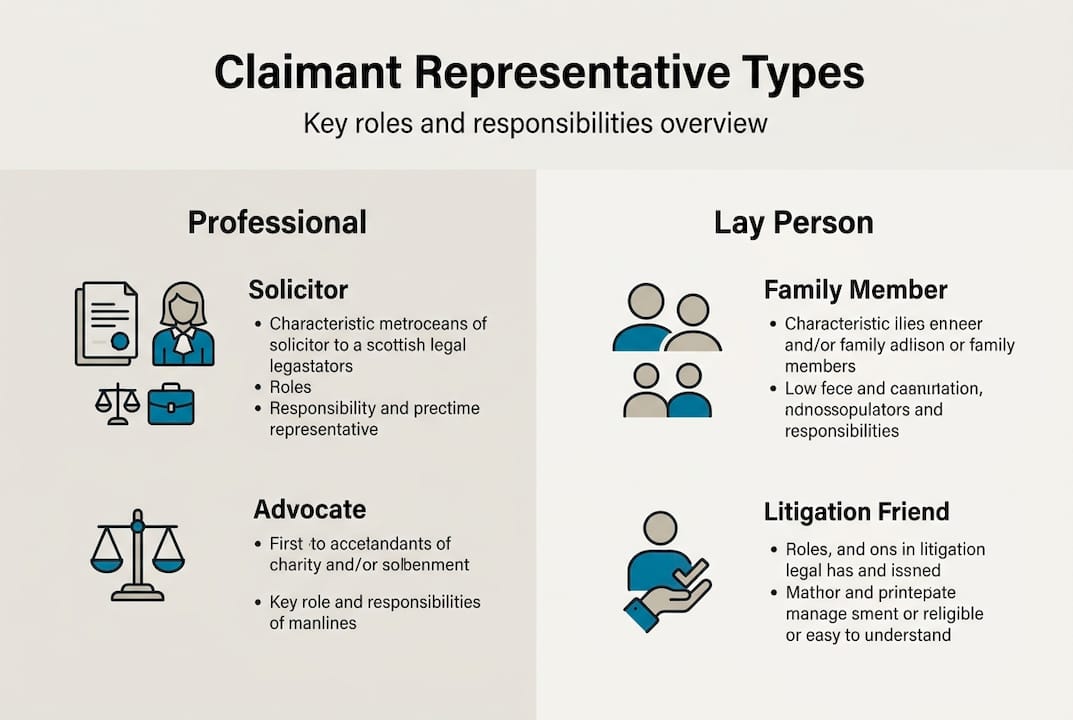
The term is broader than most people realise. A claimant representative is not always a qualified lawyer. Depending on the circumstances, it could be a Scottish injury lawyer, a trusted family member, or a formally appointed court figure known as a “litigation friend”. Each carries different levels of authority and responsibility.
The concept of a litigation friend is particularly important in Scotland. SLAB guidance on special categories clarifies that a litigation friend is the recognised legal term used when someone must act formally on behalf of a person who lacks capacity to conduct proceedings themselves.
“A litigation friend is appointed to act in the best interests of a party who cannot manage their own legal proceedings, whether due to age or incapacity.”
So, what does a claimant representative actually do in practice? Here are the core functions:
- Communicating with insurers and the opposing party on the claimant’s behalf
- Gathering and submitting evidence, including medical reports and witness statements
- Managing all paperwork and ensuring deadlines are met
- Providing or arranging legal advice relevant to the claim
- Attending court hearings or instructing legal counsel when required
- Making decisions about settlement offers in the claimant’s best interests
The key distinction to remember is this: the representative acts for the claimant, not instead of them. Their job is to protect the claimant’s interests at every stage of the process.
When do you need a claimant representative in Scotland?
Not every injury claim requires a formal representative. However, there are specific situations where having one becomes essential, and others where it simply makes the process far smoother.
Here are the most common triggers:
- The claimant is a minor. Children under 16 in Scotland cannot bring a legal claim in their own name. A parent, guardian, or court-appointed litigation friend must act on their behalf.
- The claimant lacks mental capacity. If a person cannot understand or manage legal proceedings due to a brain injury, illness, or cognitive impairment, a representative must be appointed.
- Severe physical injury. Someone hospitalised after a serious accident may be physically unable to manage correspondence, gather evidence, or meet deadlines.
- Complexity of the claim. Multi-party accidents, workplace liability disputes, or claims involving back injury complications often require someone with experience navigating the process.
- Risk of missing key deadlines. Scotland’s personal injury claims generally have a three-year limitation period, but specific circumstances can shorten this window significantly.
As SLAB guidance confirms, a representative is needed when a person cannot independently manage their own claim, whether due to incapacity or circumstance.
Even when none of the above apply, capable adults frequently benefit from legal representation. Studies consistently show that represented claimants recover higher compensation than those who go it alone, largely because professionals know how to value a claim fully and push back against low settlement offers. Understanding your Scottish injury rights before you start can help you decide how much support you actually need.
Pro Tip: Even if you feel confident handling your own claim, a free initial consultation with a specialist can reveal aspects of your case you hadn’t considered, such as future care costs or loss of earnings.
Roles and responsibilities of a claimant representative
Knowing when you need a representative is one thing. Understanding what they’re actually responsible for helps you hold them accountable and know what to expect throughout your claim.
A representative’s core duties typically include:
- Keeping the claimant informed at every stage
- Acting strictly in the claimant’s best interests, not their own
- Gathering medical evidence, accident reports, and witness accounts
- Corresponding with insurers, solicitors, and courts
- Advising on or arranging legal counsel for court proceedings
- Managing settlement negotiations and advising on offers
However, the level of legal responsibility varies significantly depending on who the representative is. The table below outlines the key differences:
| Representative type |
Legal qualifications required |
Court authority |
Ethical obligations |
| Solicitor |
Yes, must be Law Society registered |
Full |
Strict professional code |
| Litigation friend (lay person) |
No |
Court-supervised |
Must act in claimant’s best interests |
| Family member (informal) |
No |
Limited |
Moral, not statutory |
As SLAB guidance makes clear, representatives carry differing levels of responsibility depending on whether they are a solicitor, a family member, or a formally appointed litigation friend. A solicitor carries the heaviest professional and ethical obligations, while a lay litigation friend is supervised by the court to ensure the claimant’s interests are protected.
In Scotland specifically, representatives must also be aware of the rules under the Civil Procedure Rules and Scottish Court rules, which govern how claims are managed and what conduct is expected. Understanding the importance of legal support for injured individuals in Scotland is especially relevant here, as the procedural landscape differs from England and Wales in meaningful ways.

How to choose and appoint a claimant representative
Choosing the right person to represent you is one of the most consequential decisions in your claim. Here’s a practical step-by-step approach:
- Assess your situation. Determine whether you need a formal representative (due to capacity or age) or whether you’re choosing one for practical support.
- Identify eligible candidates. A solicitor, trusted adult family member, or professional advocate can all serve as representatives depending on your needs.
- Check credentials and experience. For personal injury claims, look for verified injury lawyers with specific experience in Scottish law.
- Confirm eligibility. If the claimant lacks capacity, the representative may need court approval before they can act.
- Formalise the appointment. This may involve signing a legal authority document, applying to the court, or completing paperwork through your solicitor’s firm.
- Review your claim eligibility to ensure the claim itself is viable before committing to a representative.
As SLAB guidance notes, some representatives are appointed by the court as litigation friends, while others are chosen privately by the claimant or their family.
The comparison below helps clarify the practical differences:
| Appointment type |
Who decides |
Formal approval needed |
Best suited for |
| Solicitor (professional) |
Claimant or family |
No (private contract) |
Complex or high-value claims |
| Lay litigation friend |
Court |
Yes |
Claimants lacking capacity |
| Family member (informal) |
Family agreement |
Sometimes |
Low-complexity, capable adult |
Pro Tip: Always verify that your chosen representative has handled Scottish personal injury claims specifically. Scottish law differs from English law in procedure, terminology, and court structure, so experience in England alone is not sufficient.
Why getting the right claimant representative can change everything
Most guides on this topic focus on definitions and processes. But here’s what they often miss: the quality of your representative doesn’t just affect how smooth your claim feels. It directly affects how much compensation you receive.
We’ve seen cases where claimants went without professional support and settled for a fraction of what they were entitled to, simply because they didn’t know how to value future losses or challenge a low offer. They accepted the first figure put forward, not realising that initial offers are almost always below fair value.
Professional representatives spot things that laypersons miss. They notice when evidence gaps could undermine a claim, when a medical report undersells the long-term impact of an injury, or when an insurer is applying pressure tactics to close a case quickly.
There’s also an emotional dimension that rarely gets discussed. Dealing with an injury is already exhausting. Knowing that a skilled professional is managing the legal side removes an enormous burden. You can focus on recovery while they focus on your rights. That peace of mind has real, practical value.
Choosing the right representative isn’t a box-ticking exercise. It’s one of the most important decisions you’ll make after an injury.
Connect with specialist claimant representatives in Scotland
If you’re ready to take the next step, Scotland Claims can connect you with experienced personal injury lawyers who understand the Scottish legal system inside out. Whether you need a formal representative due to capacity issues or simply want expert guidance to maximise your outcome, specialist support is available with no upfront costs.
Use our compensation calculator to get an early estimate of what your claim could be worth, then explore our no win no fee claims service to understand how you can pursue compensation without financial risk. When you’re ready, find injury lawyers matched to your specific circumstances and start your claim with confidence.
Frequently asked questions
What is the difference between a claimant representative and a solicitor?
A claimant representative is anyone acting on behalf of the injured party, while a solicitor is a qualified legal professional. As SLAB guidance confirms, a solicitor may act as a claimant representative, but not every representative needs to be a solicitor.
Can a family member act as a claimant representative?
Yes. Family and lay persons may be appointed as litigation friends in Scotland, provided they act in the claimant’s best interests and follow any court requirements that apply.
Do you need a claimant representative for all injury claims in Scotland?
No. As SLAB guidance notes, a litigation friend is recommended when the claimant cannot act independently, but many capable adults handle claims with professional legal help rather than a formal representative.
How is a claimant representative appointed in Scotland?
Appointment is either by private arrangement or by court order, particularly when the claimant is a minor or lacks the mental capacity to conduct proceedings themselves.
Recommended