Best cycling insurance for injury claims: your Scotland guide
If you were injured cycling in Scotland, the fastest route to full compensation is instructing a Scotland-based specialist personal injury solicitor on a no win no fee basis. That single decision determines how much evidence gets preserved, how quickly your claim moves, and whether you keep every penny you’re awarded.
Three protections make this the right call for almost every injured cyclist:
- Statutory success-fee caps limit what a solicitor can charge from your compensation
- Qualified One-way Cost Shifting (QOCS) shields you from paying the other side’s legal costs if you lose
- The Motor Insurers’ Bureau (MIB) lets you claim even when the driver who hit you was uninsured or never identified
Scotland Claims Injury Lawyers charges no success fee at all, meaning clients keep all of their compensation rather than a significant percentage many larger firms deduct. Act quickly: get medical attention, photograph the scene, report the collision to the police where appropriate, and speak to a specialist solicitor before evidence disappears.
Key Takeaways
Instructing a Scotland-based specialist solicitor on a genuine no win no fee basis, backed by fast evidence gathering, gives injured cyclists the strongest realistic path to full, fairly valued compensation.
| Point |
Details |
| Act within three years |
Scotland’s limitation period is three years from the accident date; starting early protects evidence and your legal rights. |
| Gather evidence immediately |
Photograph the scene, collect witness details, and get medical records before evidence disappears or memories fade. |
| Understand your cost protections |
QOCS shields you from paying the other side’s costs if you lose, with limited exceptions like fraud. |
| Check the success fee percentage |
Statutory caps allow up to 20% on the first £100,000, but ask exactly what your solicitor charges before signing. |
| Choose Scotland Claims for full compensation |
Scotland Claims Injury Lawyers charges no success fee, meaning clients retain 100% of their compensation rather than losing 20% elsewhere. |
This article is general information, not a substitute for advice from a qualified lawyer. Consult a qualified legal professional about your own circumstances before acting on anything here.
Table of Contents
Why a specialist personal injury solicitor matters for cycling claims in Scotland
Scottish civil claims succeed on the balance of probabilities, not beyond reasonable doubt. That’s a lower bar than criminal proceedings, but it still demands proof, and cycling collisions are notoriously difficult to reconstruct once skid marks fade and witnesses scatter. Scottish Cycling’s own guidance confirms that civil cases don’t require a criminal conviction against the driver at all. You can win compensation even if the police never charge anyone.
A specialist knows exactly what evidence carries weight and moves fast to secure it before it’s lost:
- Police collision reports and any dashcam or CCTV footage from nearby properties or vehicles
- Independent witness statements taken while memories are fresh
- Scene photographs showing road layout, weather, visibility, and vehicle positioning
- Medical reports linking your injuries directly to the collision
- Repair quotes or valuations for damaged bikes, helmets, and equipment
Local knowledge also speeds things along. Solicitors who work Scottish pre-action protocols daily know which insurers negotiate reasonably and which drag their feet, and they have working relationships with the orthopaedic and physiotherapy experts whose reports carry weight in Scottish claims.
Pro Tip: Ask any solicitor you’re considering how many cycling-specific RTA claims they’ve handled in the last year. A generalist injury lawyer may never have dealt with the particular evidence problems that come with bike collisions, like proving a driver failed to leave sufficient passing distance.
How a cycling injury claim works in Scotland: steps, timescales and what to expect
Scotland gives you three years from the date of the accident to raise a court action. Miss that window and you almost certainly lose your right to claim altogether, so starting early isn’t just sensible, it’s essential to preserving options later.
The claims process typically unfolds in this order:
- Initial assessment — a solicitor reviews the circumstances, checks you’re within time limits, and confirms whether liability looks arguable.
- Instruction and funding agreement — you sign a no win no fee agreement setting out exactly what happens if you win or lose.
- Evidence gathering — police reports, witness statements, medical records, and repair valuations are collected and organised.
- Pre-action exchange — for many claims worth £25,000 or less, a compulsory pre-action protocol requires both sides to share evidence early, which often pushes insurers toward settling without a court ever getting involved.
- Medical reporting — an independent expert assesses your injuries and prognosis, forming the backbone of any valuation.
- Negotiation — your solicitor puts a valuation to the insurer and negotiates, usually settling the majority of claims at this stage.
- Court proceedings — reserved for cases where liability or value can’t be agreed; relatively rare but always kept as a live option.
Timescales vary hugely depending on injury severity and whether liability is disputed. A straightforward claim with clear liability might settle within months of medical evidence being finalised. A contested case involving long-term injury could run well over a year, particularly if your prognosis needs time to stabilise before a fair valuation is possible. Early evidence gathering shortens this timeline more than anything else you can control.
Funding and cost protection: no win no fee, statutory caps and the MIB
A genuine no win no fee agreement means you pay nothing upfront and nothing at all if your claim fails. What varies enormously between firms is what happens when you win. Most large solicitors deduct a success fee from your compensation, sometimes up to the capped maximum permitted under law. Scotland Claims Injury Lawyers takes no success fee whatsoever, so clients retain all of their award rather than losing a portion of it to legal costs.

The Civil Litigation (Expenses and Group Proceedings) (Scotland) Act 2018 and its 2020 Regulations cap success fees at 20% of the first £100,000 of financial benefit, with lower percentages applying above that threshold. The Law Society of Scotland’s guidance recommends solicitors use a standardised agreement and cooling-off notice, so you can compare terms properly before signing anything.
QOCS adds a further layer of protection. It generally stops you being ordered to pay the other side’s legal expenses if your claim doesn’t succeed, with some exceptions such as fraud or manifestly unreasonable conduct during proceedings, which any solicitor should explain clearly before you sign.
If the driver who hit you was uninsured or simply drove off, you’re not left without recourse. The Motor Insurers’ Bureau exists precisely for this situation, though pursuing it depends heavily on reporting the incident to police promptly and gathering whatever evidence exists to identify or trace the vehicle involved.
What you do in the first hour after a collision often matters as much as anything your solicitor does weeks later; for detailed guidance on immediate steps and safety, see our partners’ advice on bicycle accident safety and legal advice for Tampa cyclists.
- Get medical attention first, even if injuries seem minor. Ask for written medical records or a GP note documenting what happened and what you’re experiencing.
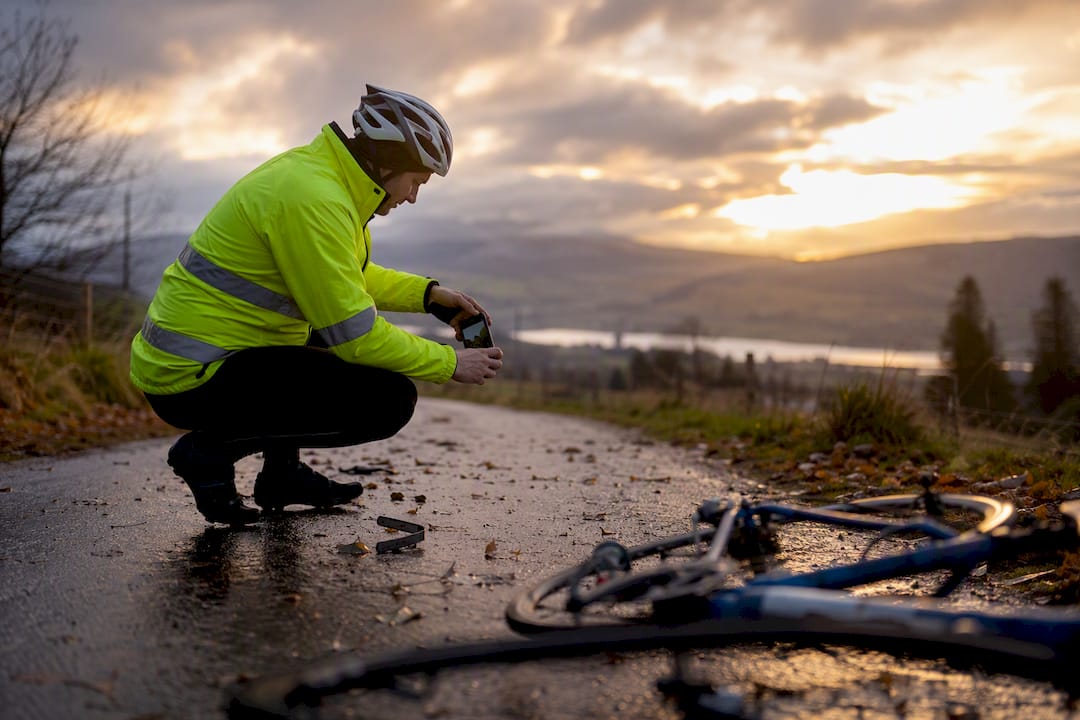
- Photograph everything — vehicle damage, bike damage, the road layout, any skid marks, and visible injuries, before the scene changes or vehicles move on.
- Collect witness details — names and phone numbers of anyone who saw the collision, taken on the spot rather than chased up later.
- Note the vehicle registration and driver details, including insurance information if the driver provides it.
- Report to the police where the collision involves injury or a driver who fails to stop, and get a reference number.
- Keep everything — damaged clothing, your helmet, the bicycle itself, and receipts for any repairs or replacement costs.
- Contact a specialist solicitor promptly for a free assessment, ideally within days rather than weeks.
Pro Tip: Don’t repair or dispose of your bicycle before a solicitor or their expert has seen it. Damage patterns can help prove exactly how a collision happened, and once that evidence is gone, it’s gone for good.
How to choose the right solicitor for your claim
Not every personal injury solicitor has real cycling experience, and that gap shows up in how a claim gets valued and argued. Ask direct questions before instructing anyone: how many cycling RTA claims have you handled in the past year? Do you have QOCS experience specific to Scotland? What’s your typical timescale for a case like mine?
Credentials matter more than marketing. The Law Society’s guidance on finding a personal injury lawyer points to accreditation and specialist directories as useful trust signals, and organisations like APIL maintain listings of solicitors with proven personal injury experience. A solicitor who can’t clearly explain their fee structure, or who’s vague about success-fee percentages, is one worth avoiding entirely.
Ask specifically what percentage they take from your compensation if you win. Get it in writing before you sign anything.
Communication style matters too. You want a solicitor who explains things plainly, responds within a reasonable timeframe, and treats a phone call from you as worth answering rather than routing through junior staff who don’t know your case.
What compensation actually covers after a cycling injury
Compensation in a successful claim typically falls into two broad categories, and understanding both helps you recognise whether an offer is fair.
Solatium covers pain, suffering, and loss of amenity, essentially compensation for what the injury cost you physically and emotionally. This figure depends heavily on injury severity, recovery time, and whether there’s any lasting impairment. A fractured wrist that heals fully within months attracts far less than a knee injury leaving permanent restriction on activity.
Special damages cover your financial losses, and this list is often longer than people expect:
- Loss of earnings, both immediate and future if recovery affects your ability to work
- Bicycle and equipment damage, valued at replacement or repair cost
- Medical expenses, including physiotherapy not covered elsewhere
- Travel costs to medical appointments
- Care costs if you needed help at home during recovery
A serious injury with lasting effects on your ability to cycle, work, or exercise can significantly increase the value of a claim, which is exactly why independent medical evidence matters so much. Expert medical assessment doesn’t just confirm you were hurt, it establishes prognosis, which drives the bulk of what a fair settlement looks like.
Common challenges and pitfalls in cycling injury claims
Liability disputes cause more delay than anything else. Drivers frequently claim a cyclist “came out of nowhere” or was riding unpredictably, and without independent evidence, that becomes your word against theirs. This is precisely why immediate scene photographs and witness statements matter so much, because they remove the ambiguity insurers rely on to reduce or reject claims.
Underestimating injury severity is another frequent trap. Adrenaline masks pain immediately after a collision, and cyclists sometimes decline medical attention only to discover days later that an injury is more serious than it felt. Settling too early, before your prognosis is clear, risks accepting compensation that doesn’t reflect the true cost of your recovery.
Contributory negligence arguments also crop up regularly. If you weren’t wearing hi-vis clothing or lights were faulty, insurers sometimes argue this reduces the driver’s liability, even where the driver was clearly at fault for the collision itself. A specialist solicitor knows how to counter these arguments rather than accepting a reduced offer at face value.
Finally, watch for solicitors offering speculative fee arrangements calculated purely as a percentage of damages without reflecting actual work done. Scottish guidance is clear that fee agreements must comply with statutory caps and reflect genuine effort, not just a blanket cut of your award.
What actually matters when you’re deciding what to do next
Most guidance on cycling injury claims focuses heavily on process, limitation periods, evidence checklists, the mechanics of pre-action protocols, and all of it matters. But it consistently underplays the single factor that determines how much money actually lands in your account: what your solicitor takes off the top.
That’s not a rounding error, it’s often the difference between a claim that genuinely compensates you for lost earnings and physiotherapy, and one that leaves you short. Yet fee structure gets treated as a footnote in most advice, buried after paragraphs about evidence and timelines.
My view, based on how these claims actually play out: evidence and speed matter enormously, but they matter for nothing if the compensation you win gets eroded by fees you didn’t fully understand when you signed. Ask about the percentage before you ask about anything else. Read the agreement. Compare it against what’s legally permitted under the statutory caps, and don’t assume every no win no fee arrangement is equally generous just because none of them ask for money upfront.
How Scotland Claims Injury Lawyers supports your cycling claim
Scotland Claims Injury Lawyers is built around a single difference that matters more than any other in this whole process: you keep 100% of your compensation. No success fee, none of the 20% deduction that larger firms routinely take, no hidden percentage buried in the small print. For a cyclist recovering from injury and facing lost earnings, physiotherapy bills, or a written-off bike, that difference can mean thousands of pounds staying in your pocket rather than a solicitor’s.
Getting started is straightforward. Use the compensation calculator to get an early estimate of what your claim might be worth, then request a free, no-obligation case assessment through the Scotland Claims injury lawyers page. Have your medical records, any photographs from the scene, witness contact details, and details of your bike damage ready. A specialist will review your case, explain your options clearly, and confirm whether you have grounds to proceed, all before you commit to anything.
Sources
FAQ
How long do I have to make a cycling injury claim in Scotland?
You generally have three years from the date of the accident to raise a court action in Scotland, though starting sooner protects evidence and strengthens your case.
What happens if the driver who hit me was uninsured?
You can pursue compensation through the Motor Insurers’ Bureau, provided you report the incident to police promptly and gather evidence to support tracing the vehicle or driver.
Will I have to pay legal fees if my claim loses?
Under Qualified One-way Cost Shifting, you’re protected from paying the other side’s legal expenses in most personal injury cases, with limited exceptions such as fraud or unreasonable conduct.
How much of my compensation will a solicitor take?
Do I need a criminal conviction against the driver to claim compensation?
No. Scottish civil claims are decided on the balance of probabilities, which is a lower threshold than criminal proceedings, so you can win compensation even without a conviction.
Recommended