Scarring compensation Scotland: what you can claim and how
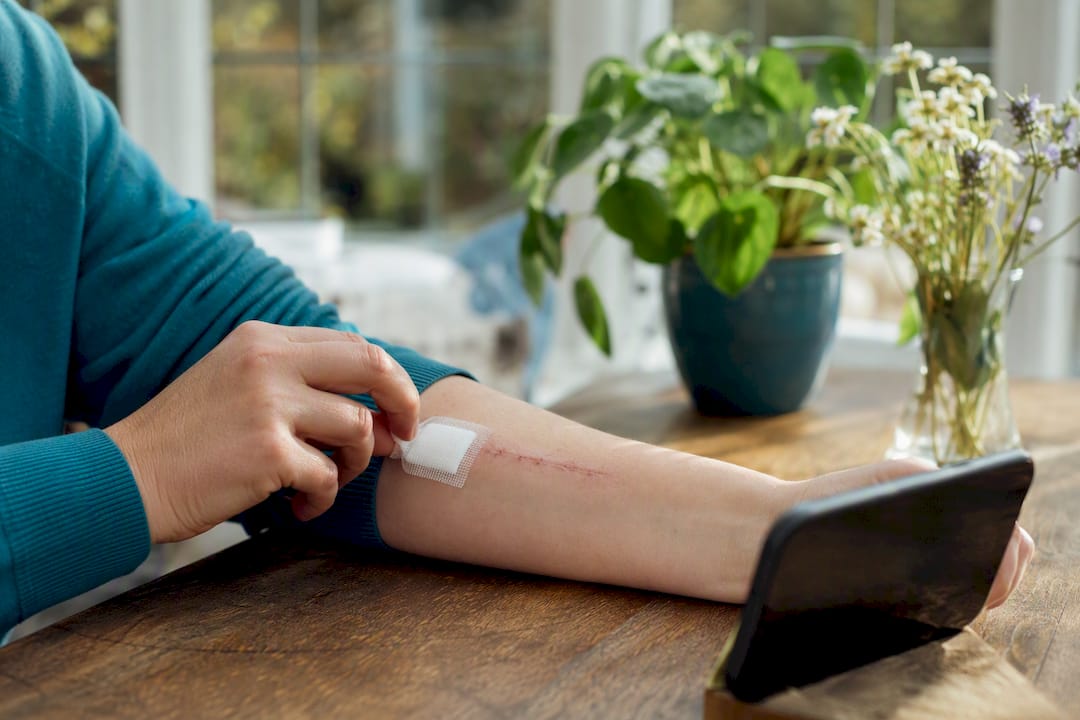
Yes. If someone else’s negligence caused your scarring in Scotland, you can claim compensation, and you can start today. This falls under a personal injury claim for damages, known in Scots law as solatium, covering pain, suffering and the lasting effect a scar has on your life. The catch is time: the clock on your claim starts running from the date of injury, so waiting costs you options, not just money.
- Basis for the claim: negligence or breach of duty by another party caused or worsened your scarring.
- What’s covered: solatium, treatment costs, lost earnings, and related expenses.
- Next step: get a free assessment from Scotland Claims Injury Lawyers while you’re still well within the time limit.
Key Takeaways
Scarring compensation in Scotland depends on prompt evidence gathering, awareness of the three-year time limit, and choosing a solicitor who doesn’t deduct a success fee from your award.
| Point |
Details |
| Eligibility basis |
You can claim if another party’s negligence caused or worsened your scarring, excluding criminal injuries or medical negligence claims. |
| Award size depends on visibility |
Facial and highly visible scars typically attract higher solatium than hidden body scarring of similar severity. |
| Claim more than the scar |
Loss of earnings, care costs, treatment expenses, and psychological support can all be claimed alongside solatium. |
| Three-year deadline |
Scots law requires most claims within three years of injury or the later “date of knowledge.” |
| Choose your fee structure carefully |
Scotland Claims Injury Lawyers charges no success fee, so clients keep all of their compensation on a successful claim. |
Where to check the law and medical guidance
This article is general information, not a substitute for advice from a qualified lawyer. Consult a qualified legal professional about your own circumstances before acting on anything here.
Table of Contents
Who can claim scarring compensation in Scotland?
You can bring a claim if your scar resulted from someone else’s act or failure to act, and you’re either the injured person or acting on their behalf. That’s the whole test in principle. In practice, most successful claims fall into a handful of recognisable situations.
- Road traffic collisions where you were the driver or passenger and not at fault.
- Workplace accidents, including common workplace hazards like faulty machinery, missing PPE, or poor site maintenance.
- Slips and trips in shops, car parks, or other public premises caused by poor upkeep.
- Burns or cuts from defective products, faulty equipment, or negligent service provision.
This guide covers personal injury claims specifically. Criminal assaults and medical negligence follow separate legal routes, so if your scarring came from an assault, criminal injuries compensation is the correct avenue rather than a standard negligence claim.
Pro Tip: Take photos of your scar within days of the injury, then again at 6 weeks and 6 months. Solicitors and medical experts use this progression to prove how a scar has settled or worsened, and it’s far more persuasive than a single photo taken months later.
How much compensation can you get for scarring in Scotland?
There’s no fixed number, but there’s a logical structure behind every award, and understanding it helps you judge whether an offer from an insurer is fair. Solatium values pain, suffering, and loss of amenity. Facial scarring almost always sits in a higher bracket than a scar hidden by clothing, even when the physical injury underneath is similar. Visibility drives value because it drives daily impact.
Solicitors typically start from the Judicial College Guidelines, the reference framework used across the UK for assessing general damages, then adjust for Scotland’s own case law and solatium conventions. Illustrative brackets used in practice include:
- Minor, barely noticeable scarring: typically the lowest bracket, often a few hundred to low thousands of pounds.
- Single noticeable scar, non-facial: moderate awards reflecting some cosmetic and psychological effect.
- Significant facial scarring: substantially higher, particularly where it causes a marked cosmetic change.
- Severe disfigurement with psychological impact: the highest brackets, especially where anxiety, PTSD, or social avoidance is medically documented.
These figures are indicative only. Every case is valued on its own facts. A specialist solicitor needs your medical evidence before giving a realistic estimate, not a generic bracket from a guide.
What pushes a case toward the top of its bracket? A few consistent factors. Keloid scarring that keeps growing or itching counts for more than a flat, faded line, because it signals ongoing symptoms and repeat treatment. Grafts and revision surgery add weight, as does documented psychological harm. Age and occupation matter too. A visible facial scar affects a 22-year-old starting a client-facing career differently to someone approaching retirement, and Scottish courts do take that into account when weighing loss of amenity.
What else can you claim for beyond the scar itself?
Solatium is usually the headline figure, but it’s rarely the only thing on the table. Scots law lets you claim several additional heads of loss alongside it, and together they often add up to more than the scarring award itself.
- Past and future loss of earnings, calculated from payslips and, where relevant, projected career impact.
- Care and assistance, if family or friends helped you during recovery.
- Treatment costs, including private plastic surgery, scar revision, or laser therapy not available promptly on the NHS.
- Psychological treatment, such as counselling or CBT, where scarring has triggered anxiety or mental health difficulties needing professional support.
- Travel expenses to medical appointments and specialist consultations.
- Special expenses, covering damaged clothing, prescriptions, or other out-of-pocket costs tied directly to the injury.
The term “solatium” itself is worth knowing, because it’s the word you’ll see in your solicitor’s correspondence and any court paperwork rather than the more general “pain and suffering” used south of the border. Same concept, different label, and it matters for how your claim documents are drafted.
How do you start a scarring compensation claim in Scotland?
Getting the process moving quickly protects both your evidence and your legal position. Here’s the practical sequence most claims follow.
- Preserve evidence immediately — photograph the injury, note witness names and contact details, and keep any accident report from the workplace, shop, or insurer.
- Get medical treatment promptly, even for scarring that seems minor at first, since NHS or GP records become the backbone of your claim.
- Obtain a specialist medical report, usually from a plastic surgeon or dermatologist, once the scar has settled enough to assess permanence.
- Contact a solicitor for a free assessment of liability, evidence strength, and likely value.
- Let your solicitor negotiate with the at-fault party’s insurer, including any interim payment while treatment continues.
- Proceed to court only if negotiation fails — most scarring claims settle without a hearing.
Before your first solicitor consultation, gather what you can:
- Dates and a written account of how the injury happened.
- Any medical records or referral letters you already have.
- Payslips if you’ve missed work.
- Receipts for treatment, travel, or damaged property.
Pro Tip: Don’t wait for your scar to “finish healing” before contacting a solicitor. You can start the claims process while treatment is ongoing, and early legal advice often prevents mistakes, like accepting a quick insurer offer, that are hard to undo later. Check where you stand against the three-year time limit before any delay creeps in.
What evidence and medical reports do you need?
Strong claims are built on documents, not memory. The core evidence set includes contemporaneous photographs, GP and hospital notes, and a specialist report from a plastic surgeon or dermatologist assessing scar type, size, and permanence. Operation notes and any formal scar-severity scoring add further weight.
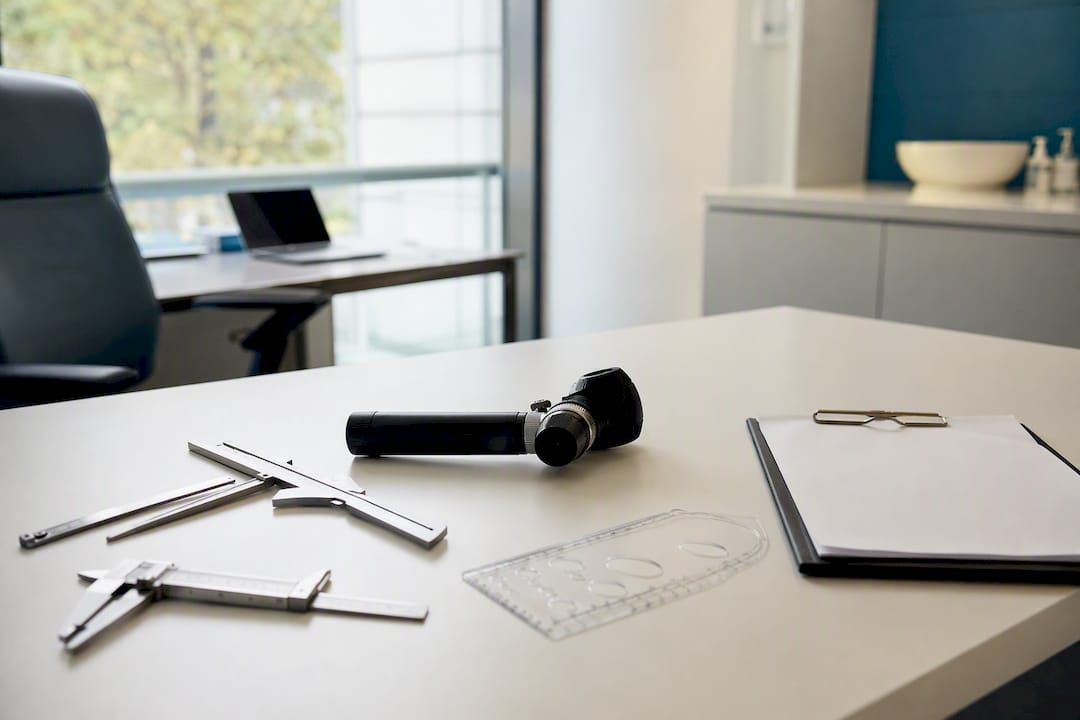
Witness statements and site-specific records help too, things like accident report forms, premises maintenance logs, or workplace PPE records depending on how the injury happened. A useful external resource on this is this car accident evidence checklist, which covers documentation habits that transfer directly to slip, trip, and workplace claims as well.
Pro Tip: Photograph scars in consistent natural daylight, include a ruler or coin for scale, and timestamp each image. Inconsistent lighting is the most common reason scar photos get challenged during valuation.
How long do you have to make a scarring claim in Scotland?
Scots law sets a time limit to bring most personal injury actions, and missing that window usually ends your claim permanently, whatever the merits.
The Prescription and Limitation (Scotland) Act 1973 requires most personal injury actions to start within three years of the date the injury was sustained, or from the date of knowledge where that comes later.
That “date of knowledge” point matters more than people assume. If you didn’t immediately realise how serious a scar would become, or only later connected it to someone’s negligence, the clock can start from that later discovery date rather than the original incident. The Prescription and Limitation (Scotland) Act 1984 clarifies how this discoverability rule operates alongside continuing acts of negligence.
In practice, even a small delay in recognising the seriousness or cause of a scar can shift when that three-year period begins, which is exactly why early legal advice matters. Citizens Advice Scotland recommends getting advice as soon as possible rather than waiting to see how a scar develops. If you’re unsure where you stand, don’t guess. Get it checked.
What do fees and No Win No Fee arrangements actually mean?
Most Scottish personal injury solicitors work on a conditional or speculative fee basis, commonly branded “No Win No Fee.” In plain terms, you pay nothing if the claim fails. Where firms differ sharply is what happens when you win.
Scotland Claims Injury Lawyers doesn’t take a success fee at all.
- No win, no fee — nothing to pay if your claim is unsuccessful.
- No success fee — unlike many competitors, Scotland Claims Injury Lawyers takes no percentage cut of your award.
- Other funding you may already have — legal expenses cover on a home or motor insurance policy, trade union legal support, or employer-provided legal cover, all worth checking before you commit to a solicitor.
- Ask upfront — at first contact, ask any solicitor directly what percentage, if any, they deduct from a successful award.
What are typical award examples and how do calculators work?
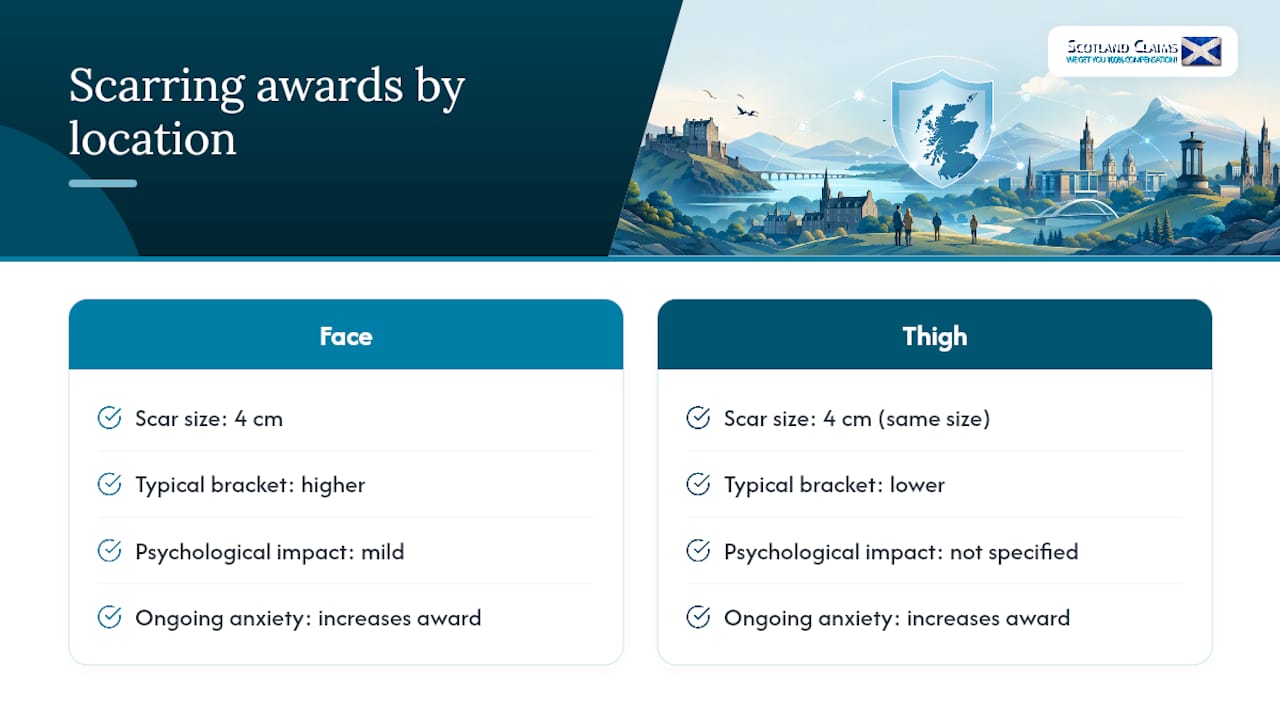
A worker who suffered a facial laceration from unguarded machinery, requiring stitches and leaving a permanent 4cm scar with mild psychological impact, would likely sit in a higher bracket than a similar-sized scar on the thigh from the same incident. Add ongoing anxiety about the injury recurring, and the psychological head of loss can lift the total further still.
Online compensation calculators, including Scotland Claims’ own tool, give a useful starting estimate based on solatium brackets alone. What they can’t capture is your specific psychological impact, future care needs, or career-specific loss of earnings. Treat a calculator result as a first indication, then get a solicitor’s assessment for an accurate figure.
What happens after you instruct a solicitor?
Once you’ve instructed a solicitor, the process generally follows a predictable rhythm, even though timescales vary with case complexity.
- Initial evidence review and medical record gathering.
- Specialist medical reporting to assess permanence and severity.
- A formal letter of claim sent to the responsible party’s insurer.
- Insurer response, followed by negotiation, often including an interim payment while treatment continues.
- Settlement, or in a minority of cases, court proceedings if agreement can’t be reached.
You’ll be asked to sign medical record authorisations and may need to provide updated evidence as treatment progresses. Staying responsive to these requests, rather than the claim itself, is usually what keeps a case moving at pace.
What actually decides whether a scarring claim succeeds
The single biggest factor I see separating strong claims from weak ones isn’t the size of the scar. It’s timing. People wait months to see “how it heals” before contacting a solicitor, and by then witnesses have moved on, CCTV has been deleted, and the accident report the shop or employer was supposed to keep has conveniently vanished.
Fair valuation depends on evidence quality, not just injury severity. Two people with near-identical scars can receive very different awards because one photographed the injury properly and got a specialist report early, while the other relied on memory and a single blurry phone photo taken weeks later. If you’re weighing whether to get advice now or wait, the practical answer is always the same: check your time limit and your evidence today, at no cost, while both are still working in your favour.
Ready to check if you have a scarring compensation claim?
There’s no upfront cost, and no charge at all if your claim doesn’t succeed.
Getting started is simple. Use the compensation calculator for a quick estimate, gather your photos and medical records, then request a callback from our team or visit our injury lawyers page to speak with a specialist Scottish solicitor directly. If you’re close to the three-year limit, don’t leave it until next week. Get in touch now while your options are still open.
Sources
FAQ
How much compensation do you get for scarring?
It depends on location, severity, and psychological impact, but facial and highly visible scars generally sit in higher brackets than hidden body scarring. A specialist solicitor can give an accurate estimate once your medical evidence is available.
How much compensation can you get for soft tissue damage in the UK?
Soft tissue injuries, including whiplash, are valued using the same solatium principles as scarring, based on severity and recovery time, with figures assessed against the Judicial College Guidelines and adjusted for Scots law.
What is the average payout for compensation?
There’s no single average, since every claim is valued individually based on injury severity, permanence, and impact on daily life and work. Illustrative brackets exist, but a solicitor’s assessment of your specific case is the only reliable figure.
What is the average payout for whiplash in Scotland?
Whiplash awards vary by severity and recovery duration, following the same Judicial College Guidelines framework used for other personal injury claims in Scotland. A free assessment from a specialist solicitor gives you a case-specific estimate rather than a generic average.
Am I eligible for scarring compensation in Scotland?
You’re likely eligible if another party’s negligence, such as a road accident, workplace incident, or public place slip, caused or worsened your scarring, and you’re within the three-year time limit. Scotland Claims Injury Lawyers offers a free assessment to confirm eligibility at no cost.
Recommended