Road traffic accident types in Scotland: claims guide

TL;DR:
- Road accidents in Scotland are classified using police reports based on collision details, injury severity, and manoeuvres.
- The most common types are rear-end collisions and parked vehicle hits, each with specific legal considerations.
- Prompt evidence gathering and understanding accident classification are essential for effective injury claims within strict time limits.
Being involved in a road accident in Scotland puts you straight into a legal and practical maze. The type of collision you were in shapes everything from who is held responsible to how much compensation you may be entitled to receive. Many people begin the claims process without realising that the specific accident category affects the strength of their case, the evidence they need, and the legal arguments available to them. This guide breaks down how road traffic accidents are formally classified in Scotland, the most common types you are likely to encounter, and what each one means for your legal options.
Table of Contents
Key Takeaways
| Point |
Details |
| Classification matters |
Understanding how Scottish authorities define and record accidents is critical for starting a claim. |
| Common accident types |
Rear-end and parked vehicle collisions are the most frequent and influence liability and evidence needs. |
| Documentation is key |
Police records, photos, and witness details make claims more robust and clear. |
| Legal impact varies |
The type of accident directly affects who’s to blame and how much compensation you could receive. |
How road traffic accidents are classified in Scotland
To navigate a claim, you first need to understand how the authorities define accident types. In Scotland, as across Great Britain, road collisions are recorded using a system called STATS19. This is the official police reporting framework used to collect standardised data on every road accident that results in injury.
STATS19 classifies accidents using key criteria including collision details, vehicle type, manoeuvre, severity, and safety factors. Each police report captures a detailed picture of the circumstances, not just a simple label. This means knowing what counts as a road traffic accident in legal terms is the essential first step before building your case.
Here is a snapshot of the most commonly recorded vehicle manoeuvres at the time of collision, according to the annual report 2024:
| Manoeuvre |
Relevance to claims |
| Going ahead |
Most frequent; speed and distraction key factors |
| Turning right or left |
Junction disputes common; liability can be shared |
| Reversing |
Often clear liability; witnesses can be limited |
| Parked or waiting |
Claimant may face challenges proving impact context |
Why does this matter for you? Because the manoeuvre recorded in an official police report can support or directly challenge the version of events put forward by the other driver’s insurer. If the report categorises the collision differently from your account, it can weaken your claim without additional evidence.
The classification also captures injury severity, including fatal, serious, and slight categories. A serious injury classification carries significant weight when calculating compensation amounts, as it signals to insurers and courts that the impact was significant.
Pro Tip: Request the police report reference number at the scene or as soon as possible afterwards. This document is one of the most important pieces of evidence you can have when starting a personal injury claim.
The most common road traffic accident types
Understanding classification helps, but knowing the actual types you are most likely to encounter is just as critical. Each accident type carries its own legal weight, its own evidentiary challenges, and its own pattern of injuries.
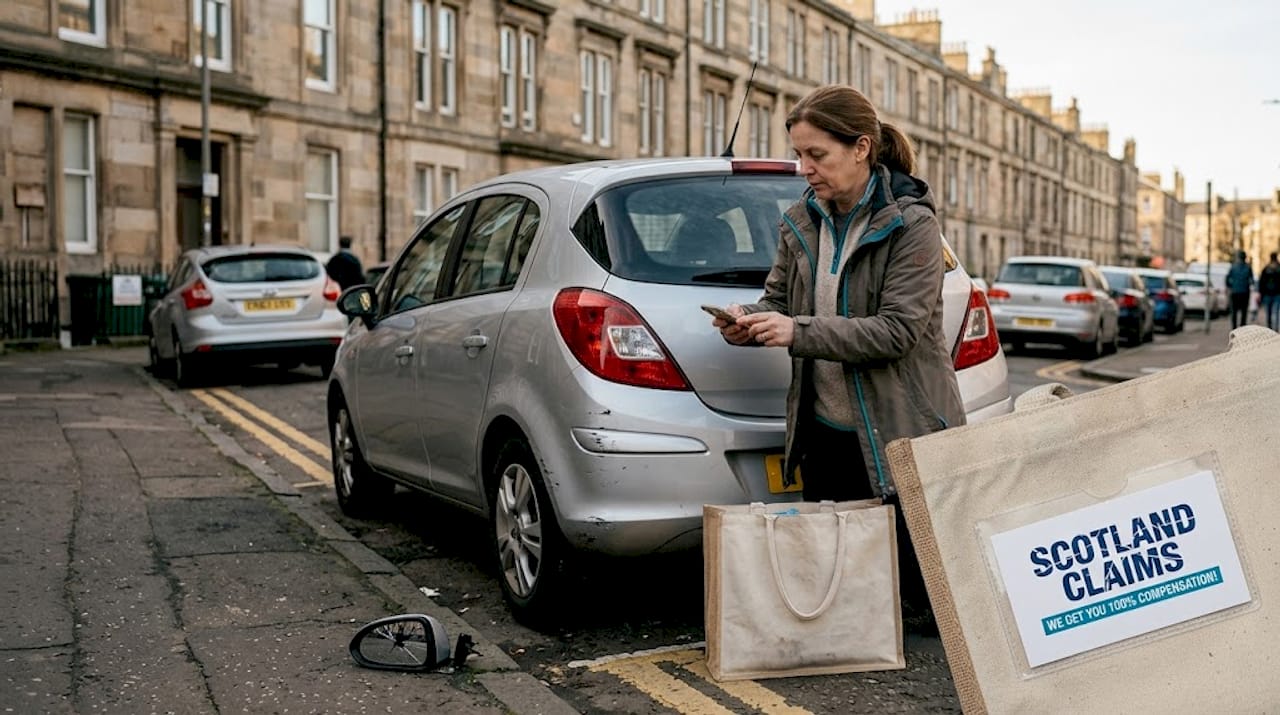
According to UK fleet collision data, hit in rear and hit whilst parked each account for over 22% of collisions. That is a significant proportion, and both types present very different legal challenges. You can read more about the injuries linked to these scenarios in our guide to types of car accident injuries.
Here is a comparison of the most common accident types:
| Accident type |
Frequency |
Key legal notes |
| Rear-end collision |
Very common |
Fault usually clear; whiplash claims frequent |
| Hit whilst parked |
Very common |
Witness evidence often essential |
| Side impact (T-bone) |
Common |
Disputed liability; severity can be high |
| Head-on collision |
Less common |
Serious injuries typical; complex liability |
| Vulnerable road user struck |
Significant |
Pedestrian or cyclist involved; high injury risk |
From the Scottish road casualty statistics, vulnerable road users including pedestrians, cyclists, and motorcyclists continue to feature prominently among those seriously injured. These accident types are often more legally complex because the power imbalance between a pedestrian and a vehicle is extreme, and injuries tend to be severe.
Some key points to keep in mind:
- Rear-end accidents are often straightforward for claimants because the driver behind generally bears responsibility for maintaining a safe following distance.
- Parked vehicle accidents can be tricky because the other driver may have fled the scene, making witness evidence or CCTV footage vital.
- Side impacts frequently involve disputed accounts of who had right of way at a junction.
- Head-on collisions tend to involve higher speeds and result in more serious injuries, but causation and speed are often contested.
Pro Tip: Immediately after any collision, take photographs of the vehicle positions, road markings, and all visible damage. These images, timestamped by your phone, can be decisive evidence if the other party later disputes the facts.
Factors that influence collision outcomes and injury claims
Statistical categories only tell half the story. Other circumstances shape each accident’s impact, and they play a direct role in how liability is assessed and how much compensation you could recover.
According to Scottish road safety data, the top road safety factors recorded in 2024 include distraction and impairment, speed-related behaviour, and driver inexperience. These are not merely abstract statistics. They form the basis of negligence arguments in personal injury claims.
Driver or rider behaviour and inexperience are leading contributing factors in many Scottish collisions, making evidence of the other party’s conduct central to proving your claim.
Key factors and their legal implications:
- Speed: If the other driver was exceeding the limit, this strongly supports a negligence argument. Speed camera data or expert reconstruction evidence may be needed.
- Distraction: Mobile phone use at the wheel is increasingly cited. Telephone records can be requested as part of the legal process.
- Weather and road conditions: Poor visibility or icy roads do not remove liability, but they can complicate the picture. Drivers are expected to adjust their behaviour to conditions.
- Vehicle type: Heavy goods vehicles and motorcycles present different risk profiles. Accidents involving lorries often result in more serious injuries and may involve employer liability as well.
- Junction design: Poorly designed or maintained junctions can introduce local authority liability alongside driver fault.
Making sense of these factors matters because accident definitions in law go beyond the collision itself. The context and contributing causes are equally important. And given that injury claims time limits in Scotland are strictly enforced, gathering this evidence early is essential.
How accident type affects liability and compensation in Scotland
Once you recognise the collision type and the influencing factors, it is vital to understand how these shape what you can actually claim. The process is more structured than many people expect.
Here is how evidence of accident type flows into a liability assessment:
- Establish the accident type using police reports, photographs, and witness statements.
- Identify the primary cause by linking the accident category to driver behaviour or road conditions.
- Assess contributory negligence, meaning whether you share any portion of the blame. For example, if you were not wearing a seatbelt during a rear-end collision, your compensation could be reduced.
- Calculate the injury impact by connecting the accident type to the injuries sustained. Rear-end collisions are closely associated with whiplash; head-on impacts with fractures and internal injuries.
- Apply the three-year deadline. In Scotland, you must start your claim within three years of the accident date, or you lose the right to claim entirely.
Rear-end shunts often indicate clear blame, but contributory negligence can reduce the final compensation figure even when fault is established.
Contributory negligence is one of the most misunderstood aspects of Scottish car accident compensation. If a court finds you were 20% responsible, your award is reduced by 20%. This is why the accident type matters so much. Certain types naturally lend themselves to shared blame arguments, while others, like being stationary at traffic lights when struck from behind, leave very little room for dispute.
Time is also a practical factor. Evidence degrades, witnesses become harder to locate, and CCTV footage is typically overwritten within 30 days. Understanding claim deadlines in Scotland and acting promptly can genuinely determine whether your case succeeds. You can also check liability in Scottish accidents for a broader legal overview of how fault is proven.
A closer look: Why accident statistics only tell half the story
Numbers and legal frameworks shape much of the conversation around road traffic accidents in Scotland, but reality is often more complicated than the official figures suggest.
Official statistics can understate true accident numbers, with real-life incidents and injury rates frequently higher than reported. Many collisions, particularly minor ones, go unreported to the police entirely. This means that if you were involved in an accident that was not formally recorded, you are not without options, but you will need to work harder to build your evidence base.
Fleet and insurance industry data regularly reveals accident patterns that police records miss. Vulnerable road users, including pedestrians and motorcyclists, are statistically at an outsized risk of serious injury, yet their incidents are among those most likely to be underrepresented in official counts.
For claimants, this has a practical consequence. Do not assume the absence of a police report means your claim is invalid or weak. Seek legal advice early, act quickly after an accident, and build your own evidence record independently of what authorities may or may not have captured. The strength of your claim depends on the totality of evidence you can present, not just what appears in a database.
Get support for your Scottish road traffic accident claim
For those facing claims after an accident in Scotland, support and clear guidance can make all the difference. Knowing the accident type is valuable, but translating that into a successful claim requires specialist legal knowledge and a clear strategy.
At Scotland Claims, our specialist injury lawyers in Scotland can assess your accident type, identify the strongest liability arguments, and help you gather the right evidence from the outset. We work on no win no fee options, meaning you pay nothing upfront and nothing at all if your case is unsuccessful. You keep 100% of your compensation. If you want a quick sense of what your claim might be worth, try our compensation calculator for a free estimate based on your specific circumstances.
Frequently asked questions
What is the most common road traffic accident type in Scotland?
Rear-end collisions and vehicles hit whilst parked are the two most common types, each accounting for over 22% of reported cases in the UK.
How does accident type affect my personal injury claim?
Accident type directly shapes liability and contributory negligence decisions, which in turn affect how much compensation you can recover, particularly if blame is disputed or shared.
What evidence do I need to prove my accident type?
Police reports, photographs, witness contact details, and medical records are all essential. Proving liability in Scotland depends on the totality of this evidence, not any single document.
Is there a deadline for making a personal injury road traffic accident claim in Scotland?
Yes. The 3-year limit runs from the date of the accident, after which you lose your right to claim compensation entirely.
Recommended