How to Prove Foreseeability Under Scotland’s Occupiers’ Liability Act
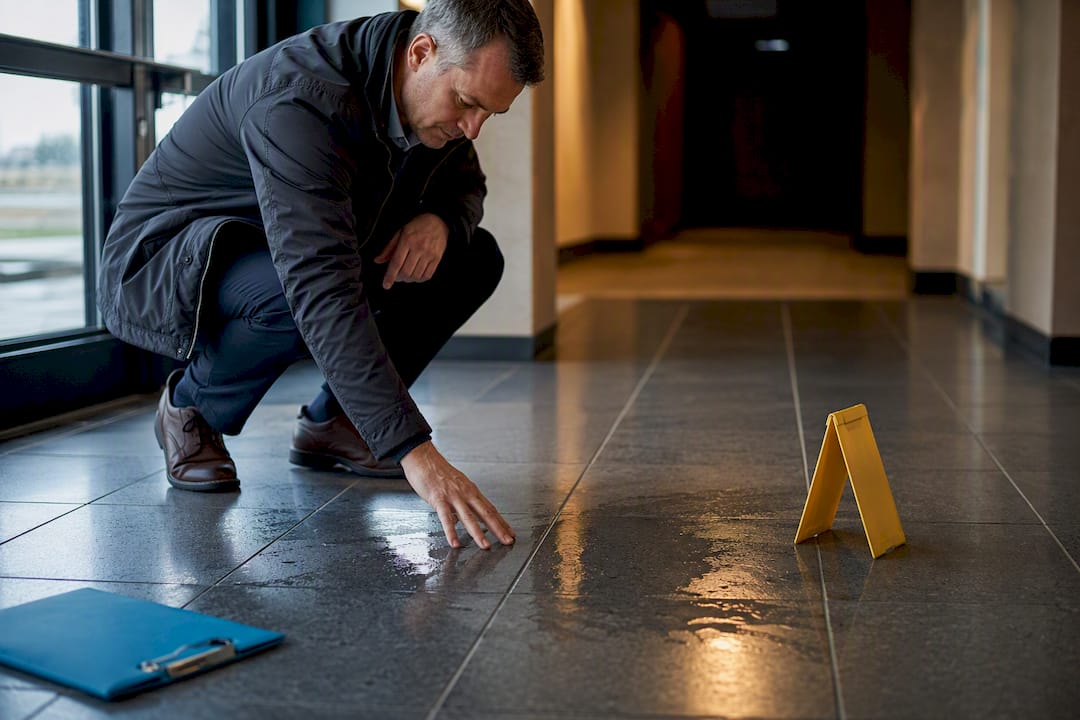
Yes: under the Occupiers’ Liability (Scotland) Act 1960, anyone occupying or controlling premises in Scotland owes visitors a duty to take reasonable care against foreseeable injury. A claim under the Act turns on two questions: was the risk foreseeable, and did the occupier fail to take reasonable steps to guard against it? Get those two elements right and you have the backbone of a personal injury claim.
TL;DR:
- The law assesses whether the risk was foreseeable and if the occupier took reasonable steps to prevent injury, regardless of visitor status.
- Control over premises, not ownership, determines who qualifies as an occupier, making multiple parties potentially liable depending on their degree of control.
- Courts now prioritize foreseeability, requiring evidence like prior complaints or incidents to prove the risk was apparent and should have been addressed.
- Defenses include obvious danger, self-created risks, or prior acceptance of danger, which can significantly weaken a claimant’s case.
- Gathering timely evidence such as photographs, witness accounts, and maintenance logs is crucial, as claims depend on proving both control and failure to act on foreseeable risks.
Scotland Claims Injury Lawyers
Discuss Your Injury Claim
Scotland Claims Injury Lawyers connects people injured through accidents or negligence with specialist injury lawyers in Scotland.
Request a callbackTable of Contents
What does the Occupiers’ Liability Scotland Act actually say?
Section 1 of the Act swept away the old common-law categories that used to decide how much care a property owner owed a visitor. Before 1960, whether you were owed a high or low standard of care depended on whether you counted as an invitee, a licensee, or a trespasser. That distinction is gone. Everyone entering Scottish premises is now assessed under one single test.
Section 2(1) sets that test: an occupier must show such care “as is reasonable in all the circumstances” to prevent injury or damage arising from the state of the premises, or from things done or not done on them. Section 2(2) allows a statute or contract to impose a higher duty in specific situations, and section 2(3) confirms that a person can be treated as having willingly accepted a risk, which can reduce or remove liability entirely.
The key statutory points, in brief:
- Section 1 abolishes the old visitor categories in favour of one universal duty.
- Section 2(1) fixes the standard at “reasonable care in all the circumstances.”
- Section 2(2) can create a stricter duty where another law or agreement demands it.
- Section 2(3) recognises willing acceptance of risk as a factor limiting liability.
Every claim starts here. The full Act text is on legislation.gov.uk, and it’s worth reading section 2 directly before you assume anything about your case.
Who counts as an occupier under Scottish law?
Ownership is not the test. The Act defines an occupier as the person or body occupying or having control of the land or premises, whether or not they hold the title deeds. A landlord who has handed over full control to a tenant may not be the occupier for the purposes of a claim; the tenant might be, even though they don’t own the building.
This gets complicated fast, because control can be shared. Typical scenarios include:
- A tenant running a shop, controlling day-to-day conditions on the shop floor.
- A landlord who retains responsibility for structural repairs or common stairwells.
- A contractor temporarily controlling a site during building work.
- A hirer of a hall or venue for a single event, controlling access on that day.
Where a landlord keeps responsibility for repairs or maintenance under the tenancy agreement, they owe the same reasonable care standard for those specific defects, even though someone else occupies the property day to day. More than one party can be liable at once, which is exactly why identifying “who controlled what” is often the first real battleground in a claim.
How do courts decide if the duty of care was breached?
Foreseeability is the threshold everything else hinges on. Before a court even asks whether an occupier did enough, it asks whether the occupier could reasonably have anticipated the risk in the first place. No foreseeability, no case, however bad the injury turned out to be.
Once foreseeability is established, the court looks at whether reasonable steps were taken. That typically means:
- Was the hazard properly maintained, inspected, or repaired within a reasonable timeframe?
- Was adequate signage or warning in place where a risk couldn’t be removed outright?
- Were physical barriers or restricted access used where the danger was serious?
- Had the occupier acted on any previous complaints or near-misses involving the same hazard?
Recent Scottish case law has pushed courts toward what’s often called a synthetic approach that puts foreseeability front and centre, weighing prior incidents, the occupier’s actual knowledge, and whether the danger amounted to something enticing rather than merely present. For claimants, that means vague assertions that an occupier “should have known” rarely survive scrutiny. You need something concrete: a prior complaint, an earlier near-identical incident, evidence the hazard existed long enough that someone should have spotted it.
Pro Tip: If you noticed the same hazard on a previous visit, or heard from staff or other customers that it had caused problems before, write that down immediately. That single detail can be the difference between a claim that stalls and one that succeeds.
What defences can an occupier raise against a claim?
Occupiers don’t automatically lose just because someone was hurt on their premises. Scottish law gives them several routes to defend a claim, and understanding these upfront helps you judge how strong your own case really is.
- Voluntary acceptance of risk (volenti): if you knowingly and freely accepted an obvious danger, the occupier’s duty can be reduced or extinguished under section 2(3).
- Obvious danger: courts generally accept that occupiers don’t need to fence off or remedy risks that are clear and obvious to any reasonable adult.
- No prior notice: where a hazard was new, hidden, or had never caused a problem before, an occupier may argue they had no realistic chance to foresee or fix it.
- Self-created risk: injuries caused by a visitor misusing premises, ignoring warnings, or straying from a permitted area weaken the occupier’s exposure considerably.
An adult who was already aware of the risk and chose to proceed anyway will usually struggle to succeed, particularly where there’s no evidence the danger was concealed or unusually severe.
What evidence do you need to bring a claim in Scotland?
A pursuer (the Scottish term for a claimant) needs to establish four things: that the defender was the occupier or had control, that the risk was reasonably foreseeable, that they failed to take reasonable steps, and that this failure caused a specific, provable loss. Miss any one of those and the claim falls apart, regardless of how genuinely painful the injury was.
Build your case with this evidence checklist in mind:
- Photographs of the hazard, taken as soon as possible and ideally showing scale and context.
- Witness details from anyone who saw the accident or the hazard beforehand.
- Maintenance and inspection records, requested from the occupier or their insurer where possible.
- Prior complaint records, including any accident book entries or online reviews mentioning the same issue.
- Medical records documenting the injury, treatment, and ongoing impact.
Gathering photos, witness statements, and maintenance history early on materially strengthens the eventual pleadings, particularly given how much weight foreseeability now carries. Act quickly after the accident: report it formally, keep any correspondence, and seek legal advice promptly, since personal injury claims in Scotland are generally subject to a three-year time limit from the date of injury (the “prescriptive period”). Waiting too long risks losing the right to claim altogether, no matter how strong the underlying case is. For accidents involving falls in shops, car parks, or public walkways, a step-by-step look at the slip and trip claim process in Scotland sets out what to expect procedurally.
Why so many occupiers’ liability claims fall short before they start
The weakest cases we see almost never fail because the injury wasn’t real. They fail because the pursuer’s averments stop at “the floor was wet” or “the step was broken,” with nothing showing the occupier knew, or should have known, about it. Foreseeability has become the courts’ real battleground, and a claim built on assumption rather than evidence rarely gets past the first hurdle.
The fix isn’t complicated, but it does need discipline: chase maintenance logs early, ask staff directly whether anyone else had complained, and get photographs before the hazard is fixed or removed.
— Roger
Ready to find out if you have a claim?
That single difference can mean thousands of pounds staying in your pocket rather than solicitor fees, on top of the No Win No Fee protection: if the claim doesn’t succeed, you owe nothing.
Starting is simple. Have the basics ready: when and where the accident happened, any photographs or witness names, and a rough idea of your injuries and treatment so far. From there, a specialist can assess whether your case meets the foreseeability and reasonable care tests under the 1960 Act. Head to the injury lawyers Scotland page to start a free assessment, or check how the no win no fee promise works before you get in touch.

This article is general information, not a substitute for advice from a qualified lawyer. Consult a qualified legal professional about your own circumstances before acting on anything here.
Sources
FAQ
What is the occupiers’ liability in the Occupiers’ Liability (Scotland) Act 1960?
It’s a statutory duty requiring anyone occupying or controlling premises in Scotland to take such care as is reasonable in all the circumstances to prevent foreseeable injury to people entering them.
What does section 35 of the Scotland Act do?
The Scotland Act governs devolution powers and has no connection to the Occupiers’ Liability (Scotland) Act 1960; readers researching premises injury claims should focus on sections 1 and 2 of the 1960 Act instead.
What does occupier liability cover?
It covers injury or damage caused by the state of premises, such as poor maintenance, hazards, or defects, and by acts or omissions carried out on those premises by the occupier or their staff.
Is the Occupiers’ Liability Act 1957 still valid?
The Occupiers’ Liability Act for England and Wales applies there but has no effect in Scotland, where the separate Occupiers’ Liability (Scotland) Act 1960 governs premises liability claims.
Can more than one party be liable under the Act?
Yes, since the Act defines an occupier by control rather than ownership, a landlord, tenant, and contractor can each hold responsibility for different aspects of the same premises at the same time.
Recommended