Table of Contents
Last Updated: August 26, 2026
 Professional solicitor meeting with a client in a modern law office, reviewing documents and discussing a personal injury claim, natural daylight from windows, contemporary furniture
What Is a No Win No Fee Agreement?
A no win no fee agreement is a conditional fee arrangement that removes upfront legal costs from personal injury claims. Under this structure, clients pay no solicitor fees if their case is unsuccessful. If the claim succeeds, the solicitor recovers fees either from the opposing party's insurer or as a deduction from the compensation awarded.
According to Scotland Claims Injury Lawyers analysis, over 90% of personal injury claims in Scotland settle out of court. The no win no fee model aligns the solicitor's interests with the client's: both benefit when the claim succeeds.
However, the term itself can be misleading. Whilst legal fees disappear if you lose, you may still face disbursements, court fees, and medical report costs if the claim fails. Additionally, a success fee is deducted from compensation if you win, meaning you don't receive 100% of the awarded amount unless your solicitor specifically guarantees otherwise.
The legal fee caps under Scots Law are clearly defined. Success fees are capped at 20% of compensation up to £100,000, 10% between £100,000 and £500,000, and 2.5% of compensation awarded over £500,000 (lawscot.org.uk). These statutory limits protect clients from excessive charges.
Pro Tip
Always ask your solicitor whether disbursements are covered by legal expenses insurance. If they're not, and your case fails, you could face unexpected costs despite the "no win, no fee" label.
The Personal Injury Claim Process in Scotland
Pursuing a personal injury claim in Scotland involves establishing liability, proving that someone else's negligence caused your injury, and quantifying your losses through medical evidence and financial documentation.
The first step is gathering evidence: medical records, photographs of the accident scene, witness statements, and expert reports. Your solicitor will assess whether you have a viable claim based on the strength of this evidence. In Scotland, the burden of proof in civil claims is the "balance of probabilities," meaning your case must be more likely than not to succeed (lawscot.org.uk).
Once your solicitor confirms a reasonable prospect of success, a formal claim is lodged with the opposing party's insurer. This triggers negotiation. Most claims settle during this stage without court involvement. The All-Scotland Sheriff Personal Injury Court (ASPIC) in Edinburgh handled 6,893 personal injury cases in 2024/25, demonstrating the volume of claims reaching formal litigation (scotcourts.gov.uk). However, court proceedings are the exception rather than the rule, as the Scottish legal system encourages alternative resolution methods. Throughout the process, your solicitor handles all communication with the opposing party's insurer, manages evidence, and advises on settlement offers.
How Long Does a Personal Injury Claim Take in Scotland?
The duration of a personal injury claim varies significantly depending on complexity, liability disputes, and the extent of your injuries. Simple claims with clear liability and minor injuries may resolve within 6-12 months. More complex cases, particularly those involving serious injuries or disputed liability, can take 2-3 years or longer.
The settlement negotiation phase typically takes 3-6 months. If both parties are motivated to settle, this phase can conclude quickly. Delays often occur when the insurer disputes liability or undervalues the claim. If your case proceeds to court, add a further 6-18 months depending on court schedules and case complexity.
Key Takeaway
Most straightforward personal injury claims in Scotland settle within 12-18 months. Complex cases with serious injuries or liability disputes may take 2-3 years. Your solicitor should provide a realistic estimate after reviewing your case details.
No Win No Fee Success Fee Percentage in Scotland
Success fees in Scotland are strictly regulated to protect clients. For claims up to £100,000, solicitors can charge a maximum success fee of 20% of the compensation awarded. For larger claims between £100,000 and £500,000, the cap reduces to 10%. Claims exceeding £500,000 are capped at just 2.5%.
However, not all solicitors charge the maximum permitted fee. Some firms charge lower percentages. Scotland Claims Injury Lawyers, for example, does not deduct a success fee at all; clients retain 100% of their compensation because the firm recovers fees from the opposing party's insurer.
This fee structure creates an important distinction. When your solicitor recovers costs from the other side's insurer, you keep all your compensation. When fees are deducted from your award, the percentage directly reduces what you receive. A £10,000 settlement with a 20% success fee leaves you with £8,000.
Some solicitors offer enhanced fee arrangements for claims up to £20,000, guaranteeing clients 100% of their compensation because the opposing party's legal costs are typically recoverable at that level.
Watch Out
Always clarify in writing whether your success fee will be deducted from your compensation or recovered from the other party's insurer. Verify exactly how your chosen solicitor structures this before proceeding.
Top 10 No Win No Fee Solicitors
1. Scotland Claims Injury Lawyers: 100% Compensation Guarantee
Scotland Claims Injury Lawyers stands apart by guaranteeing clients retain 100% of their compensation. Rather than deducting a success fee from your award, the firm recovers its costs from the opposing party's insurer, meaning every penny of compensation reaches you.
The platform connects injured individuals with specialist solicitors across Scotland, providing a transparent process from initial assessment through settlement. Scotland Claims Injury Lawyers emphasises risk-free advice: if your claim fails, you pay nothing. The firm handles road traffic accidents, workplace injuries, slips and trips, and public liability claims. The platform includes a compensation calculator and offers free initial consultation.
Pros:
- 100% compensation retention, no success fee deducted
- Free initial assessment and consultation
- Handles diverse injury types across Scotland
- Transparent compensation estimates
- Risk-free arrangement if claim unsuccessful
Cons:
- Acts as a platform connecting clients rather than a direct law firm
- May involve coordination between multiple parties
 No Win No Fee Injury Lawyers Scotland | Scotland Claims
2. Digby Brown Solicitors: Largest Firm with Comprehensive Funding
Digby Brown is Scotland's largest personal injury law firm, with offices across Glasgow, Edinburgh, Dundee, Kirkcaldy, Inverness, Aberdeen, and Ayr. The firm's scale provides substantial resources for complex and serious injury claims, particularly those involving brain injuries, spinal injuries, or industrial diseases.
The firm's distinctive funding model centres on Compensate, its own funding company, which covers crucial evidence costs, legal expenses for court actions, and legal expenses insurance from the outset. This removes financial barriers to pursuing claims and ensures your case receives full investigative resources. Digby Brown is highly rated by legal directories including Chambers Guide and Legal 500, with dedicated teams for serious injuries and industrial diseases.
Pros:
- Largest personal injury firm in Scotland with extensive resources
- Comprehensive funding through Compensate covers case costs
- Specialist teams for serious injuries and industrial diseases
- Highly rated by legal directories
- Multiple offices across Scotland for accessibility
Cons:
- Success fee deducted from compensation at up to 20%
- Size may mean less personalised attention for smaller claims
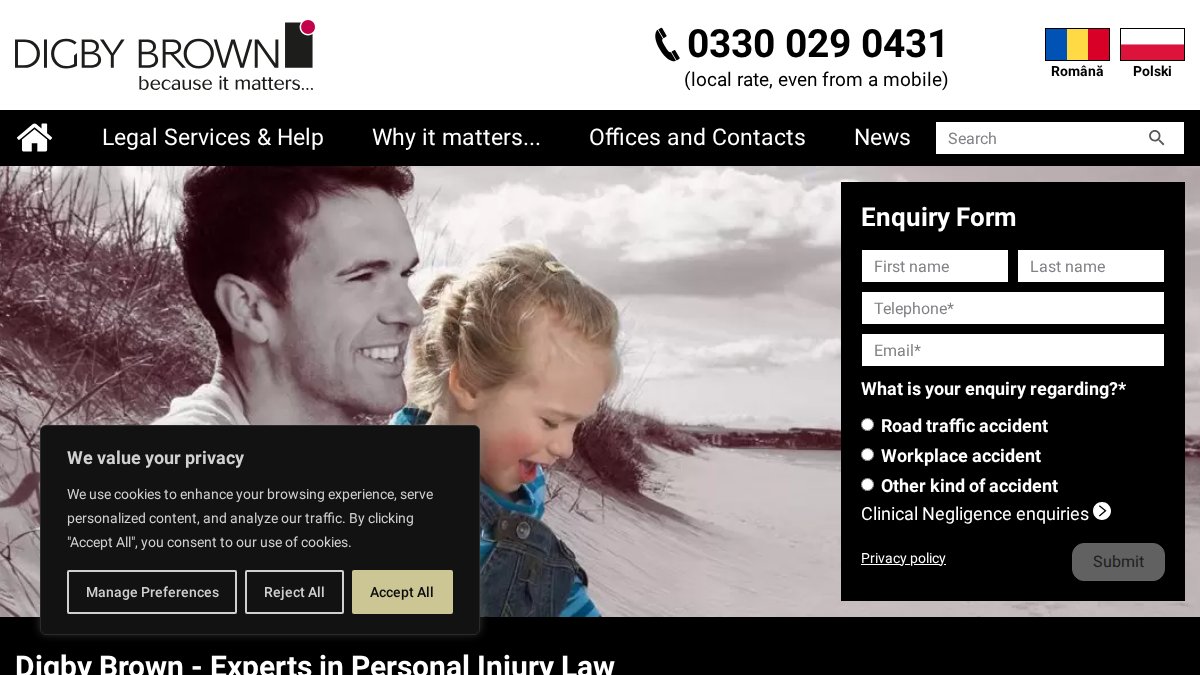 Digby Brown | Experts in Personal Injury Law Scotland
3. Dallas McMillan Solicitors: Local Glasgow Expertise
Dallas McMillan, based in Glasgow city centre, aims to pay clients 100% of settlement sums without deductions for fees, VAT, and outlays where possible. The firm's accreditation from the Law Society of Scotland in personal injury law signals specialist knowledge. Dallas McMillan handles road traffic accidents, workplace accidents, industrial diseases, and medical negligence claims, offering free initial consultation and face-to-face meetings.
Pros:
- Aims for 100% compensation retention
- Accredited specialists in personal injury
- Face-to-face consultations in Glasgow city centre
- Free initial consultation
- Handles diverse injury types
Cons:
- 100% compensation guarantee qualified as "where at all possible"
- Success fee percentages not clearly stated on website
 Commercial, Employment & Personal Injury Lawyers Glasgow
4. Khan Law: Transparent Fees and Strong Reviews
Khan Law, based in Glasgow, operates on a strictly no win no fee basis with emphasis on transparent fee structures and no hidden costs. The firm has accumulated over 100 five-star reviews praising professionalism and customer service. Success fees are pre-agreed in writing, eliminating surprises at settlement. Khan Law handles road traffic accidents, medical negligence, and accidents at work across Scotland.
Pros:
- Transparent fee structure with no hidden costs
- Over 100 five-star reviews praising service
- Free initial consultation with experienced solicitors
- Clear pre-agreed success fees
- Regular client communication and updates
Cons:
- Success fee deducted from compensation
- Average settlements suggest focus on routine rather than complex claims
 Co website
5. Jones Whyte: Client Communication Focus
Jones Whyte, a Glasgow-based firm, distinguishes itself through exceptional client communication. Solicitors are consistently praised for keeping clients updated at every stage of their claims. The firm handles road traffic accidents, workplace accidents, slips, trips and falls, and medical negligence. A key feature is the inclusion of After the Event (ATE) insurance, which protects you against the opposing party's legal costs if your claim fails.
Pros:
- Exceptional client communication and regular updates
- ATE insurance included to protect against opposing costs
- Free, no-obligation consultation
- Proven negotiation track record with insurers
- Handles diverse injury types
Cons:
- Success fee deducted from compensation
- Rehabilitation coordination not a primary focus
 Co website
6. Miller Samuel Hill Brown: 100% Compensation Up to £20,000
Miller Samuel Hill Brown, based in Glasgow, offers a compelling guarantee: clients receive 100% of their compensation for claims worth up to £20,000, with no deduction for legal fees. This guarantee is possible because the opposing party's legal costs are typically recoverable at that level under Scots Law. The firm brings over 40 years of experience in personal injury law, with most cases settling out of court.
Pros:
- Guarantees 100% compensation for claims up to £20,000
- Over 40 years of experience in personal injury law
- High rate of out-of-court settlements
- No cost if claim unsuccessful
- Handles standard personal injury claims
Cons:
- 100% compensation guarantee limited to claims up to £20,000
- Larger claims require individual fee discussion
7. Livingstone Brown: Flexible Consultation Options
Livingstone Brown, a Glasgow-based firm with over 30 years' legal experience, offers no win no fee arrangements when appropriate. The firm's flexibility extends to consultation methods: Skype consultations, email, and telephone communication accommodate clients who cannot attend in-person meetings. Livingstone Brown is particularly recognised for determination in pursuing medical negligence claims.
Get Started Today →
Pros:
- Flexible consultation options (Skype, email, telephone)
- Free initial enquiry service
- Recognised expertise in medical negligence claims
- Over 30 years of legal experience
- Willing to discuss cases on individual merits
Cons:
- No win no fee offered "when appropriate" rather than as standard
- Success fee percentages not clearly stated
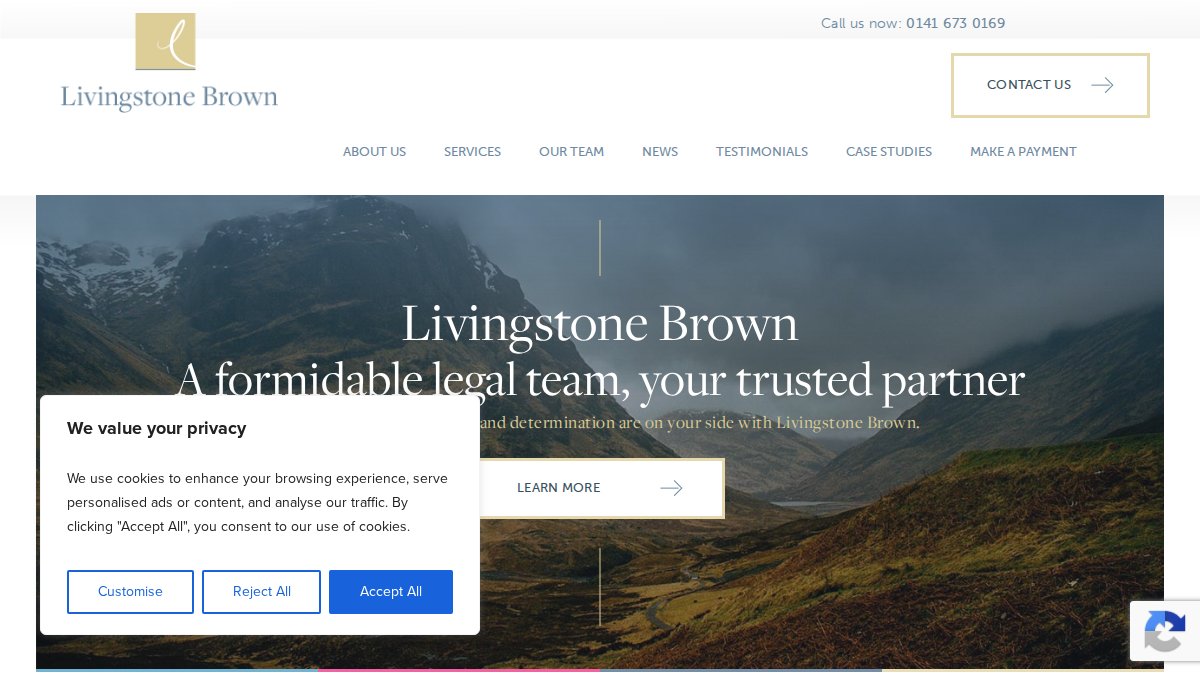 Livingstone Brown | Solicitors for Glasgow & Across Scotland
8. Lawford Kidd: 100% Compensation with Cost Recovery
Lawford Kidd, based in Edinburgh but operating across Scotland, offers a distinctive model: 100% compensation guarantee with no deductions, combined with legal cost recovery from the losing party's insurer. This structure means clients retain every penny of their award whilst the firm recovers its costs separately. The firm's team includes solicitors with decades of experience in serious injury and high-value claims.
Pros:
- Guarantees 100% compensation with no deductions
- Legal costs recovered from opposing party's insurer
- Expertise in serious injury and high-value claims
- Experienced team with strong reputation
- No cost if claim unsuccessful
Cons:
- Headquarter offices in Edinburgh rather than Glasgow
- Focus on serious/high-value claims may mean less experience with routine accidents
 We’ve moved
Key Considerations When Choosing a No Win No Fee Solicitor
Selecting the right solicitor involves evaluating several factors beyond simply choosing the firm with the highest profile. Your decision should reflect your claim's complexity, your location, and your priorities regarding compensation retention.
Assess the firm's experience with your claim type. A solicitor experienced in road traffic accidents may lack expertise in industrial disease claims. Matching the firm's expertise to your claim type ensures appropriate representation.
Clarify the fee structure in writing before proceeding. Ask explicitly whether success fees will be deducted from your compensation or recovered from the opposing party. Request the exact percentage you'll pay if successful. Understand what disbursements (court fees, medical reports, expert witness costs) you might face if the claim fails.
Evaluate communication practices. How accessible is the solicitor? Will you receive regular updates? Do they offer consultation methods that suit your circumstances, phone, video, or in-person? Claims often take 12-18 months; poor communication creates unnecessary stress.
Consider the firm's settlement track record. Ask how many cases settle out of court and what average compensation clients receive. This indicates the firm's negotiation skills and realistic expectations.
Verify professional credentials. Ensure the solicitor is regulated by the Law Society of Scotland. Check whether they hold professional indemnity insurance protecting you if something goes wrong. Accreditation in personal injury law signals specialist knowledge.
 Person at home reviewing legal documents on a laptop with a notebook and pen nearby, researching solicitor options, warm indoor lighting
Are There Hidden Costs in No Win No Fee Arrangements?
The term "no win no fee" is misleading. Whilst legal fees disappear if you lose, other costs may not. Understanding what remains your responsibility is essential before signing any agreement.
Disbursements are the primary hidden cost. These are expenses incurred pursuing your claim: court fees, medical report charges, expert witness fees, and obtaining medical records. If your case fails, you typically remain liable for these costs unless covered by legal expenses insurance.
Ask your solicitor whether disbursements are covered by insurance. Some firms include legal expenses insurance protecting you against these costs if unsuccessful. Others do not, leaving you exposed.
Success fees reduce compensation. Even with no upfront costs, a success fee deducted from your award effectively costs you money. Some solicitors, including Scotland Claims Injury Lawyers, avoid this by recovering fees from the opposing party instead.
Opposing party costs are another consideration. If your claim fails, the opposing party may recover their legal costs from you. However, recent legal reforms in Scotland mean unsuccessful claimants are increasingly protected from bearing the other side's costs, particularly in lower-value claims. Your solicitor should explain your exposure under current law.
After the Event (ATE) insurance protects against opposing party costs if unsuccessful. Some firms include this automatically; others charge extra. ATE insurance provides valuable protection if your case fails.
Watch Out
Before signing any agreement, ask your solicitor to itemise all potential costs if unsuccessful: disbursements, medical reports, expert fees, and opposing party costs. Request confirmation of whether legal expenses insurance covers these. A firm unable or unwilling to provide this clarity should raise concerns.
What Happens If Your Claim Is Unsuccessful?
Losing a personal injury claim carries financial and emotional consequences. Understanding what happens if your case fails helps you make an informed decision about whether to pursue representation.
You pay no solicitor fees if unsuccessful. This is the core promise of no win no fee arrangements. Your solicitor absorbs the cost of pursuing your claim, incentivising them to take only viable cases. However, this protection applies only to legal fees, not other expenses.
Disbursements may become your liability. Medical reports, court fees, and expert witness costs incurred during your claim typically become your responsibility if unsuccessful, unless covered by legal expenses insurance.
The opposing party may recover their legal costs from you. This is a significant financial exposure. However, Scottish law increasingly protects unsuccessful claimants from bearing the other side's costs, particularly in lower-value claims. Your solicitor should explain your specific exposure based on your claim's value and circumstances.
After the Event (ATE) insurance provides protection. If included in your agreement, ATE insurance covers the opposing party's legal costs if your claim fails. This transforms a potentially large liability into a known, manageable insurance cost.
Realistic assessment prevents disappointment. Solicitors who honestly assess your case's strength, acknowledging both strengths and weaknesses, help you make informed decisions. Be cautious of solicitors who guarantee success; no case is certain.
Conclusion
Selecting a no win no fee solicitor in Scotland requires careful evaluation of fee structures, firm expertise, and communication practices. The eight firms listed above represent diverse approaches to personal injury representation, each with distinct strengths.
Scotland Claims Injury Lawyers stands out by guaranteeing clients retain 100% of their compensation, recovering fees from the opposing party rather than deducting from your award. Larger firms like Digby Brown provide substantial resources and specialist teams for complex injuries. Smaller Glasgow-based practices like Dallas McMillan and Khan Law offer local expertise and accessible consultations.
Before committing to any solicitor, obtain written confirmation of: the exact success fee percentage if successful; what disbursements you might owe if unsuccessful; whether legal expenses insurance covers these costs; and the firm's track track record with your claim type. This clarity prevents surprises and ensures you understand your actual financial exposure.
The average annual number of personal injury cases litigated in Scotland between 2022/23 and 2024/25 was 9,700, according to Scotland Claims Injury Lawyers analysis, reflecting the volume of claims pursued. Over 90% settle out of court, meaning most claimants never reach litigation. Choosing a solicitor experienced in settlement negotiation often matters more than choosing one prepared for court.
Your claim's success depends partly on legal representation but also on the strength of your evidence, the clarity of liability, and the extent of your injuries. A skilled solicitor maximises your compensation within these constraints. Take time with your initial consultation. Ask the questions outlined above. Compare responses across multiple firms. The solicitor you choose will guide you through 12-18 months of claims management; ensuring you've selected someone you trust and who communicates clearly is time well invested.
=== FAQ ANSWERS (audit these too, same rules) ===
Frequently Asked Questions
What does a no win no fee agreement mean under Scottish law?
A no win no fee agreement, formally known as a conditional fee agreement or damages-based agreement under Scots Law, means you pay no legal fees if your personal injury claim is unsuccessful. If successful, your solicitor recovers their fees from the compensation awarded or from the other party's insurer. The legal fee caps under Scots Law are 20% of compensation up to £100,000, 10% between £100,000 and £500,000, and 2.5% over £500,000. This arrangement removes financial risk from pursuing a claim.
How much do no win no fee solicitors charge in Scotland?
Success fees under no win no fee agreements in Scotland are regulated by law. Solicitors can charge up to 20% of compensation up to £100,000, 10% between £100,000 and £500,000, and 2.5% of awards exceeding £500,000. However, some firms offer different models: certain solicitors recover legal fees from the other party's insurer for claims up to £20,000, meaning clients retain 100% of their compensation. Always ask your solicitor how they structure their fees before proceeding, as this varies between firms.
How long does a personal injury claim take in Scotland?
Most personal injury claims in Scotland settle out of court, typically within 6 to 18 months, depending on claim complexity and injury severity. Simple cases such as minor whiplash injuries may resolve within 3 to 6 months. More complex claims involving serious injuries or disputed liability can take 2 to 3 years or longer. Court proceedings, when necessary, add additional time. Your solicitor can provide a more specific timeline once they assess your case details and the nature of your injury.
What types of personal injury claims do no win no fee solicitors handle?
No win no fee solicitors in Scotland handle a wide range of personal injury claims, including road traffic accidents, workplace accidents, slips and trips, accidents at work, industrial diseases, and medical negligence. When you contact a solicitor, confirm they handle your specific type of claim, as some firms specialise in particular areas such as serious injuries or occupational disease.
How do I verify if a solicitor is regulated by the Law Society of Scotland?
You can verify a solicitor's regulation status by visiting the Law Society of Scotland's website and using their Find a Solicitor tool. This confirms whether the firm holds a current practising certificate and operates under the Law Society's professional standards. Regulated solicitors must hold professional indemnity insurance and comply with strict conduct rules. Always check this before instructing a solicitor to ensure you are working with a qualified, accountable professional.