Slip and trip prevention tips for Scotland: 2026 guide
TL;DR:
- Slips and trips are common but preventable causes of injuries, with indoor and outdoor hazards needing attention. Maintaining surfaces, good housekeeping, proper lighting, and supportive equipment significantly reduce risks, especially in Scottish winter conditions. Treating safety as a system, including hazard reporting and recovery training, is most effective for long-term injury prevention.
Slips and trips are among the most underestimated hazards in everyday life, yet they account for thousands of injuries across Scotland every year. Whether you are at home, in the workplace, or walking along an icy Scottish pavement in January, the risk is far more real than most people acknowledge. Formally known as same-level fall incidents, these accidents are largely preventable. This guide gives you practical, evidence-based slip and trip prevention tips tailored to both home and workplace environments, with advice grounded in current best practice and relevant to conditions right here in Scotland.
Key takeaways
| Point |
Details |
| Floor quality matters most |
Floors should meet a pendulum test value of 36 or higher in wet conditions to reduce slip risk. |
| Signage does not prevent falls |
Barriers and immediate cleaning are the primary controls; wet-floor signs are a supplement, not a solution. |
| Indoor hazards are serious too |
Many falls happen indoors due to poor lighting, loose rugs, and clutter, not just icy outdoor conditions. |
| A systems approach works best |
Combining engineering controls, housekeeping discipline, and personal behaviours sustains safer environments long term. |
| Recovery training reduces harm |
Controlled descent training and safe floor transfer techniques reduce injury severity when falls do occur. |
How to evaluate your slip and trip prevention tips and hazard controls
Before you can act on any advice, you need to understand what you are actually looking for. Slip and trip hazards fall into two broad categories: surface conditions that cause a loss of traction, and physical obstacles or changes in level that catch your foot. Both require different controls, and confusing them leads to missed risks.
Surface slip resistance is one of the most important factors to get right in any setting. The Health and Safety Executive recommends a PTV of 36 or higher as the threshold for low slip potential in wet conditions. In practical terms, this means smooth, polished, or contaminated floors are far more dangerous than textured, dry ones. You do not need specialist equipment to do a basic check at home, but in workplaces, formal testing is worth commissioning.
For trip hazards, look at:
- Loose or uneven flooring, including carpets and threshold strips
- Trailing cables and charging leads
- Clutter on walkways and staircases
- Sudden changes in floor level, such as raised door thresholds or worn steps
Lighting is often overlooked as a factor in both types of incident. Poor visibility means hazards go unnoticed until it is too late. A workplace corridor that looks fine during the day can become a genuine risk at night or in winter when natural light fades early, which is relevant for much of the Scottish working year.
The most important distinction to understand is this: hazard controls tackle the source of the problem. Warning signage only alerts people to a hazard that already exists. Signage alone is routinely cited as one of the biggest hidden failures in prevention programmes. Fix the floor, clear the clutter, clean the spill. Then put up the sign.
Pro Tip: When assessing any space for slip and trip risks, do a walkthrough wearing the same footwear you would normally use there. Rubber-soled trainers mask surface problems that leather-soled shoes would expose immediately.
1. Remove trip hazards from your home
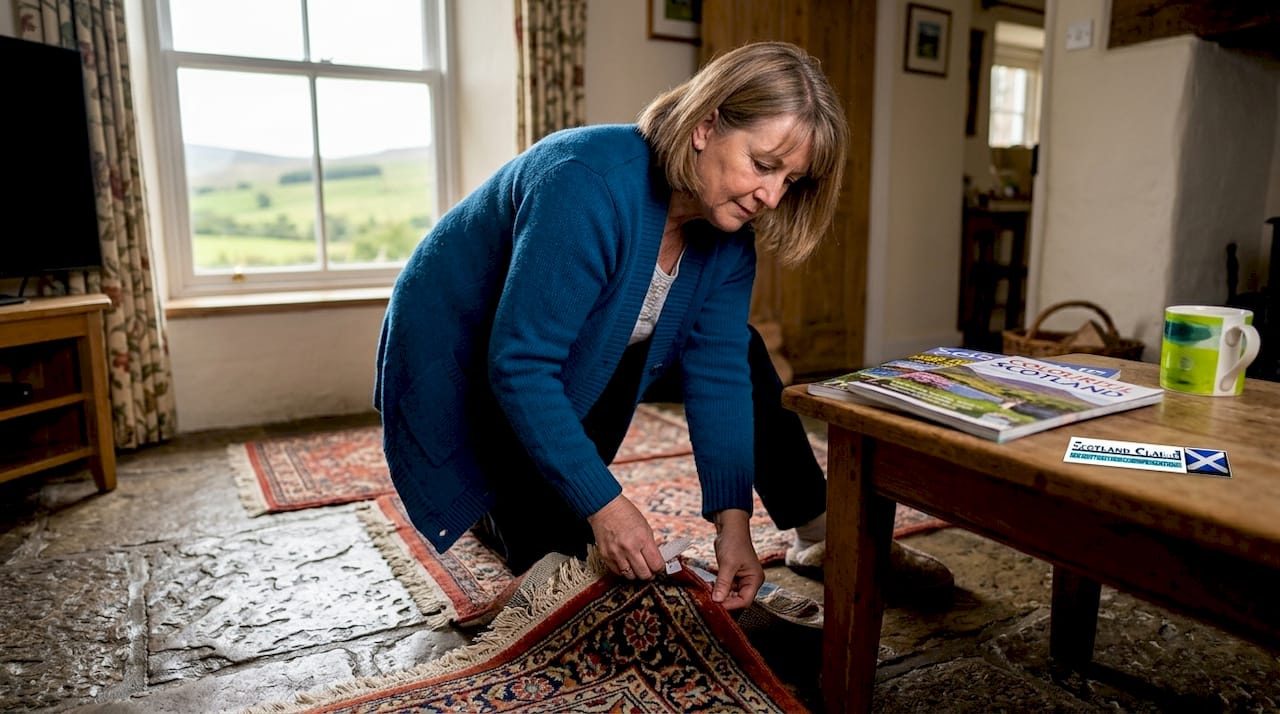
The home is where a large proportion of same-level falls occur, and the hazards are usually hiding in plain sight. Loose carpets, clutter, and trailing cords are among the most common culprits. Fixing them costs very little but makes an enormous difference.
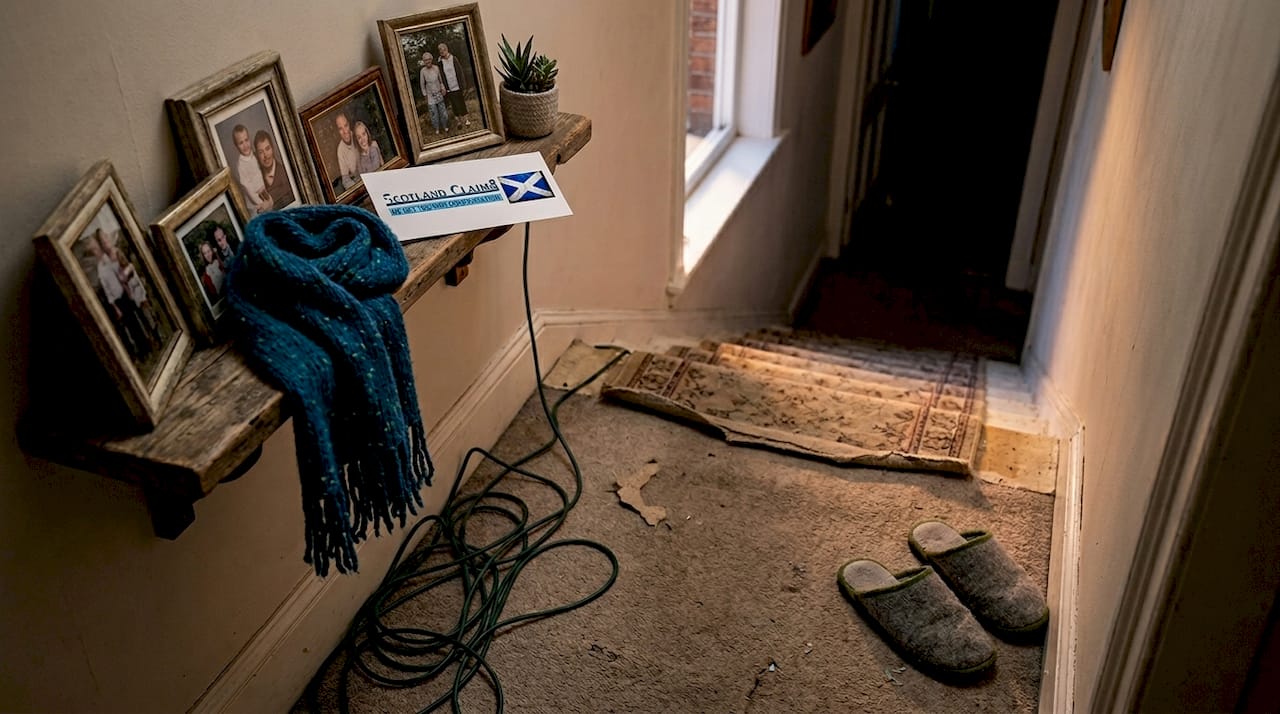
Secure loose rugs with non-slip backing or double-sided tape. Better still, remove small rugs from high-traffic areas like hallways and kitchens entirely. Tuck cables behind furniture or run them along skirting boards. Keep floors, stairs, and passageways clear of objects that have no business being there, bags by the door, shoes on the stairs, toys on the landing.
2. Improve lighting throughout the home
You cannot avoid what you cannot see. Add motion-sensor nightlights to hallways and bathrooms for night-time movement. Fit brighter bulbs in stairwells and at exterior steps. If you wear glasses or contact lenses, keeping your prescription up to date is part of fall prevention too. Poor eyesight combined with dim lighting is a particularly high-risk combination for older adults.
Pro Tip: A motion-sensor light fitted above a staircase landing costs under £20 and could prevent a serious injury. It is one of the highest-value home safety investments you can make.
3. Use supportive equipment where needed
Grab rails beside the bath, shower, and toilet are not just for elderly residents. Anyone recovering from surgery, managing a condition affecting balance, or simply living in a house with steep stairs can benefit. Fit handrails to both sides of staircases if they are not already there. Non-slip bath mats inside the shower or bath are a straightforward fix for a notoriously slippery surface.
Many people slip on their own floors while wearing socks or flat-soled slippers with no grip. Footwear inside the home matters just as much as it does outside. Wear slippers with rubber soles rather than smooth-bottomed ones, and replace them when the grip wears down.
5. Prepare for Scottish winter conditions outdoors
Scotland’s winters create specific hazards that are worth preparing for. NHS Lanarkshire highlights outdoor ice and indoor risks as particular concerns during cold weather, and both deserve attention. Keep a bag of rock salt or grit at your door for treating steps and paths. Wear boots with good grip and low heels on icy days. When walking on ice, shorten your stride, keep your weight centred over your feet, and walk with your hands free rather than in your pockets.
Critically, do not assume that staying indoors solves the problem. Many falls happen inside the home due to exactly the same trip hazards that exist year-round. Winter is a good prompt to address indoor risks too.
6. Maintain clear and safe walkways at work
In workplace and public settings, keeping floors and passageways clear and in good condition is the foundation of preventing workplace accidents. Aisles and exits should never be partially blocked, even temporarily. Maintaining clear aisles along with managing cables and ensuring fast spill responses are all cited as workplace prevention basics.
Establish a culture where workers report hazards rather than step over them. This takes leadership. If management dismisses reports of a damp floor or a loose tile, the message is that safety is not a priority.
In a workplace or public setting, the correct response to a spill is specific and time-sensitive. Best practice means placing wet-floor signage within 60 seconds, cordoning off the affected area, and cleaning it completely as quickly as possible. The sign goes up while cleaning is happening. It is not a substitute for cleaning.
This distinction matters legally as well as practically. If someone slips on a wet floor that was merely coned off but not cleaned, the responsible party has not done enough. For more on what establishes negligence in these situations, the legal standard is clear: reasonable steps must be taken to remove the hazard.
Pro Tip: Assign a named person to spill response on every shift. When nobody is responsible, everybody assumes someone else is handling it.
8. Manage cables and floor surfaces at work
Cable management is one of the most straightforward and overlooked aspects of trip prevention in offices and commercial premises. Use cable trays, conduit, or floor cable covers to keep leads off walkways. Inspect floor coverings regularly for worn patches, raised edges, and loose tiles. Even a 5mm lip on a carpet can catch a toe and send someone to the floor.
Footwear choice is a personal control that complements every engineering measure in place. Appropriate footwear, vigilance, and walking techniques are cited alongside engineering controls as key factors in preventing falls. In kitchens, food-processing environments, and any workplace where floors may be wet, slip-resistant footwear is not optional. Employers should specify and, where possible, supply it.
10. Compare prevention approaches for home and workplace
Not every tip applies equally in every setting. The table below helps you see which measures deliver the greatest value depending on where you are.
| Prevention measure |
Home |
Workplace/public area |
| Floor surface quality (PTV testing) |
Useful but rarely tested formally |
High priority, especially in wet areas |
| Housekeeping and decluttering |
Immediate, low-cost impact |
Requires daily routines and staff responsibility |
| Slip-resistant footwear |
Easy personal choice |
Employer specification and supply where needed |
| Lighting improvements |
Low-cost, high impact |
Part of facility management standards |
| Spill response protocols |
Informal but useful |
Formal, timed protocol required |
| Supportive equipment (rails, grab bars) |
Highly effective for all ages |
Part of accessible design requirements |
A systems approach that combines floor design, housekeeping discipline, and behavioural factors produces sustained safety improvements. Addressing only one element leaves persistent gaps. For example, buying non-slip mats for a workplace kitchen means little if spills are still left unattended for 20 minutes.
Seasonal factors matter here too. Scotland sees significant periods of frost, rain, and low light between October and March. Budget-conscious measures such as grit bins, motion-sensor lights, and rubber-backed mats deliver strong returns relative to cost. Premium options such as surface coatings with tested slip resistance ratings are worth considering for high-footfall or high-risk areas.
11. Build fall preparedness and recovery into your strategy
Prevention is the priority, but even the best-prepared person can lose their footing. Recovery training that includes controlled descent and safe floor transfer techniques is an emerging best practice that reduces injury severity when falls do occur.
Practically, this means:
- Learning how to fall in a way that protects your head, hips, and wrists
- Practising getting up from the floor in a controlled, staged way rather than panicking
- Working on balance and core strength through activities like yoga, tai chi, or targeted physiotherapy
- Addressing the fear of falling, which in itself can cause people to move less and become more physically deconditioned
For older adults or those recovering from injury, individual risk assessment tools can help identify specific vulnerabilities and target the right interventions. A holistic fall prevention strategy pairs hazard control with personal resilience, rather than treating the two as separate concerns.
My honest view on what actually works
I have reviewed the evidence on same-level fall prevention thoroughly, and one pattern stands out repeatedly: most prevention failures are not technical. They are operational.
A building can have compliant flooring, proper drainage, and slip-resistant mats at every entrance, and still generate injuries. Why? Because housekeeping routines and operational response loops break down. A spill gets left. A cable gets trailed across a corridor. A light bulb goes out and is not replaced for three weeks.
What I have found actually works is treating safety as a system rather than a checklist. Checklists get ticked and forgotten. Systems have named responsibilities, response times, and review cycles. They also require a culture where reporting a hazard is genuinely welcomed rather than quietly ignored.
The most overlooked prevention tip I would offer anyone is this: practise your environment rather than just assessing it. Walk your home or workplace with the specific intent of finding what could go wrong for you, wearing your footwear, at the time of day you are most vulnerable. Systems safety thinking consistently shows that how environments function in practice is what matters, not how they look on paper.
— Roger
When prevention is not enough: claiming what you are owed
Prevention reduces risk significantly, but accidents still happen, often through no fault of your own. A wet floor left unattended, a broken step on a public staircase, a poorly lit car park: these are situations where someone else’s failure to act reasonably causes you harm.
Scotland Claims Injury Lawyers specialises in slip and trip injury claims across Scotland, helping injured individuals pursue compensation on a No Win No Fee basis. If your case is unsuccessful, you pay nothing. For slip and trip claims and every other claim type, Scotland Claims Injury Lawyers deducts no success fee at all, meaning you keep 100% of your compensation - while most large national firms charge up to 20% including VAT. Whether you have suffered a back injury or a knee injury from a fall, find out where you stand with a free consultation through the no win no fee service.
FAQ
What surfaces are most likely to cause slips?
Wet, smooth, or polished floors carry the highest slip risk. The HSE recommends floors achieve a pendulum test value of 36+ in wet conditions to be considered low risk.
Does wet-floor signage legally protect a business from a claim?
No. Signage is a supplementary warning, not a primary control. A business must also respond promptly and clean the hazard to meet its duty of care, as outlined in premises liability standards.
What are the biggest trip hazards at home?
Loose carpets, clutter, and cords are the most common indoor trip hazards, alongside poor lighting and worn stair coverings.
How can I reduce slip risks in icy Scottish weather?
Grit external steps and paths before freezing temperatures arrive, wear boots with good grip and low heels, and shorten your stride when walking on ice. Indoor hazards should also be addressed during winter months, as many falls happen inside regardless of weather.
What should I do if I am injured in a slip or trip accident?
Seek medical attention, document the scene if possible, and report the incident to whoever is responsible for the property. Then contact a specialist solicitor to understand your options. Scotland Claims Injury Lawyers offers a guide to slip and trip claims in Scotland to help you understand the process clearly.
Recommended