Common slip and trip injury examples in Scotland
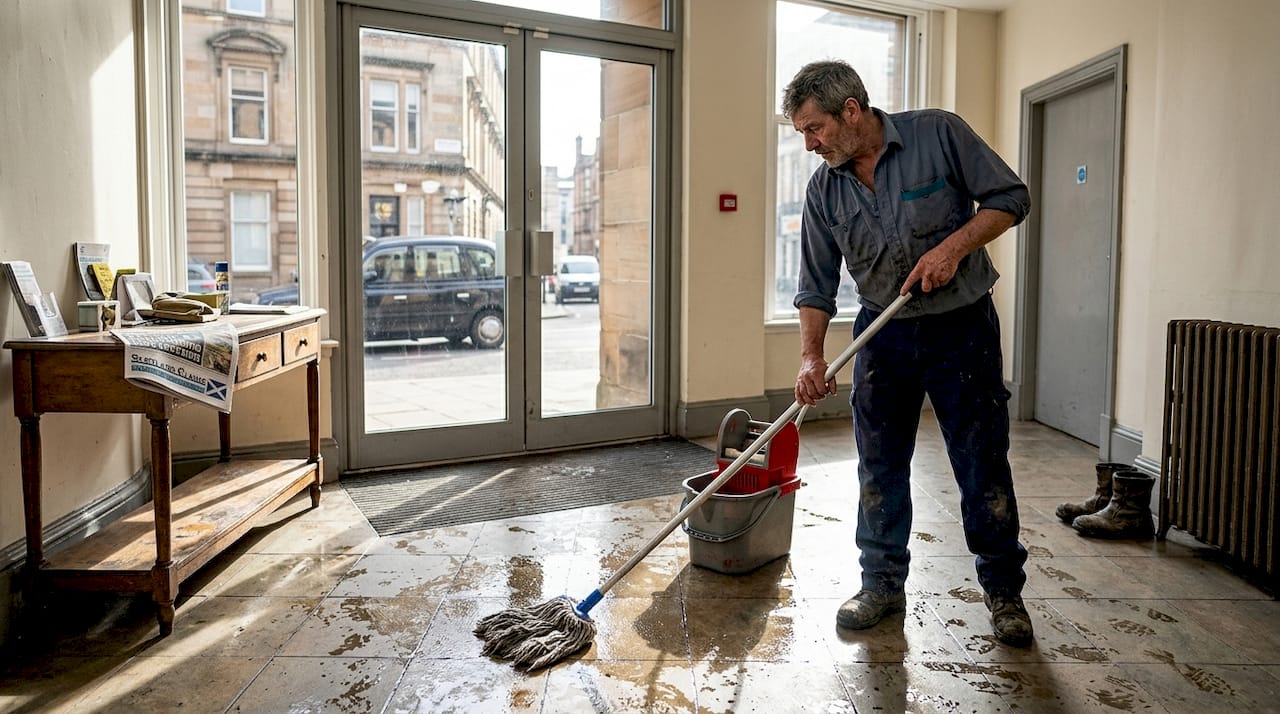
Many people who suffer a slip or trip injury in Scotland are unsure whether their accident is serious enough to pursue a claim. That uncertainty is understandable. The line between an unfortunate accident and a preventable one caused by someone else’s negligence is not always obvious. Knowing what real Scottish cases look like, and understanding the types of hazards that courts have already ruled on, can make all the difference when deciding whether to seek compensation.
Table of Contents
Key Takeaways
| Point |
Details |
| Wide range of hazards |
Slip and trip injuries in Scotland often stem from everyday hazards like wet floors and raised mats. |
| Proof is crucial |
Gathering good evidence like photos and witness details can make or break your claim. |
| Legal help boosts success |
Working with a specialist injury solicitor increases your chances of getting compensation after a trip or slip. |
| Real cases set examples |
Successful Scottish claims show what kinds of accidents meet the legal criteria for compensation. |
What counts as a slip or trip injury?
A slip happens when your foot loses grip on a surface, typically due to a wet or slippery floor. A trip occurs when your foot catches on an obstacle or uneven surface, causing you to stumble or fall. Both can result in serious injuries, and both can form the basis of a legal claim if someone else was responsible for the hazard.
Under Scottish law, the definition of slip and trip claims centres on whether the person or organisation in charge of a property failed to keep it reasonably safe. The Occupiers’ Liability (Scotland) Act 1960 places a duty of care on occupiers, meaning shops, employers, councils, and landlords must take reasonable steps to prevent foreseeable harm.
Common situations that lead to general slip and trip claims include:
- Wet or freshly mopped floors without warning signs
- Raised or curled entrance mats
- Trailing electrical cables across walkways
- Uneven paving slabs or broken kerbstones
- Poor lighting in stairwells or corridors
- Cluttered walkways in warehouses or shops
The legal principle of res ipsa loquitur (Latin for “the thing speaks for itself”) can be particularly powerful in these cases. As established in Scottish case law, res ipsa loquitur applies when the hazard was under the defender’s control and the accident simply would not have happened if proper care had been taken.
Pro Tip: Take photographs of the exact hazard that caused your fall as soon as it is safe to do so. A clear image of a raised mat, a wet floor without signage, or a broken paving slab can be compelling evidence that the hazard existed and was not addressed.
Classic examples of slip and trip injuries in Scotland
Slip and trip accidents happen in a wide range of settings across Scotland. Here are the most common scenarios that result in successful compensation claims:
-
Supermarket and shop entrances. Entrance mats that curl at the edges, wet floors near doorways during rainy weather, and spillages in aisles are among the most frequently reported hazards. A successful supermarket claim in West Dunbartonshire saw a customer awarded £9,500 after tripping on a raised entrance mat at an Iceland store in Alexandria.
-
Public pavements and transport hubs. Broken kerbstones, icy pavements, and uneven flagstones are common culprits. Local councils have a duty to maintain public paths, and failure to do so can make them liable.
-
Workplaces. Wet corridors, cluttered walkways, and poorly maintained flooring are frequent causes of workplace trips. Employers must carry out regular risk assessments to identify and address these hazards.
-
Hospitality venues. Spills on bar or restaurant floors, loose wiring near entertainment areas, and poorly lit staircases all create real risks for customers.
-
Residential properties. Loose stair carpets, broken handrails, and slippery bathroom tiles can lead to claims against landlords who have failed to carry out repairs.
Injuries from these incidents range from bruising and sprains to more serious conditions. Back injury claims and knee injury claims are particularly common following trips, as people instinctively brace themselves during a fall. Understanding how to claim compensation is the essential first step once you have received medical attention.
“The key question in any slip or trip case is not just whether you fell, but whether the occupier knew or should have known about the hazard and failed to act.”
Pro Tip: If you are injured in a shop or public building, ask a member of staff to complete an accident report form before you leave. Request a copy for your records. This creates an official record that the incident occurred on their premises.
Spotlight: Real case in West Dunbartonshire
One of the clearest recent examples of a successful Scottish trip claim involves a customer at an Iceland supermarket in Alexandria, West Dunbartonshire. The claimant tripped on the raised edge of an entrance mat and suffered injuries as a result. The case went to appeal, and the court upheld the original £9,500 damages award in favour of the customer.

The court applied the Occupiers’ Liability (Scotland) Act 1960 and found that the supermarket, as the occupier, had failed in its duty of care. The raised mat was a foreseeable hazard that the store should have identified and corrected. The full legal details of the case illustrate how courts assess occupier responsibility.
What made the difference in this case?
- The hazard was visible and identifiable. The raised mat edge was a physical defect that staff could have spotted during routine checks.
- The occupier had control over the hazard. The mat was on their premises and within their responsibility to maintain or replace.
- The principle of res ipsa loquitur applied. The accident would not have occurred had the mat been properly maintained.
- Medical evidence supported the claim. The claimant’s injuries were documented and linked directly to the fall.
If your incident shares any of these features, it is worth exploring your options. See more slip and trip cases to understand how similar situations have been handled under Scottish law.
Comparing types of hazards: Which are most likely to lead to a claim?
Not every hazard carries the same weight in a legal claim. The more avoidable the hazard, and the more clearly the occupier was responsible for it, the stronger your case tends to be. Here is a comparison of common hazard types and their typical claim prospects:
| Hazard type |
Typical cause |
Claim likelihood |
Key factor |
| Raised or curled mat |
Poor maintenance |
High |
Visible defect, occupier’s control |
| Wet floor without signage |
Spillage or cleaning |
High |
Failure to warn, foreseeable risk |
| Uneven pavement |
Council neglect |
Moderate to high |
Maintenance records, inspection logs |
| Trailing wires |
Poor housekeeping |
High |
Preventable, clear duty of care |
| Poor lighting |
Bulb failure, design |
Moderate |
Depends on how long issue existed |
| Icy pavement |
Weather conditions |
Moderate |
Gritting duty, timing of incident |
As established in Scottish case law, trips from raised surfaces such as mats and pallets, and slips from poor friction surfaces, are among the most commonly successful claim types. Poor lighting leading to a fall on stairs is also actionable, though it requires evidence that the occupier was aware of the problem.
Key insight: The longer a hazard has existed without being addressed, the stronger your claim. A spillage that happened moments before your fall is harder to prove than a mat that has been curled for weeks.
Proving hazard liability often comes down to showing that the occupier either knew about the hazard or should have discovered it through reasonable inspection. Maintenance logs, CCTV footage, and staff testimony can all play a role.
Recognising evidence and next steps if you’re injured
Knowing what happened is one thing. Proving it is another. The strength of your claim often depends on the quality of evidence gathered in the hours and days immediately following your accident.
Here is a practical checklist to follow if you are injured in a slip or trip:
- Photograph the hazard from multiple angles before it is cleaned up or repaired
- Note the exact location including the address, floor area, and any nearby signage
- Gather witness details including names and contact numbers of anyone who saw the fall
- Report the incident to the occupier and request a copy of the accident report
- Seek medical attention as soon as possible, even if injuries seem minor at first
- Keep a record of your symptoms and any impact on your daily life or work
The legal principle of res ipsa loquitur can significantly strengthen your case. Under the Occupiers’ Liability (Scotland) Act 1960, if the hazard was clearly under the occupier’s control and the accident would not have occurred with proper care, the burden of proof can shift towards the defender. This means you may not need to prove every detail of how the hazard arose.
Understanding the compensation process in Scotland helps you move forward with confidence. Working with injury lawyers who know Scottish law means your evidence is presented in the most effective way possible.
Pro Tip: Do not post about your accident on social media. Defenders and their insurers sometimes use social media posts to challenge the severity of injuries. Keep details of your claim private until it is resolved.
How expert injury lawyers in Scotland can help
If your accident matches any of the scenarios described above, taking the next step with specialist legal support could make a significant difference to your outcome. Injury lawyers in Scotland who specialise in slip and trip cases understand exactly what evidence is needed, how to apply Scottish occupier liability law, and how to negotiate with insurers on your behalf. At Scotland Claims, you can access a free, confidential case assessment with no obligation. Use our compensation calculator to get an early estimate of what your claim could be worth. All cases are handled on a no win no fee basis, meaning you pay nothing upfront and keep 100% of your compensation if your claim succeeds. Get in touch today to speak with a specialist.
Frequently asked questions
Record the details of the hazard, take photographs, seek medical attention, and gather witness contact information as quickly as possible. Acting promptly protects the evidence that supports your claim.
Can I claim compensation if I tripped on a public pavement?
Yes. If the pavement was poorly maintained or presented a hazard due to council negligence, you may have valid grounds for a claim under Scottish law.
How is fault proven in Scottish slip or trip cases?
Showing that the hazard was under the occupier’s control and was preventable is often sufficient, particularly where res ipsa loquitur applies. Photographs, witness accounts, and accident reports all strengthen your position.
Is there a time limit for starting a slip or trip claim in Scotland?
Yes. In Scotland, you generally have three years from the date of your accident to begin legal proceedings, so it is important not to delay seeking advice.
Recommended