Table of Contents
Last Updated: 28 July 2026
Personal Injury Lawyer Reviews Glasgow: What to Look For
Finding the right solicitor for your personal injury claim can feel overwhelming when you're already dealing with an accident's aftermath. According to Law Society of Scotland guidance on personal injury claims, choosing an accredited solicitor significantly improves your chances of securing fair compensation. This guide breaks down what matters most when reviewing personal injury lawyer reviews Glasgow: client testimonials, track records, and transparent fee structures.
A solicitor who communicates clearly, understands Scottish law, and pushes hard on your case can mean the difference between recovering what you're owed and accepting a lowball offer.
Pro Tip
When reviewing personal injury lawyer reviews Glasgow, look for patterns in client feedback about communication speed and settlement outcomes, not just overall star ratings.
Why Client Testimonials Matter
Client testimonials reveal what actually happens when you work with a solicitor. Real feedback tells you whether a solicitor delivers on promises or leaves clients frustrated mid-way through their case.
The most valuable testimonials address three concerns: Did the solicitor communicate regularly? Were they honest about claim prospects from the start? Did they secure a fair settlement without unnecessary delays? Specific testimonials ("They kept me updated every two weeks and explained every step clearly") tell you what to expect far better than generic five-star reviews.
When reading personal injury lawyer reviews Glasgow, look for mentions of how solicitors handle difficult cases. The real test comes when liability is disputed or the initial offer seems unreasonably low. Testimonials mentioning these scenarios reveal whether a firm has the expertise and determination to push back.
Watch Out
Avoid firms where client reviews mention feeling abandoned during difficult stages or discovering unexpected costs later.
Proven Track Record and Success Rates
A strong track record means the firm has handled hundreds of similar cases and knows how to navigate Scottish courts and insurers. Success rates matter, but context matters more: a firm claiming 95% success might only take straightforward cases, whilst one with 78% success might tackle complex catastrophic injury claims.
Ask any solicitor directly: "What's your average settlement for [your type of injury]?" and "How many cases like mine have you handled in the past two years?" Firms that hesitate or give vague answers may lack genuine experience. Those with specific numbers demonstrate real expertise.
Best Personal Injury Solicitors Glasgow: Detailed Reviews
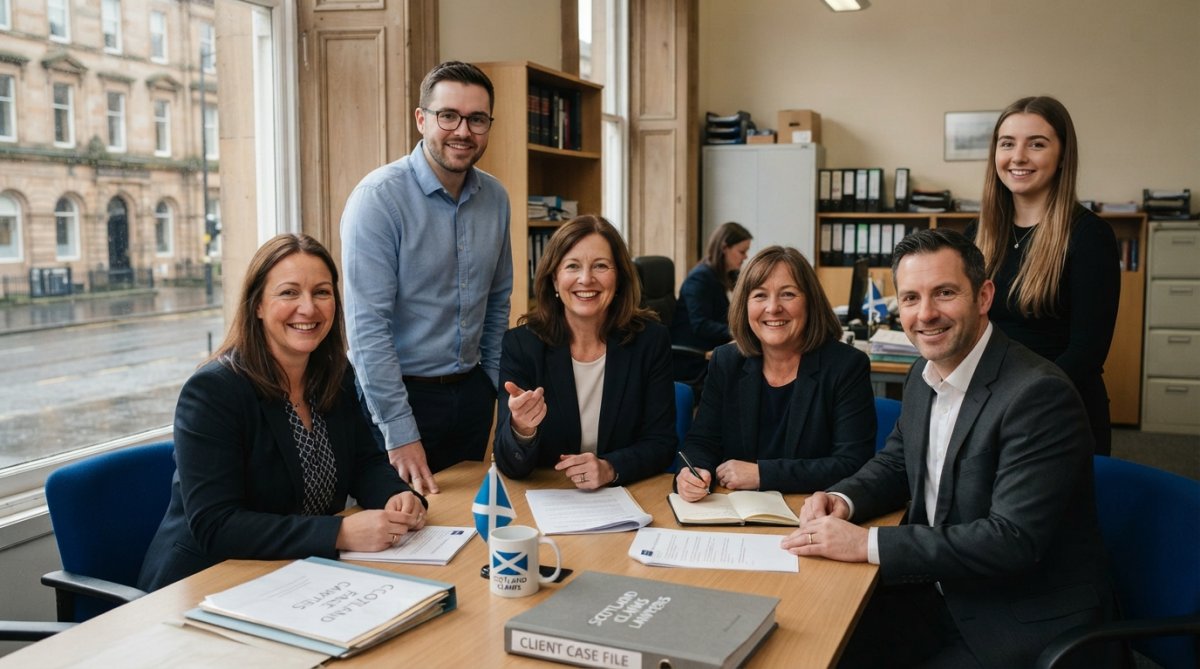
 Professional solicitor in modern Glasgow office consulting with client at desk with law books and case files visible, conveying trust and expertise
Digby Brown Solicitors: Specialist in Catastrophic Injuries
Digby Brown operates Scotland's largest personal injury practice with a dedicated Glasgow office, specialising in serious and catastrophic injury cases where compensation claims often reach six figures. What sets them apart is their support infrastructure beyond legal representation: they coordinate rehabilitation services including physiotherapy, psychological support, and vocational retraining.
Client feedback consistently highlights their expertise in securing significantly higher settlements than initial insurer offers. The firm operates on a no win, no fee basis and is ranked Band 1 for Personal Injury in Scotland by Chambers Guide to the UK Legal Profession. As a large firm, you may not receive the same personal attention as smaller boutique practices.
Watermans Solicitors: Holistic Rehabilitation Support
Watermans operates across Scotland with a Glasgow office and takes a genuinely holistic approach to personal injury claims. The firm arranges rehabilitation services, physiotherapy, psychological treatment, and occupational therapy alongside legal representation, recognising that recovery involves more than just compensation.
Operating on a no win, no fee basis, Watermans absorbs all costs if your claim fails. Clients appreciate the integrated support, with the firm coordinating everything rather than juggling separate providers. Client reviews for their Glasgow office are less readily available than larger national firms, making it harder to assess local track record through testimonials alone.
Jones Whyte: Strong Client Communication Focus
Jones Whyte is a Glasgow law firm where solicitors are specifically praised for keeping clients updated at every stage of their claim. The firm handles road traffic accidents, workplace injuries, public liability, and serious injury claims on a no win, no fee basis.
Communication is crucial when dealing with injury recovery and uncertainty. Jones Whyte's approach means you know exactly where your case stands and why decisions are being made. For clients who value regular updates and clear explanations, Jones Whyte delivers consistently. The firm doesn't emphasise rehabilitation coordination as heavily as some competitors.
Calio Claims: Compassionate Legal Representation
Calio Claims operates in Glasgow with a reputation for compassionate, client-centred legal representation. The firm handles road traffic accidents, workplace injuries, and accidents in public places, coordinating rehabilitation services alongside legal work.
What distinguishes Calio is recognising that injury claims are personal, often involving trauma and significant life disruption. Clients consistently mention the firm's compassion in reviews, particularly when dealing with serious injuries. As a smaller firm, Calio may have less capacity during busy periods.
Irwin Mitchell Scotland: National Expertise, Local Presence
Irwin Mitchell is a national law firm with a Glasgow office specialising in Scottish law personal injury and medical negligence claims. The firm has the largest team of personal injury solicitors in the UK, bringing extensive experience and resources to complex cases.
Irwin Mitchell's strength is handling high-profile, complex cases requiring specialist knowledge across multiple areas. The firm provides Support and Rehabilitation Coordinators and welfare benefits advice that many smaller firms don't offer. For straightforward claims, the firm's resources may feel like overkill, and pricing terms require direct contact to confirm.
Dallas McMillan Solicitors: Glasgow-Based Specialists
Dallas McMillan is a leading Scottish law firm based in Glasgow, advising on all aspects of personal injury claims on a no win, no fee basis. Client feedback emphasises the firm's supportive approach and professional standards in regular communication. The firm's local Glasgow base means you're working with solicitors who know the local court system intimately. Some negative reviews exist regarding communication consistency in specific instances.
How to Choose a Personal Injury Lawyer Scotland: Your Decision Framework
| Criterion |
What to Assess |
Red Flags |
| Specialisation |
Do they handle your injury type regularly? |
"We handle all types" with no specific examples |
| Track Record |
Can they cite settlement amounts for similar cases? |
Vague answers or reluctance to share outcomes |
| Communication |
Do client reviews mention regular updates? |
Reviews mentioning long gaps without contact |
| Fee Structure |
Is it clearly no win, no fee with transparent terms? |
Unclear fees or mention of hidden costs |
| Accreditation |
Are they Law Society of Scotland accredited? |
No accreditation or recent disciplinary history |
| Local Knowledge |
Do they know Glasgow Sheriff Court procedures? |
Based outside Scotland or lacking local experience |
Assess Specialisation and Experience
Personal injury law covers many distinct areas: road traffic accidents follow different procedures than workplace injuries, which differ again from medical negligence claims. When evaluating personal injury lawyers in Glasgow, ask specifically: "How many cases like mine have you handled? What was the range of settlements?"
Experience also means understanding how Scottish courts and insurers approach your specific claim type. A solicitor experienced in Glasgow Sheriff Court will know which judges are more sympathetic to certain arguments and how local insurers typically respond to settlement demands.
Verify Law Society of Scotland Accreditation
The Law Society of Scotland maintains a register of accredited personal injury solicitors. Accreditation means the solicitor has met specific training requirements, maintains professional standards, and is subject to disciplinary oversight.
Check the Law Society of Scotland website to verify your solicitor's accreditation status and look for any disciplinary history. Accreditation is not a guarantee of quality, but it's a baseline assurance that the solicitor meets minimum professional standards.
Evaluate Communication and Support Services
Communication frequency and clarity separate good solicitors from great ones. During your initial consultation, assess how clearly the solicitor explains the claims process, your prospects, and potential timescales. Ask directly: "How often will you update me?" and "How do I contact you if I have questions?"
Support services matter too. Do they coordinate rehabilitation? Offer welfare benefits advice? Provide psychological support referrals? These services reduce your burden during recovery and often improve overall outcomes.
No Win No Fee Glasgow Personal Injury: How It Works
No win, no fee arrangements are standard across Glasgow personal injury solicitors, but the details vary significantly. Understanding how your solicitor's fee structure works prevents surprises and ensures you keep maximum compensation.
Understanding Damages-Based Agreements in Scotland
A damages-based agreement (DBA) is the Scottish legal term for no win, no fee. Under a DBA, your solicitor takes payment only if your claim succeeds. If you lose, you pay nothing.
The key question: what percentage of your compensation does the solicitor take as their success fee? This varies by firm and case complexity. Some firms take a fixed percentage (typically 15-25% of compensation), whilst others negotiate based on case difficulty and risk.
Scotland Claims Injury Lawyers operates differently from most competitors. Whilst many firms charge the full 20% success fee on your compensation settlement, Scotland Claims Injury Lawyers caps its fee at 18% including VAT. The percentage is agreed in writing before your claim starts, with no hidden extras.
Fee Transparency and What You Actually Keep
Before instructing any solicitor, get the fee structure in writing. The agreement should specify whether the solicitor charges a success fee and, if so, what percentage; what costs the solicitor covers (court fees, medical reports, expert witnesses); whether you're liable for costs if the claim fails; and how the solicitor calculates the success fee.
Many solicitors cover all outlays under the no win, no fee arrangement, meaning you pay nothing upfront and nothing if you lose. However, some firms require you to cover certain costs regardless of outcome. Clarify this before proceeding.
Key Takeaway
The difference between a 20% success fee and an 18% cap adds up. On a £10,000 settlement, a 20% fee costs £2,000. With Scotland Claims Injury Lawyers, you keep at least £8,200 of the £10,000. Always ask solicitors directly: "Do you charge a success fee, and if so, what percentage?"
Law Society of Scotland Accredited Personal Injury Solicitors: Why It Matters
Accreditation from the Law Society of Scotland signals that a solicitor meets specific standards for personal injury work. Accredited solicitors have completed additional training, maintain professional indemnity insurance, and are subject to disciplinary oversight.
This matters because it gives you formal protection. If an accredited solicitor breaches professional standards, you can lodge a complaint with the Law Society of Scotland, which investigates and can impose sanctions. However, accreditation is a baseline, not a guarantee of excellence. Use accreditation as a minimum threshold, then assess quality through track record, client testimonials, and communication during your initial consultation.
Common Concerns About Choosing a Personal Injury Solicitor
Will My Solicitor Push Hard Without Upfront Payment?
Your solicitor only earns a fee if your claim succeeds, aligning their interests with yours. They want the highest possible settlement because it increases their own payment. A solicitor who accepts a lowball offer loses money compared to pushing for better terms.
Additionally, solicitors' professional reputation depends on client satisfaction. Firms that consistently accept poor settlements get negative reviews and lose referrals. Choose a solicitor with strong client testimonials specifically mentioning that they "pushed hard" or "negotiated aggressively."
What If My Case Becomes Difficult?
Solicitors can't simply abandon you mid-claim without valid reason. Professional conduct rules require them to continue representing you or provide proper notice and assistance in transitioning to another solicitor. Choose solicitors who explicitly state they handle complex cases. Firms like Digby Brown, which specialises in catastrophic injuries, have built their business around difficult claims.
Can I Switch Solicitors Mid-Claim?
Yes, you can switch solicitors at any point. If you've signed a no win, no fee agreement with your current solicitor, switching means negotiating a new fee arrangement with the replacement solicitor. The new solicitor may charge a success fee based on the remaining work, or they may absorb some of the original solicitor's fee. Switching mid-claim delays progress slightly, but it's better than remaining with a solicitor you don't trust.
Key Claim Types Handled by Glasgow Personal Injury Solicitors
Road Traffic Accident Claims
Road traffic accident claims are the most common personal injury claims in Glasgow. These involve injuries sustained in car, motorcycle, or pedestrian accidents where another party's negligence caused the accident.
Establishing liability in road traffic accidents is usually straightforward through police reports, witness statements, and traffic camera footage. The main complexity is valuing your injury accurately. Solicitors experienced in road traffic claims know how Scottish courts value specific injuries and can push for fair compensation.
Accident at Work Compensation
Workplace accidents create distinct legal issues. Your employer has a legal duty to provide a safe working environment, and if they breach this duty, you can claim compensation for injuries.
Establishing liability requires demonstrating that your employer failed to follow health and safety procedures, didn't provide proper training, or ignored known hazards. Solicitors experienced in workplace claims understand occupational health and safety law and know how to build evidence of employer negligence.
Slip, Trip and Fall Claims
Slips, trips, and falls on someone else's property create liability claims against the property owner or occupier. The owner is legally responsible for maintaining safe premises and warning of hazards.
Proving negligence requires evidence that the hazard existed, the owner knew about it (or should have known), and they failed to address it. These claims often involve local authorities or large property owners with experienced legal teams.
Medical Negligence and Industrial Disease
Medical negligence claims involve errors by doctors, surgeons, or hospitals that caused injury. These require expert medical evidence proving the healthcare provider breached the standard of care expected in their profession.
Industrial disease claims involve illnesses caused by workplace exposure: asbestos-related conditions, occupational dermatitis, vibration white finger, noise-induced hearing loss. Both claim types require solicitors with specialist expertise and access to qualified medical experts.
The Claims Process: What to Expect
Initial Consultation and Case Assessment
Your first step is an initial consultation with a solicitor, typically free and conducted by phone, video, or in person. During this consultation, you'll explain what happened, your injuries, and any treatment you've received.
The solicitor will assess whether you have a viable claim and explain the claims process, timescales, and fee structure. This consultation reveals a lot about the solicitor's quality. Do they listen carefully? Give you honest feedback about your prospects?
Evidence Gathering and Liability Establishment
Once you instruct a solicitor, they'll gather evidence to establish liability and quantify your injuries. This involves obtaining incident reports, police statements, and witness accounts; collecting medical records and arranging specialist medical examinations; and obtaining expert evidence.
Your solicitor will also obtain a medical report from a qualified doctor who examines you and provides expert evidence about your injuries, treatment, and prognosis. The evidence-gathering phase typically takes 2-4 months.
Negotiation and Settlement or Court Proceedings
Once evidence is gathered, your solicitor will send a detailed claim letter to the defendant's insurer, setting out the facts, legal liability, and compensation demand. Negotiation follows, with your solicitor pushing back on the insurer's valuation.
Most claims settle during this negotiation phase without going to court. If negotiation fails, your solicitor will issue court proceedings in Glasgow Sheriff Court. Even after court proceedings are raised, most claims still settle before trial.
Time Limits for Personal Injury Claims in Scotland
Scottish law imposes strict time limits for raising personal injury claims. For most personal injury claims, you have three years from the date of the accident to raise a claim. This means you must instruct a solicitor and raise court proceedings within three years, or you lose your right to claim entirely.
The three-year time limit applies to road traffic accidents, workplace injuries, slips and falls, and most other personal injury claims. Medical negligence claims have a three-year limit from when you became aware of the negligence.
If you were under 16 at the time of the accident, the three-year clock doesn't start until you turn 16. Don't delay instructing a solicitor. Evidence degrades, witnesses' memories fade, and medical records become harder to obtain.
What Sets Top Personal Injury Solicitors Apart
The best personal injury solicitors in Glasgow specialise in personal injury law rather than offering it as a sideline. They maintain strong relationships with medical experts and rehabilitation providers, communicate regularly with clients, and are willing to fight for fair compensation rather than accepting quick settlements.
They also understand that personal injury claims are personal. They recognise that you're dealing with injury recovery, uncertainty, and potentially significant life disruption. Top solicitors approach your case with genuine empathy whilst maintaining professional objectivity about your prospects and strategy.
Finally, top solicitors are transparent. They explain your prospects honestly, discuss fee structures openly, and keep you informed throughout your claim. They don't oversell weak cases or hide costs.
Choosing a personal injury solicitor is one of the most important decisions you'll make after an accident. The right solicitor will fight for fair compensation, keep you informed throughout your claim, and support your recovery. Scotland Claims Injury Lawyers connects you with specialist personal injury solicitors across Glasgow who operate on a no win, no fee basis, meaning you pay nothing upfront and the success fee is capped at 18% including VAT when you win. With access to experienced solicitors, transparent fee structures, and a capped success fee, you can pursue your claim with confidence and recover the compensation you deserve.
Frequently Asked Questions
What should I look for in personal injury lawyer reviews Glasgow?
Look for solicitors with proven track records of successful claims, strong client testimonials mentioning communication and support, and Law Society of Scotland accreditation. Check whether they specialise in your type of injury claim—road traffic accidents, workplace injuries, or slip and fall cases. Verify they operate on a no win no fee basis and offer clear explanations of how much compensation you'll actually receive after legal costs. Reviews mentioning rehabilitation support, expert legal representation, and stress-free processes are particularly valuable indicators.
How do no win no fee Glasgow personal injury solicitors actually work?
Under a Damages-Based Agreement (the Scottish equivalent), you pay no upfront fees or legal costs. If your claim is unsuccessful, you pay nothing. If successful, your solicitor takes an agreed percentage of your compensation settlement as their fee. However, some Glasgow firms cap this success fee below the 20% maximum and agree it in writing. Always clarify the exact fee structure before instructing a solicitor, as this varies significantly between firms and directly affects how much compensation you retain.
Are Law Society of Scotland accredited personal injury solicitors worth choosing?
Yes. Law Society of Scotland accreditation ensures solicitors meet strict professional standards, maintain indemnity insurance, and adhere to conduct rules protecting clients. Accredited solicitors must demonstrate expertise in personal injury law and ongoing professional development. When reviewing personal injury lawyer options in Glasgow, prioritise those with this accreditation as it provides regulatory assurance and recourse if standards fall short. Many top-rated Glasgow firms prominently display their accreditation status.
How long does a personal injury claim typically take in Scotland?
Settlement timelines vary considerably depending on claim complexity and injury severity. Straightforward road traffic accident claims may settle within 6-12 months, whilst serious injury cases or those requiring court proceedings can take 2-3 years or longer. Factors affecting duration include evidence gathering, liability disputes, and medical assessment timeframes. When choosing a personal injury solicitor, ask about typical settlement timelines for claims similar to yours. Good solicitors will provide realistic expectations and keep you updated throughout the process.