Facial injury claim Scotland: how to start and what it’s worth
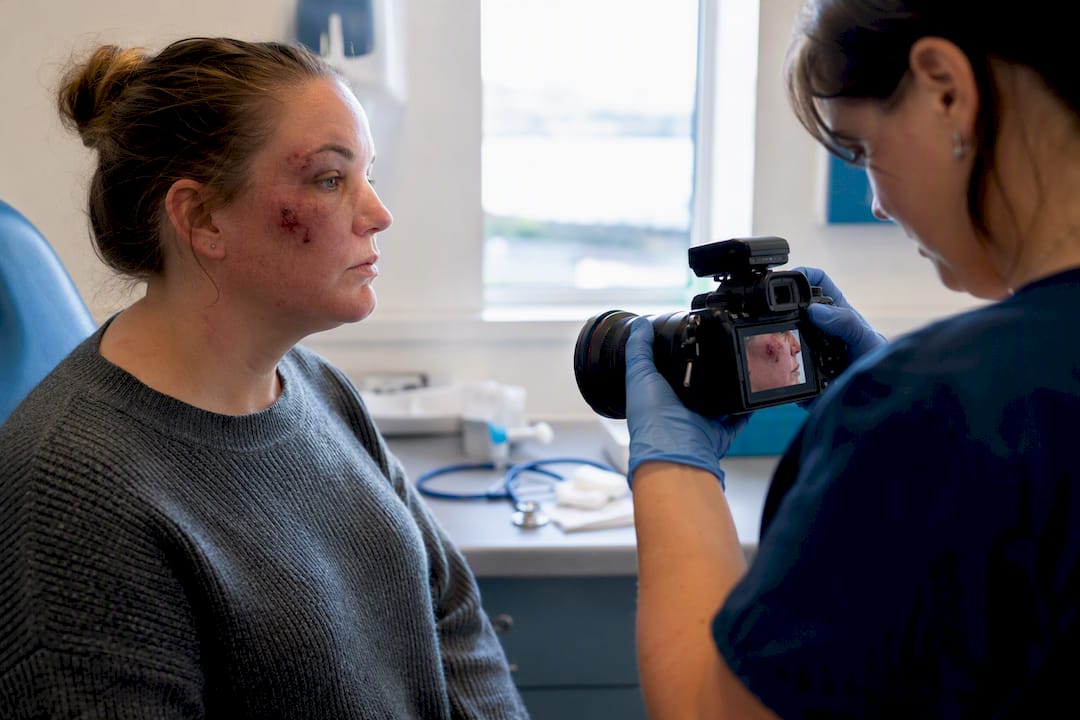
Yes, you can make a facial injury claim in Scotland if another party’s negligence caused your injury, and the clock is already running. The standard time limit for starting court proceedings is three years from the date of the accident, or from the date you became aware the injury was caused by someone else’s fault. Miss that window and, in almost all cases, your right to claim disappears.
Two things matter more than anything else in the first 72 hours: medical treatment and evidence. Facial injuries heal differently to almost any other part of the body, and how they’re documented early often decides the eventual value of a claim.
- Get medical attention and ask for the injury to be formally recorded, including any referral to plastic surgery, maxillofacial, or ophthalmology.
- Photograph the injury as it heals, on different days, in natural light, and keep a note of who was involved and where it happened.
Pro Tip: If the injury involves a child, suspected nerve damage, or the diagnosis was delayed, get legal advice immediately rather than waiting. These cases often have different time limits or need urgent specialist evidence before it disappears.
Key Takeaways
Facial injury claims in Scotland must be started within three years, valued through solatium and pecuniary losses, and supported by early medical and photographic evidence to secure a fair settlement.
| Point |
Details |
| Three-year deadline |
Court proceedings must be raised within three years of the injury, or from the date you became aware of it. |
| Two-part compensation |
Solatium covers pain and suffering while pecuniary losses cover lost earnings, care costs, and medical expenses. |
| Evidence wins cases |
Early photographs, medical reports, witness details, and accident reports strengthen valuation and liability arguments. |
| Contributory negligence reduces awards |
Being partly at fault cuts your compensation by a percentage rather than removing your right to claim entirely. |
| No success fee with Scotland Claims Injury Lawyers |
Scotland Claims Injury Lawyers charges no upfront cost and no success fee, letting successful claimants keep all of their compensation. |
This article is general information, not a substitute for advice from a qualified lawyer. Consult a qualified legal professional about your own circumstances before acting on anything here.
Table of Contents
What counts as a facial injury: types, clinical findings, and why the difference matters
Not all facial injuries are valued the same way, and the category yours falls into shapes almost everything that follows, from which medical expert gets instructed to how big the eventual settlement might be.
The main categories solicitors deal with in Scotland include soft tissue scarring from cuts, road traffic collisions, or falls, which can vary in visibility and permanence.
- Facial bone fractures, including the cheekbone, jaw, nose, or orbital socket.
- Dental trauma, from chipped teeth to full tooth loss requiring implants or bridgework.
- Nerve injury or neuropraxia, which can cause numbness, drooping, or loss of facial movement.
- Ocular injuries, ranging from bruising around the eye to genuine vision loss.
- Burns, whether thermal, chemical, or from airbag deployment in a crash.
What pushes a claim’s value up isn’t just the wound itself, it’s what it leaves behind. Permanent scarring visible in normal social contact, sensory loss such as numbness across the cheek, any lasting impairment to eating or speaking, and the psychological fallout from visible disfigurement all carry real weight. A small scar on the hairline and an identical scar across the cheekbone are not the same claim, even though the physical injury might be similar in size.
This is where solatium, the Scots law term for compensation for pain, suffering, and loss of amenity, starts to diverge from the purely financial side of a claim. Visible disfigurement tends to attract higher solatium because the impact is constant and social, not just physical. An internal injury with a full recovery might carry a smaller solatium figure but larger pecuniary losses if it kept you off work for months.
Pro Tip: Ask for clinical photography at the hospital or GP practice within days of the injury, not weeks. Early photographs showing the injury before healing began are some of the strongest evidence a solicitor can use, and they’re much harder to obtain retrospectively.
How much compensation could you get for a facial injury in Scotland?
Compensation in Scotland is built from two separate components, and both need to be added together to understand what a claim is genuinely worth.
Solatium covers pain, suffering, and loss of amenity, the non-financial impact of the injury on your life. Scottish solicitors don’t have a bespoke Scottish tariff for every injury, so many rely on the Judicial College Guidelines as a starting reference point, with the 18th edition published in April 2026 updating many of the valuation bands used across the UK. Scottish courts and solicitors treat these figures as a guide rather than a binding rule, adjusting them to fit the individual and the facts of the case.

Pecuniary losses are the financial side: past and future loss of earnings, care and assistance costs, medical and travel expenses, special equipment, dental treatment, and any incidental costs directly caused by the injury.
Here’s how the illustrative bands tend to break down by injury type. These figures are indicative only, drawn from the ranges solicitors commonly reference, and every real case depends entirely on the individual medical evidence and personal circumstances involved.
Compensation for facial injuries varies widely depending on the severity and type. Minor scarring typically results in lower awards, while severe disfigurement, fractures with lasting effects, serious eye damage, and significant dental loss attract higher awards. Exact ranges depend on individual circumstances and medical evidence.
These ranges cover solatium only. Add pecuniary losses, and a serious facial injury involving time off work, ongoing dental treatment, or long-term care needs can easily exceed the solatium figure alone. Younger claimants often attract higher awards for serious disfigurement, because the psychological and social impact is expected to run for decades rather than years.
The Scottish Law Commission’s report on damages for personal injury sets out several features unique to Scotland, including how NHS treatment costs get recovered from a successful claim and how damages awarded to children are managed differently to adult awards. Practitioners in Scotland frequently lean on Judicial College Guidelines and English case authorities where Scottish precedent for catastrophic facial injuries is thin, which is one reason instructing a solicitor with real experience in this specific injury type matters more than it might for a straightforward whiplash claim.
How long do you have to make a facial injury claim in Scotland?
The general rule is fixed: three years from the date of the accident or, where the injury wasn’t immediately obvious, from the date you first knew or reasonably should have known it was caused by someone else’s negligence. Court proceedings must be raised and formally served within that window, not just started informally with a solicitor.
There are situations where the clock can start later:
- Where a facial injury only became apparent after a delayed diagnosis, such as nerve damage that wasn’t picked up until months after the original trauma.
- Where the claimant is a child, in which case the three-year period often doesn’t begin until they turn 16.
- In fatal cases, where relatives may bring a claim under the Damages (Scotland) Act 2011, which sets out who counts as an eligible relative and how loss of society awards are calculated separately from the deceased’s own claim.
The safest assumption is that your three years started the day of the accident, unless you have a specific and documented reason to believe otherwise. Waiting to “see how things heal” before getting advice is one of the most common ways people accidentally run out the clock on a genuinely strong claim.
If you’re unsure exactly when your limitation period started, that’s a conversation for a solicitor, not a guess you make yourself. Read more detail on claim time limits in Scotland if you want the full breakdown of exceptions.
What evidence do you need to start a facial injury claim?
The strength of a facial injury claim rests almost entirely on documentation gathered in the days and weeks after the injury, not months later when memories fade and photographs no longer exist.
- Seek medical treatment immediately and ensure the injury is formally recorded in your notes, with a referral to a specialist where relevant.
- Photograph the injury regularly as it heals, noting the date of each image.
- Obtain a copy of any accident or incident report, whether from an employer, a road traffic collision report, or a venue’s own accident book.
- Collect contact details for any witnesses while the details are still fresh.
- Keep receipts, pay slips, and any records of financial loss connected to the injury, including time off work or private treatment costs.
- Request copies of your NHS records and GP notes once treatment has settled down.
Medical expert reports carry particular weight in facial injury claims. A maxillofacial surgeon, ophthalmologist, dentist or forensic odontologist, or plastic surgeon can provide independent clinical evidence that goes beyond what a GP or A&E discharge note captures, and insurers take these reports far more seriously than a claimant’s own account of symptoms. Timing matters too: some assessments, particularly for scarring, are more accurate once healing has stabilised, usually a matter of months rather than weeks.
Once you have enough evidence together, the next formal step is usually a letter of claim setting out what happened, who was at fault, and the injuries sustained. A solicitor will normally draft this as part of an initial assessment, and it’s worth reading our guide on starting a personal injury claim if you want to see what that first conversation typically covers.

Pro Tip: Keep a simple diary noting pain levels, missed activities, and emotional impact week by week. It sounds basic, but a contemporaneous record carries far more weight with insurers than a description written from memory six months later. Also tighten your social media privacy settings, insurers do check.
What happens after you start a claim: process and timeline in Scotland
A facial injury claim in Scotland moves through fairly predictable stages, even though the length of each stage varies enormously depending on how contested liability is.
- Your solicitor sends a formal letter of claim to the party responsible (or their insurer), setting out the facts and the injuries sustained.
- The insurer investigates and responds, either accepting liability, denying it, or asking for more information.
- Medical evidence is exchanged, often including an independent expert report.
- Negotiation begins, usually resulting in a settlement offer after handling insurers, sometimes several rounds of them.
- Interim payments may be requested where liability is admitted but the final value isn’t yet agreed, particularly useful if you’re facing ongoing treatment costs or lost earnings.
- If no settlement is reached, court proceedings are lodged.
Many personal injury claims in Scotland are subject to a compulsory pre-action protocol, introduced in November 2016, which requires early disclosure of medical and liability information before litigation starts. Skipping or rushing this stage can cause real delays later, since courts expect to see it followed.
Court claims, where they happen, are generally raised in the local sheriff court, the All-Scotland Sheriff Personal Injury Court for higher value or more complex cases, or the Court of Session for the most serious claims. Most facial injury claims still settle before reaching a courtroom.
A straightforward, undisputed liability claim often resolves within several months, while contested claims requiring expert reports may take longer. Complex cases involving disputed liability, catastrophic injury, or court proceedings can take a couple of years or more.
What does it cost to make a facial injury claim, and how does No Win No Fee work?
Funding a claim doesn’t have to mean paying anything upfront, and understanding the funding route matters just as much as understanding your legal rights.
- Private funding, paying a solicitor directly by the hour, which is rarely used for personal injury claims.
- Conditional fee arrangements, where a success fee is deducted from compensation if the claim wins.
- Legal expenses insurance, sometimes already included in a home or motor insurance policy.
- No Win No Fee, where the solicitor is only paid if the claim succeeds, and the fee structure is agreed in advance.
Qualified One-Way Costs Shielding offers some protection in Scotland against paying the other side’s legal costs if your claim doesn’t succeed, though the detail varies by case type and it’s worth confirming this with your solicitor before proceeding.
Many solicitors operating a No Win No Fee model take a success fee deducted from compensation, but Scotland Claims Injury Lawyers charges no success fee or upfront costs, allowing successful claimants to keep their full award.
Solicitor disbursements, such as medical report fees, are usually handled from the compensation recovered at the end of a successful claim, not charged separately along the way. If you want a rough sense of what your claim could be worth before committing to anything, the compensation calculator gives a quick, no-obligation starting point.
How do you choose the right solicitor for a facial injury claim?
Not every personal injury solicitor has genuine experience with facial injuries, and that gap shows up in how thoroughly a case is prepared.
- Proven experience specifically with facial injury claims, not just general personal injury work.
- A track record in Scottish courts, since procedure and valuation practice differ from England and Wales.
- A clear approach to instructing specialist medical experts rather than relying solely on GP notes.
- Willingness to litigate if a fair settlement isn’t offered, rather than pushing early low offers.
- Complete clarity on fees and disbursements before you sign anything.
When you first speak to a solicitor, it’s worth asking:
- What’s the realistic timeline for a case like mine?
- What medical evidence will you gather, and from whom?
- Will disbursements, such as expert report fees, be advanced on my behalf?
- Is there a success fee, and if so, how much?
Checking whether a solicitor is listed with the Law Society of Scotland’s specialist accreditation schemes or a body like APIL is a reasonable extra step, alongside asking for examples of similar cases they’ve handled. A free claim assessment is usually the fastest way to find out where you stand without committing to anything.
What Scottish legal rules shape how facial injury claims are valued?
Several pieces of legislation and guidance sit behind every valuation, even when a claimant never sees them directly.
Primary statutes and court procedure rules set the statutory framework for remedies in Scotland, while the compulsory pre-action protocol governs how evidence gets exchanged before any court action starts.
Interest on solatium in Scotland is calculated under the Interest on Damages (Scotland) Act, typically applied at half the judicial rate for ongoing losses, a detail that catches many claimants by surprise when they see the final settlement breakdown.
The Judicial College Guidelines remain the most widely used reference for solatium, with the 2026 edition revising figures for many common injuries, and the Scottish Law Commission’s SLC 266 report addresses how NHS cost recovery, deductions, and awards to children are handled under Scots law specifically, distinct from the equivalent English approach.
Are there caps on how much compensation you can get in Scotland?
There’s no fixed statutory ceiling on general damages for facial injuries in Scotland, unlike some jurisdictions that impose hard caps on pain and suffering awards. Solatium is assessed on the individual facts, guided by precedent rather than restricted by a legislative limit.
That said, practical limitations do exist. Pecuniary losses, such as future loss of earnings, must be proven with reasonable certainty, so speculative future losses tend to get discounted rather than awarded in full. Deductions also apply in specific circumstances, such as certain state benefits received during the claim period, which get recovered by the Compensation Recovery Unit before your settlement is finalised. The Scottish Law Commission’s work on damages also touches on how NHS treatment costs are recovered separately from your own compensation, meaning part of any settlement effectively repays the health service rather than landing in your pocket.
Contributory negligence can also reduce an award significantly, even where there’s no formal cap involved, since a finding that you were partly responsible for your own injury directly cuts the percentage of compensation you receive.
What if more than one party is responsible for your injury?
Facial injuries often arise from situations with more than one potentially liable party, a multi-vehicle crash, an accident at work involving both an employer and a contractor, or a slip caused by both poor maintenance and inadequate warning signage.
Your solicitor’s job is to identify every liable party early, since pursuing only one when others share responsibility can limit what’s ultimately recoverable if that party’s insurance doesn’t cover the full claim value.
Contributory negligence works differently. If you were partly at fault, perhaps not wearing appropriate safety equipment at work, your compensation gets reduced by a percentage reflecting your share of the blame, rather than being refused outright. This is precisely why early, thorough evidence gathering matters: the more clearly you can show the accident wasn’t your fault, or was only partly so, the stronger your negotiating position becomes.
A practical view from someone who’s seen how these claims actually play out
Facial injury claims get taken seriously in Scotland, more seriously than many people expect before they start the process. The mistake I see most often isn’t a weak case, it’s a strong case with weak early evidence, because nobody told the claimant that photographs taken in week one matter more than photographs taken in week six.
[Author qualifications and professional background to be inserted here.] Anonymised case examples and outcome summaries can be provided on request for readers who want a clearer sense of how similar claims have resolved.
If you’re at the stage of wondering whether your injury is “worth claiming for,” that’s exactly what a free assessment or the compensation calculator is designed to answer, quickly and without any obligation to proceed.
Get help with your facial injury claim today
You’ve read the rules, the timelines, and the typical figures. The next step doesn’t need to involve hours of research or a stack of legal jargon, it just needs a conversation. Scotland Claims Injury Lawyers offers a free claim assessment with specialist Scottish personal injury solicitors, backed by a compensation calculator that gives you a realistic starting figure before you commit to anything.
Scotland Claims Injury Lawyers takes none of it.
The service covers full case handling, instruction of medical experts, requests for interim payments where appropriate, and court representation if your case needs to go that far. Start with the compensation calculator to get an initial figure, or go straight to a free assessment with a specialist solicitor if you’re ready to talk.
Sources
FAQ
How much compensation can you get for a facial injury?
It depends entirely on severity, but illustrative solatium ranges cover from minor scarring to serious disfigurement in younger claimants, plus any pecuniary losses on top.
What is the hardest type of facial injury to prove?
Nerve damage and psychological impact from disfigurement are often the hardest to prove, since they rely heavily on specialist medical evidence rather than visible physical signs alone.
What is the average payout for a soft tissue injury in the UK?
Soft tissue injury payouts vary widely by severity and location on the body, and facial soft tissue scarring specifically tends to be valued using the illustrative solatium bands set out earlier in this guide, from a few thousand pounds for minor, faded scarring up into the tens of thousands for serious, permanent disfigurement.
What is the average payout for whiplash in Scotland?
How long does a facial injury claim take in Scotland?
Straightforward claims with accepted liability often settle within six to twelve months, while contested or complex cases involving multiple medical experts or court proceedings can take two years or longer.
Recommended