
Table of Contents
Last Updated: August 11, 2026
Can Tendonitis Be Caused by a Car Accident?
Yes, tendonitis can absolutely develop following a car accident. The sudden force and biomechanical trauma of a collision can damage tendons, the fibrous tissues connecting muscle to bone, causing inflammation that leads to pain, stiffness, and reduced mobility. Many accident victims don't realise their symptoms stem from tendon injury until weeks or even months after the crash, which is why understanding this connection matters for both health and legal purposes.
At Scotland Claims Injury Lawyers, we work with individuals across the country who've sustained soft tissue injuries from road traffic accidents. The challenge most face is linking their symptoms back to the collision, something essential when pursuing compensation. Understanding how car accidents cause tendonitis, recognising delayed symptoms, and documenting injuries properly can make the difference between a successful claim and one that falters.
This guide explains the mechanics of how collisions damage tendons, identifies the areas most vulnerable to injury, walks through diagnosis and treatment, and shows how to build a strong case for compensation. 🚗
How Car Accidents Cause Tendonitis
A car accident creates sudden, violent forces that the body isn't prepared to absorb. When a vehicle stops abruptly or is struck from behind, occupants experience rapid acceleration or deceleration, movements that stretch and strain soft tissues beyond their normal range. Tendons, which are less flexible than muscles, bear the brunt of this trauma.
The impact forces the body into unnatural positions. Whiplash injuries, for example, cause the neck to snap forward and backward rapidly, straining the tendons in the neck, shoulders, and upper back. Even lower-impact collisions can trigger tendon damage because the body's protective muscles don't have time to engage before the force hits.
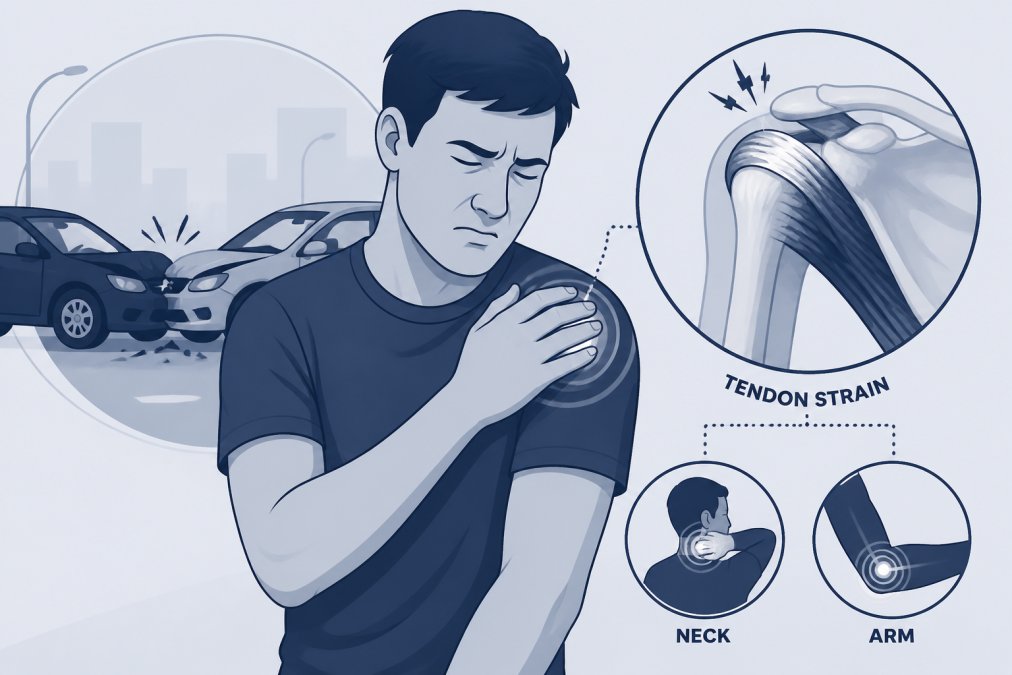 Person holding their shoulder in visible pain and discomfort, with a strained expression showing the aftermath of a soft tissue injury
Inflammation develops as the body's response to this trauma. Damaged tendon fibres swell, reducing blood flow and triggering pain signals. This inflammatory cascade can persist for weeks, which explains why many accident victims experience worsening symptoms days after the crash rather than immediate pain.
The severity depends on several factors: collision speed, vehicle weight, occupant positioning, and whether seatbelts and airbags deployed. A head-on collision at motorway speed causes more severe tendon damage than a low-speed rear-end bump, but even minor accidents can cause lasting tendonitis if the body was unprepared or positioned awkwardly at impact.
Pro Tip
Document the accident scene immediately if possible, take photos of vehicle damage, note weather conditions, and record how you felt in the hours after the crash. This context helps medical professionals and legal teams understand the force involved, which strengthens causation arguments later.
Common Areas of Tendonitis After a Collision
Different collision angles and seating positions create injury patterns. Understanding where tendonitis typically develops helps you recognise symptoms early and seek appropriate care.
Shoulder and Rotator Cuff Injuries
The shoulder's rotator cuff, a group of tendons stabilising the joint, is particularly vulnerable in car accidents. The sudden sideways or forward motion forces the arm and shoulder into extreme positions, stretching and tearing the rotator cuff tendons.
Shoulder tendonitis after an accident often develops gradually. Initial impact might cause mild discomfort, but inflammation intensifies over days, making it difficult to lift the arm, reach overhead, or sleep on the affected side. Many people attribute this to muscle soreness and delay seeking medical evaluation, allowing the condition to worsen.
Rotator cuff injuries are serious because the shoulder is a highly mobile joint. Once tendons are damaged, they're prone to re-injury. Without proper rehabilitation, chronic pain and reduced range of motion can persist for months or years, affecting work capacity and quality of life.
Neck and Upper Back Strain
Whiplash is the most common injury pattern in rear-end collisions. The sudden acceleration forces the head backward, stretching tendons in the neck, and then the body's reflexive response jerks the head forward again, creating a "whip" motion. This double injury pattern affects multiple tendon groups.
Neck tendonitis causes pain along the base of the skull, difficulty turning the head, and sometimes radiating pain down the arms. Upper back tendonitis creates stiffness between the shoulder blades and pain with certain movements. These injuries are insidious because symptoms often peak 24-48 hours after the accident, not immediately.
The cervical spine's tendons are delicate structures with limited blood supply, which means they heal slowly. Proper diagnosis and early intervention are crucial to prevent chronic pain syndromes.
Wrist and Forearm Tendonitis
When drivers brace for impact, they instinctively grip the steering wheel tightly or extend their arms to brace themselves. This sudden, forceful contraction can strain the tendons in the wrist and forearm. The impact also forces the wrist into unnatural angles, damaging tendons directly.
Wrist tendonitis makes it painful to grip objects, type, or perform fine motor tasks. Forearm tendonitis creates aching along the inner or outer forearm. Both conditions interfere significantly with work, especially for occupations requiring manual dexterity.
Key Takeaway
Shoulder, neck, and wrist injuries are the three most common tendonitis presentations after car accidents. Recognising early symptoms in these areas allows for faster diagnosis and treatment, improving long-term outcomes.
Symptoms of Post-Accident Tendonitis
Tendonitis symptoms vary depending on which tendons are affected and the severity of damage. Recognising these early allows for prompt medical intervention and strengthens compensation claims by establishing a clear injury timeline.
Common symptoms include:
- Localised pain that worsens with movement or specific activities
- Swelling or visible inflammation around the affected joint
- Stiffness, especially after periods of rest or sleep
- Reduced range of motion, difficulty moving the joint through its full arc
- Weakness in the affected limb or joint
- Tenderness when the area is touched or palpated
- Pain that intensifies with repetitive movements
- Clicking, popping, or grinding sensations in the joint
- Night pain that disturbs sleep
Symptoms can develop immediately after the accident or emerge gradually over days and weeks. Some people experience a sharp, acute pain at impact, whilst others feel only mild discomfort initially, with significant pain developing as inflammation increases. This delayed onset is one reason accident victims sometimes fail to connect their symptoms to the crash.
The intensity of symptoms doesn't always correlate with the severity of injury. A person with minor tendon damage might experience severe pain due to inflammation, whilst someone with more significant damage might have less acute pain initially. This unpredictability is why medical evaluation is essential, only imaging and clinical assessment can determine true injury severity.
Why Tendonitis Symptoms May Appear Delayed
One of the most frustrating aspects of post-accident tendonitis is that symptoms often worsen days after the collision. A person might feel relatively fine on the day of the accident, then experience escalating pain over the following week. This delay confuses many victims and sometimes leads them to believe their symptoms are unrelated to the crash.
The delayed response occurs because inflammation takes time to develop. Immediately after injury, the body's shock response masks pain. Adrenaline and stress hormones suppress pain signals, allowing people to function despite significant tissue damage. As these hormones wear off, typically within 24-48 hours, the inflammatory response peaks, and pain becomes noticeable.
Swelling also develops gradually. Damaged blood vessels leak fluid into surrounding tissues, creating pressure and pain as inflammation spreads. This process accelerates over the first few days, which is why many accident victims report their worst pain occurring 2-3 days after the crash rather than immediately.
Additionally, movement patterns change after an accident. People unconsciously limit motion in painful areas, but this immobility can paradoxically increase stiffness and pain as tendons become less mobile. The combination of ongoing inflammation and reduced movement creates a cycle that worsens symptoms.
Watch Out
Never assume you're fine because you feel okay immediately after an accident. Seek medical evaluation within 48 hours, even if you feel relatively well. Early medical records establish the injury timeline and prevent later arguments that your symptoms developed from something other than the accident.
Diagnosis and Medical Evaluation
Proper diagnosis requires clinical examination and often imaging. A GP or accident and emergency department can perform initial assessment, but specialist evaluation from an orthopaedic consultant or musculoskeletal specialist is usually necessary for definitive diagnosis.
The diagnostic process typically includes:
- Clinical history: The doctor asks about the accident, when symptoms started, which movements cause pain, and how symptoms have progressed
- Physical examination: The clinician tests range of motion, applies pressure to identify tender areas, and performs specific tests (like the Neer test for rotator cuff injury) to assess tendon function
- Imaging studies: Ultrasound or MRI scans visualise tendon damage, inflammation, and swelling. Ultrasound is often the first choice because it's non-invasive, relatively inexpensive, and allows dynamic assessment (imaging the tendon during movement). MRI provides more detailed images and is useful when ultrasound findings are unclear
Diagnostic imaging has limitations worth understanding. Early inflammation might not show clearly on imaging, especially if scans are performed within days of the accident. Conversely, some structural damage visible on imaging might not fully explain a patient's symptoms. This is why clinical assessment and imaging together provide the most accurate diagnosis.
For legal claims, imaging evidence is particularly valuable because it provides objective proof of injury. However, even without dramatic imaging findings, clinical diagnosis supported by consistent symptoms and appropriate medical history can establish injury. Documentation of the examination findings, the doctor's reasoning, and their professional opinion matters significantly in claims.
Treatment and Rehabilitation for Soft Tissue Injury Compensation
Treatment aims to reduce inflammation, restore function, and prevent chronic pain. Most post-accident tendonitis responds well to conservative (non-surgical) treatment when started promptly.
Early management typically includes:
- Rest and activity modification: Avoiding movements that aggravate pain allows inflammation to settle. This doesn't mean complete immobilisation, gentle, pain-free movement maintains mobility
- Ice application: Applying ice for 15-20 minutes several times daily reduces inflammation and pain, particularly in the first few days
- Compression: Elastic bandaging or wrapping reduces swelling by limiting fluid accumulation
- Elevation: Keeping the injured area above heart level reduces swelling
- Anti-inflammatory medication: Paracetamol or ibuprofen (if tolerated) help manage pain and inflammation
Physical therapy is central to recovery. A physiotherapist designs a graduated exercise programme that gently restores range of motion, strengthens surrounding muscles, and improves tendon resilience. Early therapy prevents stiffness; progressive loading helps tendons remodel and regain strength.
Some patients benefit from additional interventions:
- Corticosteroid injections: A doctor injects anti-inflammatory medication directly into the tendon sheath, reducing pain and inflammation. This provides relief but isn't a permanent solution
- Shockwave therapy: Acoustic waves stimulate healing in chronically damaged tendons. Evidence for effectiveness is mixed but shows promise for some patients
- Surgery: If conservative treatment fails after 3-6 months, surgical repair might be necessary, though this is uncommon for post-accident tendonitis
Recovery timelines vary significantly. Some people improve substantially within 6-8 weeks; others require 3-6 months of treatment. Factors affecting recovery include age, overall health, severity of injury, and adherence to rehabilitation. Returning to full activity too quickly risks re-injury and chronic pain.
Pro Tip
Keep detailed records of all treatment, GP visits, physiotherapy sessions, imaging results, and medication use. These documents form the evidence base for compensation claims. They show the injury's impact on your daily life and the resources required for recovery.
Tendonitis Recovery Timeline After an Accident
Understanding typical recovery trajectories helps set realistic expectations and identifies when progress is slower than expected.
Weeks 1-2: Acute inflammation dominates. Pain is typically worst during this period. Movement is limited, swelling is visible, and the injured area feels warm. Medical evaluation usually occurs during this phase.
Get Started Today →
Weeks 3-6: Inflammation begins settling, but pain persists with activity. Gentle physiotherapy starts, focusing on maintaining mobility without aggravating symptoms. Many people return to light desk work during this phase, though activities requiring the injured area remain limited.
Weeks 7-12: Noticeable improvement occurs for most people. Range of motion increases, pain with specific movements decreases, and strength gradually returns. Return to normal activities begins, though heavy lifting or repetitive use remains restricted.
Months 4-6: Most people achieve substantial functional recovery. Pain with everyday activities resolves, though sport or heavy manual work might still cause discomfort. Physiotherapy typically concludes during this window.
Beyond 6 months: Some people experience complete resolution; others have residual symptoms, particularly with demanding activities. Chronic pain affects approximately 10-15% of people with significant post-accident tendonitis, particularly if initial injury was severe or rehabilitation was delayed.
Individual variation is substantial. Age, injury severity, treatment quality, and personal factors like smoking status or diabetes affect recovery speed. Someone in their 20s with minor rotator cuff strain might recover in 8 weeks, whilst a 55-year-old with significant neck tendonitis might require 6 months.
How to Document Tendon Injuries for Claims
Documentation is the foundation of successful compensation claims. Medical records, imaging, treatment records, and personal accounts together establish causation, severity, and impact.
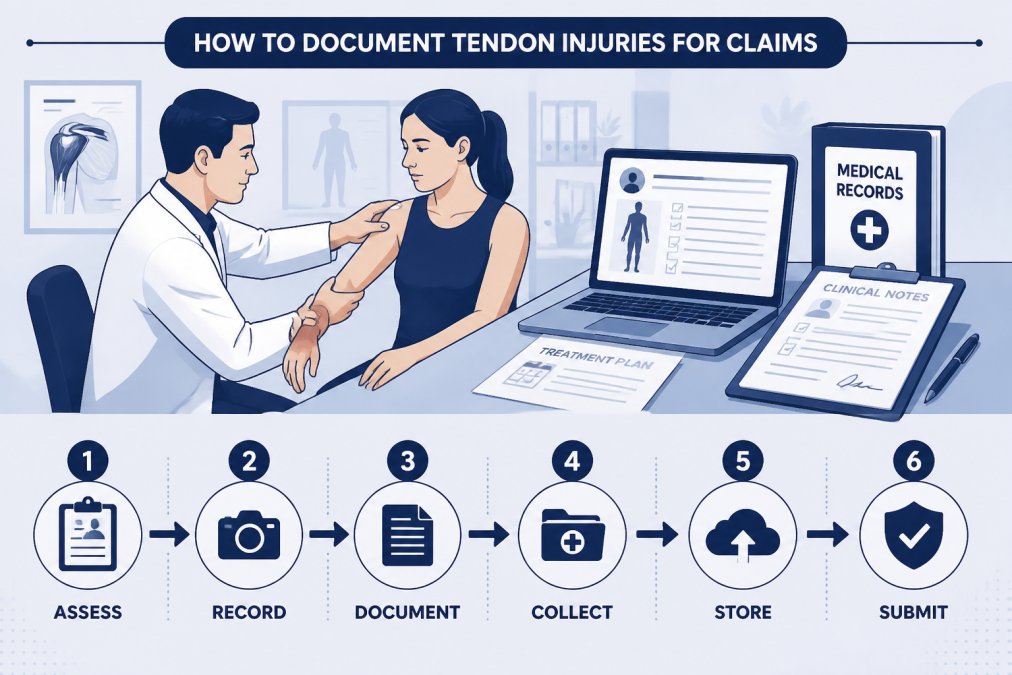 Medical professional examining patient's arm and shoulder whilst medical records and documentation are visible on the desk, showing the documentation process
Essential documentation includes:
Medical records: Obtain complete records from your GP, accident and emergency attendance, and any specialist consultations. These should detail your symptoms, examination findings, imaging results, and the doctor's assessment of causation (whether they believe the accident caused the injury).
Imaging reports: Request copies of ultrasound, X-ray, or MRI reports. The radiologist's interpretation of imaging findings provides objective evidence of tendon damage or inflammation.
Physiotherapy notes: Your physiotherapist's records document progress, specific limitations, exercises prescribed, and functional improvements. These records show the injury's ongoing impact on daily activities.
Medication records: Keep receipts or pharmacy records showing anti-inflammatory medication, pain relief, or other treatments. This documents the resources required for recovery.
Accident report: If police attended the accident, obtain a copy of their report. This establishes the accident's severity and circumstances, which helps explain how significant forces caused injury.
Photographic evidence: If swelling or visible injury was apparent, photos taken in the days after the accident provide visual evidence of injury severity.
Personal diary: Record your symptoms, activities you couldn't perform, pain levels, and how the injury affected work and daily life. Specific examples are more persuasive than general statements ("I couldn't lift my arm above shoulder height for 8 weeks" is more compelling than "my shoulder hurt").
Work impact: If the injury affected your work capacity, obtain documentation from your employer confirming time off, reduced hours, or modified duties. Loss of earnings strengthens claims for compensation.
Expert medical opinion: For significant injuries, consider obtaining an independent medical report from a specialist. This document provides an expert's assessment of causation, severity, prognosis, and impact, which carries substantial weight in claims.
Key Takeaway
Begin documentation immediately after the accident. Memories fade, symptoms evolve, and early records carry more credibility than reconstructed accounts months later. The stronger your documentation, the clearer the causation link becomes.
Proving Causation in a Personal Injury Claim
Causation, establishing that the accident caused the injury, is the legal cornerstone of compensation claims. Without clear causation, even severe injuries won't generate compensation.
The legal test for causation requires showing that the accident was the "but for" cause of the injury. In other words, but for the accident, the injury wouldn't have occurred. This isn't about proving the accident was the only possible cause; rather, it's about demonstrating that the accident was a substantial contributing factor.
Building a causation argument requires:
Temporal proximity: The injury must develop within a reasonable timeframe after the accident. Symptoms appearing within days or weeks of the collision clearly link to the accident. Symptoms appearing months later are harder to connect causally, though delayed-onset tendonitis is well-recognised medically.
Medical evidence: Your doctor's assessment matters enormously. If the medical report states that the accident likely caused the injury, this significantly strengthens your claim. Conversely, if medical evidence suggests the injury was pre-existing or unrelated, causation becomes difficult to prove.
Injury mechanism: Explaining how the accident's forces caused the specific injury you sustained helps establish causation. For example, if you were struck from behind and developed neck tendonitis consistent with whiplash, the mechanism is clear.
Absence of alternative causes: If you had no prior shoulder problems and developed rotator cuff tendonitis immediately after a car accident, alternative explanations (like overuse from work) become less plausible.
Expert evidence: For complex injuries, expert medical or engineering evidence can establish causation. An orthopaedic specialist might explain how collision forces damage tendons; an accident reconstructionist might calculate the forces involved.
Solicitors at Scotland Claims Injury Lawyers regularly work with medical experts to establish causation in tendonitis cases. The combination of clinical evidence, imaging, accident circumstances, and expert opinion creates a compelling causation narrative that insurers find difficult to challenge.
One common insurer tactic is arguing that your symptoms were pre-existing or developed from something other than the accident. strong documentation, early medical evaluation, and clear medical evidence counter these arguments effectively.
Tendonitis following a car accident is a legitimate, compensable injury when properly documented and legally supported. The key is recognising symptoms early, seeking appropriate medical evaluation, and maintaining thorough records from the outset. If you've experienced a collision and developed persistent pain in your shoulder, neck, or wrist, medical assessment should be your first step, and legal advice from an experienced personal injury solicitor should follow promptly.
Scotland Claims Injury Lawyers specialises in helping accident victims secure compensation for soft tissue injuries like tendonitis. With a No Win No Fee basis, you pay nothing unless your claim succeeds, and you retain 100% of your compensation, we don't charge the success fees that other firms do. If you're unsure whether your injury warrants a claim, a free consultation can clarify your options and next steps. 💬
British Orthopaedic Association guidance on soft tissue injury management
NICE clinical guidelines on musculoskeletal pain assessment and treatment
Royal College of General Practitioners information on whiplash and collision-related injury
Frequently Asked Questions
What are the first signs of tendonitis after a car accident?
Early warning signs include joint stiffness, mild swelling, and a dull ache in the affected area that may worsen with movement. Some people experience reduced range of motion or a catching sensation. These symptoms can appear immediately or develop gradually over days or weeks. If you notice persistent pain or swelling after a collision, seek medical evaluation promptly to rule out serious soft tissue injury and establish a medical record for your claim.
How long does tendonitis recovery typically take after an accident?
Tendonitis recovery timelines vary based on injury severity and treatment approach. Mild cases may improve within 4-6 weeks with rest and physical therapy, whilst moderate injuries often require 8-12 weeks. More severe tendon damage or cases involving chronic pain may take several months. Consistent rehabilitation and following medical advice significantly improve outcomes. Your recovery timeline will be documented in medical records, which are essential evidence for your personal injury claim.
Can I claim compensation if I developed tendonitis from a car accident?
Yes, if another driver's negligence caused your accident and resulted in tendonitis, you may be entitled to claim compensation. You must demonstrate that the collision directly caused your soft tissue injury and that you've sought appropriate medical treatment. Medical documentation, diagnostic imaging reports, and expert witness statements strengthen your claim. Our No Win No Fee service means you only pay if your claim succeeds, so you keep 100% of your compensation.
What documents do I need to prove my tendonitis claim?
Essential documentation includes accident reports, medical records from your GP and any specialists consulted, diagnostic imaging results (X-rays, ultrasound, or MRI scans), physiotherapy records, and evidence of ongoing treatment or rehabilitation. Keep records of any time off work, travel costs for medical appointments, and a detailed account of how the injury affects your daily activities. Photographs of visible swelling or bruising taken shortly after the accident also support your case. These records form the foundation of proving causation between the accident and your injury.