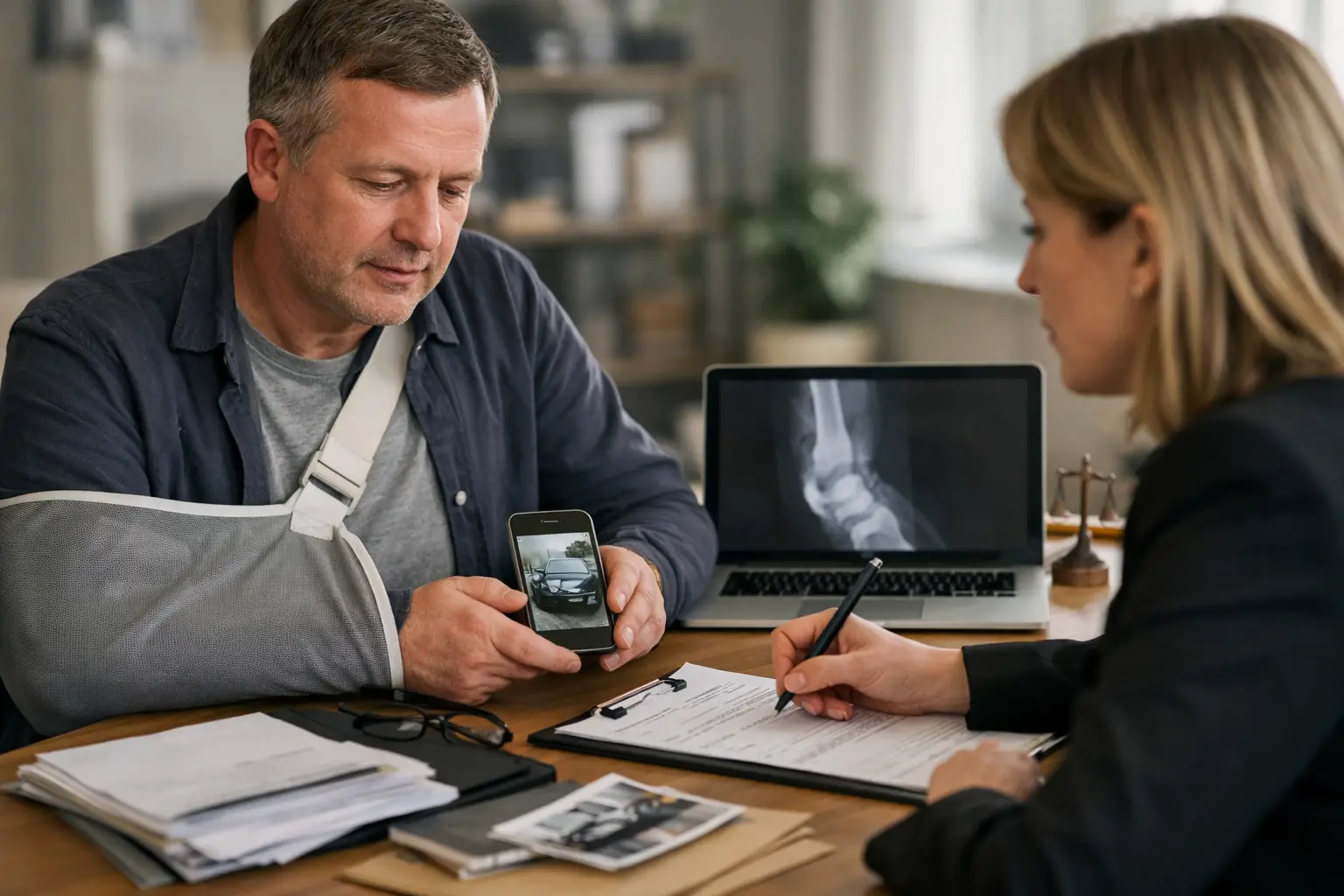
A damaged car can be repaired. A wet floor can be dried. An unsafe system at work can be changed. The evidence of what happened, however, can disappear quickly. That is why people often ask: what evidence do injury solicitors need to start a compensation claim?
The short answer is enough reliable information to show three things: someone else was responsible for the accident, you were injured, and those injuries have caused you loss. You do not need to arrive with a perfectly prepared legal file. A solicitor can obtain much of the evidence for you. But the earlier you preserve what you have, the stronger and simpler your claim may be.
If you were injured in a road traffic accident, at work, or because of a slip or trip, do not assume the incident is too minor to record. Pain can worsen over days or weeks, and a missing photograph or witness detail can be difficult to recover later.
What evidence do injury solicitors need to prove fault?
A personal injury claim is not simply about proving that an accident happened. Your solicitor must show, on the balance of probabilities, that another person, driver, employer, business or organisation failed to take reasonable care and that this caused your injury.
The evidence needed depends on the type of accident. In many cases, the most useful material is created at or soon after the scene.
For road traffic accidents
If you were a driver, passenger, pedestrian, cyclist or motorcyclist, keep any details connected to the collision. This may include photographs of vehicle positions, road markings, damage, weather conditions and the wider scene. A dashcam recording can be particularly valuable, but save the original file promptly as recordings are often overwritten.
Exchange names, registration numbers, insurer details and contact information where possible. The police incident number may also help if officers attended. Do not worry if you could not collect everything because you were injured or taken to hospital. Your account of events, vehicle repair records, CCTV enquiries and independent witnesses can still help build the case.
The other driver admitting fault at the roadside may be helpful, but it is not decisive. Insurers will look at the evidence as a whole. Equally, an apology is not always an admission of legal responsibility. Clear facts matter more than assumptions.
For accidents at work
Employers have duties to provide a reasonably safe workplace, suitable training, safe equipment and proper systems of work. Evidence can include the workplace accident book entry, incident report, risk assessments, training records, maintenance records, rotas and relevant internal messages.
Take photographs of the area, faulty equipment or hazard if it is safe to do so. Note exactly where and when the accident happened, what task you were carrying out, who was present and whether you had raised the concern before. Colleagues may be able to confirm the condition of the workplace or whether procedures were being followed.
You do not need to challenge your employer alone. Reporting an accident is not being difficult. It creates a record of an event that should be taken seriously.
For slips, trips and falls
With a slip or trip claim, the detail is often in the hazard itself. A photograph may show a wet surface without warning signs, uneven paving, a loose carpet edge, poor lighting, spilled produce or an obstruction in a walkway. Take wider photographs as well as close-ups, so it is clear where the hazard was and how people were expected to use the area.
Report the accident before leaving if you can. Ask for it to be entered in the accident book and take a photograph of the entry or request a copy later. Shops, car parks, pubs, public buildings and other premises may have CCTV, but footage can be deleted after a short period. A solicitor can request its preservation, so acting quickly matters.
Medical evidence shows the injury and its impact
Your medical records are central to a claim. They provide an independent record of the symptoms you reported, treatment you received and how your recovery has progressed. This can include GP notes, hospital records, ambulance reports, physiotherapy records, prescriptions, scans and fit notes.
A solicitor will usually arrange an independent medical assessment with an appropriate expert. The expert considers your medical records, examines you and prepares a report on your injuries, treatment needs, recovery timescale and any lasting effects. This is often the main evidence used to value compensation for pain, suffering and loss of amenity.
Seek medical advice when you need it, not because you feel pressure to make a claim. Delaying treatment can affect your health and may also leave insurers asking why there is no contemporaneous record of the symptoms later relied upon.
Keep a simple recovery diary too. Record difficult days, sleep problems, medication, appointments, activities you cannot manage and time away from work. Medical records cannot capture every practical consequence of an injury. A clear diary can help explain the real effect on your daily life.
Financial evidence protects the full value of your claim
Compensation can cover more than the injury itself. If an accident has left you out of pocket, keep evidence of each loss. This may include wage slips, a letter from your employer confirming absence, invoices, receipts, travel tickets, parking charges, prescription costs and evidence of care provided by family members.
For self-employed people, the picture can be more detailed. Retain invoices, accounts, cancelled work records, diary entries and correspondence showing contracts or jobs you could not complete. A solicitor can advise on what is needed, but do not assume a loss is too small or too awkward to mention.
There is a sensible balance here. Keep receipts and records, but do not let paperwork become another burden while you are recovering. Start a folder on your phone or at home and add items as they arise. Your solicitor can then identify what is relevant.
Witnesses, photographs and digital records can make a difference
Independent evidence can be persuasive when accounts of an accident differ. If someone saw what happened, ask for their name and contact details. They do not need to write a formal statement at the scene. A solicitor can contact them later and take a proper statement if required.
Photographs should be kept in their original form where possible. Avoid editing, filtering or adding annotations to the only copy. Save screenshots of relevant messages, but retain the conversation around them too, as context can matter.
Social media also deserves care. Insurers may examine publicly available posts and argue that they do not match the injuries being claimed. This does not mean you must stop living your life or posting altogether. It does mean you should avoid presenting a misleading picture of your recovery, and never exaggerate your symptoms in either direction.
What if you have little evidence?
A lack of photographs or witnesses does not automatically end a claim. Many people are hurt, shocked or focused on getting home safely after an accident. Your own account, medical records, an accident report and evidence gathered later may still be enough to investigate.
The key is to speak to a solicitor early. They can request records, contact witnesses, ask for CCTV to be retained and obtain the information needed before it is lost. In Scotland, personal injury claims are usually subject to a three-year time limit, although exceptions can apply. Waiting can make evidence harder to secure even where there is still time to claim.
You should also be honest about anything that may complicate the case. Previous injuries, uncertain details, a shared responsibility for the accident or a gap in treatment do not always prevent compensation. They may affect how the case is assessed, but it is far better for your solicitor to know the full position from the start.
Start with what you have
You do not need to prove your case before asking for help. A free, no-obligation claim assessment can establish whether there is a realistic route forward and what evidence should be obtained next. Scotland Claims can arrange solicitor review and explain the No Win No Fee process clearly, with the aim that you keep 100% of the compensation awarded to you.
Save the photographs, keep the receipts, note the names and get the medical support you need. Then let an experienced solicitor turn the evidence into a claim that reflects what the accident has cost you.