What is a compensation payout in Scottish injury claims

If you’ve been injured in Scotland through no fault of your own, understanding what a compensation payout actually covers is crucial. Many people mistakenly believe compensation only addresses medical bills or lost wages, but Scottish payouts include both general and financial losses. This guide explains how payouts are calculated, what legal protections exist, and how to navigate the claims process to secure fair compensation for your injuries.
Table of Contents
Key Takeaways
| Point |
Details |
| Compensation components |
Scottish payouts comprise solatium and patrimonial loss, covering non financial and financial losses. |
| Case by case basis |
There is no rigid formula; courts assess each claim individually using medical reports, expert testimony, financial evidence, and comparable judicial guidelines. |
| Guidelines with flexibility |
Judicial Studies Board guidelines are used to ensure consistency while allowing case specific differences. |
| Evidence for damages |
Special damages require meticulous documentation with receipts and records, while future losses rely on expert economic forecasts. |
| Typical payout ranges |
Typical ranges exist, with whiplash often between £1,000 and £5,000 and employers’ liability between £5,000 and £20,000. |
Defining a compensation payout in Scottish personal injury law
Compensation payouts in Scotland aim to restore you financially and physically to your pre-injury position as closely as possible. When you pursue a personal injury claim, you’re seeking recognition of both tangible and intangible harms caused by someone else’s negligence or wrongdoing.
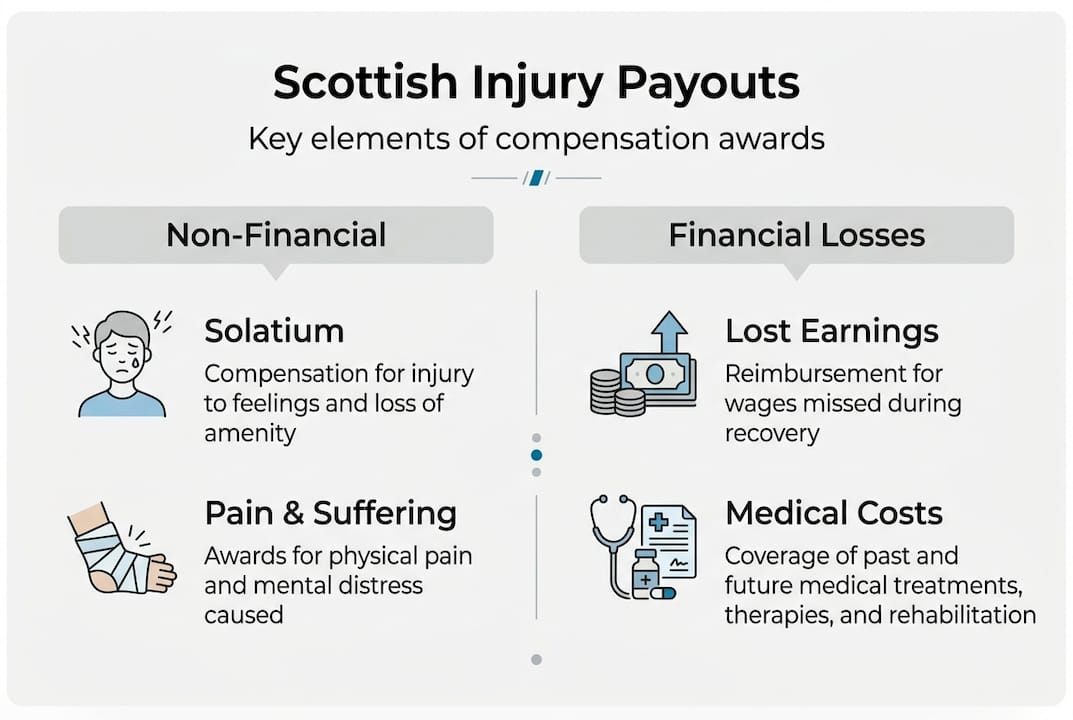
A compensation payout comprises solatium (general damages) and patrimonial loss (special damages). Solatium addresses non-financial suffering including physical pain, emotional distress, and reduced quality of life. If your injury prevents you from playing with your children or pursuing hobbies you once enjoyed, solatium compensates these losses. Patrimonial loss covers quantifiable financial impacts such as medical treatment costs, rehabilitation expenses, lost income, and future earnings capacity.
Unlike some jurisdictions, Scotland doesn’t apply a rigid formula to compensation. Instead, courts evaluate each case individually, considering:
- Medical reports documenting injury severity and prognosis
- Expert testimony on long-term effects and treatment needs
- Evidence of financial losses through receipts, payslips, and employment records
- Comparable awards in similar cases using judicial guidelines
- Impact on your ability to work, care for yourself, and enjoy life
Scottish courts reference adapted Judicial Studies Board guidelines to ensure consistency whilst allowing flexibility for unique circumstances. This approach means two people with similar injuries might receive different payouts based on how those injuries specifically affect their lives. A professional musician losing finger dexterity faces different consequences than an office worker with the same injury, and compensation reflects these distinctions.
Understanding calculating personal injury compensation helps you set realistic expectations. You can also use a Scotland compensation calculator to estimate potential award ranges based on your injury type and circumstances.
How compensation payouts are calculated in Scotland
Solatium is assessed using court decisions, guidelines, medical evidence, and lifestyle impact; special damages are calculated from receipts and records. The calculation process involves detailed analysis of multiple factors that together determine your final award amount.
For solatium, courts examine:
- Injury severity: A broken finger receives less than a spinal cord injury causing paralysis
- Duration and permanence: Temporary injuries compensated less than permanent disabilities
- Psychological effects: Depression, anxiety, or PTSD resulting from the injury increase awards
- Age and lifestyle impact: Younger claimants with longer life expectancy may receive higher awards for permanent injuries
- Pain levels: Chronic pain conditions warrant higher compensation than injuries causing minimal discomfort
Special damages require meticulous documentation. You must prove every financial loss with supporting evidence. Keep all receipts for medical treatments, prescriptions, travel to appointments, and home modifications. Document lost wages with payslips and employer letters. Future losses require expert economic reports projecting earnings capacity and ongoing care costs.
Typical compensation ranges in Scotland
| Injury type |
Severity |
Typical payout range |
| Whiplash |
Minor to moderate |
£1,000-£5,000 |
| Broken arm |
Simple fracture |
£5,000-£12,000 |
| Knee injury |
Moderate ligament damage |
£10,000-£30,000 |
| Back injury |
Severe with chronic pain |
£30,000-£100,000 |
| Brain injury |
Severe cognitive impairment |
£150,000-£250,000+ |
| Spinal injury |
Paraplegia |
£200,000-£300,000+ |
Road accident whiplash claims typically settle between £1,000 and £5,000 depending on recovery time and treatment needs. Employers’ liability claims for workplace injuries generally range from £5,000 to £20,000 for minor to moderate injuries, though severe cases involving permanent disability can exceed £100,000.

Pro tip: Start documenting everything immediately after your injury. Photograph visible injuries, keep a pain diary noting daily symptoms, and save every receipt related to your injury. This contemporaneous evidence significantly strengthens your claim and supports higher compensation awards.
Review injury compensation examples to see real-world cases and awards. Online tools like this compensation calculator provide preliminary estimates based on your specific circumstances.
Legal nuances, protections, and challenges in compensation payouts
Navigating compensation claims involves understanding several legal complexities that can significantly impact your case outcome. Scottish law provides important protections for genuine claimants whilst maintaining safeguards against fraudulent claims.
Courts maintain a high bar for dismissing claims if genuine injury exists; QOCS protects claimants except for fraud; discount rate adjusts future loss awards. Even if you initially exaggerated symptoms, courts may allow your claim to proceed if you later disclose the true extent of your injuries. This doesn’t excuse dishonesty, but recognises that claimants sometimes overstate symptoms due to stress or misunderstanding. The key is correcting the record before trial.
Low-velocity impact cases present particular challenges. Insurance companies often argue that minor car accidents cannot cause significant injuries. However, medical evidence demonstrating soft tissue damage, whiplash, or psychological trauma can overcome these defences. Your claim succeeds or fails based on objective medical findings, not the force of impact alone.
Qualified One-Way Cost Shifting (QOCS) revolutionised personal injury litigation in Scotland. Under QOCS:
- You generally won’t pay the defendant’s legal costs if you lose
- This protection applies even if your claim is unsuccessful
- Exceptions exist for fundamentally dishonest claims or unreasonable litigation conduct
- The rule encourages legitimate claims without fear of devastating cost awards
The discount rate currently sits at +0.5%, affecting how courts calculate compensation for future financial losses. When awarding damages for ongoing care costs or lost future earnings, courts apply this rate to account for investment returns you’ll earn on the lump sum. A positive discount rate reduces awards slightly, whilst a negative rate would increase them.
“QOCS has transformed access to justice for injury victims in Scotland. Claimants can pursue legitimate claims without the terrifying prospect of bankruptcy if unsuccessful, whilst dishonest claimants still face consequences.”
Pro tip: Never exaggerate your injuries or symptoms to insurers or medical professionals. Dishonesty can destroy an otherwise valid claim and expose you to cost awards under QOCS exceptions. If your symptoms change or improve, report this honestly. Credibility is your most valuable asset in litigation.
Understanding role of evidence in injury claims Scotland helps you build a strong case. Recent cases like this exaggerated injury claim case demonstrate how courts balance protecting genuine claimants against deterring fraud.
Practical steps and legal support for pursuing compensation payouts
Successfully claiming compensation requires understanding the process, acting promptly, and securing appropriate legal representation. Scottish law imposes strict deadlines and procedural requirements that can bar your claim if missed.
No win no fee is common with capped success fees (e.g., 20% first £100,000); claims must be initiated within three years, often sooner for minor injuries. This three-year limitation period runs from your injury date or when you reasonably became aware of it. For children, the clock doesn’t start until their 16th birthday, giving them until age 19 to claim.
Follow these steps to pursue your claim:
- Seek immediate medical attention documenting your injuries in official records
- Gather evidence including photographs, witness statements, and accident reports
- Contact a specialist solicitor within weeks of your injury, not months
- Undergo medical examination by an independent expert who prepares a detailed report
- Submit your claim with comprehensive evidence supporting both solatium and special damages
- Negotiate settlement or proceed to court if insurers refuse fair compensation
- Receive your payout typically within weeks of settlement or court judgment
No win no fee arrangements make legal representation accessible regardless of your financial situation. Under these agreements:
- You pay nothing upfront to instruct a solicitor
- If you lose, you owe your solicitor nothing
- If you win, success fees are capped at 20% of the first £100,000 recovered
- You keep the remaining compensation tax-free
- Legal outlays for medical reports and court fees are often recoverable from the defendant
Time is critical in personal injury claims. Evidence deteriorates, witnesses forget details, and CCTV footage gets deleted. Acting within weeks rather than months dramatically improves your prospects. Even if you’re still receiving treatment, consult a solicitor early to preserve evidence and protect your rights.
Pro tip: Don’t accept the first settlement offer from insurers. Initial offers typically undervalue claims significantly. A specialist solicitor can negotiate substantially higher settlements by presenting compelling evidence and leveraging their knowledge of comparable awards.
Explore how to claim injury compensation Scotland for detailed guidance. Understanding the accident claim process Scotland helps you navigate deadlines and procedural requirements confidently.
Get expert legal support for your compensation claim
Pursuing a personal injury claim in Scotland becomes significantly easier with specialist legal support. Expert solicitors who focus exclusively on Scottish compensation law understand the nuances that maximise your payout whilst minimising stress and uncertainty.
No win no fee claims Scotland arrangements eliminate financial barriers to justice. You can access top-tier legal representation without upfront costs or financial risk. Specialist solicitors handle evidence gathering, medical expert coordination, negotiation with insurers, and court proceedings if necessary. Their expertise often results in settlements two to three times higher than claimants achieve representing themselves.
Before committing to legal action, use a compensation calculator Scotland tool to estimate your potential award. Whilst calculators provide only approximate ranges, they help you understand whether pursuing a claim makes financial sense given your injury severity and losses.
Contacting injury lawyers in Scotland early in your recovery maximises your chances of success. Solicitors can advise on evidence preservation, coordinate medical examinations, and ensure you meet all deadlines. Early legal involvement often leads to faster settlements and higher compensation awards.
Frequently asked questions
What exactly is a compensation payout?
A compensation payout is a financial award designed to restore you to your pre-injury position after someone else’s negligence caused you harm. It includes solatium for pain and suffering plus patrimonial loss covering medical expenses, lost wages, and future financial impacts. Courts calculate payouts individually based on injury severity, evidence quality, and how the injury affects your specific circumstances.
What components are included in Scottish injury payouts?
Scottish compensation comprises two main elements. Solatium compensates intangible harms like physical pain, emotional distress, loss of amenity, and reduced quality of life. Patrimonial loss covers quantifiable financial damages including medical treatment costs, rehabilitation expenses, lost earnings, reduced future earning capacity, travel costs, and necessary home modifications. Both components require substantial evidence to support the amounts claimed.
How long do I have to claim compensation in Scotland?
You must initiate your claim within three years of your injury date or when you reasonably discovered the injury. This limitation period is strictly enforced, and missing the deadline typically bars your claim permanently. Children have until age 19 to claim for injuries suffered before turning 16. Acting within weeks or months rather than years significantly improves evidence quality and claim prospects.
When does no win no fee apply to injury claims?
No win no fee arrangements apply to most personal injury claims in Scotland. Under these agreements, you pay nothing upfront and owe nothing if your claim fails. If successful, solicitors deduct a capped success fee (typically 20% of the first £100,000 recovered) from your compensation. This structure makes legal representation accessible regardless of your financial situation and aligns solicitor incentives with maximising your payout.
What protections exist for claimants in Scotland?
QOCS (Qualified One-Way Cost Shifting) protects you from paying defendants’ legal costs if you lose, except in cases of fundamental dishonesty or unreasonable conduct. This rule eliminates the fear of bankruptcy that previously deterred legitimate claims. Additionally, no win no fee agreements ensure you face no upfront costs or financial risk when pursuing valid compensation claims. These protections make Scottish personal injury law more accessible whilst maintaining safeguards against fraudulent claims.
How can I strengthen my compensation claim?
Document everything immediately after your injury. Photograph visible injuries, keep detailed pain diaries, save all medical receipts and reports, and gather witness statements. Seek prompt medical attention to create official injury records. Consult a specialist solicitor within weeks to preserve evidence and meet procedural requirements. Honest, comprehensive evidence dramatically increases both your success prospects and final compensation amount. Learn more about claiming injury compensation effectively.
Recommended