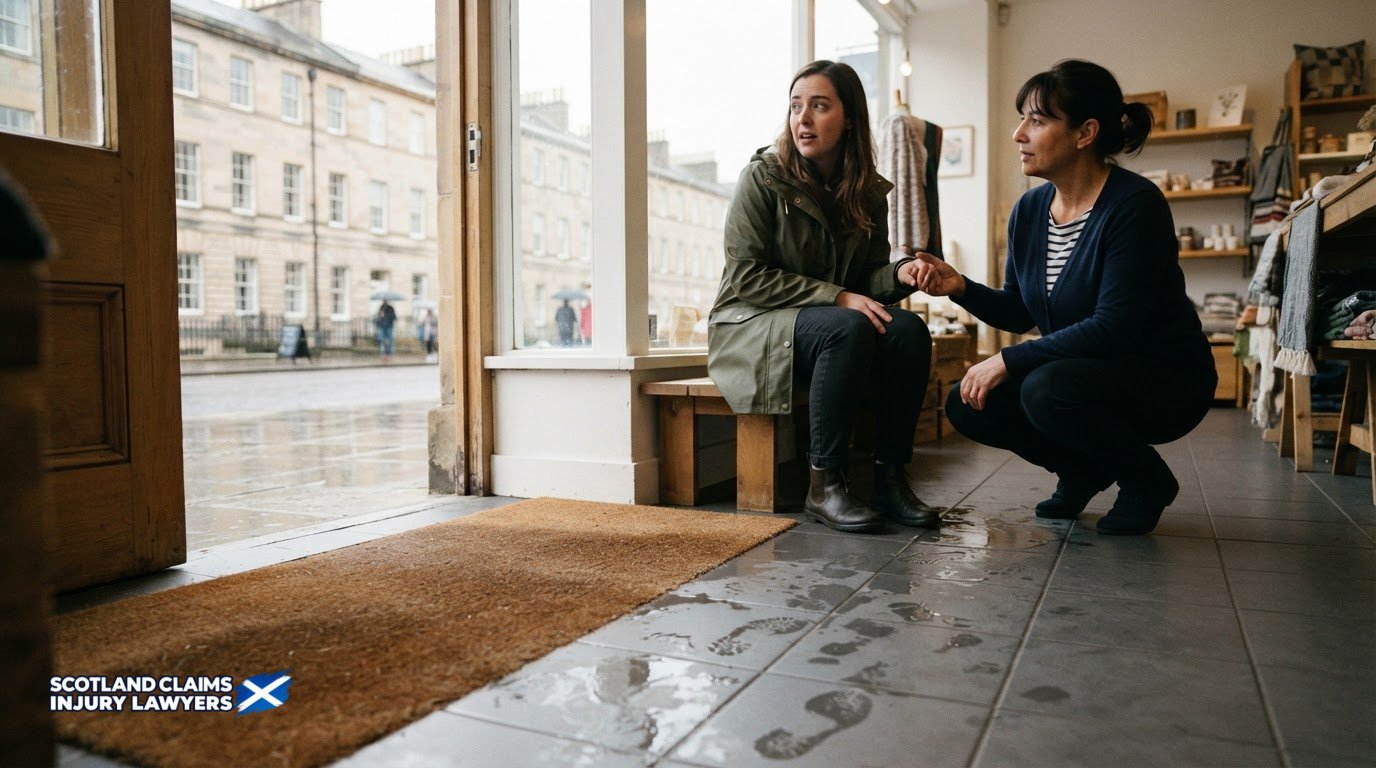
A slip and trip claim in Edinburgh may be possible if another party’s failure to meet a duty of care caused your injury. According to the UK legislation portal, you normally have three years from the date of injury to raise a personal injury claim in Scotland. Compensation may cover the injury and financial losses caused by it.
Starting a slip and trip claim in Edinburgh can feel daunting, particularly when you’re dealing with pain, time away from work or uncertainty about what happened. Get medical attention and preserve useful details about the accident, including when and where it occurred.
This guide explains how to start a claim, what evidence can help and where slips and trips may happen in Edinburgh, from pavements and public places to shops and workplaces. It also covers factors that can affect compensation, including your injury, recovery and financial losses, and how legal support can assess the circumstances and clarify what happened.
Key Takeaways
- A claim depends on showing that another party’s fault caused your accident and injury.
- Medical records, witness details and photographs can help build a clearer account of what happened.
- Compensation may reflect both the effects of your injury and financial losses linked to it.
- The location of the accident can help identify who was responsible for the surface or premises.
- A solicitor can assess the evidence, manage the claim and explain how court procedures may apply.
How can a solicitor start a personal injury claim on your behalf?
A solicitor can assess whether another party’s fault caused your injury and identify evidence that may support a claim. Look for experience with Scottish personal injury claims, clear explanations of the process and careful consideration of both your injury and financial losses.
Starting a claim in Edinburgh
To begin, a solicitor will ask when and where the accident happened and for a clear account of events. A slip and trip claim in Edinburgh might involve a fall on a shop floor, a broken pavement or a hazard in a gym. The solicitor considers whether another party’s fault caused your injury and resulting harm.
Your account can help identify who controlled the place where you fell and what records may exist. A pedestrian injured on a commute, for example, may have different relevant evidence from someone hurt while exercising or shopping. These details help the solicitor assess how your claim should proceed.
Evidence and medical assessments
Medical records help establish the nature and effects of an injury. Tell your solicitor where you received treatment and provide details of any follow-up care. Medical evidence can clarify your symptoms, recovery and any lasting effects, whether the injury is minor or serious.
Evidence can also connect the accident to its location and circumstances. A solicitor may consider photographs, incident reports, witness details and relevant records from the premises. Keep information about missed work and treatment expenses too. These details can support a claim for financial losses as well as compensation for pain and suffering.
The personal injury claim time limit
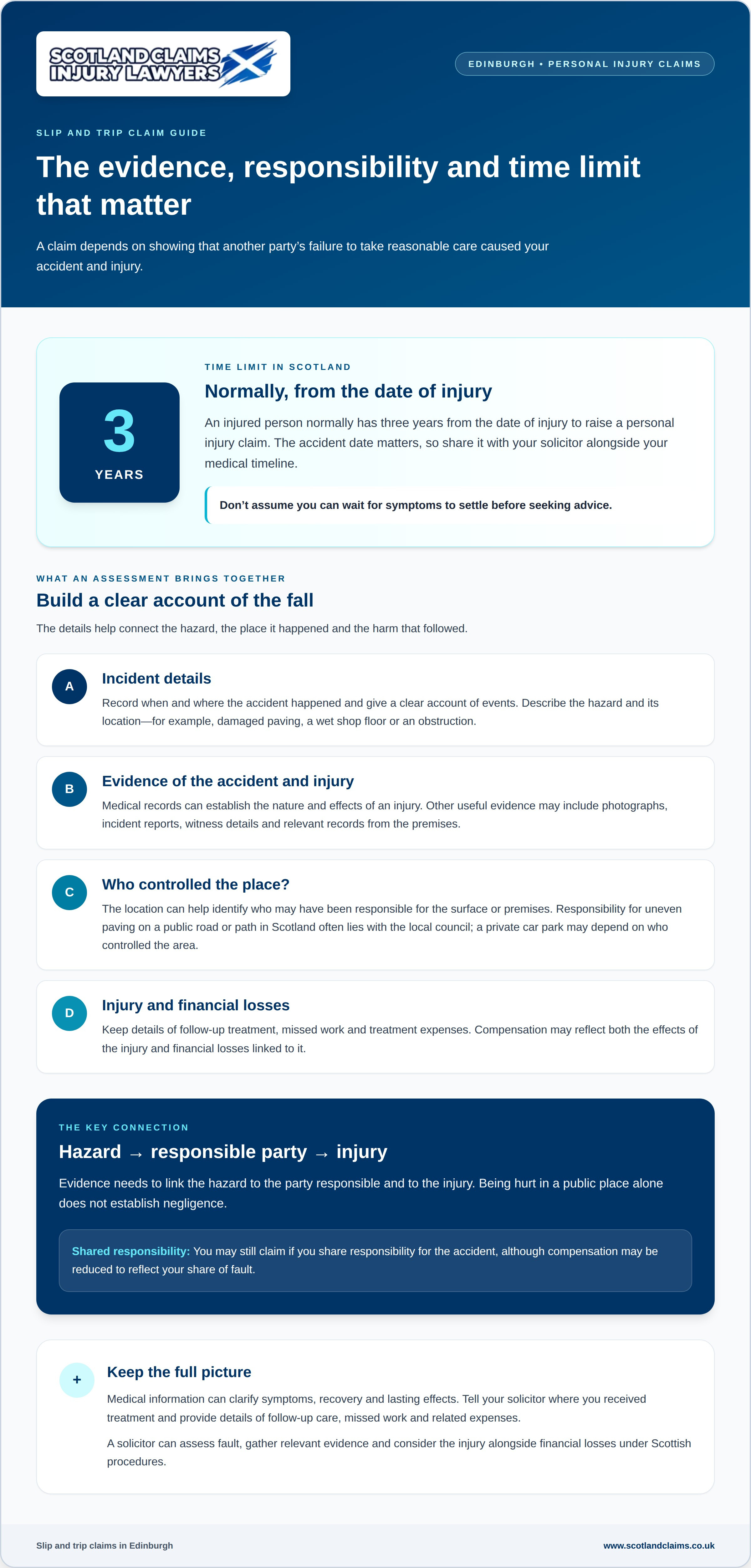
In Scotland, an injured person normally has three years from the date of injury to raise a personal injury claim. The date matters, so tell your solicitor when the accident happened as soon as you seek advice. They can consider the relevant time limit while assessing your claim.
Don’t assume that waiting for symptoms to settle means you can put off seeking advice. For example, a pedestrian may initially focus on treatment after a pavement fall, then find that the injury affects their work. Sharing the accident date and medical timeline helps your solicitor understand the circumstances and plan the next steps.
Finding a slip or trip solicitor
Choose a solicitor who can explain how they assess fault, gather evidence and value injury-related losses under Scottish procedures. Ask how they will handle medical information and keep you updated as the claim develops. Clear answers should make the process and your role understandable from the outset.
Consider whether the solicitor addresses the full impact of the accident, not just the immediate injury. A shopper with a fracture, for instance, may need to explain treatment, recovery and time away from work. A thorough assessment brings these effects together when considering compensation for the injury and financial losses.
Slips, trips and falls in public places, shops, workplaces and on pavements
A fall in a shop, workplace or public place may lead to a claim if another party’s negligence caused your injury. The location and condition of the hazard help identify who may have been responsible.
Making a public place accident claim
For an accident in a public place, start by identifying where it happened and who controlled that space. A fall on a footpath may involve different responsibilities from an accident inside a shop or leisure centre. Solicitors assess the location, hazard and circumstances of the fall when considering whether negligence caused harm.
For example, if you trip over damaged paving, describe the accident location clearly. A fall in a busy shopping centre may involve a spill or obstruction instead. A personal injury claim needs evidence linking the hazard, the responsible party and the injury. Being hurt in a public place alone does not establish negligence.
Your initial account should distinguish the accident from any separate disease or condition affecting the same area. This helps clarify which symptoms followed the fall and which medical records relate to the injury. A solicitor can assess these details as part of the personal injury claim and the circumstances of the incident.
Hazards in public places
Common hazards include wet floors, uneven surfaces and obstacles in walkways. In a workplace, inadequate safety measures may also contribute to a fall. Businesses, employers and local authorities have a duty of care that includes assessing potential hazards in the buildings and spaces they control.
The key question is whether another party’s failure to take reasonable care caused the accident and injury. A wet shop floor, for instance, must be considered alongside its location and the circumstances of the fall. Evidence can help show what the hazard was and how it affected your route. If you share responsibility, you may still claim, although compensation may be reduced to reflect your share of fault.
The assessment depends on the specific incident. A solicitor considers the surface defect or obstruction, where it appeared and the harm that followed. These details help distinguish an actionable injury from an accident without evidence of another party’s negligence.
Public and private land claims
Responsibility can depend on who controlled the land. For uneven paving on a public road or path in Scotland, responsibility often lies with the local council. Responsibility for a defect in a private car park may depend on who controlled the area and the circumstances.
The size of a paving defect can matter when assessing whether fault can be established. A solicitor will consider where it was, how it caused the fall and what injury resulted. A claim involving a shop, workplace or privately controlled area may require a different assessment of responsibility from one involving a public pavement.
For a fall on private premises, the relevant question is which owner or occupier controlled the area and whether their negligence caused the injury. A solicitor handling a slip or trip claim can assess the circumstances and potential responsibility.
How much is your slip or trip claim worth?
A solicitor reports the accident by setting out what happened, the injury and why another party may be responsible. They gather medical records, photographs and other evidence, then use Scottish procedures to prepare the claim and assess its value.
There is no single figure that applies to every fall. Compensation depends on the injury’s severity, recovery time, relevant guidelines, awards in similar cases and the specific facts.
Compensation can include general damages for pain and suffering, as well as special damages for financial losses. Lost earnings and medical expenses, for example, may form part of the assessment. Your solicitor considers how the injury affected daily life, work and recovery, rather than relying on the accident description alone. A serious injury with lasting effects raises different valuation issues from a short-lived injury.
Medical evidence helps explain the injury and its consequences. Treatment records, follow-up notes and an assessment of recovery can show how symptoms developed after the fall. A solicitor reviews this material alongside your account and financial records. Medical negligence is a separate type of allegation; medical records in a slip claim help evidence your injury and its effects.
Photographs can help show the condition of the accident scene. A clear image of a pothole or uneven paving may show the defect’s position and appearance. Wider photographs can provide context, such as the surrounding path, lighting or nearby features. Your solicitor can compare scene evidence with your description and other records. A photograph can support a claim, but it needs to fit the wider evidence.
Other useful material may include an accident report, correspondence about the hazard, witness accounts and records of missed work or expenses. Each item has a purpose: linking the defect to the incident, supporting your account of the injury or showing financial loss. Your solicitor identifies relevant evidence, organises it and discusses any gaps with you. This helps establish whether the evidence supports your claim.
If a dispute cannot be resolved, a Scottish claim may proceed in the sheriff court or the Court of Session. Solicitors handle pleadings and evidence gathering under Scottish procedures. The court route depends on the case and its circumstances. Your solicitor can explain the process and prepare the material needed to present your claim.
To estimate possible compensation, assess the injury and its financial consequences together. A personal injury compensation calculator can help you explore an initial estimate, while a solicitor considers the evidence and case-specific factors behind the valuation.
Witness details and accident-scene photographs
Witness accounts and photographs can help show how a fall happened. Record each witness’s name and contact details, then tell your solicitor what they saw. Someone who watched you slip on a shop floor may describe the spill, its position and whether staff had attended to it. Their account can support your version of events alongside photographs and medical evidence.
Photographs should show both the hazard and its setting. A close image can capture a broken paving edge, while a wider view shows its position on the route. For a shop-floor spill, images of the surrounding area can explain how people approached the hazard. Your solicitor can assess these alongside the accident location and any incident records.
Who may be liable depends on who controlled the place and whether their fault caused your injury. For uneven paving on a Scottish public road or path, responsibility often lies with the local council. A defect in a private retail-park car park is more likely to involve its owner. Inside a shop, the relevant party may be the owner or occupier responsible for that area.
The same principle applies at work, where an employer has a duty to take reasonable care for employees’ safety. For example, a fall on a wet workplace floor raises questions about the hazard and safety measures. A road traffic accident involves different circumstances, so responsibility must be assessed in light of where and how it happened.
To bring a claim, you must establish that another party’s fault or negligence caused the accident and your injury. Witness accounts, photographs and medical records can help connect these points. If you were partly responsible, you can still claim compensation, although the award may be reduced to reflect your share of responsibility.
A Scottish workplace fall case illustrates how offers can change as evidence and negotiations develop. Those figures describe that particular case, not a standard amount for workplace falls or other slip and trip accidents.
Useful witness details include where each person stood and what they observed before or after the fall. A witness who saw a hazard before your accident may help establish how long it had been there. Photographs can add context, but they do not replace an assessment of fault, injury and the full circumstances.
Slip and trip claims in Edinburgh and Glasgow
In Edinburgh and Glasgow, the central issue is whether another party’s fault caused your fall and injury. The city alone does not decide responsibility: the accident location, who controlled it and the available evidence matter.
Scottish slip and trip cases are personal injury claims based on delict, rather than tort. The injured person, known as the pursuer, must show the defender’s fault and the resulting harm. For example, someone injured on an Edinburgh pavement must connect the defect, the fall and the harm. A shop-floor accident in Glasgow requires the same core assessment.
The responsible party depends on the place and hazard, not simply the city. For uneven paving on a public path in Edinburgh, responsibility often lies with the local council. A defect in a private car park in Glasgow is more likely to involve its owner. In a workplace in either city, the employer must take reasonable care for employees’ safety.
A practical starting point is to establish who controlled the site when the accident happened. An Edinburgh shopper might identify the shop where a spill caused a fall, while a Glasgow worker may report a hazard to their employer. Describe the exact location and explain how the hazard caused your injury. This helps focus enquiries on the party whose responsibility is relevant.
Evidence needs to support both fault and harm. A photograph of a paving defect near an Edinburgh property may show its position and condition. A Glasgow workplace incident report may help document where a colleague fell. Medical records establish the injury, while witnesses can describe the hazard or events immediately before the fall. Lawyers assess this evidence together, rather than treating one photograph as proof on its own.
Claims in Edinburgh and Glasgow follow Scottish procedures. Depending on the circumstances, a case may proceed in the sheriff court or the Court of Session. Solicitors handle pleadings and evidence gathering under those procedures. The court route is not determined simply by whether the accident happened in Edinburgh or Glasgow; the case and its circumstances guide the process.
Identify the precise site before deciding who may be responsible. A pavement, shop, workplace and private car park can involve different parties, even within the same city. Record the location, describe the hazard and give your solicitor the evidence available. This allows them to assess the relevant duty, alleged fault and injury together.
Scotland Claims Injury Lawyers: Slip or Trip Claims
Scotland Claims Injury Lawyers handles slip or trip claims for people injured across Scotland, including Edinburgh. If your fall happened within the past three years and another party may be responsible, the firm’s solicitors can assess the circumstances and help pursue compensation.
The firm works on a no-win-no-fee basis and promises 100% compensation. This means it recovers its fees from the at-fault party and passes the full settlement to you. The firm also handles work injury and road traffic accident claims, where those are relevant to your circumstances.
If you’re ready to discuss the accident, contact Scotland Claims Injury Lawyers about your slip or trip claim.
Take the next step with a clear plan
If you’re considering a slip and trip claim in Edinburgh, start with an informed assessment of your circumstances. A solicitor can clarify the issues that matter, including whether the available information supports taking the claim forward. This gives you a practical basis for deciding what to do next.
Before speaking with a solicitor, consider what you most need explained: responsibility for the accident, the effect of your injury or how the claims process works. A direct discussion can help turn uncertainty into a clearer plan. You don’t need to know the legal answer before seeking guidance.
Scotland Claims Injury Lawyers can discuss your slip or trip claim and explain the next steps. The firm also handles claims involving workplace injuries and road traffic accidents, so you can raise the type of incident relevant to you.
Take the process one step at a time, with a clearer understanding of your options.
Frequently Asked Questions
What Kind of Accidents Can You Claim For in Edinburgh?
You may be able to claim after a slip, trip or fall, workplace accident or road traffic accident if another party’s fault caused your injury. A fall involving an unaddressed hazard in a shop differs from a collision on an Edinburgh road, for example, but both require evidence of responsibility and harm. Scotland Claims handles these personal injury claims across Scotland.
Will I need to attend court for my claim?
Most personal injury claims settle out of court, so attending a hearing isn’t usually necessary. If responsibility or compensation remains disputed, court proceedings may become part of the process. In Scotland, a case may proceed in the sheriff court or the Court of Session. Your solicitor can explain each stage and prepare you if a hearing is required.
Do I have to pay legal fees upfront?
No. Scotland Claims handles personal injury claims on a no-win-no-fee basis, with no upfront fees. If your claim is unsuccessful, you owe nothing for the firm’s legal work. Legal costs are recovered from the at-fault party’s insurer, allowing you to focus on treatment and recovery rather than arranging payment.
How does the ‘no win, no fee’ agreement work?
With Scotland Claims’ no-win-no-fee arrangement, the firm earns fees only if your claim succeeds. If it doesn’t, you owe nothing for its legal work. The firm recovers its fees from the at-fault party and passes your entire settlement to you. Scotland Claims is regulated by the Law Society of Scotland. Ask for the agreement’s terms to be explained before proceeding.
How much compensation am I owed?
The amount depends on your injury, recovery and the losses caused by the accident. An ankle injury that prevents you from working, for example, may involve different losses from a minor injury with no time away from work. Compensation can include damages for pain and suffering, as well as special damages such as lost earnings and medical expenses. Your records help establish the impact.
What must be proved to make a slip or trip claim in Scotland?
You must show that another party was at fault and that this caused your injury. Evidence needs to connect the hazard, accident and resulting harm. A photograph of a damaged surface may help explain the scene, while medical records support your account of the injury. A solicitor considers these alongside witness evidence and information about who controlled the area.
What is the time limit for making a personal injury claim in Scotland?
In Scotland, an injured person normally has three years from the date of injury to raise a personal injury claim. Give your solicitor the accident date early so they can assess the claim’s timeframe. Keep records of when the incident happened and when you sought treatment, particularly if symptoms developed or changed after the accident.
How much compensation can I claim for a slip or trip injury in Scotland?
There’s no fixed amount for every slip or trip injury. The valuation depends on the injury’s severity, recovery time, relevant guidelines, awards in similar cases and the facts of your situation. An injury with ongoing effects may be assessed differently from one that resolves quickly. Compensation may also reflect financial losses, such as earnings missed during recovery and medical expenses.