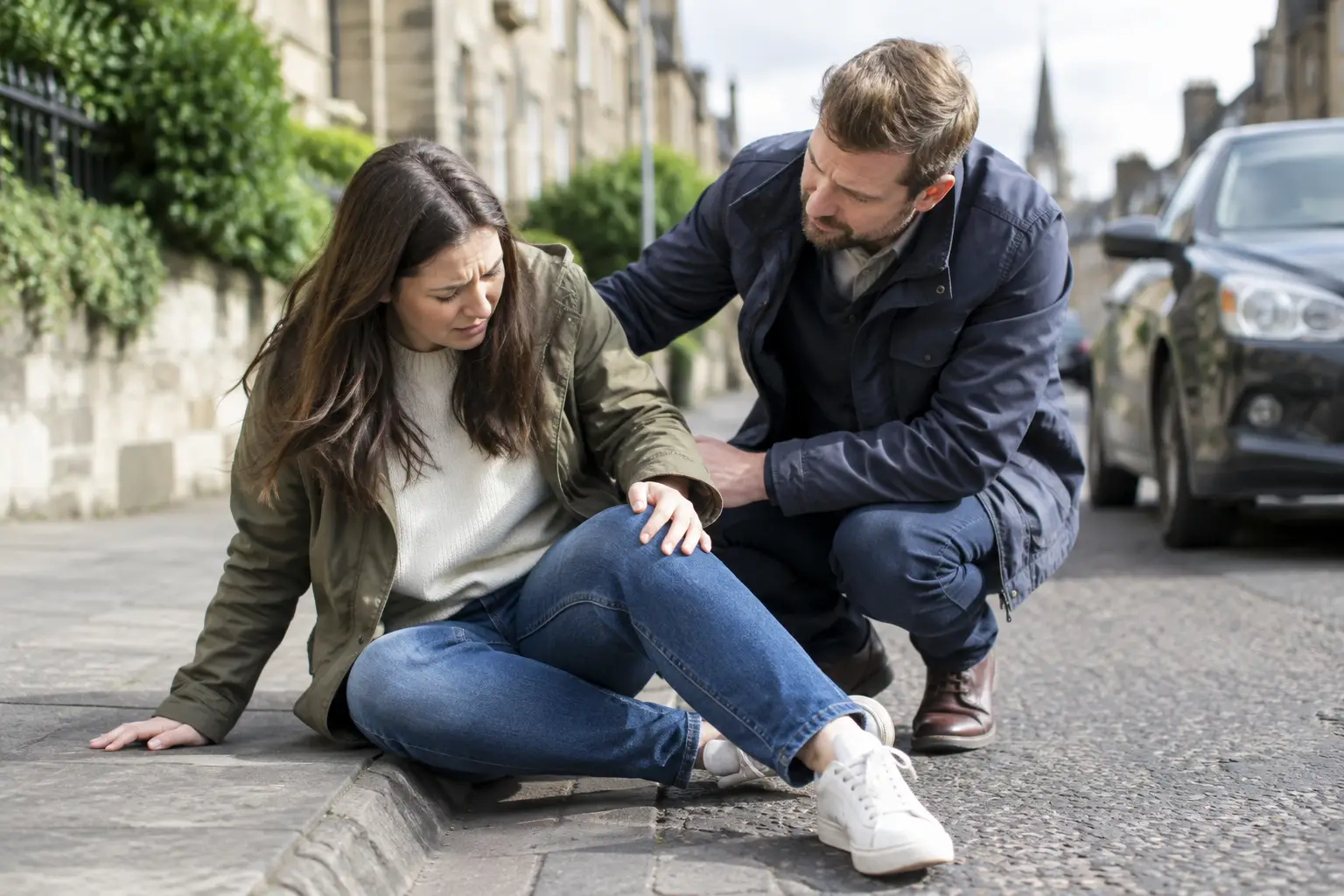
A driver mounts the pavement. A car turns across a crossing without seeing you. A cyclist cuts through a pedestrian area. When you are injured, the first question is usually simple: was this my fault, or can I claim? Pedestrian claim eligibility depends on the facts, but you do not need to have been on a marked crossing or struck at high speed to have a valid case.
If somebody else’s negligence caused your injury, you may be entitled to compensation. That can include accidents involving cars, vans, lorries, taxis, buses, motorcycles and bicycles. It can also apply where a dangerous road or pavement defect caused you to fall.
What makes you eligible to claim as a pedestrian?
A pedestrian compensation claim normally comes down to three points. You must have suffered an injury, another person or organisation must have been at least partly responsible, and there must be evidence to support what happened.
The injury does not have to be life-changing. Whiplash, fractures, soft-tissue injuries, cuts, psychological symptoms and injuries that aggravate an existing condition can all be relevant. What matters is that the accident caused a genuine injury and that medical evidence can show its effect on you.
Responsibility is often clearer than people expect. Road users have a duty to pay attention, control their vehicle, observe speed limits and look out for people crossing or walking nearby. A driver who is speeding, distracted by a mobile phone, reversing without checking, failing to give way or turning carelessly may be liable for the harm they cause.
You may still have a claim even if the driver says they did not see you. Failing to see a pedestrian is not a defence if they should have seen them by taking reasonable care.
Accidents at crossings and junctions
Marked crossings provide useful evidence, but they are not the only places where drivers must take care. Pedestrians are injured at junctions, car parks, bus stops, residential streets and outside shops every day. A motorist turning into a side road must properly check for people crossing the entrance. A vehicle leaving a driveway must not pull out into someone walking along the pavement.
The exact circumstances matter. For example, a pedestrian using a mobile phone or stepping into the road unexpectedly might affect how responsibility is shared. It does not automatically end the claim. If the driver also had time to slow down, failed to keep a proper lookout or was travelling too fast for the conditions, they could still be held partly or fully responsible.
Hit-and-run and uninsured driver claims
Do not assume there is no route to compensation because the driver left the scene or had no insurance. Claims can often be made through the Motor Insurers’ Bureau where an uninsured or untraced driver caused the accident.
These cases can be more evidence-heavy, so act promptly. Report the incident to Police Scotland, get medical attention and preserve anything that may identify the vehicle or driver. Registration details, dash-cam footage, CCTV, photos and independent witnesses can make a major difference.
Pedestrian claim eligibility when you were partly at fault
Insurers sometimes focus on what the pedestrian did before an impact. They may argue that you crossed away from a crossing, wore dark clothing, had consumed alcohol or failed to look properly. These arguments do not automatically mean you receive nothing.
In Scotland, compensation may be reduced where you are found to have contributed to the accident. This is called contributory negligence. If you were assessed as 25% responsible, for instance, your compensation could be reduced by 25%.
That is a reason to get proper advice, not a reason to abandon your case. Insurers have a financial interest in placing more blame on you than the evidence justifies. A clear account of the accident, supported by records and witness evidence, helps protect the value of your claim.
Evidence that can strengthen your claim
The best evidence is often gathered in the first hours and days after an accident. Seek medical treatment even if you expect to recover quickly. Medical notes create an independent record of your injuries and can identify symptoms that worsen later.
Take photographs of the location, visible injuries, damaged clothing and the vehicle if you can do so safely. Note the time, weather, road layout, traffic lights, crossing markings and anything else that could explain why the collision happened. Ask witnesses for their names and contact details before they leave.
You should also keep a record of the practical consequences. Save receipts for prescriptions, travel to appointments, mobility aids and care. Record time away from work, reduced hours and help you have needed from family. These losses may form part of the compensation claim alongside the injury itself.
CCTV and dash-cam footage can be overwritten quickly. Tell a solicitor about possible cameras near shops, homes, buses, public buildings or traffic junctions as soon as possible. Early action gives the best chance of securing footage before it disappears.
What compensation can cover
The value of a pedestrian claim is based on the individual evidence, not a fixed payment table. It will depend on the nature of your injury, treatment, recovery period and the impact on your work and everyday life.
Compensation can cover pain and suffering, as well as financial losses caused by the accident. This may include lost earnings, treatment costs, damaged personal belongings, care provided by others and travel expenses. Where an injury affects your future ability to work or creates ongoing care needs, those future losses may also need to be considered.
A quick settlement offer can be tempting when bills are mounting. But accepting too early can leave you undercompensated if your symptoms continue or you need more treatment than first expected. You should understand the full extent of your injuries before agreeing a final settlement wherever possible.
Time limits for pedestrian accident claims in Scotland
For most adult personal injury claims in Scotland, court proceedings must be raised within three years of the accident date. There are exceptions, including for children and in some situations where the injury or its cause was not immediately clear, but you should never rely on an exception applying.
Three years can pass quickly while you are recovering, attending appointments or dealing with work. Starting a free assessment early gives your solicitor time to investigate liability, obtain medical evidence and deal with the insurer properly.
The claim process should not cost you your settlement
A pedestrian injury can create financial pressure at the worst possible time. You should not have to pay upfront legal fees to find out where you stand. With a genuine No Win No Fee claim, you can ask a solicitor to assess the accident without taking on that immediate risk.
It is equally important to ask what happens to your compensation if the claim succeeds. Some firms take a percentage of the settlement as their success fee. That can mean losing up to 20% of money awarded for your injury and losses.
Scotland Claims works on a 100% compensation basis. Where your claim succeeds, you keep the full value of your compensation, while legal costs are recovered from the at-fault party’s insurer. Your case is handled through Kerr Brown Solicitors, regulated by the Law Society of Scotland.
What to do next
Write down what happened while it is fresh in your mind. Keep your medical appointments, retain receipts and avoid discussing fault with the other side before you understand your position. If an insurer contacts you, you are entitled to take advice before accepting any offer or giving a detailed statement.
A free, no-obligation claim assessment can establish whether the evidence supports a case and what should happen next. You deserve a straightforward answer, clear legal support and the chance to recover the compensation that the accident has taken from you.