
What if the first compensation offer is only a starting point, rather than a fair reflection of what you’ve lost? If you’re considering “accepting the first compensation offer scotland” after an accident, it’s understandable to want the uncertainty to end. But an early offer may arrive before your recovery and financial losses are clear.
It’s sensible to check whether the amount reflects your injury, its effects and costs such as lost earnings or care. You may also worry that turning it down could delay your claim. Before deciding, find out what the offer covers and what accepting it could mean for your claim.
This guide explains how compensation offers are assessed in Scotland, what to check in settlement terms and when further medical or financial evidence may be needed. It also explains why an offer can be negotiated and how advice may help you make an informed decision. A careful review can help you avoid settling before you understand the full picture.
Key Takeaways
- A first offer is an initial proposal, not proof that the amount fairly reflects your injury or losses.
- Before accepting, check whether the offer accounts for your recovery, ongoing symptoms and documented expenses.
- When considering accepting the first compensation offer scotland, understand the settlement terms and what accepting may conclude before you decide.
- You can seek clarification or negotiate. Keep the offer and related correspondence, and get advice if anything is unclear.
- Scotland Claims Injury Lawyers says it recovers legal costs from the at-fault party’s insurer, so clients keep 100% of their compensation.
What does accepting the first compensation offer in Scotland mean?
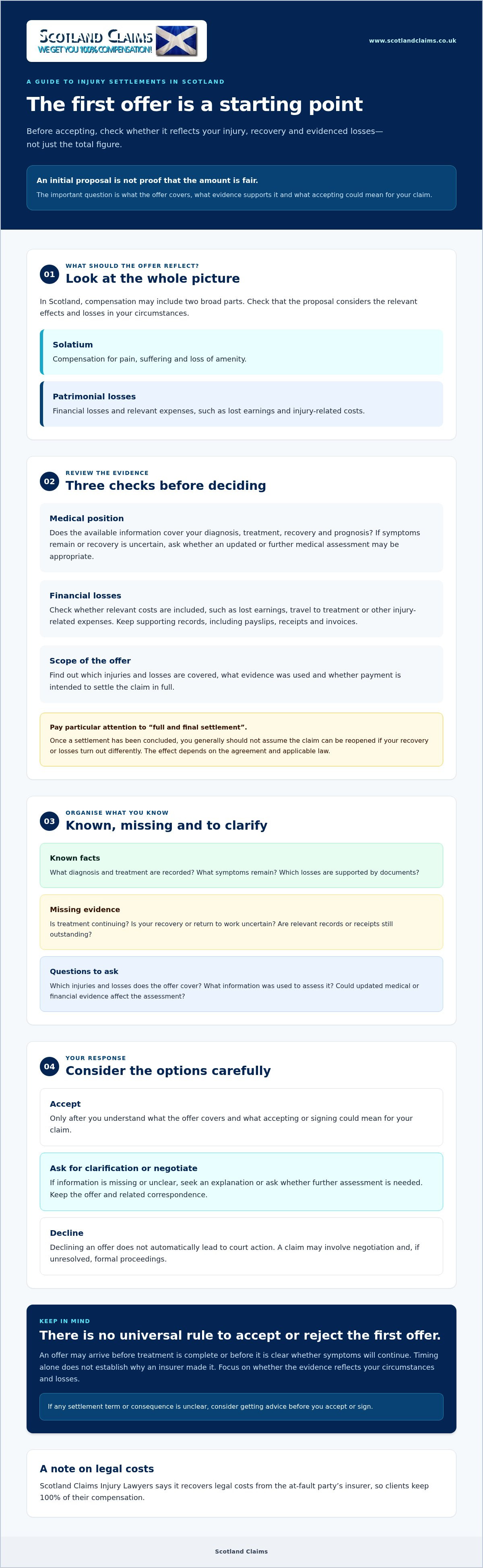
A first compensation offer is an initial proposal to settle your claim. It does not, by itself, show whether the amount is fair. The key question is whether it reflects your injury, its effects and the losses you can evidence. There is no universal rule that you should always accept or reject the first offer. If you’re thinking about accepting the first compensation offer scotland, focus on what the proposal covers and what accepting it could mean for your claim.
An initial proposal is an opening figure. A fully assessed settlement is one you understand in light of your injury, recovery and financial losses. In Scotland, compensation may include solatium for pain, suffering and loss of amenity, as well as patrimonial losses such as lost earnings and relevant expenses. If the figure does not account for the full picture, ask for clarification or further assessment.
Why might an insurer make an early compensation offer?
An offer may arrive before your treatment is complete or before it’s clear whether symptoms will continue. The timing alone does not establish why the insurer made it, so avoid assuming a particular motive. Instead, check whether the medical information reflects your current condition and whether your financial losses have been recorded. For example, if you don’t yet know when you can return to work, the offer may not reflect the full effect on your earnings.
Ask whether the proposal accounts for treatment to date, recovery progress, continuing symptoms and injury-related expenses. If important information is missing, seek clarification rather than guessing at the claim’s value.
What does accepting an offer usually settle?
Read the agreement carefully. It should set out which parts of the claim the offer covers and whether payment is intended to settle the claim in full. Pay particular attention to terms such as “full and final settlement”. Ask a solicitor to explain what they mean in your circumstances before you accept or sign anything.
Once a settlement has been concluded, you generally should not assume you can reopen the claim if your recovery or losses turn out differently. Whether an agreement can be challenged depends on its terms and the applicable law, so get advice if the consequences aren’t clear. A claim may involve negotiation and, if unresolved, formal proceedings. The Sheriff Personal Injury Court is part of Scotland’s court system for personal injury cases. Declining an offer does not automatically lead to court action.
If you need help understanding a Scottish injury claim, you can read about injury lawyers in Scotland. Independent advice can help you understand the offer’s scope before making a significant decision.
How to assess a first compensation offer before deciding
Don’t judge an offer by its total alone. Check whether it reflects the available medical evidence and the financial effects of your injury. A proposal made before your recovery is clear may not account for continuing symptoms or future needs. Before responding, identify what is supported by evidence, what is missing and what needs explaining.
Has your medical position been properly assessed?
Diagnosis, treatment, recovery and prognosis can all affect how an injury is valued. If symptoms remain, treatment is ongoing or your recovery is uncertain, ask whether the medical evidence gives a sufficiently complete picture. Depending on your circumstances, a further assessment or updated report may be appropriate. Don’t rely on a generic online figure alone. It cannot assess your individual injury or replace medical evidence.
Are your losses and supporting documents included?
Compare the offer with the financial losses and expenses linked to your injury. Depending on your circumstances, these may include lost earnings, travel to treatment or other relevant costs. Keep records such as payslips, receipts and invoices. Each loss needs evidence, and whether it can be included depends on the facts of your claim. The personal injury compensation calculator may help you explore an estimate, but it is not a legal assessment of your offer.
Use this simple review to organise the information before deciding:
- Known facts: What diagnosis and treatment are recorded? What symptoms remain? Which losses are supported by documents?
- Missing evidence: Is treatment continuing? Is your recovery or return to work still uncertain? Are receipts, earnings records or other relevant documents outstanding?
- Questions to ask: Which injuries and losses does the offer cover? What evidence was used to calculate it? Could updated medical or financial information affect the assessment?
For road accident claims, the Scottish Government guidance on road crash compensation explains the general claims process. Use it as background information, then compare your offer with your own records and circumstances.
These checks can make accepting the first compensation offer scotland a more informed decision, whether you accept, ask questions or seek a revised proposal. If you’d like help understanding your information and options, you can get an initial view of your claim.
Accept, reject or negotiate: comparing your options in Scotland
There isn’t one right response for every claim. Your choice depends on the evidence, the offer’s terms and what remains uncertain. Rejecting an offer does not automatically mean your claim will fail. It may lead to further discussion, but what happens next depends on the circumstances and applicable Scottish law.
| Option |
Potential benefit |
What to check |
| Accept |
May resolve the claim without further negotiation. |
Be sure you understand what the settlement covers and whether it concludes the claim. |
| Seek clarification |
Helps you understand how the amount was assessed and what losses it includes. |
Ask whether the offer has a response date or other terms, and whether it remains open while you seek answers. |
| Negotiate |
Gives you an opportunity to explain why the proposal may not reflect the evidence or losses. |
Support your position with relevant medical information, records of expenses or earnings, and advice where needed. |
| Decline |
Avoids accepting terms you don’t understand or consider incomplete. |
Ask what may follow. Negotiation and any formal procedure depend on the claim and Scottish law. |
Before replying, read the offer and related correspondence carefully. Check for a stated deadline, conditions and instructions for responding. If these aren’t clear, ask for an explanation promptly and keep a written record. Don’t assume an offer will remain open indefinitely or that declining it will have a particular procedural consequence. Get advice on the terms and your options before making a final decision.
When might accepting be worth considering?
Acceptance may be worth considering once you’ve reviewed the available medical evidence, your documented losses and the settlement wording. Check whether it resolves all relevant parts of your claim, including losses you’ve already incurred and any issues still being assessed. A quick offer or convenient payment date is not, on its own, a sound reason to accept.
What can you do if the offer seems too low?
Ask how the amount was calculated and which evidence was considered. Point out any missing medical information or financial losses, and discuss with an adviser whether further evidence could help. The next step may be clarification, negotiation or a formal process. If you’re searching for “accepting the first compensation offer scotland”, compare the offer with the evidence and understand the consequences before choosing.
What to do before responding to a first offer
Take time to understand the proposal before replying. Keep the written offer and related correspondence together, including emails, letters and notes of calls. Check whether the offer gives a response date, what it covers and how to ask for more information. If anything is unclear, ask for an explanation and get advice before accepting or declining.
Use this checklist to prepare:
- Pause. Don’t let pressure or the prospect of a quick payment make the decision for you.
- Read the terms. Identify what the offer settles, any conditions and the stated response date.
- Gather evidence. Collect relevant medical records, earnings information, receipts and other documents about your losses.
- Ask questions. Clarify how the figure was reached and what happens if you need more time or don’t accept.
- Obtain advice. Ask a Scottish solicitor to explain the wording and assess how the offer relates to your circumstances.
Questions to ask before giving an answer
Ask specific questions. Is the proposal intended to settle your whole claim or only a defined part? Which medical findings, losses and documents were considered when calculating the amount? If a record or expense appears to be missing, can it be reviewed? Also ask what the next steps are if you need more information or decide not to accept. Confirm any response date and whether the offer includes terms that affect how or when you should reply.
If your offer relates to a road accident, Scotland Claims’ Scottish whiplash claims information may provide relevant accident-specific background. The issues in your own claim depend on your injury and evidence.
When should you speak to a Scottish solicitor?
Get advice if your symptoms continue, your losses are unclear or the settlement wording is difficult to understand. A solicitor can review the offer against the evidence and explain how Scottish procedure may apply to your circumstances. This is especially useful before accepting terms that may bring the claim to an end. You can find out more about Scottish personal injury solicitors and the support they provide.
Before accepting the first compensation offer scotland, make sure you understand its scope, response terms and the evidence supporting the amount. A careful review helps you make a considered decision rather than responding under pressure.
If you’re unsure whether an offer reflects your injury and losses, advice can help you understand what to check before responding. Scotland Claims is a trading style of Kerr Brown Solicitors, which is authorised and regulated by the Law Society of Scotland. The firm handles personal injury claims in Scotland, including road traffic accidents, workplace injuries and public-place slips or trips.
An assessment gives you an opportunity to discuss the offer alongside the information you have, such as medical evidence, recovery progress and records of financial losses. It cannot guarantee a particular outcome, but it can help clarify what questions to ask and whether further evidence may be needed before you decide. You can read more about Scottish injury solicitors and the claims they handle.
How the firm’s No Win, No Fee model addresses fee concerns
Scotland Claims says it recovers legal costs from the at-fault party’s insurer rather than deducting them from your settlement. It states that clients keep 100% of their compensation, with no success fee or settlement deduction, and owe nothing if the claim is unsuccessful under its No Win, No Fee arrangement. Before proceeding, ask for the agreement that applies to your case and make sure you understand how it works.
What happens in an initial claim assessment?
The firm says it offers a fast, no-obligation assessment of potential claims. You can explain what happened, describe your injury and recovery, and raise questions about the offer and its terms. The discussion can help you understand whether the proposal appears to account for the information available, but it is not a promise that a claim will succeed or that an offer will change. The firm handles road traffic, workplace and public-place slip or trip injury claims in Scotland.
Before accepting, make sure you understand what the settlement covers and how its terms affect your claim. If you’re considering accepting the first compensation offer scotland, Scotland Claims can provide an initial view to help you decide what to do next.
Make your next decision with confidence
A first offer is a proposal to assess, not a decision you need to make without checking the details. Review the medical evidence, your recovery, documented losses and settlement wording. If information is missing or the terms are unclear, seek answers before deciding whether to accept, negotiate or decline.
If you’re weighing up accepting the first compensation offer scotland, advice can help you understand what the offer covers and what accepting may mean for your claim. Scotland Claims is a trading style of Kerr Brown Solicitors, regulated by the Law Society of Scotland.
The firm says it recovers legal costs from the at-fault party’s insurer. It also says clients keep 100% of their compensation, with no success fee deducted, and owe nothing if a claim is unsuccessful under its No Win, No Fee arrangement. Check the terms that would apply to your individual case.
With the right information, you can make a considered choice and move forward with greater clarity.
Frequently Asked Questions
Should I accept the first compensation offer in Scotland?
It depends on the evidence, your recovery and what the offer settles. Don’t accept simply because it’s the first proposal or because you feel pressed to reply quickly. Check the medical information, documented losses and settlement wording first. If you’re considering accepting the first compensation offer scotland, a Scottish solicitor can review the specific facts and explain the potential effect of acceptance before you decide.
Can I reject or negotiate a compensation offer in Scotland?
You can ask questions or seek advice before responding, but the available options depend on your claim and the offer’s terms. Rejecting an offer does not automatically mean your claim will fail. Check whether the offer gives a response date, keep a copy of it and related correspondence, and ask a solicitor how negotiation or any formal procedure may apply to your circumstances in Scotland.
What happens if I accept a first compensation offer?
Acceptance may settle some or all of your claim, depending on the agreement and its wording. A full-and-final settlement can have important consequences, so check which injuries and losses it covers before agreeing. Don’t assume an accepted settlement can easily be reopened if your symptoms or losses change. Ask a solicitor to explain the precise legal effect under the rules that apply to your case in Scotland.
How do I know whether a compensation offer is fair?
Compare the offer with your medical evidence, recovery outlook, documented financial losses and the settlement terms. An online calculator may provide a general estimate, but it cannot establish the value of your individual claim. If treatment is ongoing or important evidence is missing, ask whether the offer accounts for that information. A solicitor can assess your circumstances and explain what further evidence may be relevant before you respond.
Can an insurer withdraw its first compensation offer if I don’t accept?
That may depend on the offer’s wording, any stated deadline and the procedure applying to your claim. Don’t assume the offer will remain open indefinitely or that it automatically disappears when you ask questions. Keep the offer and related correspondence, and check any response date promptly. A Scottish solicitor can review the terms and advise what may happen if you need more time or choose not to accept.
Will a solicitor take money from my compensation in Scotland?
Fee arrangements vary, so check the agreement rather than assuming every firm charges in the same way. Scotland Claims says it recovers legal costs from the at-fault party’s insurer, charges no success fee and passes the full settlement to the client. It also says clients owe nothing if a claim is unsuccessful under its No Win, No Fee arrangement. Ask for the terms that apply to your case to be explained before proceeding.
Is there a time limit for a compensation claim in Scotland?
For most personal injury claims in Scotland, court proceedings generally need to be started within three years of the accident or the date you became aware of the injury. Exceptions can apply, including for children, people who lack legal capacity and fatal accident claims. The relevant start date and exceptions depend on the circumstances. Seek advice promptly so a Scottish solicitor can confirm the deadline that applies to your situation.