Last Updated: November 4, 2026
Quick Summary
If the other driver refuses to share their details, stay calm, make sure everyone is safe, and record their registration number, vehicle make, model and colour. Then report the collision to Police Scotland and keep the reference number. Recording other driver details carefully gives your insurer the evidence needed to pursue a claim.
- Photograph the registration plate from several angles in good light and check the number twice.
- Ask witnesses for their name and contact details and note what they saw.
- Call 999 if anyone is injured or the other driver is aggressive, otherwise call 101.
- Write down the police reference number and keep it with your other evidence.
- Notify your own insurer promptly and give them the evidence you have gathered.
Table of Contents
Being in a collision is unsettling, and it can be even harder when the other driver will not share their details. This guide walks you through the steps to take after a collision, including how to record other driver details, starting with the most important one: keeping everyone safe.
Your first priority is safety. Switch on your hazard lights, turn off the engine if it is safe to do so, and move to a safe place away from traffic if you can. If anyone is hurt, call 999 straight away and ask for an ambulance.
Once everyone is safe, take a slow breath and stay calm. An angry or upset driver is harder to deal with, so keep your voice level and avoid arguments on the road.
Record the Other Driver's Registration and Vehicle Details
If the other driver refuses to exchange details, your next task is to record what you can see. The registration number is the most useful piece of information you can collect.
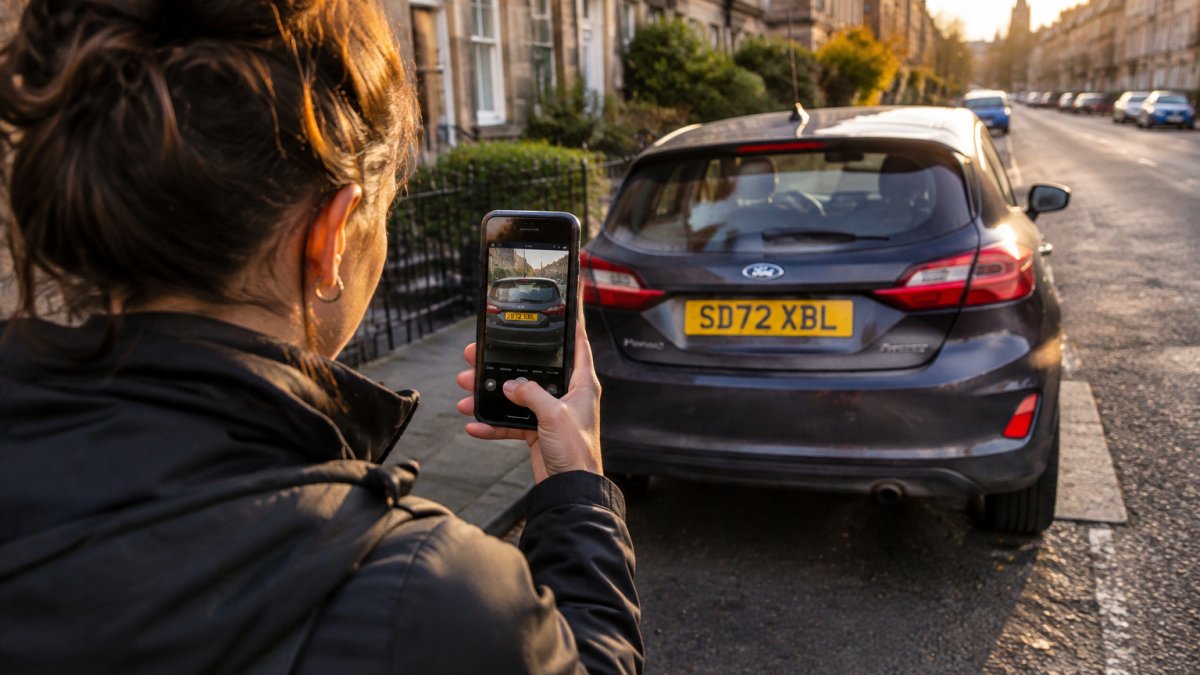 A driver capturing other driver details by photographing a car registration plate on a quiet Glasgow street.
A driver photographing the registration plate of a parked car on a quiet Glasgow street in daylight, phone held steady in one hand. The image shows the plate clearly and the surrounding road.
Write down or photograph the following:
- The registration number, read carefully and checked twice
- The make, model and colour of the vehicle
- Any visible damage to the vehicle
- The exact time and location of the collision
Watch out: photographs taken in poor light can make a plate hard to read, so take several shots from different angles.
What Details to Collect After a Car Accident
A full exchange of information makes any later claim much easier, so collecting other driver details is worth the effort. Where the other driver will cooperate, ask for the following:
- Their full name and address
- The name of their insurer and their policy number
- Their driving licence number
- The make, model and registration of their vehicle
If they refuse, you can still record their vehicle details and report the incident to the police, who can follow up with them.
If the other driver refuses to share their details, you still have options. The table below sets out what to record and where to report it.
| Item |
Detail |
Note |
| Registration number |
Read carefully and checked twice |
Most useful detail to record |
| Vehicle make, model, colour |
Note what you can see |
Helps police trace the keeper |
| Visible damage |
Photograph from several angles |
Take shots in good light |
| Time and location |
Write down exactly |
Needed for the police report |
| Witnesses |
Name and contact details |
Note what they saw |
| Police non-emergency line |
Call 101 |
Call 999 if anyone is injured |
| Police reference number |
Write it down and keep it |
Proof of your report |
Gathering Witness Details and Evidence to Collect After a Car Accident
Witnesses can be valuable, especially when the other driver disputes what happened. Ask anyone who saw the collision for their name and contact details, and note what they saw.
Useful evidence includes:
- Photographs of the scene, the vehicles and the road conditions
- Dashcam footage, if you have it
- The time and location of the collision
- Notes made at the scene while the details are fresh
Keep copies of everything. Evidence gathered early is often the strongest.
Reporting a Road Accident to the Police in Scotland
If the other driver will not exchange details, contact Police Scotland. The correct route depends on the circumstances. Call 999 if anyone is injured, the road is blocked, the other driver is aggressive, or there is an immediate risk to safety. For everything else, call 101, the non-emergency line, or attend a police station in person.
When you call 101, have the following ready: the date, time and location of the collision; the other vehicle's registration number, make, model and colour; a description of the other driver if you saw them; and details of any witnesses. The call handler will give you a reference number, which you should write down and keep with your other evidence.
Reporting the collision creates an official record. Police can trace the registered keeper through the DVLA and follow up on the incident (Request information about a vehicle or its registered keeper from DVLA ). This record is often the difference between a claim that proceeds smoothly and one that stalls.
Get Started Today →
The Legal Duty to Stop and Exchange Details
Under UK road traffic law, a driver involved in a collision that causes injury or damage must stop at the scene and, if asked, give their details to anyone with reasonable grounds to require them (Vehicle insurance: If you’re in an accident). Check the current legislation on the official UK government website for the exact requirements.
The Separate Duty to Report Within 24 Hours
If details are not exchanged at the scene, a separate duty arises. The driver must report the collision to the police as soon as reasonably practicable. Check the current legislation and official guidance for the exact time limits that apply.
Watch out: telling your insurer is not a substitute for reporting to the police directly. Keep proof of the report, such as the reference number or the name of the officer you spoke to.
What Happens If the Other Driver Leaves the Scene
If the other driver leaves without exchanging details, report it to Police Scotland as soon as you safely can. The police can investigate a driver who leaves the scene using the registration number and any witness accounts. Do not follow the other vehicle or attempt to block it. Note the direction of travel and any distinguishing features, then report from a safe location.
Making an Insurance Claim Without the Other Driver's Details
You can still make a claim even if you do not have the other driver's name, address or policy number. What matters is that you notify your own insurer promptly and give them the evidence you have gathered. To understand what happens after the claim is submitted, read on. Policies usually require you to report a collision promptly, so check your own policy wording.
When you contact your insurer, provide the following:
- Your policy number and vehicle registration
- The date, time and location of the collision
- The other vehicle's registration number, make, model and colour
- A description of the other driver if you saw them
- The police reference number from your report to Police Scotland
- Photographs of the damage, the scene and the registration plate
- Names and contact details of any witnesses
- Details of any dashcam footage you hold
Your insurer can often trace the other party through the registration number and the police report. Where the other driver is uninsured or cannot be traced, the options depend on your own policy and the Motor Insurers' Bureau scheme, so ask your insurer what applies to you (MIB claims process - how it works and what to expect).
A missing name or policy number does not automatically defeat a claim. What weakens a claim is a gap in the evidence: no registration number, no police report, no witnesses and no photographs. That is why the steps at the scene matter so much.
Watch out: it is generally sensible to notify your insurer promptly rather than waiting for the police to trace the other driver, then update them when a name or address becomes available.
Speaking to a specialist injury lawyer can help you understand your options where the other driver refuses to cooperate. You can find a free consultation with an injury lawyer in Scotland to talk through your situation. Scotland Claims Injury Lawyers, based in Glasgow, offer a No Win No Fee arrangement, so you pay no upfront costs.
When It Is Unsafe to Stay or Approach the Other Vehicle
Sometimes it is not safe to remain at the scene or to approach the other vehicle. If traffic is heavy, the road is blocked or the other driver seems aggressive, move to a safe place and call the police.
Never put yourself at risk to take photographs or to confront the other driver. Your safety comes first, and you can record details later from a safe distance.
Common Mistakes to Avoid When the Other Driver Refuses
Several errors can weaken your position. Avoid these:
- Admitting fault at the scene, even informally
- Leaving before recording the registration number
- Waiting too long to report the collision
- Failing to keep copies of photographs and notes
- Posting about the collision on social media
Booking a Free Consultation After a Collision in Glasgow
If you were injured or the other driver is refusing to cooperate, speaking to a specialist can help. Scotland Claims Injury Lawyers, based in Glasgow, offers impartial advice and a No Win No Fee arrangement, so you pay no upfront costs and keep all your compensation when you win.
Contact the team to discuss your options and the next steps in your claim.
other driver detailswhat to do if the other driver refuses to exchange detailswhat details to collect after a car accidentreporting a road accident to the police in scotland