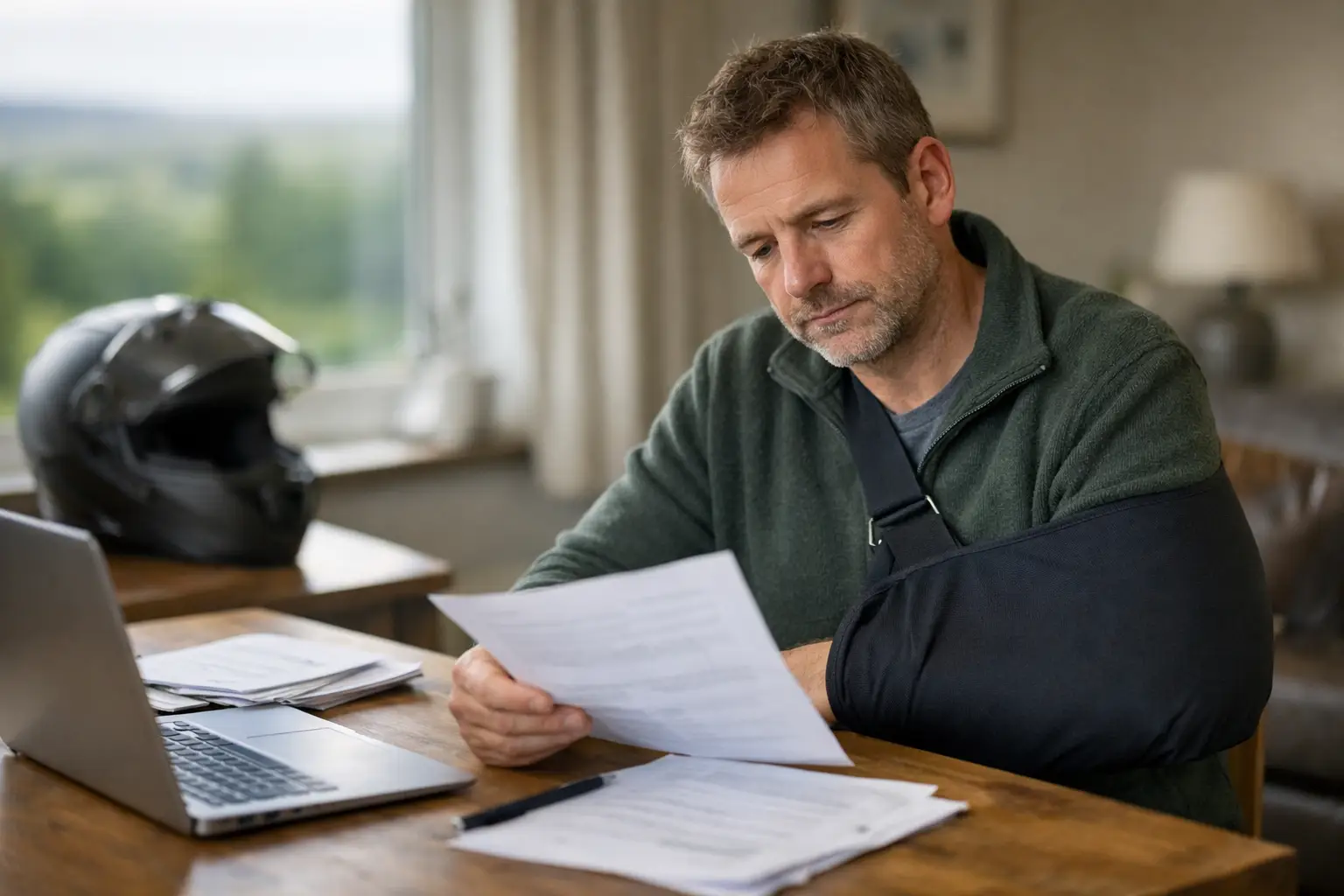
A motorcycle collision can change your plans in seconds. One driver failing to look properly at a junction, opening a car door into your path or pulling out without giving way can leave you injured, unable to work and facing a damaged bike. Motorcycle accident compensation Scotland is there to put financial responsibility where it belongs - with the person or insurer responsible for the crash.
If the accident was not your fault, you should not have to absorb the cost alone or hand over a percentage of your compensation in legal fees. A properly handled claim can cover the impact on your health, earnings and day-to-day life, while giving you a clear route forward.
Can you claim motorcycle accident compensation in Scotland?
You may be able to claim if another road user, employer or organisation caused your accident through negligence. In practice, many motorcycle claims arise because a driver did not see a rider, misjudged their speed, failed to check mirrors or turned across their path.
Fault is not limited to dramatic high-speed crashes. A low-speed collision in traffic can still cause serious injury to a motorcyclist. So can poor road maintenance, diesel or oil left on the road, defective traffic management or an unsafe working vehicle.
You do not need to prove that you were completely untouched by criticism before asking for advice. Sometimes insurers argue that a rider was travelling too fast for conditions, filtering unsafely or not wearing suitable protective equipment. That can affect the value of a claim if it contributed to the injury, but it does not automatically mean there is no claim. The evidence matters.
A free, no-obligation assessment is the sensible first step. It allows a solicitor to consider what happened, identify who may be responsible and explain whether there is a realistic basis for pursuing compensation.
What compensation can a motorcycle accident claim cover?
Compensation is not a fixed payment for the type of collision. It reflects the actual consequences of the accident. A wrist fracture that prevents you from working in a manual role may have a very different financial effect from the same injury for someone who can continue in a desk-based job.
Your claim can include compensation for pain, suffering and the effect an injury has on your quality of life. It can also include financial losses caused by the accident, such as lost earnings, treatment costs, travel to appointments and the cost of care or help at home where needed.
Motorcyclists can face significant practical losses too. Protective clothing, helmets, communications equipment and other personal items may be damaged. The cost of repairing or replacing the bike is often dealt with through the relevant motor insurer, but the position depends on your insurance arrangements and the facts of the case. Keep invoices, photographs and details of every expense. Small costs can add up quickly while you are recovering.
Future losses may matter where an injury has a long-term effect on your ability to work, ride, manage daily tasks or pay for ongoing support. This is why accepting an early offer without understanding the medical position can be risky. Once a settlement is accepted, it is usually final.
Evidence that can strengthen your claim
The best evidence is often gathered in the first few days, when memories are clear and the scene has not changed. But it is still worth seeking advice even if time has passed. A solicitor can help obtain evidence that is not immediately available to you.
Useful evidence includes photographs of the vehicles, road layout, skid marks, debris and visible injuries. Details of witnesses can be particularly valuable, especially where the other driver disputes what happened. Dashcam footage, helmet-camera footage, CCTV and police incident details may also help establish liability.
Medical records are central because they show the injuries linked to the collision and the treatment you needed. Keep a straightforward record of symptoms, appointments, medication, time away from work and activities you cannot manage. This is not about exaggerating your difficulties. It is about making sure the full effect of the accident is not overlooked.
If the collision happened while you were working, report it to your employer as soon as possible and check that it has been entered in the accident book or reporting system. The same applies if a dangerous road condition or site hazard played a part: report it to the authority, business or organisation responsible and take photographs if it is safe to do so.
Time limits for motorcycle accident compensation Scotland
In most cases, a personal injury claim in Scotland must be started within three years of the accident date. There are exceptions, including situations where the full extent of an injury was not immediately known, but you should never rely on an exception applying.
Three years can feel like plenty of time when you are focused on treatment, work and repairing your life. Evidence does not wait, however. CCTV can be overwritten, witnesses can move away and recollections can fade. Starting early gives your solicitor more opportunity to investigate properly and present a strong case.
If you are unsure whether you are within the time limit, ask now. A quick assessment can give you clarity before an important deadline is missed.
Why keeping 100% of your compensation matters
After a serious accident, every pound of compensation has a purpose. It may replace wages you have lost, fund recovery, meet household costs or recognise the pain you have endured. A firm taking a percentage as a success fee can reduce the amount that reaches you.
For example, a 20% deduction from a £10,000 settlement would leave you with £8,000. That is £2,000 from your compensation gone. You should always ask a claims firm exactly what it will take from your settlement, not just whether it offers a no win no fee arrangement.
Scotland Claims works on a no win no fee basis with a clear difference: you keep 100% of the compensation awarded. Legal costs are recovered from the at-fault party's insurer rather than deducted from your settlement. Your case is handled through Kerr Brown Solicitors, regulated by the Law Society of Scotland, so you have the reassurance of solicitor-led legal support.
No claim can be guaranteed, and the amount recovered will always depend on the evidence, liability and the effect of the injury. But cost should not stop you from finding out where you stand.
What happens after you start a claim?
The process begins with the facts. Your solicitor will ask how the collision happened, who was involved, what injuries you suffered and what losses you have experienced. They will then assess the available evidence and contact the relevant insurer where appropriate.
The claim may require medical evidence from an independent expert to explain your diagnosis, recovery period and any lasting symptoms. Your solicitor will also build a picture of your financial losses using payslips, receipts, employment evidence and other documents. This ensures the claim reflects more than the immediate damage at the roadside.
Some cases settle through negotiation once the evidence is in place. Others take longer because fault is denied or the seriousness of an injury is disputed. The right approach is not to rush for the first offer, but to pursue a settlement that properly reflects what the accident has cost you.
You do not need to deal with insurer arguments, legal paperwork and requests for evidence on your own while trying to recover. If another person caused your motorcycle accident, get a free assessment promptly, keep hold of the evidence you have and make sure the compensation you receive stays with you.