Why claim for whiplash in Scotland: your 2026 guide
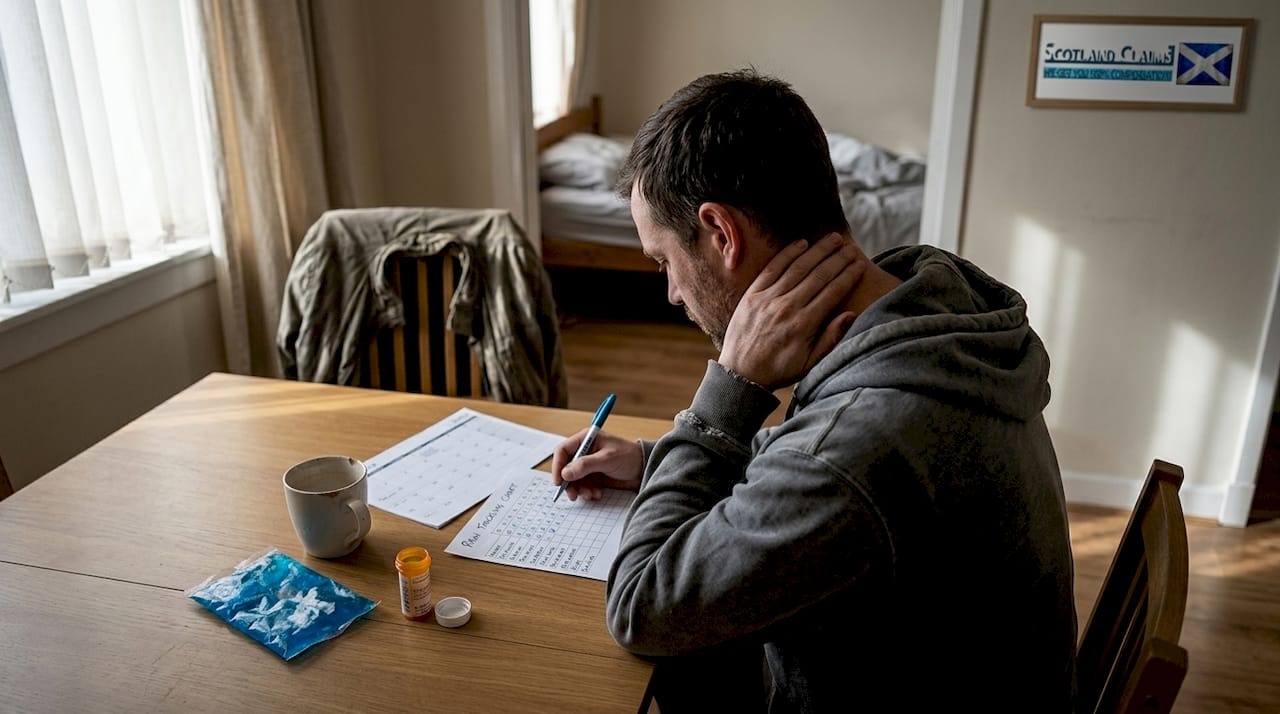
Many people in Scotland dismiss whiplash injuries as minor inconveniences, only to discover months later that persistent neck pain, headaches, and reduced mobility have significantly impacted their quality of life. This misconception leads countless individuals to miss out on rightful compensation that could cover medical expenses, lost earnings, and ongoing treatment costs. If you’ve suffered whiplash in an accident, understanding your legal rights and the claims process is essential. This guide explains why claiming compensation matters, how Scotland’s legal framework supports injured individuals, and how no win no fee arrangements make pursuing justice accessible without financial risk.
Table of Contents
Key takeaways
| Point |
Details |
| Long term impact |
Whiplash injuries can persist for years, affecting daily activities and work capacity beyond initial expectations. |
| Financial protection |
Compensation covers medical treatment, rehabilitation, lost wages, and pain and suffering from your injury. |
| Risk free claims |
No win no fee arrangements eliminate upfront legal costs, making claims accessible regardless of financial situation. |
| Early action benefits |
Seeking legal advice promptly preserves evidence and strengthens your claim within Scotland’s three year limitation period. |
| Specialist support |
Experienced Scottish injury lawyers understand local legal processes and maximise compensation outcomes for whiplash victims. |
Understanding whiplash and why it matters
Whiplash occurs when your head suddenly jerks forward and backward, typically during road traffic accidents, causing soft tissue damage to the neck. This rapid movement strains muscles, ligaments, and tendons beyond their normal range of motion. In Scotland, rear end collisions remain the most common cause, but whiplash can also result from sports injuries, workplace accidents, or slips and falls.
Recognising symptoms early is crucial for both medical treatment and legal claims. Common indicators include:
- Neck pain and stiffness that may worsen over several days
- Headaches originating from the base of the skull
- Shoulder pain and reduced range of motion
- Dizziness, fatigue, and difficulty concentrating
- Tingling or numbness in arms and hands
Research shows that 50% of whiplash patients experience prolonged symptoms at one year, with psychological factors playing a significant role in recovery. This statistic challenges the myth that whiplash always resolves quickly. Early treatment helps, but over medicalisation through unnecessary procedures can actually hinder recovery. The key is balanced medical care that addresses physical symptoms whilst acknowledging psychological components like anxiety about re injury or frustration with persistent pain.
Whiplash symptoms can significantly disrupt your daily life. You might struggle with work tasks requiring computer use, experience sleep disturbances, or find driving uncomfortable. These impacts justify seeking compensation, as whiplash compensation Scotland explained demonstrates through real case examples. Ignoring symptoms or delaying medical attention weakens your claim and potentially worsens your condition.
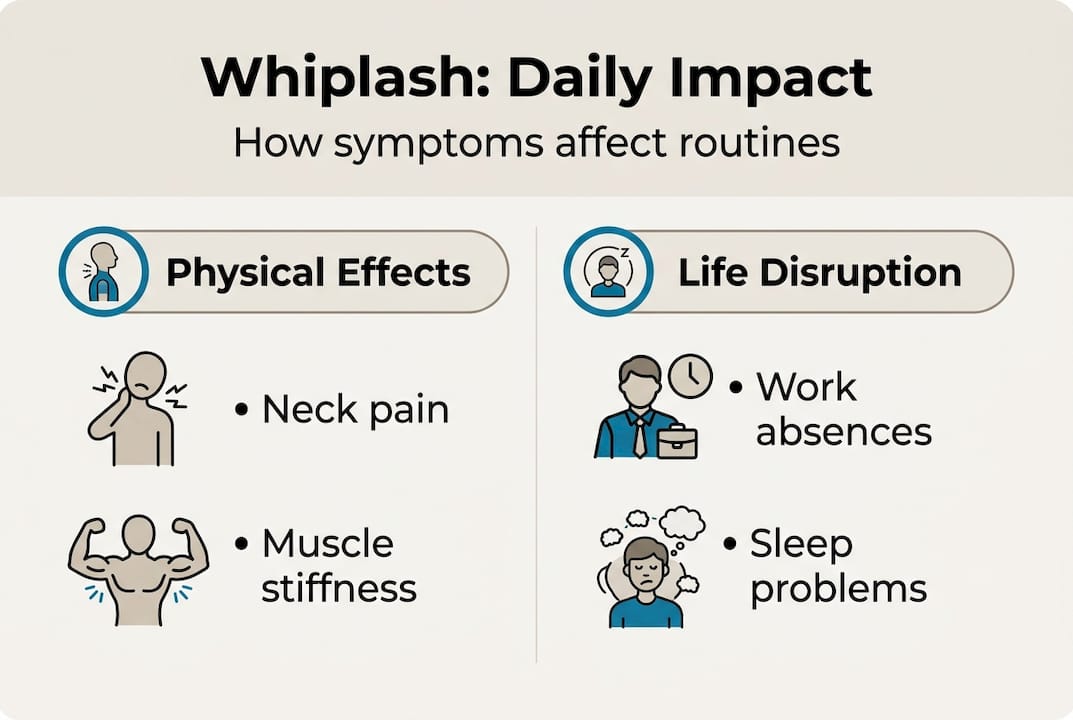
Pro Tip: Photograph any visible injuries immediately after the accident and keep a daily symptom diary noting pain levels, activities affected, and medical appointments. This contemporaneous evidence proves invaluable when building your compensation claim months later.
Understanding that whiplash can have lasting consequences underscores why claiming compensation isn’t about being litigious, it’s about securing financial support for genuine medical needs and lost opportunities. The next section explains exactly how to navigate Scotland’s claims process.
How claiming compensation for whiplash works in Scotland
Scottish personal injury law allows individuals injured through another party’s negligence to seek compensation. For whiplash claims, you must demonstrate three core elements: the accident occurred due to someone else’s fault, you sustained a whiplash injury as a direct result, and this injury has caused quantifiable losses or suffering.
The claims process follows these structured steps:
- Seek immediate medical attention and obtain documentation of your whiplash diagnosis from a GP or hospital.
- Report the accident to relevant parties, including police for road traffic incidents and your employer for workplace accidents.
- Gather evidence including photographs, witness statements, and accident reports within days of the incident.
- Consult a specialist personal injury solicitor who understands how to claim injury compensation Scotland regulations.
- Your solicitor submits a claim to the at fault party’s insurer, outlining liability and initial compensation expectations.
- Undergo an independent medical examination to assess injury severity and prognosis objectively.
- Negotiate settlement terms or proceed to court if insurers dispute liability or offer inadequate compensation.
Scotland operates under a three year limitation period, meaning you must initiate claims within three years of the accident date. However, starting earlier preserves evidence quality and witness memories. Claims typically resolve within 9 to 18 months, though complex cases involving disputed liability or severe injuries may take longer.

Compensation for whiplash falls into distinct categories:
| Compensation type |
What it covers |
Example amounts |
| General damages |
Pain, suffering, and loss of amenity from the injury itself |
£1,000 to £10,000+ depending on severity and duration |
| Special damages |
Quantifiable financial losses including medical expenses and prescriptions |
Actual costs incurred with receipts |
| Lost earnings |
Income lost during recovery or reduced earning capacity |
Calculated from payslips and employment records |
| Travel costs |
Expenses for medical appointments and rehabilitation sessions |
Mileage or public transport receipts |
| Care costs |
Professional or family care needed during recovery |
Market rate for care hours required |
The calculate personal injury compensation Scotland guide provides detailed frameworks for estimating your potential award. Remember that prolonged whiplash symptoms affect half of patients beyond one year, potentially qualifying you for higher compensation bands.
Common pitfalls that delay or reduce compensation include accepting early settlement offers before fully understanding injury extent, failing to attend medical appointments which suggests injuries aren’t serious, and providing inconsistent accounts of the accident or symptoms. Insurers scrutinise claims carefully, so accuracy and thoroughness in documentation matter significantly.
Understanding this process empowers you to approach your claim strategically rather than reactively, maximising your chances of fair compensation.
The advantages of no win no fee for whiplash claims
No win no fee arrangements, legally termed Conditional Fee Agreements, revolutionise access to justice for whiplash victims. Under these agreements, your solicitor receives payment only if your claim succeeds. If you lose, you pay nothing for their services. This structure removes the primary barrier preventing many Scots from pursuing legitimate claims: fear of mounting legal bills.
These arrangements particularly benefit individuals who:
- Lack savings to fund upfront legal costs ranging from hundreds to thousands of pounds
- Feel uncertain about claim success and cannot risk financial loss
- Need specialist legal expertise but cannot afford hourly solicitor rates
- Want to focus on recovery without financial stress about legal proceedings
The no win no fee claims Scotland model works through a success fee arrangement. If your claim succeeds, your solicitor deducts an agreed success fee from the final award - though Scotland Claims never deducts a success fee, meaning you keep 100% of your compensation on every kind of claim. Crucially, this fee comes from the compensation amount, not from your own funds. The at fault party’s insurer usually covers your solicitor’s base costs separately, meaning you retain the majority of your compensation.
This funding method dramatically increases access to legal representation. Before no win no fee became standard practice, many whiplash victims simply abandoned claims because they couldn’t afford solicitors. Now, anyone with a valid claim can access the same quality legal expertise as those with significant financial resources.
However, understanding potential costs remains important. If your claim fails, you won’t pay your solicitor’s fees, but you might face costs for the defendant’s legal expenses. Reputable solicitors mitigate this risk through After the Event insurance, which covers opponent costs if you lose. This insurance premium is typically recoverable from the defendant if you win, adding another layer of financial protection.
Pro Tip: Before signing any no win no fee agreement, request a clear written explanation of the success fee percentage, what happens if you lose, whether After the Event insurance is included, and any circumstances where you might incur costs. Transparency at this stage prevents surprises later.
Choosing solicitors who specialise in whiplash injury claims Scotland rather than general practitioners significantly impacts outcomes. Specialists understand medical evidence nuances, know typical compensation ranges for different injury severities, and have established relationships with medical experts who provide independent assessments. This expertise translates directly into higher settlement amounts and faster resolution times.
No win no fee arrangements level the playing field between individual claimants and well resourced insurance companies, ensuring your whiplash injury receives the legal attention it deserves regardless of your financial circumstances.
Tips for a successful whiplash claim in Scotland
Maximising your compensation requires strategic preparation and attention to detail throughout the claims process. These practical steps significantly strengthen your case:
- Seek medical attention within 24 to 48 hours of the accident, even if symptoms seem mild initially. Early medical records establish the injury timeline and demonstrate you took your condition seriously.
- Request written accident reports from police, employers, or property owners depending on where the incident occurred. Official documentation carries more weight than personal accounts alone.
- Photograph the accident scene, vehicle damage, and any visible injuries from multiple angles. Visual evidence becomes crucial when insurers dispute accident severity or injury causation.
- Collect contact details from witnesses who can corroborate your account. Independent witness statements counter insurer claims that you’re exaggerating or fabricating injuries.
- Maintain a detailed symptom diary recording daily pain levels, activities affected, sleep disturbances, and emotional impacts. This contemporaneous record proves more credible than retrospective accounts months later.
- Keep all receipts for accident related expenses including prescriptions, physiotherapy, travel to medical appointments, and any adaptations needed at home or work.
- Attend every medical appointment and follow prescribed treatment plans. Gaps in treatment suggest injuries weren’t serious or that you’re not genuinely trying to recover.
- Avoid discussing your claim on social media platforms. Insurers routinely monitor claimants’ online activity, and posts showing physical activities can undermine claims of ongoing disability.
- Never accept the first settlement offer without consulting your solicitor. Initial offers typically undervalue claims, and insurers expect negotiation.
- Choose solicitors with proven experience in Scottish whiplash claims who understand local court procedures and typical compensation ranges.
The advantages of using injury lawyers Scotland extend beyond legal knowledge. Experienced solicitors handle insurer negotiations, removing emotional stress from confrontational discussions. They know when settlement offers represent fair value and when to push for more. They also coordinate medical examinations with reputable experts whose reports carry weight with insurers and courts.
Common mistakes that weaken claims include providing inconsistent accounts of how the accident occurred, exaggerating symptoms which medical evidence doesn’t support, and failing to mitigate losses by refusing reasonable treatment. Insurers employ experienced claims handlers who spot these inconsistencies immediately.
Remember that building a strong claim is a collaborative process between you, your medical providers, and your legal team. Your role involves honest, detailed reporting of symptoms and impacts. Your solicitor’s role involves translating that information into compelling legal arguments supported by robust evidence. Together, this partnership maximises your compensation potential.
How Scotland Claims can help with your whiplash claim
Navigating whiplash compensation claims can feel overwhelming when you’re already dealing with pain, medical appointments, and potential work disruptions. Scotland Claims specialises in connecting injured individuals throughout Scotland with experienced personal injury solicitors who understand the complexities of whiplash cases. Our no win no fee claims Scotland service eliminates financial barriers, ensuring you can pursue rightful compensation without upfront costs or risk.
Our specialist team has helped countless Scots secure compensation for whiplash injury claims Scotland and related injuries including back injury claims Scotland. We provide free initial consultations to assess your case, explain your legal options clearly, and match you with solicitors whose expertise aligns with your specific circumstances. From gathering evidence to negotiating with insurers, we support you at every stage, allowing you to focus on recovery whilst we handle legal complexities. Contact our team today to discuss your unique situation and take the first step towards securing the compensation you deserve.
FAQ
Can I claim compensation for whiplash caused by a minor accident?
Yes, you can claim compensation even if the accident seemed minor at the time. What matters legally is whether you sustained a genuine injury with demonstrable impacts on your life, not the severity of the collision itself. Many whiplash injuries result from low speed accidents where vehicle damage appears minimal. If you have medical evidence confirming whiplash and can show how it affected your daily activities or work capacity, you have grounds for a claim regardless of accident circumstances.
How long do I have to make a whiplash claim in Scotland?
Scottish law provides a three year limitation period from the date of your accident to initiate legal proceedings. However, starting your claim as early as possible significantly strengthens your case. Evidence quality deteriorates over time, witness memories fade, and medical records become harder to obtain. Most successful claims begin within weeks or months of the accident when documentation is fresh and injury impacts are clearly demonstrable. Waiting until near the three year deadline often results in weaker claims and lower compensation.
What does no win no fee mean for my whiplash claim?
No win no fee means your solicitor only receives payment if your compensation claim succeeds. You pay nothing upfront for legal services and incur no solicitor fees if your claim fails. If you win, Scotland Claims deducts no success fee whatsoever, so you keep 100% of your compensation award - though you should be aware that most other large or national firms charge a success fee of up to 20% including VAT. This arrangement makes pursuing legitimate claims accessible regardless of your financial situation, removing the risk of accumulating legal bills whilst dealing with injury recovery. Reputable solicitors also arrange After the Event insurance to protect you from opponent costs if your claim is unsuccessful.
How much compensation can I expect for whiplash in Scotland?
Compensation amounts vary significantly based on injury severity, recovery duration, and how whiplash impacts your life. Minor whiplash with full recovery within weeks might attract £1,000 to £2,000. Moderate injuries lasting several months could reach £2,000 to £6,000. Severe whiplash with symptoms persisting beyond two years and causing permanent limitations may exceed £10,000. These figures cover general damages for pain and suffering. Special damages for lost earnings, medical expenses, and other quantifiable costs are calculated separately and added to your total award. Your solicitor will provide a more precise estimate based on your specific circumstances and medical evidence.
Recommended