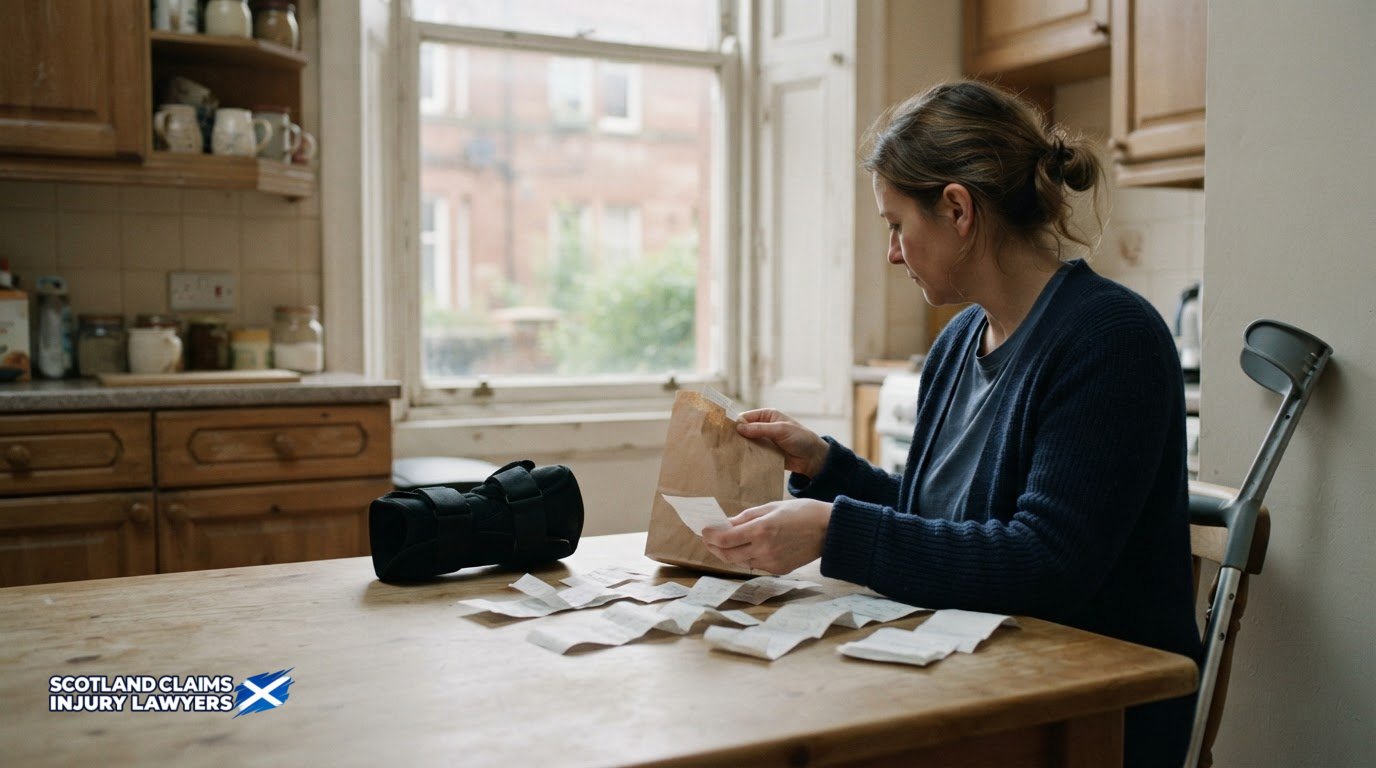
Claiming out-of-pocket expenses in a personal injury claim in Scotland can cover reasonable costs directly caused by your injury, provided you can show what you spent. These may include travel, medical treatment, care, lost income, damaged belongings, and necessary changes to your home or vehicle. Keep receipts, invoices, and other records to support each expense.
An injury can affect your finances well beyond the immediate cost of treatment. Extra travel, help at home, and time away from work may all add up, so it’s important to understand which losses could be included and how to document them.
This guide covers expenses that may be included in a Scottish personal injury claim, the evidence to keep, and how fees or deductions can affect compensation. It also explains the claims process and what to consider when assessing your losses.
Key Takeaways
- Costs linked directly to your injury may include treatment, travel, care, lost income and necessary adaptations.
- Keep receipts, invoices and pay slips to help show what you spent or lost and why it relates to the injury.
- Costs paid by an insurer or another party may affect what can be included, so identify who covered each expense.
- Understand how a no-win, no-fee agreement and any insurance premium could affect the compensation you receive.
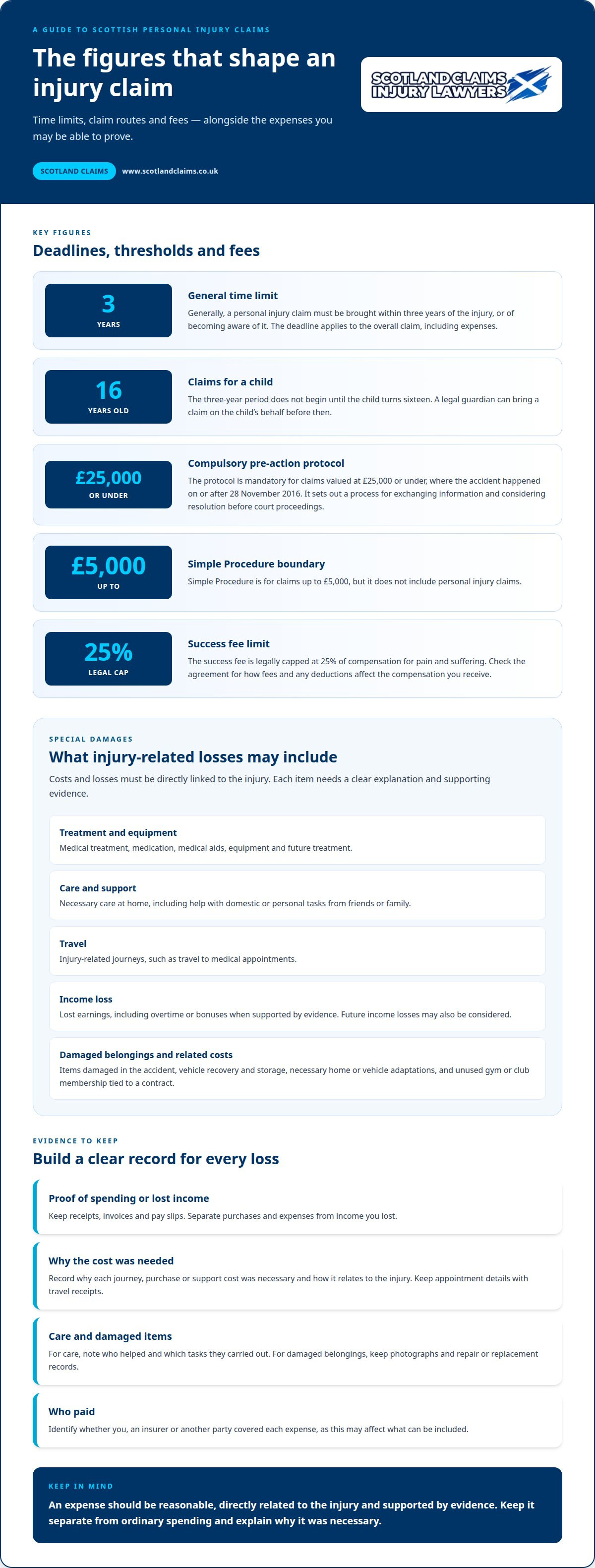
- According to the UK legislation register, the success fee is legally capped at 25% of compensation for pain and suffering.
What Is The Personal Injury Claims Process In Scotland?
A Scottish personal injury claim can include injury-related medical bills, care costs and travel expenses, alongside compensation for the injury itself. The process also considers deadlines, evidence and the route used to resolve the claim.
Compulsory pre-action protocols apply to accidents that happened on or after 28th November 2016, and are mandatory for claims valued at £25,000 or under.
Medical Bills and Care Costs
Medical and care costs are expenses for treatment or support made necessary by an injury. A claim may include treatment, medication, medical aids, equipment, future treatment, and necessary care at home.
For example, if your injury means you need help with domestic tasks, the cost of that support may be included. Keep a record of the care provided and how it relates to your injury, alongside any medical bills.
Travel Costs and Medical Expenses
Travel costs include injury-related journeys, such as trips to medical appointments. Medical expenses cover treatment costs connected to the injury. Either may form part of a claim if the accident created the need for them.
Record why each journey or purchase was necessary. Keep appointment details with travel receipts, for example, and retain evidence of medication or equipment bought because of your injury. This helps separate injury-related costs from ordinary spending.
Time Limits for Expense Claims
In Scotland, the general time limit for a personal injury claim is three years from the injury date, or from when you became aware of the injury, according to the Scottish Courts and Tribunals Service. As expenses form part of the claim, the deadline applies to the overall action.
For a child, the three-year period does not begin until they turn sixteen. A legal guardian can bring a claim on the child’s behalf before then. If an illness becomes apparent later, the period may begin from diagnosis or when the person knew, or should have known, about the condition.
Claim Routes and Simple Procedure
The Scottish personal injury claims process can include expenses as part of a claim for injury compensation. Simple Procedure is different: it is for claims up to £5,000, but does not include personal injury claims.
Most personal injury claims in Scotland settle without a court hearing. Where the compulsory pre-action protocol applies, it provides a process for exchanging information and considering resolution before court proceedings.
Legal advice can clarify how medical costs, care and travel fit into your claim, and which procedure applies. The Scottish personal injury lawyers page covers the Scotland-specific legal service.
A No Win No Fee agreement means no legal fees are payable if the claim is unsuccessful. In Scotland, such agreements may be offered under the Civil Litigation (Expenses and Group Proceedings) (Scotland) Act 2018. Read the agreement’s terms, including how fees and any deductions affect compensation if the claim succeeds.
Special damages and out-of-pocket expenses
In Scotland, special damages cover financial losses directly caused by an injury. They account for expenses and lost income alongside compensation for the injury itself.
Claiming out-of-pocket expenses after a personal injury in Scotland means identifying costs linked to the accident and explaining why they were necessary. Keep each item separate from ordinary spending, such as routine household shopping or a journey unrelated to treatment.
Special Damages and Financial Losses
Special damages cover provable financial effects of an injury, including past expenses and losses that may continue into the future. They reflect the effect of the injury on your finances, not just the injury itself.
For example, if you cannot work, you may claim lost earnings, including overtime or bonuses when supported by evidence. Future income losses may also be considered. A solicitor can organise these amounts alongside other documented losses, giving each item a clear basis rather than presenting one unexplained total.
Claiming out-of-pocket expenses in a personal injury claim in Scotland also means distinguishing costs you paid from income you lost. This helps show whether each item is a purchase, lost earnings, or another financial consequence of the injury.
Damaged Belongings and Other Losses
Damaged belongings are personal items made unusable or damaged by the accident. A road traffic accident, for example, may damage clothing, a car seat, or motorcycle equipment that needs repair or replacement.
Other losses may include vehicle recovery and storage, necessary home or vehicle adaptations, and unused gym or club membership tied to a contract. Clearly identify each item, the damage, and its link to the accident. Photographs can show the condition of damaged clothing, while repair or replacement records help support the claimed loss.
Reasonable Expenses and Mitigating Losses
An expense should relate directly to the injury and be supported by evidence of what you spent. This separates injury-related costs from ordinary spending and gives each claimed amount a clear explanation.
Consider practical alternatives before taking on extra costs, and record why your chosen option was necessary. For example, note why a particular journey or item supported your recovery. A negligence claim concerns responsibility for the injury, but each expense still needs its own explanation and supporting evidence.
Damages may also cover help with household or personal tasks provided by friends or family after an injury under the Administration of Justice (Scotland) Act 1982. Note who helped, which tasks they carried out and how the injury made that support necessary.
Medical expenses not covered by the NHS, injury-related travel, care, and necessary adaptations may all form part of your financial losses. Record each category separately. A clear account shows how the accident affected your finances and which losses you want the claim to address.
For instance, after a collision, record damaged clothing, vehicle recovery and lost earnings as separate items. Compensation for these financial losses is distinct from compensation for pain and suffering. A personal injury compensation calculator can help you explore how compensation may be assessed.
Invoices, receipts, and payslips can document reasonable costs directly resulting from a personal injury in Scotland. Keep a clear record that links each expense to the accident and shows what you paid or lost.
Start a simple expense log as soon as you can. For each item, record the date, amount, purpose, and connection to the injury. For example, note that a taxi fare covered travel to an appointment because you could not travel as usual after the accident. Keep the receipt with that entry.
- Treatment: Keep invoices for private treatment, medication and medical equipment.
- Travel: Save tickets, parking receipts and mileage records for injury-related journeys.
- Care: Record the support provided, the tasks involved and any payment made.
- Belongings: Photograph damaged items and keep replacement receipts or repair invoices.
Medical records and appointment letters can help explain why treatment or travel was necessary. Match them to receipts where possible. If you bought equipment after the injury, keep the purchase record and note how it helps address the effects of your injury.
Describe care expenses clearly. Record who provided help, which household or personal tasks they carried out, and when. If a family member helped with shopping or cleaning, a dated note provides useful context beyond a bare estimate.
For lost earnings, keep payslips or statements from your employer’s payroll department. Record missed shifts, overtime, bonuses, or allowances separately, and retain correspondence explaining your absence. This helps show which earnings you lost because of the injury, rather than for unrelated reasons.
If you’re self-employed, keep your tax returns for the 3 years used as evidence of loss of earnings. Pair them with relevant business records showing how the accident affected your work. A specialist reviewing the figures can see the basis for the claimed loss instead of relying on a single estimated total.
Keep digital copies of receipts and invoices alongside the originals, using clear file names such as “appointment travel” or “replacement clothing”. This makes it easier to match each document to an expense. Avoid combining unrelated costs: separating a medical purchase from ordinary household spending helps the person assessing the claim understand each item.
Before submitting your expense details, compare your log with your bank statements and receipts. Note any missing evidence and add a brief explanation, such as why an electronic receipt is unavailable. An organised record helps the other side assess each cost instead of facing an unexplained lump sum.
Legal fees and deductions from compensation
A No Win No Fee agreement explains how legal costs are handled if a Scottish personal injury claim succeeds or fails. Read the terms carefully: compensation may cover both your injury and expenses, and the agreement should explain any deductions from the award.
If the claim is unsuccessful, no legal fees are payable under the No Win No Fee arrangement described here. In Scotland, such agreements may be offered under the Civil Litigation (Expenses and Group Proceedings) (Scotland) Act 2018. Read the written agreement carefully so you understand what happens in either outcome.
On a successful claim, a success fee may apply under the agreement. According to the UK legislation register, the success fee for a personal injury claim is legally capped at 25% of compensation for pain and suffering. This cap relates to that compensation, not automatically to every part of your settlement.
An After the Event (ATE) insurance premium is another possible deduction. The premium described for personal injury claims is payable only if the claimant wins, and may be deducted from compensation. Check how the agreement explains this premium and whether it affects the amount you receive after settlement.
Before accepting an agreement, identify the separate costs it discusses:
- Success fee: how it is calculated and which compensation it applies to.
- ATE premium: when it becomes payable and how it is taken from the award.
- Other deductions: any further sums the agreement says could come from compensation.
- Net payment: how the final amount is shown after listed deductions.
Ask for the figures to be explained with a clear example based on the proposed settlement. Compare the gross compensation with each deduction and the resulting payment. This helps you understand how the written terms affect your recovery of injury-related expenses.
Keep the agreement, settlement statements, and payment records together. When compensation is offered, compare the final statement with the agreed terms. Check that it separates compensation for pain and suffering from sums for financial losses, then review every deduction before accepting payment.
Legal costs and recovery of expenses are related, but they are separate matters. Receipts and other evidence support the losses claimed, while the agreement explains fees and any deductions. Reviewing both records together helps you understand what the settlement covers and what you will receive.
Are expenses recoverable if they are paid by the NHS, an insurer or someone else?
An expense paid by the NHS, an insurer, or another person is different from money you paid yourself. Record who covered each cost so the claim distinguishes your losses from another party’s expenditure.
If the NHS provided treatment, you did not personally pay that treatment bill. You can still record related costs you paid, such as travel to an appointment or separately purchased medication. Note the treatment date and keep receipts for these additional expenses to show what came out of your own pocket.
Private medical insurance may cover treatment after an accident. Keep the insurer’s statements with your treatment records, and identify any amount you paid yourself. An insurance excess paid after a road traffic accident or for private medical treatment can be included in a personal injury claim. Record the excess separately from the treatment bill.
A solicitor may contact employers, health insurers, or other third parties to establish whether they want their financial outlay included in the claim. For example, an employer may have paid sick pay during your absence. Keep relevant payroll statements and correspondence to show the payment and its source.
Separate the costs into categories before submitting them:
- You paid: list the expense, date and reason, then keep its receipt.
- An insurer paid: identify the policy, payment and any excess you covered.
- The NHS provided: note the treatment and retain proof of related costs you paid.
- Someone else paid: record who paid and keep the supporting statement or correspondence.
This distinction matters because one appointment can involve different payments. The NHS may provide treatment, private insurance may pay for another service, and you may cover travel or an excess. List each payment once under the person or organisation that paid it, making the claim’s financial details easier to assess.
Do not describe an insurer’s payment as money you personally spent. Keep the insurer’s statement available so that payment can be recorded separately. If a family member paid for an injury-related item, record their payment and retain the receipt. This distinguishes your direct spending from support paid for by someone else.
Before accepting a settlement, compare its breakdown with your receipts, insurance statements, and any third-party payments. Check that your own expenses are identified separately, including any insurance excess. A clear breakdown helps you understand which losses are addressed and how different payments have been treated.
Discuss a Scottish personal injury claim
Scotland Claims Injury Lawyers: Road Traffic Accident Claims
Scotland Claims Injury Lawyers handles Road Traffic Accident Claims for people injured in collisions in Scotland. If you are assessing travel, treatment, or other accident-related costs, the firm can help explain how they fit into your claim. It also handles Slip or Trip Claims and Work Injury Claims.
When pursuing compensation, the firm focuses on ensuring that recoverable expenses are fully factored into your settlement alongside damages for your injuries. A Personal Injury Compensation Calculator can help you explore potential compensation, including injury-related financial losses.
If you have been injured in a Scottish road traffic accident and want to discuss your claim, contact Scotland Claims Injury Lawyers.
Take the next step with confidence
Your next step is to decide what you need from the claims process. Consider which financial pressures remain, what outcome would help you move forward, and what questions you want answered before making decisions. A focused conversation can help turn a complicated situation into a clearer plan.
If you’re claiming out-of-pocket expenses after a personal injury in Scotland, explain how the injury has affected your day-to-day life. You can also raise any costs paid by others and ask how deductions may affect your settlement.
Scotland Claims Injury Lawyers handles Road Traffic Accident Claims, Slip or Trip Claims, and Work Injury Claims across Scotland. Choose the route that matches your injury, then discuss what you need from the claim.
Take the next step at your own pace, with a clearer understanding of what matters to you.
Frequently Asked Questions
What out-of-pocket expenses can you claim after a personal injury in Scotland?
You may claim reasonable financial losses directly caused by your injury, including costs you paid yourself. Examples include medication, travel to treatment, necessary care, and replacement of items damaged in the accident. Lost earnings and necessary home or vehicle adaptations may also form part of the claim. Keep each expense separate from compensation for the injury itself, with a clear explanation of its purpose and connection to your recovery.
How do you prove and document personal injury expenses in Scotland?
Link each expense to the injury with a record of what it was, when you paid for it, and why it was necessary. A dated expense log can connect a bank transaction to an appointment, purchase, or care arrangement. Keep relevant medical letters, booking confirmations, and employer correspondence with each entry. For example, pair a treatment invoice with an appointment record explaining why you attended.
Can you claim travel, parking and public transport costs after an accident in Scotland?
Yes. Injury-related travel costs may include public transport, parking, or journeys to treatment. Record the destination and reason for each trip, and keep tickets, parking receipts, or payment records. If someone else drove you, note the journey and appointment details. For a vehicle damaged in a collision, keep recovery or storage paperwork separate from treatment travel, as these are different accident-related costs.
Can you claim prescription, treatment, care and rehabilitation costs in a Scottish injury claim?
Yes. A claim may include injury-related medication, treatment, medical aids, equipment, and necessary care. Costs not covered by the NHS may be relevant, as may future treatment required because of the injury. Keep prescriptions, provider invoices, and treatment recommendations together. For care or rehabilitation, record the support needed and how it relates to the injury, such as help with daily tasks during recovery.
Can you claim lost earnings and future expenses for a personal injury in Scotland?
Yes. A claim may include lost income and future income losses linked to your injury. Payslips or employer payroll statements can show missed earnings, while evidence of lost overtime, bonuses, allowances, pension value, or fringe benefits can provide a fuller picture. Self-employed claimants may need three years of tax returns as earnings evidence. Future expenses should relate to ongoing needs caused by the injury, such as anticipated treatment or care.
How are out-of-pocket expenses included in a Scottish personal injury settlement?
They can be presented as financial losses alongside compensation for the injury, with each cost explained and supported by evidence. A settlement breakdown should distinguish expenses you paid from payments made by an insurer or another party. For example, identify an insurance excess separately from treatment funded by private cover. Before accepting a settlement, compare the breakdown with your expense records and the terms of any legal agreement.
What happens if you cannot provide receipts for personal injury expenses in Scotland?
Other records may help show what you paid and why. A bank statement, online order confirmation, duplicate invoice, or appointment record can support an expense if the original receipt is missing. Add a dated note explaining what you bought, why the injury made it necessary, and how you calculated the amount. Keep the explanation consistent with medical records and other documents relating to your recovery.