
A permanent scar can affect far more than your appearance. If negligence caused your scarring, a claim for the psychological impact of scarring may include emotional distress and loss of enjoyment, as well as physical effects. The scar’s visibility, permanence and effect on everyday life can all matter.
It’s understandable to focus first on pain, treatment and how the scar looks. But anxiety, reduced confidence, changes to relationships or work, and avoiding activities can also show how the injury has affected you. Evidence from medical or mental health professionals can help explain those effects.
This article explains which physical and psychological effects may be considered in a Scottish negligence claim, how the impact on daily life may be assessed, and what evidence can help show what you’ve experienced. It also explains how physical scarring and psychological injury may be considered together.
Key Takeaways
- A scarring claim may account for physical effects as well as distress, anxiety and reduced enjoyment of everyday life.
- Evidence from medical or mental health professionals can help show how the scar has affected your wellbeing.
- Visibility, permanence and the effect on work, relationships and daily activities can all shape how the impact is assessed.
- Scars may follow different types of accidents, including road collisions, workplace injuries and slips or trips.
- According to UK Government, legislation.gov.uk, covered personal-injury damages actions in Scotland generally must be started within 3 years of the injury, although a later awareness-based starting date may apply in some cases.
Compensation for emotional distress and loss of enjoyment
A scarring claim may consider both physical effects and psychological harm, including distress and lost enjoyment of activities. According to UK Government, legislation.gov.uk, covered personal-injury damages actions in Scotland generally must be started within 3 years of the injury, subject to a later awareness-based starting date in some cases.
Psychological Effects on Scarring Compensation
Psychological impact means the emotional and social consequences of living with a scar, alongside its physical effects. A visible facial scar, for example, may affect confidence, relationships or work, while a scar elsewhere may restrict activities or cause distress. These effects can inform the overall assessment, particularly where the scar is permanent or severe and the impact is supported by evidence.
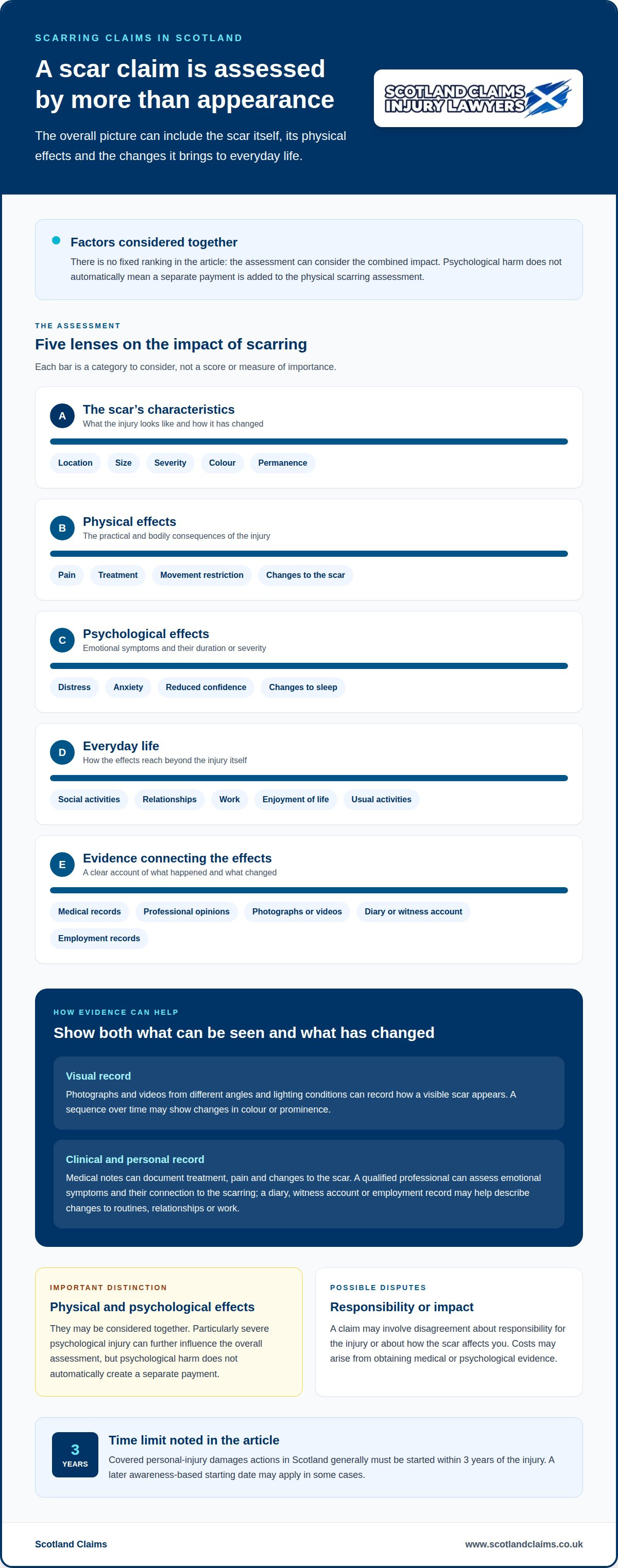
Compensation may account for pain, suffering and emotional distress, as well as disfigurement and loss of enjoyment of life. The assessment can consider the scar’s location, size, severity, colour and permanence. A facial scar that affects how someone feels in social settings has different effects from a smaller scar that causes pain when a joint moves. What matters is the combined impact, not appearance alone.
Psychological harm does not automatically mean a separate payment is added to the physical scarring assessment. The effects may be valued together, while particularly severe psychological injury can further influence the assessment. Evidence of persistent anxiety and avoiding usual activities, for instance, may help explain how a visible scar affects someone’s life beyond its appearance.
The risks in a claim include disputed responsibility for the injury or disagreement about how the scar affects you. Costs may arise from obtaining medical or psychological evidence, and any personal financial exposure depends on the funding terms and expenses involved. Clear evidence can help explain the claim, but it cannot remove a dispute about liability or the extent of the effects.
Evidence for a Scarring Claim
Evidence for a scar compensation claim records the injury, its effects and the connection between them. Medical records and expert opinions can help assess physical and psychological effects, while an evaluation by a qualified professional can explain emotional distress. A personal diary, witness statements and employment records may also show changes to daily routines, relationships or work.
- Photographs and videos from different angles and lighting conditions can record how a visible scar appears.
- Medical notes can document treatment, pain and changes in the scar.
- A diary or witness account can describe missed activities, such as avoiding social events or changing work duties.
For a claim in Scotland, evidence should explain both what the scar looks like and what has changed in your life. The personal injury claims guidance for Scotland relates to the jurisdiction where the claim is being considered. Keeping the physical and emotional effects clear in the evidence helps show how the injury affects everyday life.
Can I claim for the psychological effects of scarring?
Yes. Psychological effects linked to scarring can form part of a personal injury claim, even if they need separate evidence. An assessment considers how the injury affects your mental health and everyday functioning. A psychological impact of scarring claim can address emotional symptoms alongside physical injury, with evidence showing how they are connected.
Psychological Evaluations and Evidence
A psychological evaluation is an expert assessment of emotional symptoms and their connection to the scarring. It matters because photographs alone cannot show distress. A qualified professional may use validated scoring tools to assess symptoms and their severity. Their report can explain how the accident relates to changes in sleep, confidence, social activity or work, rather than simply recording that you feel upset.
Assessing Psychological Harm
Assessment considers the nature, severity and duration of psychological symptoms, alongside their effect on daily life. For example, an expert may explore whether facial scarring has led to anxiety in social situations or difficulty returning to work. Medical records and professional opinions can help establish when symptoms began and how they developed. This evidence supports a reasoned assessment of harm, rather than relying only on a brief description of distress.
Psychological and Visible Scarring Claims
Psychological harm can be claimed even when its main effects are not visible, but the evidence must connect it to the injury. A visible scar is not essential to describing psychological symptoms. Where facial scarring is present, photographs can show its appearance, while an expert assessment can explain its emotional consequences. Physical and psychological effects may be considered together, and severe psychological injury may also affect the overall assessment.
Photographs provide a visual record, not a full account of the impact. Images of facial scarring taken from different angles and in different lighting can show how it appears in varied conditions. A sequence over time may also illustrate changes in colour or prominence. Solicitors can consider these images alongside clinical evidence, so the claim reflects both what can be seen and what the injury has changed.
Evidence is more useful when it creates a clear timeline. Treatment records from after the accident can establish when the injury occurred and what care followed. A specialist psychological report can then address when symptoms began, what they involve and how they affect ordinary activities. Employment records may show changes to duties or attendance, while a witness can describe a specific change they observed.
For a disfigurement claim, evidence should describe appearance and practical impact without treating either as the whole story. The location and permanence of a scar matter alongside its effect on function, relationships and confidence. A personal injury compensation calculator can help you explore how injury details relate to compensation, while expert evidence explains the individual effects. This evidence can help build a clear account for a psychological impact of scarring claim.
A scar can change how you feel about your appearance and how you take part in daily life. Its effects may reach beyond the skin, influencing confidence, relationships and quality of life.
Appearance and Identity
Appearance and identity can be closely connected when a visible injury changes how you recognise or present yourself. A facial scar, for example, may draw attention during conversations or make photographs uncomfortable. You may feel others notice the scar before they notice you. That can affect social choices and your sense of identity, especially when the scar is permanent and has significantly changed your appearance.
Confidence and Self-Esteem
Confidence is your comfort in everyday situations, while self-esteem is how you value yourself. A scar can affect both. Someone may avoid meeting new people, speaking in public or returning to a familiar social activity. Anxiety, depression and social withdrawal are recognised effects associated with scarring. These changes matter because they show how disfigurement affects ordinary life, not simply how the scar looks.
The impact varies with the scar’s position and the situations you face. A mark on the face may be difficult to conceal at work or during social contact. A scar elsewhere may attract less attention but still affect clothing choices, intimacy or participation in sport. What matters is how the injury affects your routine, not whether someone else considers it noticeable.
Changes to confidence can also affect relationships and career prospects. Anxiety about being seen may lead someone to decline a presentation, avoid a family gathering or stop attending a club. Those choices can reduce social contact and enjoyment over time. A scar that restricts movement may add another effect, such as avoiding a leisure activity because stretching the affected area feels uncomfortable.
Thinking about specific changes can make the impact clearer. Compare your activities before the injury with now: whether you attend social events, feel comfortable at work or take part in hobbies. A family member might notice that you leave photographs early, while a colleague may observe that you avoid customer-facing duties. Such examples show how appearance-related distress can affect confidence in practical ways.
In a claim, the assessment can consider the claimant’s experience of disfigurement and its effects on social, home and work life. The scar’s visibility, permanence, location and severity also matter. A facial scar linked with anxiety and reduced social contact has a different overall impact from a scar that causes little change to daily activities. The focus is on the combined effect on wellbeing and quality of life.
Claims involving injuries caused by negligence
A permanent scar can follow a sudden accident or treatment for another injury. For a negligence claim, the circumstances matter: the injury must be connected to someone’s negligent act or omission. A scar alone does not explain how the injury happened or establish responsibility. The account of the event, medical records and evidence about the resulting harm help establish what happened.
Traumatic causes vary. A road traffic collision can cause a degloving injury, where skin and underlying tissue are torn away. A fall or machinery accident may cause a penetrating wound. Burns can result from electrocution, boiling liquid, friction or other heat exposure. Acid attacks can also cause lasting scarring. Each type of injury can produce different physical damage and emotional consequences.
The nature of the injury helps explain why a scar formed and what ongoing effects followed. A deep wound may damage nerves, leaving pain or itchiness after the skin has healed. Scar tissue can feel tight because it is less flexible than normal skin. If it lies over a joint, movement may become painful, affecting tasks such as dressing, working or taking part in leisure activities.
Burn injuries can involve substantial treatment and long-term aftercare. A skin graft, for example, may leave a scar at the treatment site as well as the original wound. That scarring can be a secondary consequence of necessary surgery or another medical intervention. A treatment-related scar does not, by itself, establish negligence. The circumstances of the original injury and care remain central to identifying what caused the harm.
Evidence can connect the accident to physical and emotional effects. Treatment records may describe the wound, operations and changes during healing. Photographs can show how the scar develops, while a medical opinion can explain pain, restricted movement or nerve symptoms. Records of a hand wound and later difficulty gripping tools, for example, may help show how the injury affects work.
Different accident settings call for different evidence. After a road collision, an account of the crash and records of the resulting injuries may help explain the scar’s origin. At work, incident details and employment records can clarify what happened and how duties changed. After a slip or trip, evidence about the fall and resulting wound can help establish the sequence. Relevant material depends on the circumstances, not simply the scar’s appearance.
A claim can address the physical scar and its emotional consequences together. A visible mark may cause distress, while pain or limited movement can reduce independence and enjoyment. Describe how the injury changed specific activities, such as avoiding a sport because a scarred joint hurts. This gives a clearer account of lasting harm than appearance alone.
Claiming for physical scarring and psychological injury
A scarring claim can consider physical disfigurement alongside psychological injury. In Scotland, a clear assessment connects the scar’s lasting effects to the accident and explains how they affect your life.
Physical Scarring Claims
A physical scarring claim seeks damages for lasting effects of scar tissue and disfigurement. Its assessment considers factors such as the scar’s location, size, severity, colour and permanence. A scar across a joint, for example, may affect movement as well as appearance. These details help explain the injury’s practical consequences, including changes to daily activities, employment or future treatment needs.
The physical and emotional effects are usually considered together in injury claims. The Judicial College Guidelines provide separate brackets for facial scarring, body scarring and burns, and the 18th edition was published in April 2026. Relevant considerations include visibility, permanence and the claimant’s experience of disfigurement. Age and occupation may also matter, since a visible scar can affect a person’s work and confidence differently.
A solicitor starts by taking details of the accident, the injury and the effects you have experienced. They then gather relevant records and arrange expert evidence to assess the scar and any psychological injury. An expert can consider, for example, whether a scar has stabilised or whether planned revision surgery could affect its final appearance. The assessment should capture current harm and ongoing needs.
Psychological Injury Claims
A psychological injury claim concerns mental harm linked to the scarring or the accident that caused it. It matters because anxiety, depression or post-traumatic stress can affect work, relationships and self-esteem, even when the physical scar has healed. A psychological or psychiatric evaluation can document symptoms, their severity and their effect on everyday function.
Physical scarring and psychological harm are commonly valued together, but particularly severe psychological injury may affect the assessment further or receive separate consideration under PTSD brackets. The evidence should connect the symptoms to the accident or scar and explain their effects. An assessment may, for example, address persistent anxiety that prevents someone from returning to customer-facing work.
Damages can also reflect consequences beyond appearance, such as treatment needs, rehabilitation or loss of earnings. Employment records may show changed duties or missed work, while treatment records can explain ongoing care. A complete claim brings these consequences together: the scar itself, its emotional effects and practical changes to your life. The strength of that account depends on evidence linking each loss to the injury.
Scotland Claims Injury Lawyers
Scotland Claims Injury Lawyers can help you understand how a scar and its psychological effects fit into a personal injury claim. If your injury followed a road traffic accident, workplace accident, slip or trip in Scotland, the firm can assess your claim and help present its physical and emotional effects together. Evidence about changes to your confidence, work or daily activities can help show the full impact.
Scotland Claims Injury Lawyers works on a no-win-no-fee basis and promises 100% compensation: its fees are recovered from the at-fault party, with the entire settlement passed to you. Its Personal Injury Compensation Calculator can also help you explore compensation estimates.
Contact Scotland Claims Injury Lawyers
Take the next step towards a complete claim
A scar’s effects can change over time, so keep your account current as your circumstances develop. Note changes to treatment, confidence, relationships or work, and make sure the evidence reflects physical symptoms and emotional effects. This can help your legal representative present a clearer picture of what the injury means for your future.
A claim for the psychological impact of scarring should not overlook less visible losses. Effects on daily choices, employment and enjoyment can matter alongside the scar itself. Scotland Claims Injury Lawyers handles Road Traffic Accident Claims, Work Injury Claims and Slip or Trip Claims, helping people pursue injury claims arising from those circumstances.
You can take the next step by discussing your situation and the evidence available. A clear assessment can help you understand how the physical and psychological effects fit together, and what the claim process involves. You deserve an account of your injury that reflects its full impact.
Frequently Asked Questions
What aspects of permanent scarring can be claimed for?
A claim may include damages for the scar’s physical and emotional effects. The assessment can consider pain, disfigurement, restricted movement, distress and reduced enjoyment of activities. A scar that makes bending uncomfortable, for example, may affect household tasks as well as leisure. Treatment needs and earnings losses linked to the injury may also be relevant, provided the evidence connects them to the accident.
What is the impact of scarring injuries on daily life?
Scarring can affect routines, relationships and confidence, depending on its position and effects. A scar across a hand, for example, might make gripping tools or preparing food uncomfortable. A visible mark may lead someone to avoid photographs or social events. Some people also experience anxiety or reduced self-esteem. These specific changes help explain how an injury affects ordinary life beyond its appearance.
Can I claim for a scar from an accident in a public place?
You may be able to claim if negligence caused an accident in a public place and the resulting injury left a scar. The circumstances matter. Evidence about a fall, the resulting wound and how the accident happened, for example, can help establish what caused the injury. A scar alone does not show who was responsible. The claim must connect the injury and its effects to the circumstances of the accident.
What are the most common reasons to make a disfigurement or scarring claim?
Claims can follow injuries such as burns, cuts, penetrating wounds or road collision injuries. Workplace machinery accidents and falls can also cause wounds that leave permanent marks. Burns may result from contact with boiling liquid, friction or electrocution. A claim is not based on the scar’s appearance alone, but on the injury, how it happened and any lasting physical or emotional effects connected to it.
What specific evidence is needed?
There is no single evidence list for every scar claim. Useful material can include records of the accident, treatment notes, photographs showing the scar over time and professional assessments of ongoing effects. An incident report may help establish when a workplace injury occurred, while employment records can document changed duties. Witness accounts may also describe practical changes they observed after the accident.
Can you claim compensation for anxiety, depression or PTSD caused by a scar in the UK?
Yes, psychological harm connected to scarring can be included in a personal injury claim. Anxiety about being seen, depression or PTSD may affect work, relationships and social activities. A professional assessment can explain the symptoms and their effects on your life. The evidence should also link the psychological injury to the accident or scar, rather than relying only on a description of distress.
What medical evidence is needed for a psychological injury claim involving scarring?
Relevant evidence may include medical records and an assessment by a qualified psychological or psychiatric professional. A report can describe symptoms, when they began and how they affect daily activities. It might, for example, consider whether anxiety has made it difficult to return to a previous role or attend social events. Treatment records can add context by showing when support was sought and how symptoms developed.
How are compensation amounts calculated for physical scarring and psychological impact in the UK?
Assessment considers the scar’s location, size, severity, colour and permanence, alongside its psychological and practical effects. The Judicial College Guidelines provide brackets for facial scarring, body scarring and burns. A visible facial scar, for example, may be assessed differently from a body scar that mainly restricts movement. Evidence about distress, work, relationships and daily activities helps explain the full impact in each individual claim.