
A supermarket accident does not automatically mean you can claim, but you may have a case if the store’s failure to take reasonable care caused your injury. In Scotland, the usual time limit is three years from the accident or from when you became aware of the injury, according to The National Archives. Supermarket injury lawyers in Scotland can assess how the accident happened and whether the evidence supports a claim.
It’s understandable to wonder whether a spill, obstruction or other hazard was the supermarket’s responsibility, and whether the evidence is strong enough to take things further. This guide explains when you may be able to claim, what compensation can cover, and how evidence and a solicitor’s experience with injury claims can help. You’ll also learn what to do after an accident and how to judge whether a solicitor’s relevant experience fits your situation.
Key Takeaways
- In Scotland, the Occupiers’ Liability (Scotland) Act 1960 sets out occupiers’ duty to protect visitors, according to The National Archives (legislation.gov.uk).
- Your ability to claim depends on how the accident happened, whether the supermarket failed to take reasonable care and how the injury affected you.
- Keep evidence of the accident, your injury and related expenses. CCTV footage may be overwritten quickly, so prompt action can matter.
- Compensation can reflect the injury’s severity, recovery and effect on daily life, as well as relevant financial losses.
- Look for a solicitor with experience handling personal injury claims and the type of injury you sustained.
Can I make a supermarket accident claim?
You may have a claim if a supermarket’s failure to take reasonable care contributed to your injury. The evidence needs to connect the hazard, the accident and the harm you suffered.
Checking Scottish claim deadlines
In Scotland, the usual time limit is three years from the accident date or the date you became aware of the injury, according to The National Archives (legislation.gov.uk). The deadline makes early advice important, particularly if symptoms appeared later. The National Archives (legislation.gov.uk) describes occupiers’ duty to protect visitors as arising under the Occupiers’ Liability (Scotland) Act 1960.
If you were partly responsible, you may still be able to claim. Evidence about your actions and the supermarket’s response can help establish responsibility and how it may affect compensation. Claims management companies operating in Scotland must register with the Financial Conduct Authority. They are not usually solicitors and may not be able to pursue compensation through court on your behalf.
Gathering evidence and valuing a claim
Report the accident to the manager and ask for it to be recorded in the accident book. Request a copy of the record, photograph your injury and the scene if possible, and note witnesses’ contact details. Seek medical advice, even if the injury seems minor. Keep receipts for medical costs and other expenses linked to the accident.
Ask promptly about CCTV, as footage may be overwritten within around 30 days. A subject access request under UK GDPR can be used to seek footage showing you. The injury, recovery, effect on daily life and evidenced financial losses all help determine claim value.
Examples of supermarket injury claims
In Scotland, a slip on an unmarked spill, a trip over stock left in an aisle or a fall near damaged flooring could lead to a claim. These examples do not, by themselves, prove negligence. The evidence must help show how the hazard caused your injury and whether reasonable care could have prevented the accident.
For example, photographs might show an obstruction, while a witness account could describe how long it had been there. Medical records can document the resulting injury and its effects. Compensation depends on the evidence and the harm suffered, so another shopper’s outcome cannot determine the value of your claim.
Understanding the claim and settlement process
A claim involves assessing the accident, gathering evidence, valuing the injury and presenting the case to the party considered responsible. Many personal injury claims are resolved through negotiation with insurers. If responsibility or compensation is disputed, the evidence helps determine the next steps.
Timing depends on recovery, evidence and whether responsibility is contested. Simple personal injury claims might be resolved in a few months. A solicitor experienced in Scottish personal injury claims can explain how these factors apply to your circumstances.
Common injuries and indicative compensation ranges
A supermarket accident can cause anything from a soft-tissue injury to a fracture that affects walking. Compensation depends on the injury’s severity, recovery and impact, as well as evidence of responsibility and financial loss. Expert guidance from Scotland Claims Injury Lawyers can help you understand how these factors apply to your situation.
Indicative ranges for common injuries
Guide ranges can illustrate how injury type and recovery affect compensation. They are not fixed tariffs, and similar injuries may have different values when their effects differ.
These figures are guides, not promises. A minor ankle injury and a fracture that leaves lasting difficulty walking, for example, are not assessed as the same injury. Medical evidence about symptoms, treatment and recovery helps explain the difference.
Compensation for losses and care
A claim can include compensation for pain and suffering, as well as eligible financial losses caused by the accident. These may include lost earnings, treatment expenses and care costs. Keep records linking each expense or loss to your injury, such as receipts and details of missed work.
Care needs matter too. If you needed help with daily tasks during recovery, record what assistance you received and how your injury affected your routine. The injury’s effects, supporting evidence and financial records all contribute to the overall valuation. A compensation calculator can provide an initial guide, but it cannot replace a full assessment of your injury and losses.
Compensation and benefits
In Scotland, personal injury compensation may affect benefit entitlement. Certain injury-related benefits paid by the Department for Work and Pensions may need to be repaid by the other party and deducted from compensation. This applies to compensation for lost earnings, care costs or loss of mobility, rather than every part of a settlement.
That distinction matters when estimating what you may receive. Tell your solicitor about relevant benefits and keep benefit letters alongside earnings and care records. The deduction relates to specified losses, so it should be considered in the claim calculation, not treated as an automatic deduction from every part of the compensation.
Criminal injury compensation
A supermarket accident claim based on negligence differs from a criminal injuries application. In Scotland, an application to the Criminal Injuries Compensation Authority must normally be made within two years of the incident. If seeking this compensation, report a criminal incident to the police as soon as possible.
If an assault caused your injury, the criminal injuries route may be relevant. A civil claim instead examines liability for the accident and resulting harm. Understanding which process fits the circumstances helps you focus on the right evidence and losses.
Choosing a personal injury solicitor in Scotland
Choose a solicitor whose experience matches the accident and injury you suffered. Clear advice about evidence, deadlines and costs helps you make an informed decision before taking action.
Finding a personal injury solicitor
Look for personal injury solicitors who handle supermarket accident claims and understand Scottish procedure. Ask how they assess responsibility, gather evidence and value the effects of your injury. A lawyer experienced in supermarket falls may approach a case differently from one focused on asbestos claims. Relevant knowledge should fit the incident, not just the broad category of personal injury.
Use an initial discussion to explain what happened, the injury you suffered and the records you have. Notice whether the solicitor explains the next steps in plain language, including what may happen if the supermarket disputes responsibility. You should leave knowing who will manage your claim and how you will receive updates.
Checking solicitor credentials
Ask who will handle your case and what experience they have with similar injury claims. Find out whether the person advising you is a solicitor or works for a claims management company. These companies are not usually solicitors and may not be able to pursue compensation through court on your behalf. Claims management companies operating in Scotland must register with the Financial Conduct Authority.
Also ask how the solicitor will assess medical evidence, lost earnings and care needs. A useful answer explains how each factor supports your claim rather than promising a particular result. Before agreeing to proceed, get clear written information about the work, costs and who is responsible for decisions.
Understanding Scottish time limits
The usual Scottish personal injury time limit is three years from the accident or when you became aware of the injury, according to The National Archives (legislation.gov.uk). Some claims have shorter deadlines, so don’t assume the usual period applies. For a child, the three-year period starts at age 16, allowing a claim up to their 19th birthday.
The time limit does not run while an adult lacks mental capacity to manage a claim themselves. There is no time limit for a civil-court compensation claim for childhood abuse. These exceptions apply in specific circumstances. Tell the solicitor the accident date, when symptoms began and any relevant details about capacity or age promptly.
No win no fee agreements and costs
Yes, Scottish solicitors may offer no win no fee agreements for personal injury claims. Under such an arrangement, clients pay no legal fees unless the solicitor wins, but the written terms explain what happens in your particular case.
Do not treat every funding agreement as identical. Under a speculative fee arrangement, losing means you will not pay your own solicitor’s fees, but you might have to pay the other party’s costs. Ask what costs could arise, how a successful claim is funded and whether any deduction applies. The agreement, not the label, sets out your financial position.
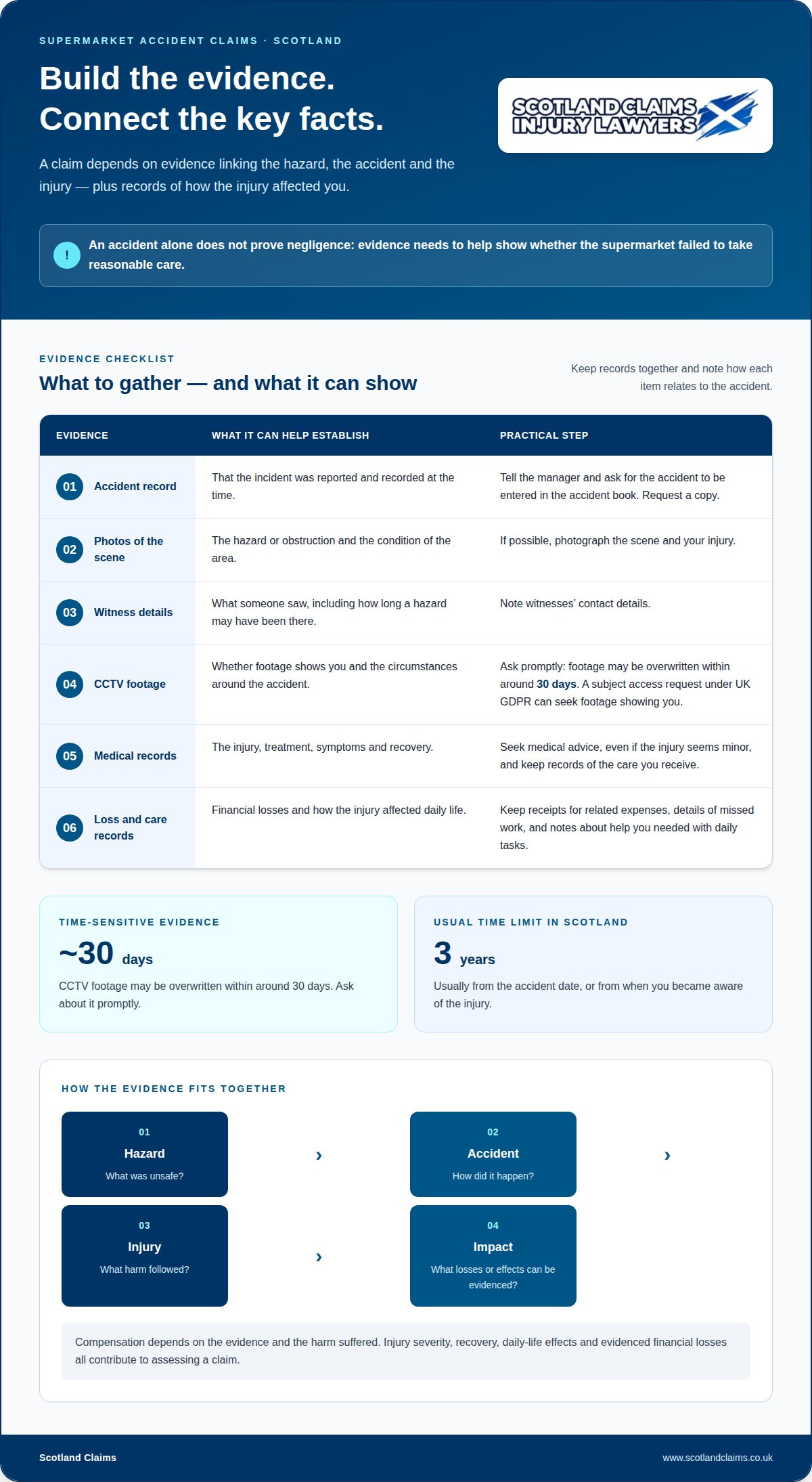
Evidence gathering and CCTV
Strong evidence connects the supermarket’s actions or omissions with the accident and your injury. A clear account of what happened helps assess whether negligence contributed.
Build a timeline while the details are fresh. Note where you were, what caused the fall, what you noticed beforehand and what happened immediately afterwards. Distinguish, for example, between a spill, an obstruction and a damaged surface. Record whether warning signs or barriers were visible, without moving anything or putting yourself at risk.
Preserve CCTV evidence promptly
Supermarket CCTV may show the hazard, how long it remained, staff responses and the accident itself. Footage can be overwritten within around 30 days, so raise the request promptly. A subject access request under UK GDPR can be used to seek footage showing you. Describe the date, approximate time and location as clearly as possible.
Footage may include other shoppers, so the supermarket may need to protect their privacy when responding. It may not provide an unrestricted copy of every camera recording. Keep a note of when you made the request and any response. Act promptly, as footage may no longer be available after a delay.
Collect records that support your account
Ask the manager to record the accident and request a copy of the entry. Note the names or roles of staff you spoke with, and ask witnesses for their contact details. Photograph the area, any warning sign, the hazard and visible injuries where possible. Keep the original images and note when and where each was taken.
Medical records help document your injury and its effects. Seek medical advice and explain how the accident happened. Keep appointment details, treatment information and receipts for injury-related expenses. If your pain or movement changes over time, record when the change happened and how it affected everyday tasks.
Each item can answer a different question. CCTV may show what happened; photographs can capture a hazard after the fall; witness accounts may describe what they saw. Together, these records can support or challenge accounts of the incident. A single image rarely explains the entire sequence, so preserve its context and date.
How evidence informs negligence
Evidence helps establish whether a hazard existed, whether staff knew or should have known about it, and whether reasonable steps were taken. For instance, footage showing a spill before your fall may clarify the timeline, while cleaning records or witness observations could add context. Consider all the material together.
Organise records chronologically and keep copies of correspondence with the supermarket. This gives a solicitor a practical starting point for reviewing the incident and identifying gaps. Evidence cannot change what happened, but preserving it promptly can make the facts easier to assess.
Lawyer experience and injury specialisms
The right experience relates to the accident, the injury and the issues a claim must establish. For a supermarket fall, look for personal injury lawyers who can explain how they assess those elements.
Assessing lawyer experience
Ask about the solicitor’s experience with claims involving slips, trips or hazards in shops. A useful answer describes what they assess, including how the accident happened, what evidence supports your account and how the injury affected you. General experience with personal injury claims may not explain their approach to a supermarket incident.
Use your initial enquiry to see how clearly the solicitor explains the case. Can they identify the information needed, describe the next steps and explain how they would respond if the supermarket disputes responsibility? Clear advice should connect each step to your circumstances, not rely on broad assurances.
Ask who will manage the claim and how you will receive updates. If a team is involved, establish who your main contact will be and who makes decisions about key steps. These practical details help you understand how your case will be handled from the first discussion onwards.
Matching injury specialisms
A specialist should understand the injury as well as the accident setting. A wrist fracture, ankle injury and back strain can affect movement, work and everyday tasks in different ways. Ask how the solicitor considers medical evidence and recovery when explaining your claim’s potential value and needs.
Check that the solicitor’s experience fits the incident, not just the broad category of personal injury. A supermarket fall involves different evidence from a traffic accident or workplace injury. A shop claim, for example, may involve floor conditions, inspection records or CCTV, while a traffic accident presents different circumstances to assess.
Relevant experience also means recognising when a case needs further investigation. Ask how the solicitor would address gaps in your account, conflicting witness descriptions or a disputed cause of injury. Their explanation should show how each issue could affect the evidence and the next step.
Before deciding, summarise your accident, injury and main concern in your enquiry. Notice whether the response addresses those details directly, explains unfamiliar terms and sets out what information would help assess the claim. You should understand who is advising you, what relevant experience they have and how they will communicate. A specialist approach connects the evidence, injury and legal issues to your circumstances, rather than treating every claim as identical.
Scotland Claims Injury Lawyers
Scotland Claims Injury Lawyers can assess a supermarket accident and the evidence supporting your injury claim. If you slipped or tripped in a store, its Slip or Trip Claims service may fit your circumstances. You can also use the Personal Injury Compensation Calculator for an initial estimate based on the details you enter.
The firm’s 100% compensation promise means it recovers its fees from the at-fault party and passes the entire settlement to you. This can help you understand the firm’s approach to your compensation and how its fees are handled. If you’re considering a claim, contact Scotland Claims Injury Lawyers to discuss your situation.
Choose a next step that feels right for you
A claim is a practical decision as well as a legal one. Consider what you need help resolving, whether that is understanding responsibility, recognising the effects of your injury or deciding how to proceed. You don’t need every answer before seeking advice. Explaining what remains uncertain can make the discussion more focused.
Speaking with supermarket injury lawyers in Scotland can help you understand how the details of your situation fit together. Consider what matters most to you, such as clarifying your options or deciding whether to pursue compensation. A useful conversation should help you weigh the choices ahead without pressure to act before you’re ready.
If you’re weighing up what to do, a direct discussion can help turn uncertainty into a considered decision.
Take the next step with a clearer sense of what matters to you.
Frequently Asked Questions
How are these solicitors ranked?
A UK supermarket accident claims directory ranks 2,586 law firms and updates its rankings twice a week, every Thursday and Sunday. A directory ranking is one way to compare firms, but it doesn’t establish which solicitor suits your circumstances. Look beyond position: consider the lawyer’s experience with supermarket accidents, how clearly they explain your options, and who would handle your claim.
How does it work?
A solicitor first reviews what happened, your injury and the available records. If you proceed, they investigate the circumstances, obtain relevant evidence and present the claim to the party they consider responsible. The other side may accept responsibility, dispute it or make an offer. Your solicitor can explain what each response means and help you decide whether to accept or continue discussions.
What if the supermarket says it didn’t know about the hazard, or the spill had only just happened?
The supermarket’s response does not settle the question by itself. Evidence about timing, inspections, staff activity and the hazard’s location can help clarify what happened. A witness may, for example, have seen the spill before your fall, or records may show when an aisle was checked. A solicitor can assess this evidence alongside your account and injury records.
What should I do if the supermarket’s insurer contacts me?
Keep the insurer’s letter, email or call details, and note what was discussed. You can ask for important questions or offers in writing, giving yourself time to understand them. Avoid guessing about details you can’t recall, and don’t agree to a settlement before considering how your injury has affected you. If you have a solicitor, pass the communication to them before replying.
How do I find a supermarket injury lawyer in Scotland?
Look for a solicitor who handles personal injury claims in Scotland and can explain their experience with shop accidents. Ask who will manage your case, how they approach disputed evidence and how they will keep you informed. Scotland Claims is a trading style of Kerr Brown Solicitors, which is authorised and regulated by the Law Society of Scotland. The firm handles slips and trips in public places.
What types of supermarket accidents can lead to a personal injury claim in Scotland?
A claim may arise from a fall on a spill, a trip over clutter or debris, or another hazard in an aisle or walkway. The accident alone does not establish responsibility. The circumstances matter, including what caused the fall and whether the supermarket took reasonable care. You must also have suffered an injury. A fall causing a fracture, for example, differs from an incident without injury.
What must I prove to make a supermarket injury claim in Scotland?
You need evidence that a hazard or unsafe condition contributed to the accident, that the supermarket was responsible for the relevant failure, and that you suffered an injury as a result. Useful material may include an accident record, photographs, witness details, medical records and receipts for related expenses. Assess the evidence together, as one photograph rarely explains the full sequence of events.
How long do I have to claim for a supermarket injury in Scotland?
The usual time limit is three years from the accident date or from when you became aware of the injury, according to The National Archives (legislation.gov.uk). Some circumstances can affect the deadline, and certain claims have shorter limits. If symptoms appeared later, record when you first connected them with the accident. Seek advice promptly so the relevant dates and circumstances can be assessed.