Sports negligence cases: when an injury becomes a claim
Yes, a sporting injury can found a negligence claim, but Scottish courts apply a high, fact-specific threshold known as the reasonable competitor test. Liability generally requires conduct beyond an error of judgment or an ordinary foul committed in the heat of play. This article walks through the legal test, the cases that shaped it, and the practical steps that turn a strong claim into a paid one.
TL;DR:
- Liability in sports negligence cases depends on whether a player’s conduct fell below what a reasonable competitor at the same level would have done in similar circumstances.
- Courts focus on conduct that shows reckless disregard for safety, not merely breaking rules or making an error of judgment in the heat of play.
- Evidence such as referee reports, witness testimony, and video footage is crucial, as the legal test is highly fact-sensitive and requires credible proof of reckless conduct.
- Defendants can include individual players, clubs, referees, or venue operators, with vicarious liability for clubs being particularly complex in amateur sport.
- Early evidence preservation, prompt medical treatment, and expert legal advice are essential because the chance of success hinges on strong, objective proof collected soon after the incident.
Table of Contents
Sports negligence cases and the legal test that decides them
Every negligence claim rests on three elements: duty, breach, and causation. In sport, the duty of care exists between competitors, but the standard courts apply is deliberately calibrated to the rough, fast-moving reality of physical games.
The leading Scottish authority, Sharpe v Highland and Islands Fire Board, asks whether a competitor made an error of judgment that a reasonable competitor, playing the same game at the same level, would not have made. That is a markedly different question from asking whether a rule was broken.
A few points separate a genuine sports negligence case from a bad tackle that simply hurt:
- Breaching a rule of the game is not automatically negligence in law; referees penalise fouls, courts assess conduct against the reasonable competitor standard.
- Context matters enormously: the speed of play, the level of competition, and whether the action was instinctive or deliberate all shape what “reasonable” looks like.
- Reckless disregard for another player’s safety, rather than a split-second misjudgement, is what tends to tip a case towards liability.
Get this distinction wrong and you waste months pursuing a claim that was always going to fail on breach, not just causation.
Key cases that shape sports negligence law
Case law does the heavy lifting in this area, because there is no statute setting out a sports-specific negligence test. Four judgments, in particular, show how the courts actually apply the principle.
1. Sharpe v Highland and Islands Fire Board established the Scottish benchmark. The Inner House confirmed that the question is whether the defender’s conduct fell below what a reasonable competitor would have done in those exact circumstances, not whether the claimant was simply unlucky. The Sharpe judgment is notable for stressing how fact-sensitive these cases are: the evidence available, rather than the abstract legal test, usually decides the outcome.
2. Condon v Basi remains the foundational English Court of Appeal authority, arising from a serious leg injury in an amateur football match. The court held that a player owes a duty to fellow competitors to exercise such care as is reasonable in the circumstances, and that referee evidence describing the tackle as reckless and “made in an excessive and unnecessary manner” was central to the finding of liability. It set the template that later Scottish and English decisions have refined rather than replaced.
3. Czernuszka v King involved a hockey injury during a match with a marked disparity in playing standards between the two sides. The court found liability partly because the conduct was sustained and dangerous, and partly because the context, a mismatch between an experienced and inexperienced side, made the risk of a reckless challenge foreseeable and unacceptable. Practitioner analysis from CMS highlights this as a modern illustration of how courts weigh mismatch and repeated dangerous play, not just a single incident.
4. Tylicki v Gibbons, a High Court case arising from a horse racing incident, tested the same principles in a very different sporting context. Reporting on the case shows how courts extend the reasonable competitor framework beyond field sports into disciplines with their own regulatory bodies and safety rules, asking whether the rider’s manoeuvre went beyond an acceptable risk inherent in the sport.
5. Fulham v Jones stands as a cautionary authority. Appellate review narrowed an initial finding of liability, a reminder that first-instance sympathy for an injured claimant does not always survive scrutiny on appeal, particularly where the evidence of recklessness is thin.
Across these five cases, a consistent pattern emerges: claims succeed when the evidence shows conduct that departed sharply from what the sport reasonably permits, not merely conduct that caused harm.
The throughline across all five is evidential, not doctrinal. Sharpe and Condon both succeeded, in different ways, because credible testimony (an experienced referee describing the challenge as excessive) turned a serious injury into a legally provable breach. Fulham v Jones shows what happens when that evidential foundation is weaker on closer inspection.
Who can be sued: players, clubs, referees and venues
A sports negligence claim rarely has just one possible defendant. Working out who to pursue, and against whom the evidence is strongest, shapes the whole case.
- Fellow competitors are the most common defendants, liable where their individual conduct meets the reasonable competitor threshold set out above.
- Clubs and organisers can face vicarious liability if the player’s relationship with the club is close enough to the organisation’s purpose, an argument that depends heavily on control, payment, and whether the role was integral to how the club operates.
- Referees and officials may be liable in narrower circumstances, typically where their own decisions or failures to enforce safety rules directly contributed to the injury.
- Venues and occupiers can be liable separately under occupiers’ liability principles where a pitch defect, unsafe surface, or poorly maintained facility caused or worsened the injury.
Vicarious liability against an amateur club is genuinely unsettled ground. Courts apply a “close connection” or “akin to employment” test, and academic research on amateur sport shows that unincorporated clubs, run by volunteers with no formal employment structure, sit awkwardly within a framework built around paid employment relationships.
Pro Tip: If you are considering a claim against a club rather than an individual player, start gathering documentary evidence early: team sheets, evidence of who selected the side, who provided kit or equipment, and whether any payment changed hands. These details often decide whether the “akin to employment” argument gets off the ground.
Evidence, experts and why proving sports negligence is hard
Amateur sport rarely comes with the video coverage and professional officiating of the top flight, which is exactly why the quality of evidence, more than the legal test itself, tends to decide these cases.
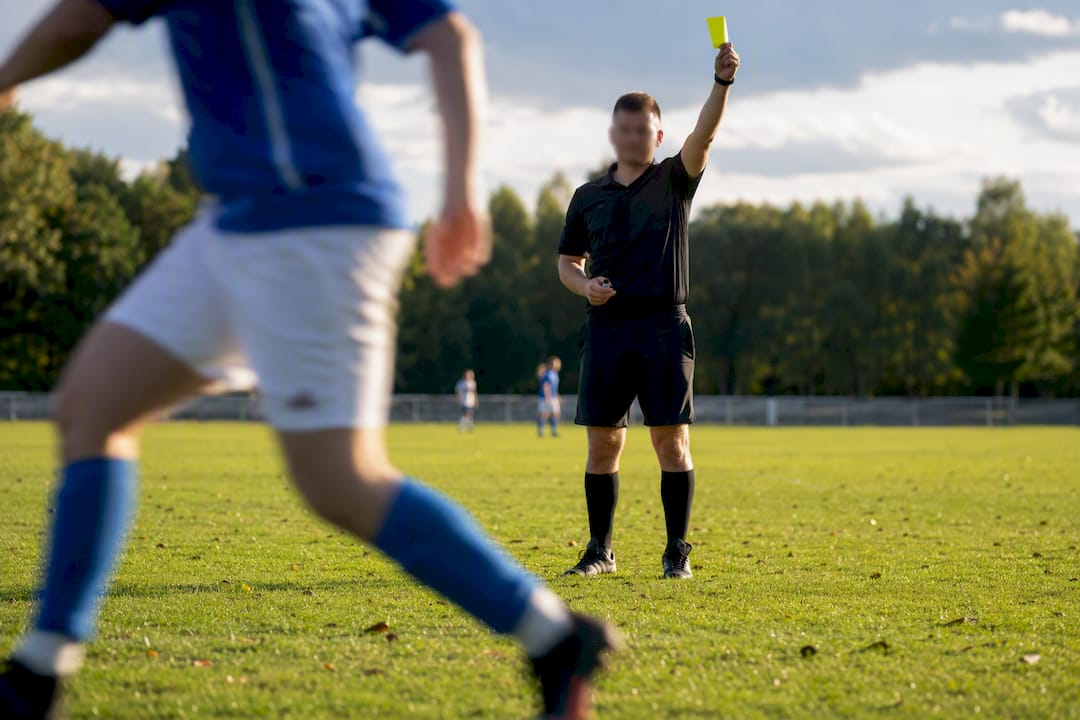
Video footage and referee reports carry the most weight because they offer an objective, contemporaneous account of exactly what happened, rather than a reconstructed memory formed under adrenaline and after the fact. Law Society of Scotland commentary stresses that amateur matches often lack this kind of reliable, objective record, which is precisely why claimants who do secure it have a material advantage.
Eyewitness testimony from fellow players or spectators tends to carry less weight than expert or officiating evidence, partly because witnesses are rarely neutral and partly because untrained observers struggle to judge whether a challenge was reckless or merely hard. A properly briefed referee expert, explaining positioning, timing and whether the conduct was an excusable error of judgment, often proves decisive in meeting the reasonable competitor threshold.
Preserve evidence early, before memories fade and footage disappears:
- Photograph the pitch, surface, or equipment involved immediately after the incident.
- Collect contact details for every witness, players and spectators, while they are still present.
- Keep a written, dated note of what happened as soon as possible after the event.
- Retain kit, equipment, or protective gear exactly as it was at the time of injury.
- Request and keep every medical report, from the pitch-side assessment through to hospital discharge notes.
How to start a sports negligence claim
Momentum matters in these cases. Evidence degrades quickly, memories fade, and limitation periods run whether or not you have taken advice.
- Get medical treatment first. Beyond your health, a documented medical record from day one becomes the backbone of your causation evidence later.
- Preserve evidence while it exists. Photograph the scene, secure witness contacts, and write down what happened while it is still fresh, ideally within 24 hours.
- Check the limitation period. Personal injury claims in Scotland are generally subject to a three-year limitation window, but early advice matters far more than the deadline itself, since evidence, not time, is usually what determines whether a claim succeeds.
- Get a free claim assessment. A specialist solicitor can tell you quickly whether the reasonable competitor threshold is realistically met on your facts, before you commit further time or expectation to the process.
- Understand the pre-action process. Expect early disclosure requests, correspondence with the defender’s insurer, and an assessment of whether liability is likely to be admitted or contested.
- Confirm funding before you commit. A No Win No Fee arrangement means you pay nothing upfront, and for qualifying road traffic accidents, whiplash injuries, workplace accidents, and slips or trips where you were not at fault, it can mean retaining 100% of your compensation with no success fee deducted.
What compensation covers and how damages are calculated
Compensation in a successful sports negligence claim splits into two categories. General damages compensate pain, suffering, and loss of amenity, the physical and psychological impact of the injury itself. Special damages cover quantifiable financial losses: medical costs, lost earnings, travel to treatment, and the cost of any adapted equipment or care.
- Valuing future losses, particularly lost earning capacity, usually depends on expert medical and vocational evidence linking the specific injury to a specific career or functional impact.
- Practitioner guidance on causation stresses that courts require clear medical linkage between the defender’s conduct and the exact injury claimed, not just a general connection between the match and the harm.
- Contributory negligence can reduce an award where the claimant’s own conduct, playing recklessly themselves, or ignoring a known risk, contributed to the injury.
Our own back injury claims service and compensation calculator give a practical starting point for understanding what a claim involving back, knee, or ankle injuries from a sporting incident might realistically be worth.
Why Scotland Claims Injury Lawyers can help with your claim
Scotland Claims Injury Lawyers specialises in personal injury claims across Scotland, with particular depth in back, knee, and ankle injuries, exactly the kind of harm that follows a serious sporting incident. Every claim runs on a No Win No Fee basis, so you pay nothing upfront and face no bill if the case does not succeed.
For qualifying claims, including road traffic accidents as a non-fault driver or passenger, whiplash injuries, workplace accidents, and slips or trips, you keep 100% of your compensation. No success fee is deducted, unlike the maximum 20% that other large solicitor firms typically take from a client’s settlement. Our compensation calculator and free claim assessment give you a clear, no-obligation starting point before you decide anything.
Practical advice from a specialist contributor
The biggest mistake injured players make is waiting. Evidence disappears fast in amateur sport, no video, scattered witnesses, memories that soften with time. If you’re hurt, get medical treatment, write down what happened that same day, and get contact details for anyone who saw it. Then get advice early, even if you’re not sure you have a case. A quick, free assessment costs you nothing and tells you honestly whether the reasonable competitor threshold is realistically within reach.
— Roger
Start your sports negligence claim with no upfront cost
Scotland Claims Injury Lawyers gives you a genuinely different starting point from big-brand solicitors, who typically take up to 20% of your settlement as a success fee. We take nothing from your compensation. For qualifying claims, road traffic accidents where you weren’t at fault, whiplash, workplace injuries, or slips and trips, you keep 100% of what you’re awarded, with no success fee and no upfront cost under our No Win No Fee arrangement.
Getting started takes three steps: a free claim assessment, allocation to a specialist solicitor who understands sports negligence cases, and no fees to pay unless your claim succeeds. Use our compensation calculator to get an initial estimate, or head straight to our injury lawyers page to request a callback and get your case assessed today.
Primary sources and further reading
The Bailii judgment in Sharpe v Highland and Islands Fire Board is the primary Scottish authority behind the reasonable competitor test. Law Society of Scotland commentary and CMS analysis of recent case law provide practitioner context on evidence and modern applications. Academic research on vicarious liability in amateur sport covers club liability in more depth.
This article is general information, not a substitute for advice from a qualified lawyer. Consult a qualified legal professional about your own circumstances before acting on anything here.
Sources
FAQ
What is the most famous negligence case in sport?
Condon v Basi is generally regarded as the foundational sports negligence authority, establishing that a player owes fellow competitors a duty to exercise reasonable care during a match.
How much compensation do you get for negligence in a sports injury claim?
There is no fixed figure; compensation depends on the severity of the injury, ongoing financial losses, and expert medical evidence, which is why using a compensation calculator for an early estimate is worthwhile.
What is the hardest injury to prove in a sports negligence claim?
Injuries where causation is disputed, such as pre-existing conditions aggravated by an incident, are typically hardest to prove, because they require clear medical evidence linking the specific conduct to the specific harm.
What are the key elements of a sports negligence claim?
A successful claim needs duty of care, a breach of the reasonable competitor standard, causation linking that breach to the injury, and evidence of loss, most commonly established through video, referee testimony, and medical reports.
Does breaking a game’s rules automatically count as negligence?
No. A foul or rule breach alone does not establish legal negligence; courts assess whether the conduct fell below what a reasonable competitor would have done in the same circumstances.
Recommended