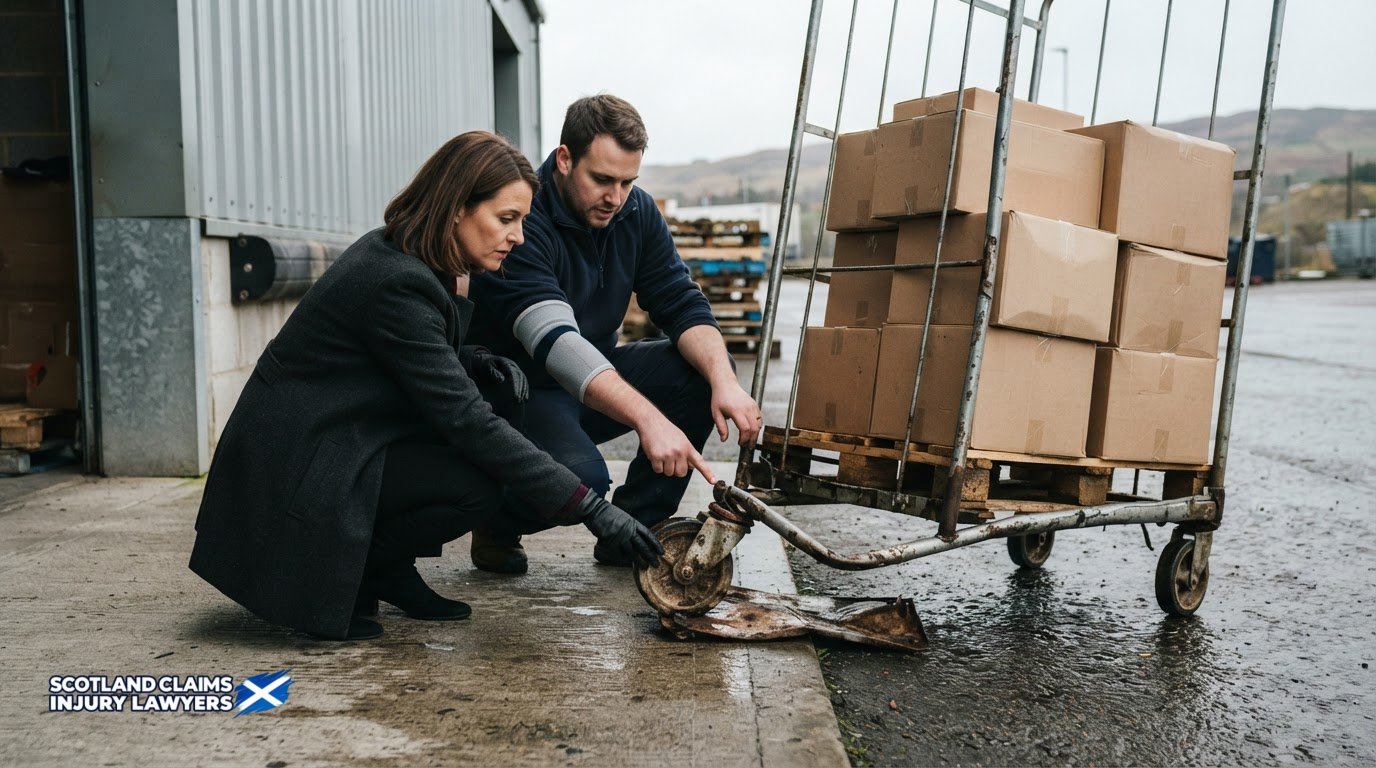
A workplace injury claim is rarely just a question of what happened. If you’re weighing why you should use a specialist personal injury firm, the key advantage is focused knowledge of workplace risks, legal responsibility and the evidence needed to support your case. In Scotland, employers owe employees duties under the Health and Safety at Work etc Act 1974, according to the UK legislation register.
An injury at work can affect your health, income and confidence about returning to your job. Building a claim also means establishing how the accident happened, who may be responsible and how the injury has affected you. A specialist personal injury firm can bring those issues together and explain how they relate to a claim in Scotland.
This article explains how workplace-specific knowledge can help assess a claim, gather and use evidence, and negotiate with an insurer. It also covers what to consider when choosing a solicitor and how the right support can make the process easier to understand, from investigating the accident to discussing settlement.
Key Takeaways
- Specialist knowledge can help connect workplace safety duties to the circumstances of your injury and who may be responsible.
- A well-built claim brings together evidence such as accident records, witness accounts and medical reports.
- Clear evidence of your injury and losses can strengthen settlement discussions and help assess whether an offer is fair.
- You can choose a solicitor to represent you rather than automatically using an insurer’s panel firm.
- Experience with workplace claims and relevant recognition can help you judge whether a solicitor is equipped to handle your case.
How industry-specific legal and regulatory knowledge helps assess workplace claims
A specialist connects the work, safety duties, medical evidence and legal responsibility involved in a Scottish workplace claim.
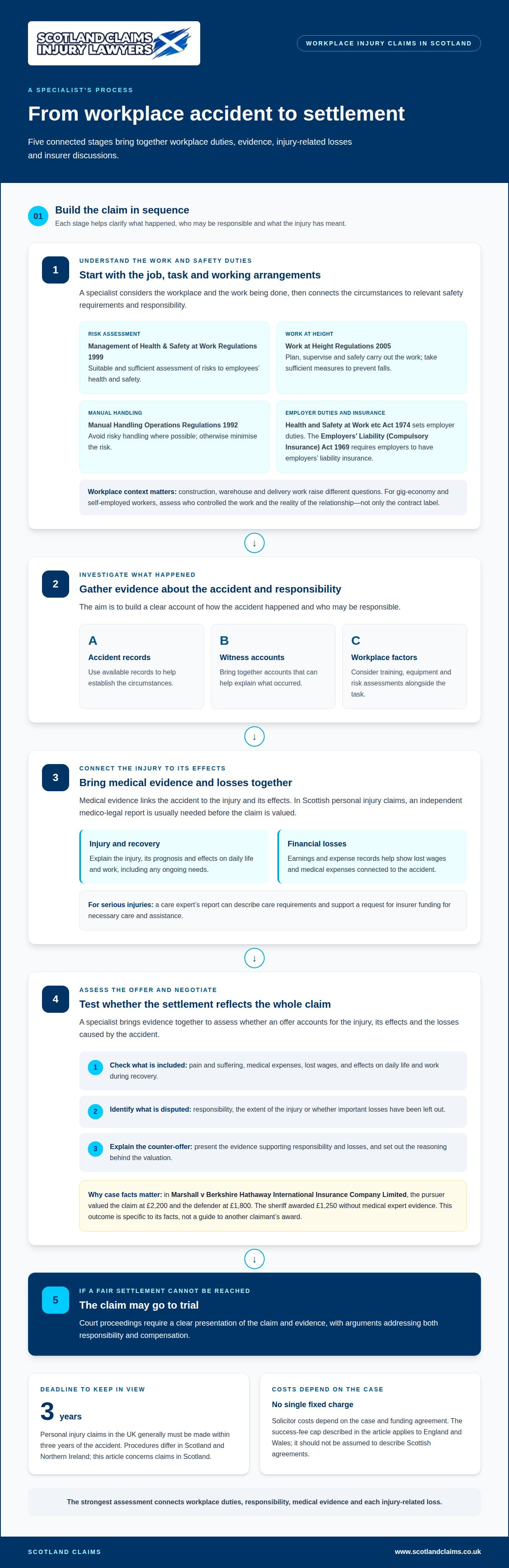
Under the Health and Safety at Work etc Act 1974, UK employers owe duties to employees, according to the UK legislation register. The Management of Health & Safety at Work Regulations 1999 require employers in Great Britain to carry out a suitable and sufficient assessment of risks to employees’ health and safety, according to the UK legislation register. For work at height, the Work at Height Regulations 2005 require employers to plan, supervise and safely carry out the work, and take sufficient measures to prevent employees falling, according to the UK legislation register. The Manual Handling Operations Regulations 1992 require employers to avoid risky workplace manual handling where possible, and otherwise minimise the risk, according to the UK legislation register. The Employers’ Liability (Compulsory Insurance) Act 1969 requires UK employers to have employers’ liability insurance, according to the UK legislation register. These requirements help frame questions about training, equipment, risk assessments and insurance.
Medical evidence links the accident to the injury and its effects. In Scottish personal injury claims, an independent medico-legal report is usually needed before the claim is valued. For a disputed road collision, an accident reconstruction expert may analyse vehicle damage, road conditions and skid marks to assess how it happened.
Industry and worker-specific claim knowledge
Construction sites, warehouses and delivery jobs raise different questions about tasks and working arrangements. For gig-economy and self-employed workers, it may also be necessary to assess who controlled the work. The UK Supreme Court case Uber v Aslam established that employment status depends on the reality of the relationship, not just the contract label. A specialist considers the actual arrangements when assessing responsibility.
Claim deadlines and costs
Personal injury claims in the UK generally must be made within three years of the accident. Yes, procedures differ in Scotland and Northern Ireland; this article concerns claims in Scotland. Solicitor costs depend on the case and funding agreement, rather than one fixed charge. In England and Wales, a success fee under a no-win-no-fee agreement is capped by law at 25% including VAT of general damages and past losses. That cap should not be assumed to describe Scottish agreements.
Firm experience and accreditations
Look for experience that matches both the injury and the workplace, such as machinery accidents or falls from height. Headway and the Spinal Injuries Association are relevant indicators of knowledge in brain and spinal injuries. Reviews can offer insight into communication and case handling, while a complaints process and regulatory record show how concerns and professional accountability are addressed. Consider whether the firm’s experience fits your claim.
Settlement negotiations and court proceedings
A settlement offer should reflect the injury, its effects and the losses caused by the accident. A specialist assesses the evidence before advising whether an offer accounts for your circumstances or leaves important losses out.
That assessment may include pain and suffering, medical expenses and lost wages, as well as the injury’s effects on daily life and work during recovery. An offer made before the likely effects are clear may not account for ongoing needs. Medical evidence helps explain the injury and prognosis; earnings and expense records help show financial losses. The solicitor brings this evidence together to value the claim and explain the reasoning behind a counter-offer.
Negotiations involve more than naming a figure. The solicitor presents evidence supporting responsibility and the claimed losses, then responds to the insurer’s position. If responsibility is denied or the insurer disputes the injury’s extent, further evidence and discussions may be needed. A specialist can identify what remains contested and focus negotiations on those issues. If a fair settlement cannot be reached, the case may go to trial. Court proceedings require a clear presentation of the claim and evidence, with arguments addressing both responsibility and compensation.
The Scottish case Marshall v Berkshire Hathaway International Insurance Company Limited shows why case circumstances matter. The pursuer valued the claim at £2,200, while the defender valued it at £1,800. The sheriff awarded £1,250 without medical expert evidence. That outcome is specific to its facts, not a guide to what another claimant will receive. It illustrates why a solicitor must assess the available evidence and the particular injury rather than assume that either side’s valuation will be accepted.
Some claims involve losses beyond immediate treatment and time off work. A serious injury may affect future working capacity or create care needs. A care expert’s report can describe those requirements and support a request for insurer funding for necessary care and assistance. Relevant evidence connects each claimed loss to the injury and gives negotiations a clear basis.
For a workplace accident, a focused work injury claim assessment can help organise the issues that shape settlement discussions, from responsibility to injury-related losses.
Choosing your own solicitor instead of an insurer’s panel firm
An insurer may offer a panel solicitor after an accident, but you can choose who represents you. The Insurance Companies (Legal Expenses Insurance) Regulations Act 1990 allows a claimant to select a solicitor instead of using one appointed by their insurer. That choice matters because your solicitor handles the claim on your behalf, explains your options and negotiates with the insurer. You should understand who represents you before deciding how the claim will proceed.
An insurance policy’s legal expenses cover may appoint a panel firm. Panel firms may charge the insurer lower fees to handle claims, but that alone does not establish the quality of their work. The practical question is whether the solicitor has experience with your injury and can clearly explain the evidence, process and decisions. A specialist personal injury solicitor represents your interests in the claim, rather than the insurer defending it.
Your representation affects the advice you receive at important stages. A solicitor can explain the strengths and limits of the evidence, assess the insurer’s response and advise whether an offer reflects your claim. They can also negotiate with the insurer on your behalf. Clear advice helps you make informed decisions instead of accepting an offer simply because it seems like a convenient resolution.
Before changing firms, review any agreement you have already signed. If you started a personal injury claim under a Conditional Fee Agreement, you may have to pay the existing solicitor’s costs before transferring the case. The outgoing firm’s work, the agreement’s terms and the stage reached can affect the practical steps involved. Your new solicitor needs the file and relevant correspondence to understand what has happened and keep important issues on track.
Experience is another useful point of comparison. A solicitor familiar with workplace claims will understand the questions raised by an accident at work, while a road collision may require different evidence and analysis. Online feedback can help you assess a firm’s personal injury experience and how clients describe its communication. Look for specific comments on case handling, clear explanations and support through negotiations, rather than relying on a general rating alone.
For claims in Scotland, personal injury solicitor support can help you understand the representation available and the steps involved. Choosing your own solicitor gives you a direct decision about who handles your claim. The right fit is a firm that can explain its approach, keep you informed and pursue a settlement based on the evidence.
Investigating accidents and gathering evidence
A specialist firm considers negligence, causation and injury together. Its personal injury team gathers records, witness accounts and expert evidence, then uses them to assess the claim and the losses involved.
An investigation starts by establishing what happened and who may have been responsible. Solicitors can review accident reports, relevant medical records and available workplace documents, then compare them with your account. For example, an account of a machinery accident may need to be considered alongside statements from colleagues who witnessed it. Each piece of evidence helps show what is agreed, what remains disputed and what else may be useful.
Witness evidence can matter when accounts differ. An independent witness can describe what they saw and offer an impartial account of the circumstances. The solicitor considers those details alongside the other evidence, rather than treating one account as conclusive. In serious cases, investigators or specialists may help gather evidence. A personal injury team can also handle related police investigations, Health and Safety Executive inquiries and coroners’ inquests.
- Accident records: establish the reported event and its immediate circumstances.
- Witness accounts: clarify what colleagues or bystanders saw.
- Medical records: document treatment and the injury’s effects.
- Expert evidence: help assess disputed circumstances or the claim’s value.
Medical evidence links the accident to the injury and helps assess recovery. In Scotland, an independent medico-legal report is usually needed before a personal injury claim is valued. The expert examines the claimant, reviews relevant records and gives an independent opinion on the injury and prognosis. The report can explain how long symptoms may last and whether further treatment or investigations are recommended.
Evidence gathering also needs to address losses connected to the injury. A solicitor can consider medical evidence alongside information about time away from work, treatment expenses and effects on daily activities. For a significant injury affecting everyday life, a care expert’s report may describe the claimant’s care needs. This sets out practical consequences as well as the diagnosis.
When responsibility is disputed, expert evidence may help clarify how the accident happened and whether another party’s negligence caused the injury. For a road collision, an accident reconstruction expert can analyse vehicle damage, road conditions and skid marks. A workplace claim needs evidence suited to the task, equipment and setting. Clear guidance from the solicitor helps you understand what information supports your claim and how each item contributes.
What experience and accreditations can a specialist personal injury firm demonstrate?
Experience matters most when it matches your circumstances. A solicitor familiar with workplace injuries can recognise questions about the task, equipment, training and responsibility that a general practice may not routinely handle. Ask how the solicitor approaches similar claims, what evidence they assess and how they explain decisions. A clear account of the process is more useful than a broad claim of expertise.
Relevant experience should show in how a firm handles a case. A claim involving a fall from height, for example, may need close attention to work arrangements and the injury’s medical effects. A machinery accident raises different questions about the equipment and how the work was done. The solicitor should explain which issues apply to your circumstances, what evidence may address them and how the findings affect the next steps.
Recognition from organisations connected with particular injuries can offer another indication of relevant knowledge. The firm’s personal injury solicitors are recognised by Headway and the Spinal Injuries Association, organisations connected with brain and spinal injuries respectively. If your injury involves either area, ask how the solicitor’s knowledge informs communication, evidence gathering and the issues that may affect your claim. Recognition can inform your assessment of experience, but it does not replace clear advice about your case.
Useful signs of practical experience include a solicitor’s ability to explain:
- How they identify the central questions about responsibility and injury.
- Which medical or other expert evidence may help address disputed issues.
- How they assess losses and respond to an insurer’s position.
- What updates you can expect as the claim progresses.
Reviews can add detail about clients’ experiences of communication and case handling. Look for specific examples, such as whether a solicitor explained a delay or made a settlement decision understandable. A complaints process and regulatory record also help you understand how concerns are handled and how professional accountability works. These checks complement, but do not replace, a direct explanation of the solicitor’s approach to your claim.
Finally, look for consistency between the firm’s stated expertise and the advice you receive. If your case concerns a workplace accident, the solicitor should explain how its circumstances affect the evidence, responsibility and valuation. That practical discussion helps you judge whether the firm’s experience is relevant, rather than simply broad.
Scotland Claims Injury Lawyers: Personal Injury Compensation Calculator
Scotland Claims Injury Lawyers can help you understand your options after an accident at work. Its Personal Injury Compensation Calculator offers a starting point for considering potential compensation, while a solicitor can assess how your injury, evidence and losses affect a claim.
Turn to the firm if your workplace injury happened in Scotland within the past three years and you want support with a Work Injury Claim. Scotland Claims Injury Lawyers also handles Road Traffic Accident Claims and Slip or Trip Claims. Its 100% compensation promise means it recovers its fees from the at-fault party and passes the entire settlement to you.
Take the next step with confidence
Understanding why to use a specialist personal injury firm can help you choose who represents you. The next step is to have your circumstances assessed and understand your options. You do not need every detail resolved before seeking guidance. A clear conversation can help you decide how to proceed and what support would be useful.
Scotland Claims Injury Lawyers handles workplace injury claims, as well as road traffic accident and slip or trip claims across Scotland. If you are considering a claim, choose a next step that feels clear and manageable. You deserve to understand the process and make decisions with your interests in focus.
Taking the first step can give you a clearer way forward. You can proceed at your own pace, with support focused on your claim.
Frequently Asked Questions
Why use a specialist personal injury solicitor?
A specialist can apply personal injury experience to the decisions your case requires. The reason to use a specialist personal injury firm is to have someone assess how responsibility, medical evidence and losses fit together, rather than treating them as separate issues. A workplace injury claim, for example, may involve questions about the work being done and its effect on your ability to earn. Focused advice helps you understand the approach to your case.
Why do industry-specific claims succeed where general ones might not?
Industry-specific claims do not automatically succeed, but relevant experience can help identify evidence a broad approach may overlook. For a warehouse injury, that could mean examining the task, equipment and working arrangements alongside the medical effects. The outcome still depends on proving responsibility, causation and loss. A solicitor familiar with that type of work can focus enquiries on the facts that matter to your claim.
What does a specialist personal injury solicitor do in the UK?
A specialist solicitor advises on your claim, manages its legal process and represents your interests in dealings with the opposing party. In Scotland, this can include assessing whether the evidence supports a claim, organising relevant records and explaining decisions as the case develops. The solicitor also considers how the injury affects work and everyday life, so the claim reflects more than the immediate accident report.
How does a specialist personal injury firm compare with a general solicitor or claims company?
The key difference is the focus and role of the service. A specialist firm concentrates on personal injury cases, while a general solicitor may handle a wider range of legal work. A claims company may have a different role from a solicitor providing legal representation. Before choosing, establish who will advise you, manage the legal case and explain the funding terms. Clear responsibility makes it easier to understand who is acting for you.
What risks are there in handling a personal injury claim without a specialist solicitor?
Without specialist support, it may be harder to identify relevant evidence, assess disputed responsibility or understand how an injury affects a claim’s value. For example, accepting an early offer before the medical effects are clear may leave important consequences unconsidered. Legal procedures and deadlines also need attention. In Scotland, early advice can help you understand the steps relevant to your circumstances and avoid preventable gaps in the case.
How do specialist personal injury solicitors handle complex or disputed claims?
They break the dispute into specific issues: what caused the accident, who was responsible and which losses followed. They organise supporting records and obtain relevant expert opinions where needed. If accounts conflict, the solicitor can assess witness evidence and identify what further investigation may clarify. In a Scottish claim, this structured approach helps explain the case’s strengths and unresolved points during negotiations or court proceedings.