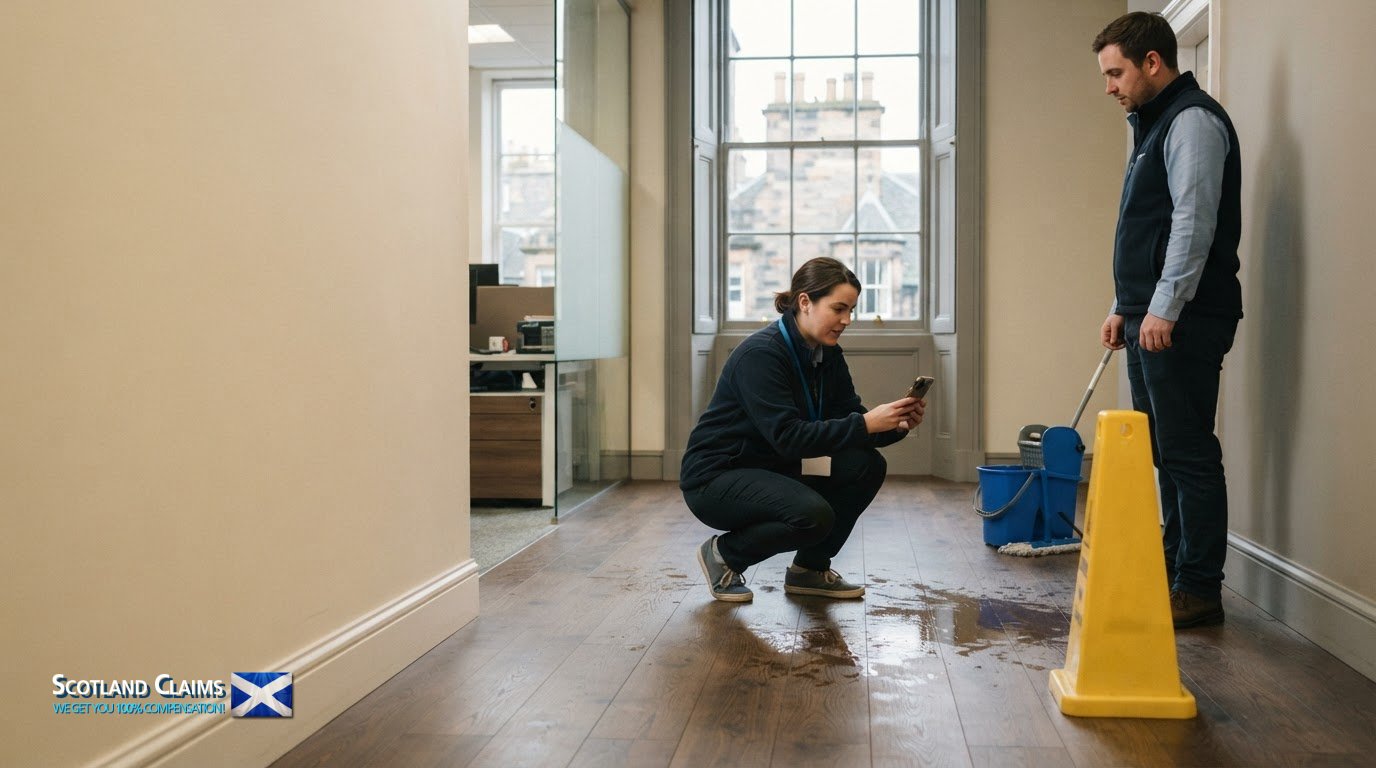
A slip on a wet floor at work in Edinburgh may support a claim if the responsible party owed you a duty of care, failed to meet it and that failure caused your injury. The Health and Safety at Work etc. Act 1974 sets out an employer’s duty to take reasonable and practicable steps to protect workers’ health, safety and welfare, according to UK legislation. Your employment status alone does not rule out a claim.
A fall can leave you coping with pain, time off work and uncertainty about who is responsible. Agency, self-employed and zero-hours workers may also have options, depending on how the accident happened and who controlled the area.
This guide explains how to claim after a wet-floor slip at work or in a public place, what evidence may help, and how responsibility is assessed. It also covers what to do after a fall, how your work arrangement may affect your options, and what can influence compensation. Clear records of the hazard, your injury and related costs can help show what happened and how it affected you.
Key Takeaways
- A claim depends on who was responsible for the wet area, whether reasonable safety steps were taken and whether the breach caused your injury.
- Agency, self-employed and zero-hours workers may still have options; your employment arrangement does not automatically decide the outcome.
- Report the fall promptly and preserve useful evidence, including photos, witness details, medical records and any available CCTV.
- Compensation may cover both the injury itself and related losses, such as travel costs, damaged belongings or lost income.
- Understand the terms of a No Win No Fee agreement and the time limit that applies before deciding on your next step.
How Can I Claim If I’ve Slipped On A Wet Floor In Public?
A claim may be possible if the party responsible for the floor failed to take reasonable safety steps and that failure caused your injury. In Edinburgh, an important first step is establishing who controlled the area.
Wet-Floor Accident Claim Eligibility
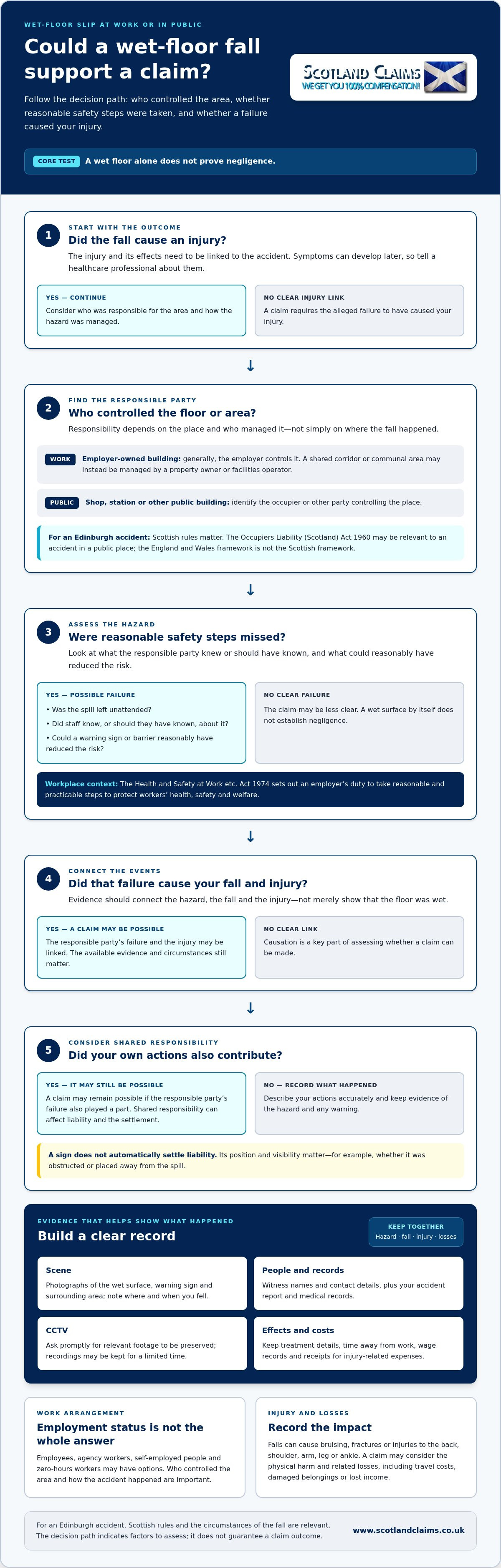
Eligibility depends on the hazard, the responsible party’s actions and the injury you suffered. A wet floor alone does not prove negligence. Consider whether the spill was left unattended, whether staff knew or should have known about it, and whether a warning sign or barrier could reasonably have reduced the risk.
For a workplace accident, the Health and Safety at Work etc. Act 1974 sets out an employer’s duty to take reasonable and practicable steps to protect workers’ health, safety and welfare, according to UK legislation. That duty can be relevant to employees, agency workers and self-employed people working alongside others. The key evidence connects a failure to manage the hazard with your fall and injury.
If the accident happened at work, identify who controlled the floor. In an employer-owned building, this would generally be the employer. A shared corridor or communal area may instead be managed by another party, such as the property owner or facilities operator. A sign does not automatically settle liability if it was obstructed or poorly placed.
Public Liability and Regional Eligibility
A public liability claim concerns an injury in a place controlled by an occupier, such as a shop, station or other public building. The key questions are whether the occupier owed you a duty of care, breached it, and caused your injury as a result. Photographs, witness accounts and records of the hazard can help show how the accident happened.
In England and Wales, the Occupiers’ Liability Act 1957 sets out occupiers’ duties concerning visitors’ safety. That Act is not the Scottish framework. In Scotland, the Occupiers Liability (Scotland) Act 1960 may be relevant to a public-place accident. Your location matters: a claim involving Edinburgh should be considered under Scottish rules, not treated as an England and Wales case.
Whether you were a paying visitor, customer or other lawful visitor can help clarify the circumstances of the occupier’s responsibility. Record the exact location, who appeared to manage it, and what made the floor unsafe. These details can help distinguish a claim involving a business from one involving a communal area or another responsible party.
Shared Responsibility for the Accident
Yes. A claim may still be possible if your actions contributed to the accident, provided the responsible party’s failure also played a part in causing your injury. Evidence should show what each person knew and did, including whether the hazard was visible and any warning was clear.
For example, an occupier may point to a warning sign, while you explain that it was hidden behind a display or placed away from the spill. A witness or photograph may help show where it was. Shared responsibility can affect liability and the settlement, so describe your actions accurately when reporting the accident.
Can I Make A Slip Or Fall Claim On A No Win No Fee Basis?
A No Win No Fee agreement can let you pursue a personal injury claim without paying solicitor fees upfront. Your eligibility, the time limit and the available evidence all matter, so understand the agreement and act promptly after a wet-floor accident.
Evidence for a Wet-Floor Injury
Build a clear record of the hazard and the injuries it caused. Photograph the wet surface, any warning sign and the surrounding area. Note where and when you fell, then record the names and contact details of witnesses who saw the accident or its immediate aftermath.
Keep your accident report, medical records and receipts for injury-related expenses. Relevant CCTV may help show the floor’s condition, but recordings are often kept for a limited time, so ask promptly for footage to be preserved. Together, these records can connect the hazard, the fall and your resulting losses.
Injuries from Workplace Slips
A wet-floor fall can cause bruising, fractures or injuries to the back, shoulder, arm, leg or ankle. The direction of the fall, the surface and the body part that took the impact can all affect the injury. Some symptoms may develop later, so tell a healthcare professional about them.
Record your treatment, time away from work and any changes to everyday tasks. Medical notes document the injury, while wage records and receipts can show expenses or lost income. An injury claim considers both the physical harm and its effect on your work and routine.
In Scotland, personal injury time limits differ from those in England and Wales. General guidance describes a three-year limit for many claims, usually running from the accident date, but the Limitation Act 1980 applies to England and Wales and should not be treated as Scotland’s rule. For an Edinburgh accident, get advice promptly about the Scottish deadline relevant to your circumstances.
For a person injured before turning 18, the claim period is paused until their 18th birthday; if no claim has been made, they then have three years to claim. Different rules can apply where someone lacks mental capacity. These exceptions make early advice important, particularly if the accident date or the injured person’s circumstances are uncertain.
Before signing a No Win No Fee agreement, read how it explains the solicitor’s success fee, any deductions from compensation and what happens if the claim does not succeed. The agreement should make the financial terms clear before work begins. For practical guidance on a workplace injury claim, see work injury claims.
Can I Make a Claim for a Slip On a Wet Floor at Work?
A workplace claim may include compensation for your injury and financial losses caused by the accident. Evidence should connect the spillage, any health and safety failure, your injury and the costs you incurred.
General Damages for Injury
General damages address the pain, suffering and personal impact of the injury. The assessment considers its nature and severity, how long symptoms last, and how treatment affects daily activities. A fracture that limits movement may have a different impact from bruising that settles quickly.
Medical records help establish which injuries occurred and how they developed. Tell your healthcare professional about your symptoms and difficulties, including problems standing, walking or completing work tasks. A personal injury solicitor can use the medical evidence to explain how the accident caused your condition and affected you.
General damages are separate from expense reimbursement. They reflect the personal impact of the injury, not the cost of a prescription or travel to an appointment. If your symptoms change, record when they began, which activities they affect and any treatment received.
Relevant details may include pain, reduced mobility and the effect on everyday routines. For example, an ankle injury could make walking to work difficult, while a shoulder injury might restrict lifting. Describe these effects accurately and support them with medical notes or treatment records. The nature and duration of the injury inform the assessment.
Special Damages and Other Losses
Special damages cover financial losses and expenses linked to the accident. They may include lost earnings, medical expenses, travel to appointments, care and assistance, or damaged clothing and personal property. Keep receipts, invoices and wage records to support each claimed loss.
If you take time off work, compare your usual pay with what you actually received. Someone off work for four weeks may lose income if they receive no pay or only Statutory Sick Pay. Payslips and absence records can help show the difference and link it to the injury.
Record costs as they arise. Keep pharmacy receipts, travel details for appointments, and invoices for treatment or help with daily tasks. Photograph damaged belongings and retain repair or replacement documents. These records show what you spent and why the expense followed from the workplace accident.
Not every cost is automatically recoverable. The expense should relate to your injury and have a clear explanation. For example, a taxi fare to a medical appointment may be relevant if your injury prevented you from travelling as usual. A personal injury solicitor can organise the evidence and distinguish financial losses from general damages when presenting your claim.
Solicitor support and evidence gathering
In Edinburgh, your workplace health and safety representative or trade union can offer workplace guidance. For legal advice, a solicitor working under a No Win No Fee agreement may take on a case without an initial solicitor fee, but this does not automatically mean all advice is free.
Evidence for a Slip-at-Work Claim
A solicitor can organise evidence showing how the accident happened, who controlled the area and what losses followed. Preserve photographs of the floor, any warning sign and the route you took. Your account should state the time and location, and what you noticed before falling.
Give the solicitor your accident report, witness names and details of anyone you told about the spillage. Ask promptly for relevant CCTV to be preserved, as footage may not be kept for long. A witness who saw the floor before or after your fall may help establish whether the hazard was present.
Keep relevant messages, shift records and workplace notes. For example, a message reporting a leak before your accident could help establish when the hazard arose. Solicitors can compare these records with your account and the employer’s response, then identify any evidence gaps in the compensation claim.
Medical Evidence and Prognosis
Medical evidence connects the accident to your injuries and records their effect over time. Attend appointments, describe your symptoms accurately and keep treatment records. An independent medical assessment is required in all personal injury claims to establish an accurate settlement figure.
The assessment considers the injury, treatment and expected recovery. A serious fracture may require different evidence from bruising or soft-tissue symptoms. Tell the medical professional about difficulties at work and home, such as standing for a shift or climbing stairs. These details help explain the injury’s practical impact.
Keep appointment letters and treatment records together. If your symptoms change, note when and how they affect daily activities. A clear timeline helps the medical evidence address both current problems and prognosis, rather than relying on a single description made just after the fall.
Free Legal and Workplace Injury Advice
For workplace guidance in Edinburgh, speak to your health and safety representative or trade union if you’re a member. For legal advice, ask a solicitor to explain the proposed fee agreement before you proceed. A No Win No Fee arrangement may avoid an initial solicitor fee, but read its terms and understand any potential deductions.
Ask how the solicitor will obtain records, approach witnesses and handle medical evidence. Prepare by writing a concise timeline, gathering the accident report and listing treatment or work absences. These steps make an initial discussion more focused and help the solicitor identify what evidence is still needed.
For support with an injury at work, work injury claim guidance explains the relevant claim process.
Prioritise your health, then make a clear record of the accident. At work in Edinburgh, tell your supervisor what happened and where the wet floor was. If you need urgent medical attention, seek it first; report the accident as soon as you’re able.
- Get medical help. Contact a healthcare professional about pain, swelling or difficulty moving, even if symptoms seem manageable at first. Explain that you slipped on a wet floor at work and describe how you landed. Keep appointment details and any records of treatment, as they document the injury and when it was assessed.
- Report the accident. Notify your supervisor and ask for the fall to be entered in the workplace accident reporting system or accident book, if available. Check that the entry records the date, time, exact location, floor condition and injury. Keep a copy or note the report reference, and correct factual errors promptly.
- Tell the relevant workplace contacts. Notify your workplace health and safety representative. If you’re a trade union member, inform your union too. A supervisor or representative can help ensure the hazard is recorded and the workplace receives notice of your injury.
- Preserve evidence safely. If you can do so without risking another fall, photograph the spill, the surrounding floor, warning signs and the route you used. Don’t touch or clean the hazard. Note whether a sign was absent, obscured or positioned away from the wet area.
- Identify witnesses. Ask people who saw the fall or the floor beforehand for their names and contact details. Record what each person observed, such as a leaking container or a recently mopped surface. Keep your own account while the sequence remains clear.
Ask a manager to preserve relevant CCTV promptly, because workplace footage may not be kept for long. Note which camera might cover the area and the time period to review. Keep work messages, shift information and incident correspondence that could help establish when the spillage occurred or who was told.
Keep receipts for injury-related travel and prescription costs, along with records of missed shifts and pay. Photograph damaged clothing or belongings before repair or disposal. A simple dated log of symptoms, treatment and changes to your work duties can help show how the fall affected you over time.
Once you’re safe, avoid guessing about details in the accident report or workplace messages. Stick to what you saw, be honest about anything you’re unsure of, and retain copies of relevant records. A prompt, accurate account can help explain what happened and support the next steps in a workplace injury claim.
Get guidance on a work injury claim
Scotland Claims Injury Lawyers: Road Traffic Accident Claims
Scotland Claims Injury Lawyers can help if you’re considering a workplace slip or public-place accident claim in Scotland. Its services include Work Injury Claims and Slip or Trip Claims. The Personal Injury Compensation Calculator can also help you explore potential compensation.
The firm works on a No Win No Fee basis and promises 100% compensation: it recovers its fees from the at-fault party and passes the entire settlement to you. If you’re weighing up your next step after a wet-floor accident, review the details of work injury claims.
Contact Scotland Claims Injury Lawyers to discuss your situation and the evidence you’ve gathered.
Choose your next step with confidence
Before moving forward, decide what you most need clarified: who may be responsible, how your injury has affected work, or which records could support your position. A short timeline of the accident and its consequences can focus the discussion. Include changes to duties, missed shifts and treatment, then note any questions you still have.
Whether a slip on wet floor at work claim in Edinburgh is viable depends on evidence linking the hazard, responsibility and injury. Scotland Claims Injury Lawyers can discuss your workplace accident and the practical steps involved in pursuing a claim. Raise any concerns about the process and learn what information may help assess your circumstances.
Learning how these claims are assessed is a useful first step. Keep your records together, ask clear questions and move ahead at a pace that feels right for you.
Frequently Asked Questions
Is There A Time Limit For Making Slip Claims?
Yes, personal injury claims have time limits, and Scottish claims follow Scottish rules rather than the Limitation Act 1980 rules for England and Wales. The accident date and the claimant’s circumstances affect how the deadline is calculated. As Scotland Claims Injury Lawyers handles accidents in Scotland within the past three years, contact a solicitor promptly if your fall happened earlier or the date is unclear.
Can I Claim if I’m an Agency Worker or Self-Employed?
Yes, agency and self-employed workers may be able to claim after a workplace slip. Your contract label alone does not establish who was responsible for the hazard. The employer, an agency, a building owner or a facilities operator may control different areas. Note who arranged cleaning, maintained the floor and managed the worksite, then share those details with your account of the accident.
Can I Get Compensation For My Financial Losses?
Yes, a successful claim can include financial losses caused by the injury, not just compensation for physical harm. These may include lost earnings, travel to treatment, prescription costs or replacement work clothing. Keep payslips, receipts and invoices, and explain why each expense followed from the accident. Distinguish costs you paid from amounts reimbursed elsewhere.
How Can I Prove That The Floor Was Wet?
Use evidence that captures the floor’s condition close to the time of the fall. A photograph of the spill, nearby objects and any warning sign can provide useful context. A witness may describe seeing the liquid before it was cleaned, while a cleaning log or incident report may show when staff attended. Ask promptly for relevant CCTV to be preserved, as footage may be routinely overwritten.
How Long Will It Take to Process My Claim?
A workplace wet-floor claim may take around 6 to 8 months if the employer admits liability and you’ve recovered. A disputed or more complex claim can take longer than a year. The investigation, availability of records and medical evidence, and whether your recovery is complete all affect progress. A claim involving continuing symptoms may need clearer evidence of the longer-term impact before settlement.
How will my claim be funded?
Scotland Claims Injury Lawyers handles personal injury claims on a No Win No Fee basis. Clients pay no success fee and keep the full settlement, with legal fees recovered from the at-fault party. Read the agreement before proceeding to understand what happens if the claim fails and how costs are handled. Ask for any funding terms to be explained in plain language.
I had a fall at work, what should I do?
After arranging any medical care you need, tell your supervisor about the fall and ask for it to be formally recorded. Write down your shift, the location and the names of nearby colleagues. If your normal duties become difficult, tell your manager which tasks are affected and note any adjustments. This creates a practical record of the accident’s effect at work.
Can I claim compensation for slipping on a wet floor at work in Edinburgh?
You may be able to claim if the party responsible for the floor failed to take reasonable safety steps and that failure caused your injury. In Edinburgh, responsibility might rest with an employer or whoever controlled a shared area. Working agency shifts or being self-employed does not automatically rule out a claim. Identify who controlled the area and preserve records of your injury and losses.