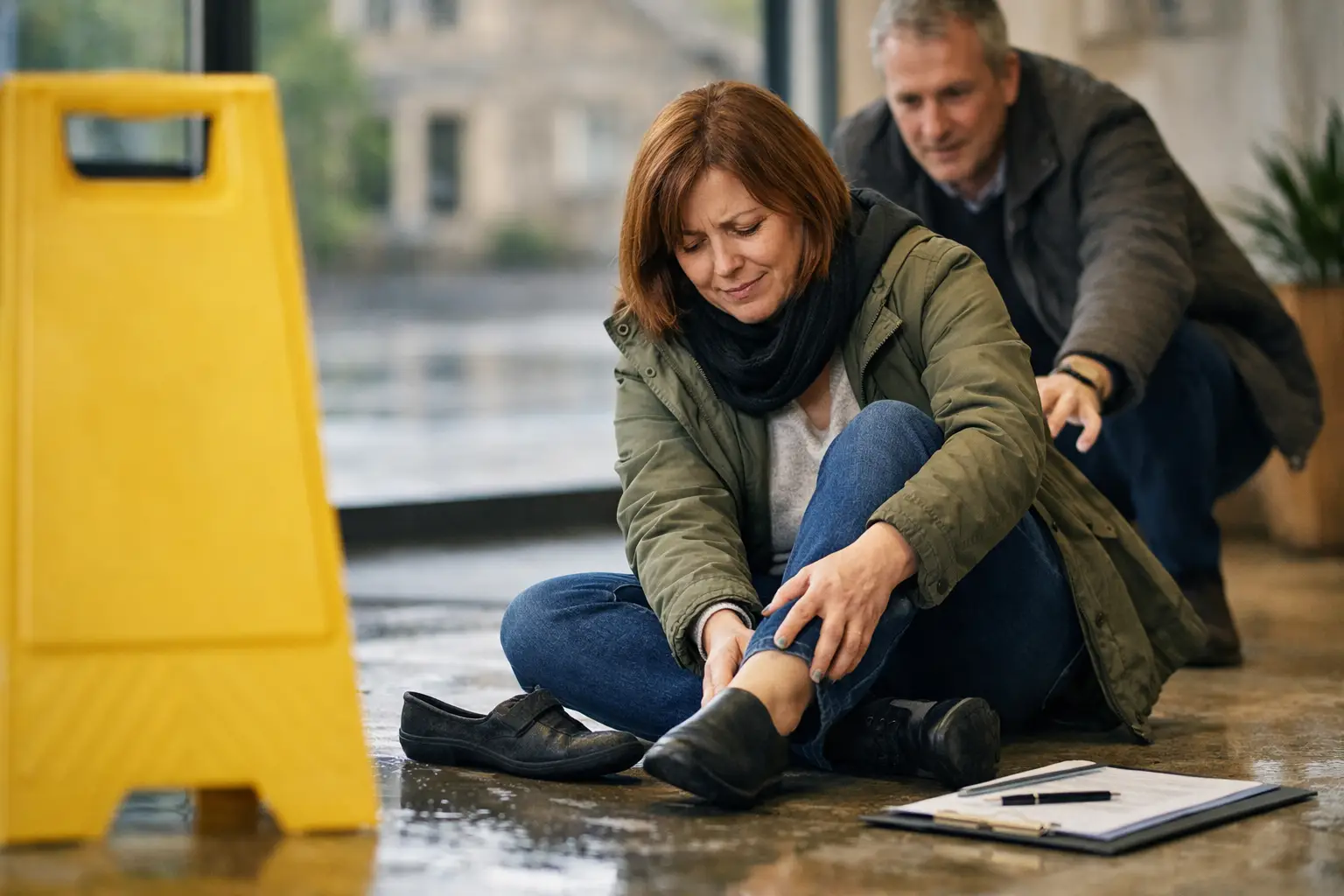
A wet supermarket floor, loose paving outside a shop or an unmarked spill at work can leave you with more than a bruised knee. If someone else failed to keep an area reasonably safe, this slip accident compensation guide explains what you may be able to claim, what proof matters and how to protect the full value of your settlement.
A fall is not automatically grounds for compensation. The key question is whether another person, business, employer or public body was responsible for a hazard they should have prevented, repaired, cleaned or clearly warned you about. If the accident was not your fault, you should not be left carrying the financial consequences alone.
When can you claim after a slip accident?
You may have a valid claim where a person or organisation owed you a duty of care and failed to meet it. This commonly applies to shops, supermarkets, restaurants, pubs, landlords, employers, local authorities and owners of public spaces.
For example, a claim may be possible if a shop knew about a spill but did not clean it up within a reasonable time, if there were no warning signs around a freshly mopped floor, or if a pavement defect had been reported but left unrepaired. At work, an employer may be responsible if poor housekeeping, inadequate lighting, unsafe flooring or a failure to provide suitable footwear contributed to your fall.
The circumstances matter. A wet floor sign placed clearly beside a recently cleaned entrance may affect whether the occupier was at fault. Equally, a sign hidden from view does not necessarily protect them. Your solicitor will look at the whole picture: the hazard, the inspection and cleaning arrangements, any warnings given, and whether reasonable steps could have stopped the accident happening.
What compensation can a slip accident claim include?
Compensation is intended to put you, as far as money can, in the position you would have been in had the accident not happened. The value depends on the injury, its effect on your life and your financial losses.
You can usually seek compensation for pain, suffering and the impact of the injury on daily activities. This may include fractures, soft tissue injuries, back and neck injuries, damaged joints, head injuries or psychological symptoms following a serious fall.
You may also recover losses caused by the accident. These can include lost earnings, treatment and rehabilitation costs, prescription charges, travel to appointments, care provided by family members and the cost of adapting your home or replacing damaged personal items. Keep evidence of every expense, even where the amount appears small. Receipts, wage slips and appointment letters can make a real difference when losses are calculated.
There is no honest fixed figure for a slip accident claim. A sprained ankle that settles within weeks will be valued differently from a fracture that prevents you from working, caring for children or enjoying hobbies for months. Medical evidence and proof of your losses are what give a claim its proper value.
The evidence that can strengthen your claim
The first few days after a fall can be crucial. Businesses may overwrite CCTV, clear the hazard or lose sight of exactly what happened. If you are able, gather what you can without putting your health at risk.
Take photographs of the area, the cause of the fall, your footwear and any visible injuries. Report the incident immediately and ask for it to be recorded in the accident book or incident report. If staff make comments about the hazard, note who said what and when.
Where possible, obtain the names and contact details of witnesses. A witness who saw the spill, broken surface or absence of warning signs can be valuable. Seek medical attention promptly too. Your medical records provide an independent account of your injuries and the treatment you needed.
Do not worry if you were too injured or shocked to take photographs. Many successful claims begin with limited evidence. A solicitor can request CCTV, cleaning logs, inspection records, risk assessments and maintenance documents from the responsible party. Acting quickly gives the best chance of preserving them.
How long do you have to start a claim?
In most personal injury cases in Scotland, court action must be raised within three years of the accident date. There are exceptions, including cases involving children and situations where the injury or its cause was not immediately clear. The rules can be complex, and waiting until the deadline is close can make evidence harder to obtain.
You do not need to know every legal rule before asking for advice. A free, no-obligation assessment can establish whether you have a claim and whether there is still time to pursue it. The earlier you start, the sooner CCTV and records can be secured and the clearer witness memories are likely to be.
A practical slip accident compensation guide: what to do next
First, put your recovery first. Get medical advice, follow the treatment plan and keep a note of how the injury affects your work, sleep, mobility and normal routine. A short diary can show the real day-to-day impact that medical notes may not capture.
Next, preserve your evidence. Keep photos, receipts, correspondence, wage information and the details of anyone who witnessed the accident. If you reported the incident, write down the date, time and the name of the person you spoke to.
Then seek legal advice from a regulated Scottish solicitor. A solicitor can assess fault, value your losses, deal with insurers and take the pressure of the claim process off you. You should not feel pushed into accepting an early offer before the full extent of your injury and losses is known.
Do you keep all of your compensation?
This is one of the most important questions to ask before starting a claim. Some firms advertise No Win No Fee but still deduct a percentage of your compensation when the case succeeds. A 20% deduction from a £10,000 settlement means £2,000 of your award is gone.
At Scotland Claims, clients keep 100% of the compensation awarded. There is no success fee taken from your settlement. Legal costs are recovered from the at-fault party's insurer, so the compensation intended for your injury and losses stays with you.
That difference matters when you are already dealing with time off work, treatment costs and the disruption caused by an accident that should not have happened. Always ask a firm, in plain terms, what will be deducted from your compensation before you agree to proceed.
What if you think you were partly to blame?
Do not assume that looking at your phone, wearing ordinary shoes or failing to spot a hazard means you cannot claim. The other side may argue that you contributed to the accident, but that does not automatically defeat the case. It may affect the final award if shared responsibility is established, yet the responsible organisation can still be held accountable for an unsafe area.
Be honest about what happened. A clear and accurate account helps your solicitor deal with any allegation of shared fault properly. Trying to fill gaps or guess at details can cause more problems than it solves.
You do not have to deal with the insurer alone
After a slip or trip, the responsible party's insurer may contact you quickly. Their role is to protect their policyholder's position, not to make sure you receive every penny you deserve. You are entitled to take advice before discussing settlement or signing any paperwork.
A fall can change your routine in seconds. Taking prompt advice can protect the evidence, clarify your rights and give you a straightforward route to the compensation that belongs to you.