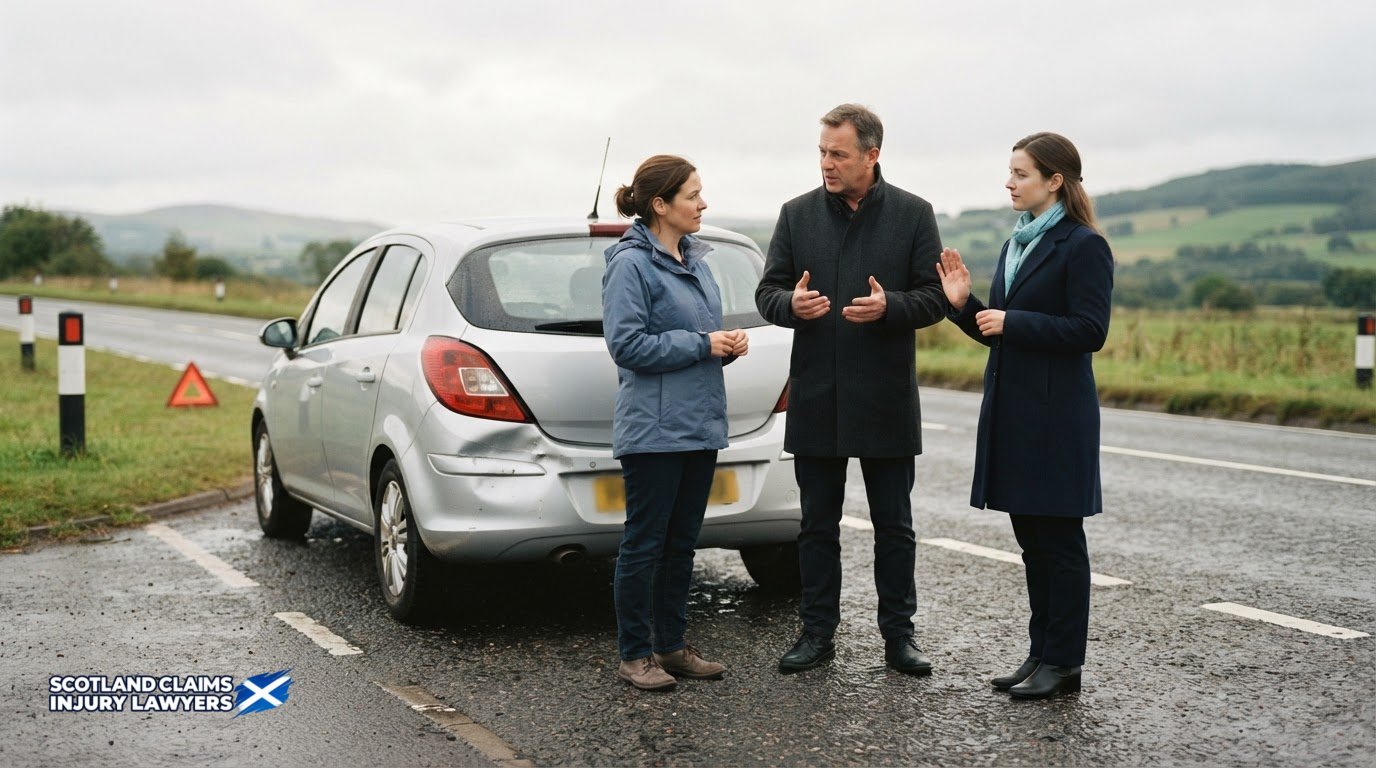
A quick conversation with the other driver’s insurer doesn’t mean you have to accept an offer or settle your claim. If you’re asking whether you should talk to the other party’s insurer, you can wait before discussing fault, giving a detailed account or making a decision. Ask for any proposal in writing and take time to consider it.
It’s understandable to want the matter resolved quickly, especially when an insurer gets in touch soon after a crash. But an early offer may arrive before the full effect of an injury is clear. Accepting a full and final settlement can prevent you from seeking further compensation later.
This guide explains what you can share, how to handle requests for a recorded statement and what to consider before accepting compensation. You’ll also learn when independent legal advice may help protect your position.
Key Takeaways
- You can appoint a solicitor even after speaking to the other driver’s insurer.
- Keep early communications to basic accident details if you choose to respond; you don’t have to discuss fault or provide detailed medical information straight away.
- Ask for any proposed help or compensation in writing, and take time to consider it before deciding.
- Get independent legal advice if liability is disputed, injuries are ongoing or complicated, or the insurer is pressing for a quick statement.
- Before settling, consider whether your injury and recovery outlook are clear, as a full and final settlement can close the door to further compensation.
Can I appoint a solicitor after speaking to the insurer?
Yes. Speaking to the other driver’s insurer doesn’t prevent you from appointing a solicitor later. You can ask a solicitor to advise you or take over the claim, even if you’ve already discussed the crash with an insurer. Keep a note of what you said, who you spoke to and when, so your solicitor can understand the contact and any evidence the insurer has gathered.
Report the crash to your own insurer in line with your policy, even if the other insurer contacts you first. Keep this separate from any claim deadline: a phone call about the accident doesn’t replace either step. If you haven’t reported it yet, tell your insurer promptly and note the date you made contact.
The Third Parties (Rights against Insurers) Act 2010 received Royal Assent on 25 March 2010, according to UK legislation.gov.uk. UK legislation.gov.uk identifies the Act as 2010 CHAPTER 10. Its relevance is specific: section 2 allows a third party to request information about rights transferred to them before deciding whether to start or continue litigation. This is not a general right to see every document held by an insurer. The Act applies irrespective of foreign elements, such as an insurer being based overseas, under section 18, according to UK legislation.gov.uk.
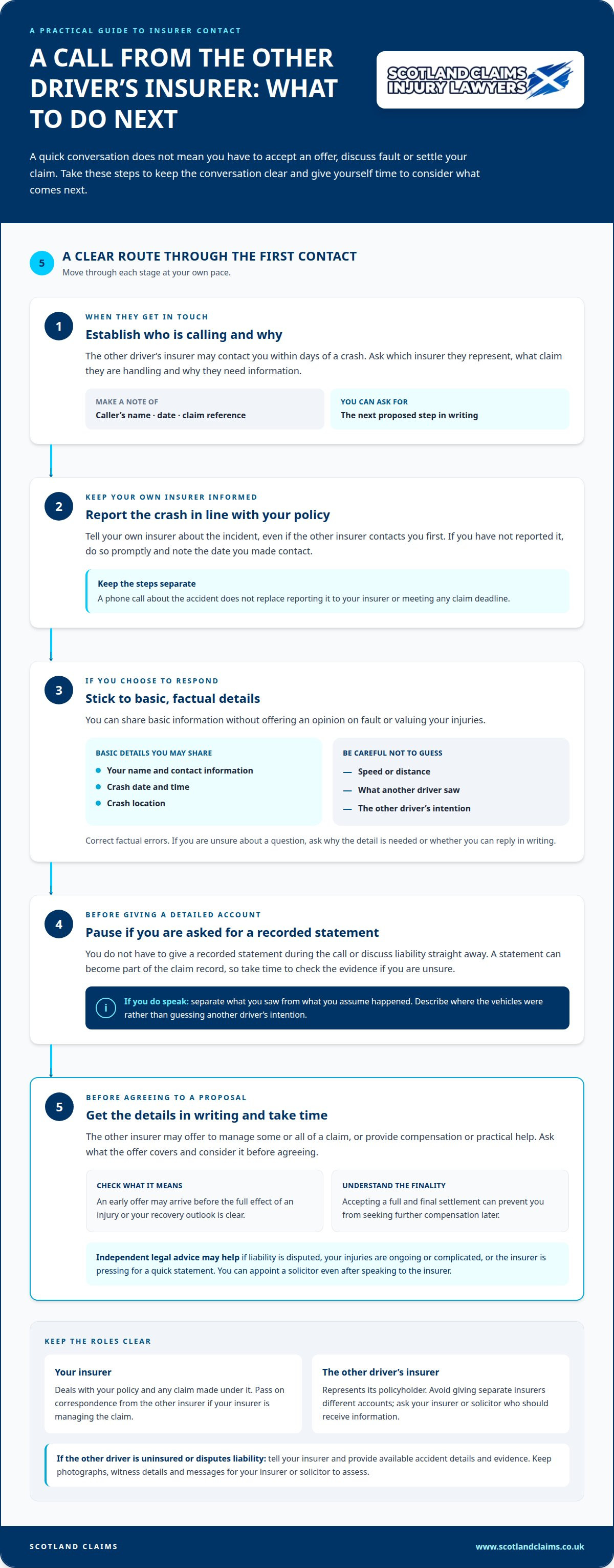
During an insurer call, establish who is calling, which insurer they represent and why they’re contacting you. Ask for the claim reference, the policyholder’s identity and a written explanation of the next proposed step. If you need information about your rights against an insurer, distinguish that request from asking for the other driver’s full policy file. A solicitor can assess whether the Act’s information process applies to your circumstances.
An insurer may ask how the crash happened, whether you were injured, what treatment you received and what damage your vehicle sustained. Ask why each detail is needed and whether you can respond in writing. You don’t have to give a recorded statement during the call. A statement can become part of the claim record, so pause if you’re unsure about a question or need to check the evidence first.
If you choose to share basic details, give your name, contact information, and the crash’s date, time and location. For example, you might confirm where the collision happened without offering an opinion on fault or a valuation of your injuries. Correct factual errors, but avoid guessing about speed, distance or what another driver saw.
A solicitor can review the insurer’s requests, your account and the available evidence after you’ve spoken to them. That independent review can help you decide what to disclose next and whether the insurer’s proposed approach addresses your claim.
The other driver’s insurance company may contact you within days of a crash. That call doesn’t require you to discuss liability immediately. Ask who the caller represents, what claim they’re handling and why they need information. Note the caller’s name, the date and any claim reference. These details help you identify the reason for contact and keep a clear record if the insurer calls again.
Should you talk to the other party’s insurer, use your own insurer or ask a solicitor to communicate? Tell your own insurer about the incident, then decide how to handle contact from the other party. The other insurer may offer to manage some or all of a claim directly. Ask for details in writing and consider them before agreeing to any proposed arrangement.
Your policy and the circumstances of the crash affect how your own insurance company handles a claim. If it manages repairs under your cover, it may pursue recovery from the other party. If the other driver accepts fault, their insurer may contact you about assistance or a claim. Before accepting a replacement vehicle, establish whether you could face a charge and who would be responsible.
Keep each party’s role clear. The other driver’s insurer represents its policyholder, while your insurer deals with your policy and any claim made under it. If your insurer is managing the claim, pass on correspondence from the other company. Avoid giving separate insurers different accounts. If you’re unsure who should receive information, ask your insurer or solicitor to clarify.
If the other driver is uninsured, tell your insurer and provide the accident details and available evidence. The claim may then involve your own insurer rather than a third-party insurer. If the other party disputes liability, don’t treat their account as an accepted version of events. Keep photographs, witness details and messages, then ask your insurer or solicitor to assess the evidence.
If you’re still weighing whether to talk to the other party’s insurer directly, consider what they’re asking you to do. You can ask to delay a recorded statement and explain that you want advice first. A recorded account may later be reviewed for gaps or inconsistencies. If you do speak, distinguish what you saw from what you assume happened. For example, describe where each vehicle was rather than guessing the other driver’s intention.
For an injury claim in Scotland, independent legal advice can help you understand how liability, evidence and insurer correspondence affect your next steps.
Early compensation offers from third-party insurers
An insurer may offer money or practical help soon after an accident, before your recovery is clear. Understand what the offer covers and what accepting it could mean later.
Early compensation offers
An early compensation offer is a proposal from the other driver’s insurer to resolve some or all of your losses. It matters because the full effect of an injury may not be clear when the insurer first contacts you. Some insurers offer compensation directly after their policyholder accepts liability, even without medical evidence. Ask for the offer and its terms in writing before deciding.
Injury valuation depends on medical evidence and the impact of symptoms on your life. Without conclusive medical evidence, an injury claim usually cannot be valued accurately, unless you have made a quick, full recovery. A medical expert might predict recovery within six months, for example, but that forecast isn’t the same as completing recovery. If symptoms continue or treatment is ongoing, an early figure may not reflect the final position.
Separate injury compensation from offers of practical assistance. The Association of British Insurers’ Third Party Assistance Code says an unrepresented claimant doesn’t have to accept any or all assistance offered by the other insurer. If it offers a replacement vehicle, establish whether you could face a charge before agreeing. Ask who is responsible for hire costs and what happens if the proposed arrangement changes.
Fault and settlement decisions
A fault decision concerns responsibility for the accident; a settlement decision concerns whether to accept compensation on stated terms. They’re linked because accepting a full and final injury settlement ordinarily prevents you from seeking further compensation if your injury later proves more serious. Read the wording carefully, including whether the offer covers injury, vehicle damage or both.
Don’t treat an insurer’s offer as a complete valuation simply because it arrives quickly. Compare the proposal with the losses it says it covers, including repair costs and any injury claim. If the other driver’s liability is disputed, or the offer depends on accepting a particular account, get advice before agreeing. Taking time to understand the terms can prevent a decision based on incomplete information.
Ask the insurer to explain its calculation and identify the evidence used. Keep the written offer, medical information, repair estimates and related correspondence together. If you’re unsure whether the proposal closes your claim, ask for clarification in writing before accepting. Under the Third Party Assistance Code, you don’t have to decide during the call or accept the insurer’s proposal there and then.
Insurer interests and independent advice
The other driver’s insurer assesses claims made against its policyholder. It may gather evidence, consider liability and decide whether to make an offer. That is a claims-handling role, not independent advice about your interests. Ask what the insurer’s proposal covers, which facts it relies on and whether it expects you to accept anything. A clear explanation helps you understand the process without treating the insurer as your representative.
The Association of British Insurers’ Third Party Assistance Code applies when an insurer contacts an unrepresented person after an accident involving its policyholder and offers to handle some or all of the claim directly. The Code identifies situations where independent legal advice should be strongly recommended. These include disputed liability, contributory negligence, persistent or complicated injuries, and disagreement about causation.
Each situation calls for careful assessment. If liability is disputed, the parties may give different accounts of how the crash happened. Contributory negligence means the insurer may argue that your own actions contributed to the accident. A persistent injury can require a fuller view of symptoms and treatment, while a causation dispute concerns whether the accident caused the condition. Independent advice can help you understand how these issues affect your claim.
Consider obtaining advice before giving a detailed account if the insurer is pressing you to respond immediately. A recorded statement may become part of the claim record, and unclear or incomplete answers can create problems later. Explain that you need time to review the request. Keep the insurer’s correspondence and note the questions it wants answered, so advice can address the specific issues.
Independent advice is also useful when an offer combines different parts of a claim. For example, an insurer might discuss vehicle damage alongside an injury claim. Ask whether accepting one part affects the other, and request the proposed terms in writing. A solicitor can examine the wording, the evidence supporting the valuation and whether the offer accounts for ongoing symptoms or treatment.
Before responding, identify the decision you need to make. Is the insurer asking for facts, an agreement about liability, permission to arrange repairs, or acceptance of a settlement? These requests have different consequences. A solicitor can explain the distinction and help you respond without accepting terms you don’t understand. This is particularly valuable where injuries remain complicated or the parties disagree about what caused them.
Independent advice doesn’t mean every insurer contact requires a solicitor. It becomes more important when the Code’s listed concerns arise, or when you can’t confidently assess the evidence and proposed terms. Record the insurer’s position, keep relevant documents and seek advice before making a decision that could shape your claim.
Should I admit fault or agree to a settlement with the other insurer?
Don’t admit fault to the other driver’s insurer before the facts have been properly considered. An early comment made under stress can sound like an admission, even if you meant to describe only part of the accident. Stick to what you directly remember, such as which direction you were travelling or where the vehicles stopped. Separate those observations from guesses about speed, distance or what the other driver saw.
Your first account can also affect how your injuries are understood. If you describe pain as minor before symptoms develop, the insurer could rely on that description later. Give accurate information, but don’t minimise symptoms or speculate about your recovery. If treatment is ongoing, say so clearly rather than presenting an early impression as the complete picture.
Before agreeing to a settlement, establish exactly what the document covers. A proposal might deal with vehicle repairs, injury compensation or both. Ask the insurer to set out each part and explain any condition attached to accepting it. For example, check whether signing would settle the injury claim in full and final terms, rather than resolving only the repair dispute.
A settlement can close the claim. If you accept a full and final settlement before your medical position is clear, you will ordinarily be prevented from seeking further compensation if the injury later proves more serious. Wait until you’ve recovered fully or have a clear, reliable prognosis before deciding whether the proposed amount reflects your position. Ongoing treatment, changing symptoms and a disputed cause all need careful consideration.
You don’t have to decide during a telephone call. Ask for the offer and its terms in writing, then take time to read them. Compare the insurer’s account with your records, such as photographs, repair information and medical documents. If the insurer’s version differs from yours, identify the specific disagreement instead of accepting its wording just to move the claim forward.
Pause before responding if the insurer wants a quick statement, fault is unclear or several parties were involved. A rushed answer can leave out important details or conflict with evidence gathered later. Keep copies of messages and make a dated note of conversations. If you’ve already made a comment, record what you meant and the circumstances, then share that account with your solicitor before making further statements.
Independent advice can help you assess the proposed settlement, the evidence and any wording that affects your claim. It’s especially useful where injuries are still being treated or responsibility is contested. A solicitor can explain the implications before you accept terms that may end your right to pursue further compensation.
Scotland Claims Injury Lawyers
Scotland Claims Injury Lawyers can help you assess contact from the other driver’s insurer, understand a proposed settlement and pursue a personal injury claim after a road traffic accident in Scotland. Independent legal guidance can be especially useful when liability is disputed, your symptoms are ongoing or an offer arrives before your recovery is clear.
The firm handles injury claims for accidents in Scotland that occurred within the past three years. Its 100% compensation promise means it recovers its fees from the at-fault party and passes the entire settlement to you. This can help you understand how representation works before deciding whether to proceed.
If you’d like advice about your situation, contact Scotland Claims Injury Lawyers.
Choose your next step with confidence
If you’re deciding whether you should talk to the other party’s insurer, focus on what you need to protect your position before responding. A clear next step is to get independent advice on your circumstances, especially if you’re unsure how an insurer’s request or proposed terms affect your claim.
Scotland Claims Injury Lawyers handles road traffic accident, slip or trip, and work injury claims across Scotland. Its team can help you consider your options and decide how to proceed with an injury claim.
Take the time you need to make an informed decision, then move forward with a plan that feels right for you.
Frequently Asked Questions
Should you talk to the other driver’s insurance company after a crash?
You can speak with the other driver’s insurer, but you can also wait before discussing the claim. If you’re wondering, “Should I talk to the other party’s insurer?”, first consider what the caller is asking. Confirm the insurer’s identity and claim reference, and ask for any proposal in writing. This gives you time to understand the request and decide whether to respond yourself or appoint a representative.
Am I required to accept its assistance?
No. The Association of British Insurers’ Third Party Assistance Code says an unrepresented person doesn’t have to accept any or all assistance offered by the other driver’s insurer. You can consider each offer separately. For example, before agreeing to use a replacement vehicle, ask whether charges could apply and who would be responsible. Keep a copy of the terms so you can review them before deciding.
Do I have to deal directly with the other driver’s insurer?
No. Depending on your policy and circumstances, your own insurer or a solicitor may handle communications. If someone represents you, tell the other insurer where to send correspondence and pass on anything you receive. For example, if a letter asks for a response by a particular date, sharing it promptly helps your representative understand what is being requested and respond appropriately.
Is it OK to speak to the other party’s insurance after a car accident?
Yes, you can speak with the insurer without agreeing to its proposal. Ask the caller to explain the purpose of each question and give only information you can state accurately. If you can’t recall a detail, say so rather than guessing. For instance, distinguish what you remember seeing at a junction from what you infer about the other driver’s actions.
Is dealing directly with the insurer a bad idea?
Not necessarily. A direct conversation can clarify what the insurer is proposing, but the insurer represents its policyholder, not you. Consider whether the request concerns a straightforward administrative detail or a decision affecting your injury claim. If a document’s effect is unclear, ask for an explanation in writing and get independent advice before agreeing to terms that could settle part or all of your claim.
Should you give a recorded statement after a car accident?
You can ask to delay a recorded statement while you consider the request. Ask what subjects it will cover and how the recording will be used in the claim. If you later provide an account, stick to what you remember and distinguish facts from assumptions. Making a dated note of the questions and your answers afterwards can help you keep an accurate record of the conversation.
Should I contact the other driver’s insurer after a car accident in the UK?
You may contact the other insurer, but this is separate from notifying your own insurer under your policy. If you’re asking whether you should talk to the other party’s insurer, consider whether you’re ready to discuss the claim and understand the questions being asked. Note when you notified your own insurer and what you told them, so you can distinguish that report from any later discussion with the other party.
What information should I give the other party’s insurer?
Give information you know to be accurate and understand why you’re sharing it. Basic identifying and accident details can help the insurer locate its policyholder’s claim. If asked about treatment, symptoms or vehicle damage, avoid guessing or predicting how matters will develop. Ask for questions in writing and use your own records to prepare a factual response, rather than relying on estimates from memory.