
What if the solicitor who sounds most confident isn’t the right one for your claim? If you’re searching for “questions to ask a personal injury lawyer Scotland”, look beyond promises. Ask about experience with your type of accident, who will manage your case and how fees work before you decide.
It’s understandable to want clear answers before trusting someone with your claim. “No win, no fee” can mean different things, so ask whether a success fee or other deduction could come from your compensation, what happens if the claim is unsuccessful and how legal fees are recovered. You should also know who will update you, how often you can expect to hear from them and who to contact if you have concerns.
This checklist will help you compare solicitors and understand their approach, costs and communication before you commit. It covers relevant experience, fee terms, risks, case management and ways to stay informed. Personal injury claims in Scotland follow a separate legal system from those in England and Wales, so it’s worth asking how familiar the solicitor is with Scottish claims.
Key Takeaways
- Use this questions to ask a personal injury lawyer Scotland checklist to compare experience with your accident type and circumstances.
- Ask what happens to fees and expenses if your claim succeeds, settles or fails, then request the terms in writing.
- Find out how the solicitor will assess evidence, identify what remains uncertain and explain the next steps.
- Compare practical details, including your named contact, update arrangements and complaints process.
- Choose clear, realistic answers over confident promises, and check the agreement carefully before proceeding.
Questions to ask a personal injury lawyer Scotland: checking experience
Your first conversation is a chance to ask questions and understand your options. Making an initial enquiry does not, by itself, mean you’ve committed to using that solicitor. Use the conversation to check whether their experience fits your circumstances and whether their proposed approach makes sense to you.
Start with specifics. Ask: “How often do you handle claims involving this type of accident?” A road collision, an injury at work and a slip or trip in a public place can raise different questions about evidence and responsibility. Then ask what information is likely to matter in a case like yours. This could include photographs, incident records, witness details or documents showing how the injury has affected your work and daily life. A useful answer will relate to what you’ve told them, rather than rely on broad claims about experience.
How to check relevant Scottish personal injury experience
Ask whether the solicitor has handled claims with circumstances similar to yours, not just whether the firm deals with personal injury in general. In Scotland, personal injury claims sit within the Scots law of delict. You can ask how the solicitor will assess responsibility under the relevant Scottish legal principles and what facts they need to check before advising you. A helpful answer should connect their experience to your circumstances and explain what is still uncertain. Past results may provide context, but they cannot guarantee the outcome of your claim. For more background on personal injury solicitors in Scotland and your rights, read our related guide.
Who will handle your claim and keep you informed?
A firm’s overall track record is not the same as the experience of the person managing your case. Ask: “Who will be my named contact, what is their role, and what relevant claims have they handled?” Find out who will carry out the day-to-day work and whether a solicitor or caseworker might take over later. If responsibility changes, ask how you’ll be told and how the new handler will get up to speed.
Set communication expectations early. Ask how often you’ll receive updates, whether you can contact your named person directly and who to approach if an urgent question comes up. These answers can show whether the firm has a clear process for keeping you informed. When comparing firms, note the named contact and update arrangements alongside experience. Look for specific answers that explain what is known, what still needs checking and what happens next, without relying on promises about the outcome.
Questions about fees, no win no fee and your compensation
Fee terms can affect how much compensation you receive, so don’t rely on the phrase “no win, no fee” alone. Ask the solicitor to explain what happens if your claim succeeds, settles or is unsuccessful. Request the full terms in writing, including any success fee, deductions, expenses and exceptions. These are important questions to ask a personal injury lawyer in Scotland because arrangements can differ between firms.
What does no win, no fee mean for your case?
Ask directly: “If my claim is unsuccessful, will I owe anything, and are there circumstances where I could still have to pay?” Ask for a clear explanation of any possible expenses or other payment obligations, then check that it matches the written agreement. The label alone does not explain what your individual arrangement covers. For a fuller explanation of how these agreements can work, read this No Win No Fee Scotland guide.
How will legal fees affect the compensation you receive?
If your claim succeeds or settles, ask whether the solicitor will deduct a success fee or other legal fees from your compensation. Find out how the firm recovers its fees and whether any exceptions could affect the amount you receive. Don’t assume every firm uses the same arrangement.
Scotland Claims Injury Lawyers states that it charges no success fee from the client’s settlement and recovers legal fees from the at-fault party’s insurer. It also states that clients keep 100% of their compensation and owe nothing if a claim is unsuccessful under its no win, no fee framework. Ask the firm to explain the terms that apply to your case and confirm them in your agreement.
To compare firms fairly, put their written answers side by side. Check what each says about:
- Any success fee or deduction from your compensation.
- Expenses and other possible payment obligations.
- What you would owe if the claim fails.
- How fees are recovered and whether exceptions apply.
Compare the amount you would receive after any stated deductions, not just the headline promise. If you’re exploring a potential award, the Scottish injury compensation calculator can help you consider an estimate. It cannot guarantee the value or outcome of a claim.
Clear fee terms should leave you knowing what you may receive and what, if anything, you could owe. To review Scotland Claims Injury Lawyers’ approach to personal injury representation, visit the personal injury information page.
Questions that reveal how the solicitor will assess and run your claim
A useful first assessment should give you a clearer picture of the case, not just a quick opinion. Ask the solicitor to explain what they understand so far, what remains uncertain and what they’ll need to check before advising you further. If you’re preparing questions to ask a personal injury lawyer in Scotland, focus on the steps they’ll take and how they’ll keep you informed as the evidence develops.
Try asking these questions in order:
- “What do you need to know to assess my claim?”
- “What evidence could help, and how will it be gathered?”
- “How will you assess who may be responsible?”
- “What are the next steps, and when will you update me?”
The answers should relate to what you’ve told them. A solicitor can assess the prospects of a claim, but should not guarantee that it will succeed. They should explain the basis for their view and what could change it.
What evidence and information will the solicitor need?
Ask which records or details may help establish what happened and how you were injured. Depending on the circumstances, these might include photographs, witness details, an accident or incident report, or relevant medical information. No single item is essential in every claim. Ask what you should provide yourself, how the firm may obtain other evidence and whether there’s anything you can do now to preserve useful information. A clear answer should distinguish immediate priorities from information that may not be available yet.
How will the firm explain progress, risks and likely next steps?
Ask how the solicitor will review responsibility, your injury information and any risks or gaps in the evidence. They should distinguish what’s established from what still needs investigation, rather than present assumptions as facts. Find out how often you can expect an update and how delays will be explained. Before agreeing to a proposed step, ask the solicitor to explain its purpose, possible implications and what they need from you.
Pay attention to how they communicate during the initial assessment. Do they answer directly, explain unfamiliar terms in plain English and invite you to raise concerns? A practical process should help you understand the decisions ahead without suggesting that every stage or outcome can be predicted from the outset.
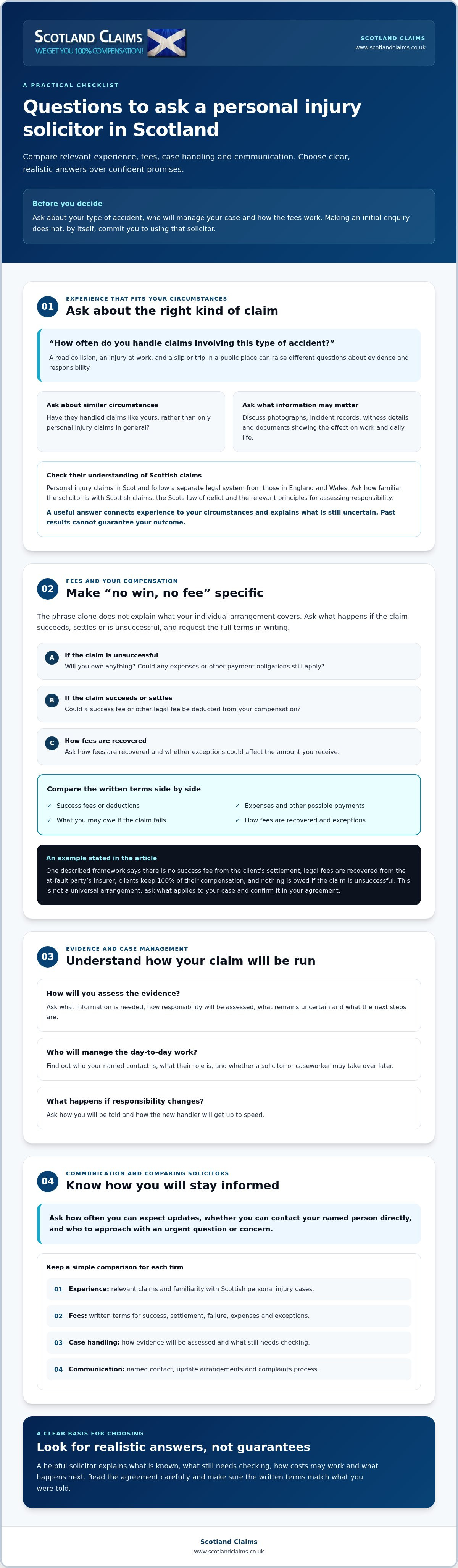
How to compare personal injury lawyers in Scotland before choosing
Comparing solicitors is easier when you ask each firm the same questions and record the answers. Look for clear explanations tied to your circumstances, not just confident sales language. If an answer about fees, responsibility or communication is vague, ask a follow-up and request written clarification before signing an agreement.
What should a useful solicitor comparison checklist include?
Use this simple grid to capture details that could affect your experience of the claim. Write down each firm’s answer in your own words and note anything you still need them to confirm. Asking consistent questions makes differences easier to spot.
Relevant expertise: Experience with your type of accident and circumstances.
Named contact: Who manages the claim and handles the day-to-day work?
Fees: What could be deducted, what expenses may apply and what happens if the claim fails?
Updates: How often will you hear from the firm, and who can you contact?
Complaints: What is the firm’s process for raising a concern?
Next step: What will happen after the initial assessment?
These points turn the questions to ask a personal injury lawyer Scotland into a practical comparison, rather than a test of who gives the most persuasive first impression. Keep unanswered questions on your list. Ask for written answers where the detail matters, particularly if you’re unsure what an agreement allows or who is responsible for your case.
How can you check regulation and raise concerns in Scotland?
Ask which regulated legal practice will act for you and who has responsibility for the case. Check current solicitor and firm details directly with the Law Society of Scotland. You can also check current complaint guidance with the relevant Scottish bodies, including the Law Society of Scotland and the Scottish Legal Complaints Commission. Confirm the process that applies to your circumstances, as routes and guidance can change.
Before choosing, compare the written agreement with what you were told. If the firm’s answers don’t explain who will do the work, how fees are handled or how concerns can be raised, ask for clarification. You don’t need to proceed until you understand the terms and feel able to make an informed choice.
Choosing a personal injury lawyer in Scotland and taking your next step
Choose a solicitor who can explain their relevant experience, the written fee terms and who will manage your case. You should also receive a realistic account of what is known, what needs checking and what may happen next. These questions are there to help you assess whether the solicitor understands your circumstances, not to encourage you to decide under pressure.
What answers should give you confidence to proceed?
Look for direct answers about your case handler, evidence, communication and fees. A solicitor should explain uncertainty and assess prospects without guaranteeing a particular result. Before proceeding, read the written agreement carefully and ask about any term you don’t understand. Compare how clearly each firm explains its approach, rather than relying on polished sales language or pressure to sign.
Scotland Claims Injury Lawyers states that its 100% compensation model means it doesn’t deduct a success fee from the client’s settlement and recovers legal fees from the at-fault party’s insurer. Treat this as an arrangement to examine, not a substitute for checking your own written terms. Ask what applies to your case, including any exceptions, so you understand the agreement before committing. You can also explore personal injury lawyers in Scotland and the firm’s approach.
What to prepare before requesting an assessment
A few notes can make an initial assessment more focused. Write down when and where the accident happened, what type of injury you suffered and how it has affected you. Gather any available photographs, records or witness details if you have them, but don’t delay asking questions because information is missing. The solicitor can explain what may be useful and what still needs to be checked.
Before contacting a Scottish personal injury firm, prepare questions about fees, who will manage the claim, how you’ll receive updates and what the next step involves. Scotland Claims Injury Lawyers offers a free, no-obligation claim assessment. Use it to ask for clear answers and consider whether the proposed approach is right for you.
Choose with clear terms and confidence
The questions to ask a personal injury lawyer Scotland help you check what matters: experience with claims like yours, who will manage your case and how the solicitor will explain progress and risks. Compare written fee terms carefully. Ask about deductions, expenses and what you may owe if the claim doesn’t succeed before you agree to proceed.
Scotland Claims Injury Lawyers states that clients keep 100% of their compensation, pays no success fee from the client’s settlement and owes nothing if a claim is unsuccessful under its no win, no fee framework. Check the agreement to understand exactly what applies to you. The firm also states it is authorised and regulated by the Law Society of Scotland, so you can verify current details independently.
Take the time you need to ask questions and review the answers. Clear terms and a solicitor who understands your priorities can help you move forward with greater confidence.
Frequently Asked Questions
What questions should I ask a personal injury lawyer in Scotland?
Ask about relevant experience, who will manage your case, how evidence and responsibility will be assessed, how you’ll receive updates and what happens with fees if the claim succeeds or fails. Request clear written terms, including any deductions, expenses and exceptions. A checklist of questions to ask a personal injury lawyer Scotland can help you compare firms consistently. Also ask what the solicitor knows so far, what remains uncertain and what they need to check.
How do I know if a personal injury solicitor is regulated in Scotland?
Ask for the solicitor’s name and the name of the legal practice that would act for you. Check the current solicitor and firm details with the Law Society of Scotland, which regulates solicitors in Scotland. Don’t rely on a firm’s statement alone if you want to confirm its status. Scotland Claims states that its solicitors are authorised and regulated by the Law Society of Scotland. Verify current details independently before proceeding.
Can I change personal injury solicitors after starting a claim?
You may be able to change solicitor, but first check your existing agreement and ask what changing representation could mean for fees, expenses, records and the progress of your claim. Contact the solicitor you’re considering and explain that a claim is already under way. Ask how a change would be managed and whether anything needs to happen before you end your current arrangement. Get the implications explained in writing before making a decision.
What should I ask about no win, no fee charges?
Ask what you would owe if the claim is unsuccessful, whether any expenses or exceptions could apply, and whether a success fee or other deduction comes from your compensation if the claim succeeds or settles. Ask how legal fees are recovered and request the full agreement in writing. The phrase “no win, no fee” doesn’t explain every term. Scotland Claims states that clients pay no success fee from their settlement and owe nothing if a claim fails under its framework.
How can I compare personal injury lawyers in Scotland?
Ask each firm the same questions, then compare its relevant experience, named case handler, fee terms, update arrangements and process for raising concerns. Record what the solicitor says about evidence, possible risks and the next step. Specific, understandable answers are more useful than broad assurances. Before choosing, check that the written agreement reflects what you were told and ask for clarification on any unclear fee, responsibility or communication arrangement.
Will a personal injury lawyer guarantee that my claim will succeed?
No solicitor should promise that your claim will succeed or guarantee a particular compensation amount. They can assess the information available, explain the prospects and identify what still needs to be investigated. The assessment may change as evidence develops or the other side responds. Ask what supports the solicitor’s view, what uncertainties remain and how you’ll be told if the position changes. Be cautious of assurances that don’t explain the risks or limits.