
Could starting physiotherapy after an accident help your recovery without putting your injury claim at risk? If you’re claiming for physiotherapy after an accident in Scotland, it’s understandable to wonder whether treatment you arrange yourself can be connected to your injuries. Treatment costs may form part of a claim, but reimbursement isn’t automatic.
The key is the link between the accident, your injury and the treatment. A clear record of why physiotherapy was recommended and what it involved can help explain that link. Keep receipts and appointment records, and note any advice you receive about treatment and progress.
This guide explains when physiotherapy costs may be relevant to a personal injury claim, what evidence can help support them and what to discuss with a solicitor. It also covers practical steps for recording NHS or privately funded treatment expenses after a road, workplace or public-place accident in Scotland. You’ll have a clearer basis for deciding what to do next, without assuming that treatment costs or compensation are guaranteed.
Key Takeaways
- When claiming for physiotherapy after an accident, the treatment’s connection to your injury and the circumstances of your claim matter.
- Clinical advice and accurate records can help explain why you had treatment and how it fits your recovery.
- Consider NHS and private physiotherapy in light of clinical advice, access and your circumstances. Don’t delay appropriate care while legal funding questions are unresolved.
- Keep invoices, appointment details and relevant accident documents together so you can discuss them as part of your claim.
- Scotland Claims Injury Lawyers can assess how treatment may relate to your claim. You pay no success fee, and you owe nothing if your claim is unsuccessful.
Can you claim for physiotherapy after an accident in Scotland?
Physiotherapy costs may be relevant to an injury claim if the treatment relates to an injury caused by the accident. Whether they can be included depends on the circumstances, supporting medical evidence and the wider claim. No appointment or course of treatment is automatically covered.
It helps to distinguish treatment expenses from compensation for the injury itself. Physiotherapy invoices record costs you’ve incurred. Compensation may also take account of pain, symptoms and other losses linked to the injury. These are assessed as parts of the overall claim, but one doesn’t guarantee the other. A key consideration is whether the treatment and its cost were reasonable in your circumstances.
When may physiotherapy be connected to an accident claim?
A clear link matters: the accident, injury and treatment should form a consistent account. For example, you might seek physiotherapy for neck pain after a road collision, shoulder symptoms following an incident at work, or a leg injury after a slip in a public place. Physical therapy is a broad healthcare field. In a claim, the relevant issue is how the treatment relates to your particular injury. Medical notes and treatment records can help explain that connection.
The details matter. A solicitor may consider when symptoms began, what a clinician advised, the type and duration of treatment, and whether the costs appear reasonable. Tell clinicians accurately about your symptoms and how the accident happened. Don’t assume every session, or a proposed course, will be accepted as a recoverable expense.
Does starting physiotherapy mean your claim is guaranteed?
No. Seeking treatment doesn’t establish that another party was at fault, prove that the accident caused your injury, or guarantee compensation. Those questions are assessed using the wider evidence, which may include accident details, medical information and accounts from people involved.
Physiotherapy costs are also considered separately from whether you have a valid injury claim. Liability, the link between the accident and your symptoms, and which losses may be recoverable all require a case-specific assessment. In Scotland, reasonable private treatment costs may be considered even where NHS treatment is available, but that doesn’t mean every expense will be recovered. Keep invoices and discuss treatment with a solicitor before assuming how it will affect your claim.
If you’re claiming for physiotherapy after an accident, a solicitor can assess how the treatment fits the facts and evidence of your case. Scotland Claims Injury Lawyers handles claims arising from road accidents, workplace injuries, and slips or trips. Find out more about the firm’s personal injury solicitors in Scotland.
How do medical advice and treatment records support physiotherapy costs?
Clear records can show when your symptoms began, what treatment you received and why it was recommended. They provide a more reliable timeline than trying to remember details much later. For a claim, treatment records can help explain the injury and related expenses, but they don’t prove by themselves that another party was at fault.
Follow suitable clinical advice and describe your symptoms honestly, including how they change over time. If an exercise or treatment causes discomfort, tell the clinician rather than carrying on without advice. Accurate notes help health professionals understand your recovery and can help a solicitor assess how treatment relates to the accident.
What should you record after each physiotherapy appointment?
Keep a simple paper or digital folder, and add documents as you receive them. Useful records include:
- Appointment dates and the physiotherapist’s or clinic’s details.
- Invoices and proof of payment, where available.
- Referral information, treatment plans and recommendations.
- Relevant letters, emails or messages about appointments and treatment.
- A brief personal note about symptoms, changes in what you can do and everyday activities affected.
For example, note whether pain affects walking, lifting, sleep or work, and whether that changes after treatment. Keep original documents and don’t alter or recreate records. If something is missing or incorrect, ask the person or organisation that created it about correcting the record rather than amending it yourself.
Why should treatment information be accurate and consistent?
A clear account helps clinicians and legal professionals understand your symptoms and recovery timeline. If you’re unsure about a date or detail, say so instead of guessing. If you notice a mistake in a record, raise it promptly and explain what you believe is accurate. Don’t overstate symptoms or leave out relevant changes, even if they seem minor.
Keep clinical information separate from legal conclusions. A physiotherapist can record symptoms, findings, treatment and progress. Whether the accident caused the injury, who may be responsible and which losses can be claimed are separate questions for legal assessment. The Chartered Society of Physiotherapy provides information about physiotherapy and the profession. Your own clinical records document your care.
If you’re claiming for physiotherapy after an accident, organised records make it easier to discuss the treatment timeline and expenses with a solicitor. Learn more about discussing an accident injury claim on Scotland Claims Injury Lawyers’ website.
NHS or private physiotherapy: what should you consider after an accident?
There isn’t one right treatment route for everyone. Your options may depend on clinical advice, appointment access, the arrangements available and your personal circumstances. Don’t postpone appropriate care just because you’re unsure whether treatment will be funded or whether its cost could form part of a claim. Those are separate questions from getting advice about your health.
Routes into physiotherapy vary in Scotland. Care Information Scotland explains options for accessing physiotherapy in Scotland, including NHS and self-referral pathways. Availability and arrangements depend on the relevant service and your circumstances. Private treatment is another route, but don’t assume it will always be quicker or more suitable. Discuss your symptoms and treatment needs with a clinician, then consider which arrangements are practical for you.
What questions can help you understand your treatment options?
Before deciding, ask the clinician what treatment is recommended, how often appointments may be needed and when your progress should be reviewed. Clarify what to do if symptoms change or treatment isn’t helping. If you’re considering private care, check what charges apply, what each appointment includes and how payment works. Keep written details of the arrangement so you can refer back to them.
Consider the full picture: access, appointment timing, clinical recommendations, travel and your ability to attend. Choose based on your needs and circumstances, not an assumption that one route will produce a particular outcome in an injury claim.
Can physiotherapy costs be included if you pay privately?
Possibly. Paying privately doesn’t, by itself, mean the expense will be recoverable. In Scotland, reasonable private treatment costs may be considered even if similar treatment is available through the NHS. Important factors include whether the treatment relates to the accident injury, whether there was a sound clinical reason for it, and whether the amount claimed reflects costs you actually incurred.
Keep invoices and payment records, along with information explaining the recommended treatment and its purpose. A solicitor can assess how those details fit the wider evidence and whether the expense may be included in your claim. Don’t treat insurer payment or reimbursement as certain, and don’t delay clinically appropriate care while funding questions are being considered.
If you’re claiming for physiotherapy after an accident, consider access and clinical advice alongside the practical cost arrangements. You can make a treatment decision based on your health needs while seeking case-specific legal advice about how a private expense may relate to your claim.
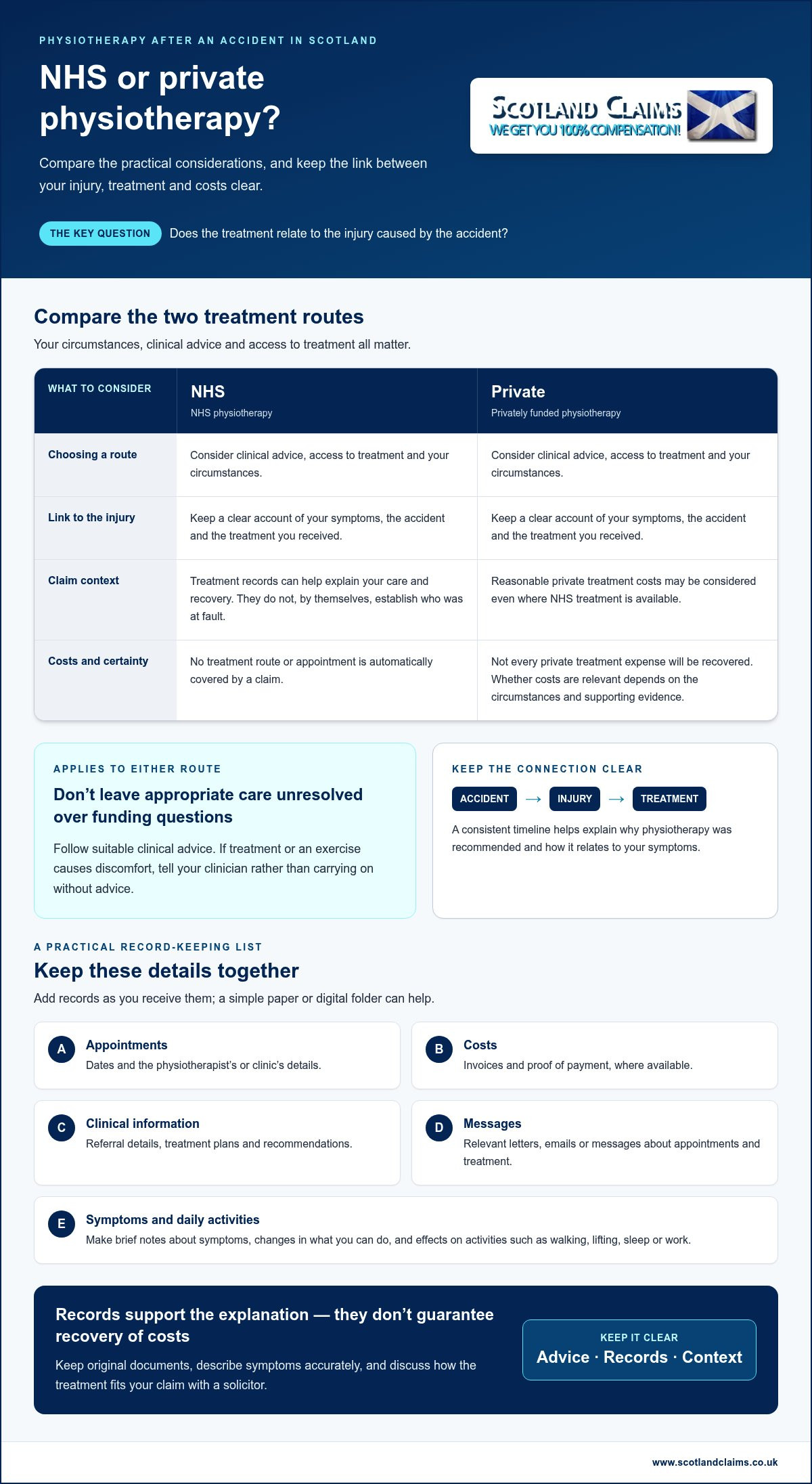
What steps should you take to include physiotherapy in an accident claim?
A practical process helps you keep treatment information alongside evidence about the accident and its effects. Physiotherapy receipts matter, but they’re only one part of the picture. When claiming for physiotherapy after an accident, a case may also be assessed using medical information, details of how the accident happened and evidence of its impact on your daily life.
A simple checklist for treatment and claim records
Use this sequence to get organised. You don’t need every document before asking for advice.
- Seek appropriate care. Follow suitable clinical advice and explain your symptoms accurately. Note when symptoms started and any changes.
- Write down the accident details. Record the date, location and circumstances. Keep any witness details, incident reference or correspondence about what happened.
- Collect treatment information. Save relevant medical notes, physiotherapy appointment records, treatment recommendations and plans.
- Keep expense records. Preserve invoices and proof of payment where available. Store documents as you receive them rather than relying on memory later.
- Track the effect on everyday life. Note appointments, changes in symptoms and activities affected, such as walking, lifting, sleep or work.
Keep original records and organise copies in one place. Don’t edit or recreate documents. If a detail is wrong, contact the person or organisation that issued the record to ask about correcting it.
When should you get legal advice about treatment costs?
Consider seeking advice if physiotherapy is ongoing, expenses are building up or you’re unsure how treatment relates to your claim. A solicitor can organise the relevant information and assess it alongside the wider evidence. Early guidance can clarify what may need further support, but it can’t guarantee that a particular cost will be recovered or determine the outcome.
For a Scottish personal injury claim, read about injury lawyers in Scotland. Scotland Claims Injury Lawyers' personal injury compensation calculator can provide an estimate of potential compensation. It isn’t a guaranteed valuation, and the value of an individual claim depends on its circumstances and evidence.
Discuss your accident injury claim with Scotland Claims Injury Lawyers to get a no-obligation assessment.
How Scotland Claims can help with physiotherapy after an accident
If you’re claiming for physiotherapy after an accident, Scotland Claims can assess how your treatment relates to a personal injury claim. The assessment considers the circumstances of the accident, your injury and the available evidence. It can help clarify how treatment information and costs fit into your case, but it can’t guarantee that a claim will be accepted or that physiotherapy expenses will be recovered.
What information helps start a claim assessment?
You don’t need every record in hand before discussing your situation. A brief account of what happened, where and when it took place, and how you were injured is a useful starting point. Explain what treatment you’ve had so far and whether physiotherapy is ongoing or has been recommended.
If available, gather relevant medical and physiotherapy records, appointment details, invoices, receipts and documents about the accident. These help build a clearer picture, but missing paperwork shouldn’t stop you discussing the circumstances. A solicitor can consider what information may be relevant as the assessment progresses.
An initial assessment is an opportunity to discuss how the accident and treatment may fit into a personal injury claim. It isn’t a promise that another party will be found responsible or that compensation will be awarded. The strength of any claim depends on its individual facts and evidence.
How does the no-win, no-fee approach address fee concerns?
Scotland Claims works on a true no-win, no-fee basis. If your claim is unsuccessful, you owe nothing. There is no success fee, so you don’t pay the firm’s legal fees from your own pocket if the claim doesn’t succeed.
You keep 100% of your compensation. Scotland Claims recovers its legal costs from the at-fault party’s insurer, rather than deducting them from your settlement. This fee arrangement doesn’t guarantee that your claim will succeed or that every treatment cost will be included. Whether physiotherapy expenses are relevant and recoverable still depends on the facts and evidence in your case.
If you’re unsure whether your treatment may be relevant, discussing the accident, injury and physiotherapy with a solicitor can help clarify your next step. Scotland Claims’ solicitors are authorised and regulated by the Law Society of Scotland and support personal injury claims across Scotland.
Start with a Scottish injury claim assessment.
Take a clear next step with your treatment records
Physiotherapy costs may be relevant to an injury claim when treatment relates to the accident, but recovery isn’t guaranteed. Keep your treatment records, receipts and accident information together. Medical advice and clear evidence can help explain why you had physiotherapy and how it fits your circumstances.
If you’re considering claiming for physiotherapy after an accident, Scotland Claims can assess how your treatment may relate to a personal injury claim. You keep 100% of your compensation, with no success fee deducted from your settlement, and owe nothing if your claim is unsuccessful. The firm’s solicitors are authorised and regulated by the Law Society of Scotland.
You don’t need every answer or document ready to take the first step. Discuss what happened, your injury and your treatment with Scotland Claims online or through its 24-hour freephone helpline on 0800 611 8132.
Frequently Asked Questions
Can I claim for physiotherapy after a car accident in Scotland?
Possibly, if the physiotherapy relates to an injury caused by the collision and the expense is reasonable in your circumstances. When claiming for physiotherapy after an accident, treatment records, clinical advice and evidence about how the accident happened may all be relevant. A receipt alone doesn’t establish that another party was at fault or guarantee reimbursement. A solicitor can assess treatment costs as part of the wider injury claim.
Do I need a doctor’s referral before starting physiotherapy after an accident?
Not always. In Scotland, access routes vary, and some services allow self-referral whilst others may involve a GP or another clinician. The right route depends on the service and your circumstances. Seek appropriate clinical advice about your symptoms and treatment needs. Keep any referral, recommendation or treatment plan you receive, as it may help explain why physiotherapy was appropriate and how it relates to your injury.
Can I claim for private physiotherapy costs after an accident?
Private physiotherapy costs may be included in an injury claim if they relate to the accident injury and are reasonable. The availability of NHS treatment doesn’t automatically prevent a reasonable private treatment expense from being considered. However, paying privately doesn’t guarantee reimbursement. Keep invoices and proof of payment, along with information about the clinical reason for treatment, and get case-specific legal advice before assuming the expense will be recovered.
Who pays for physiotherapy while my accident claim is ongoing?
There isn’t one payment arrangement for every claim. NHS treatment is provided through the NHS, while privately arranged treatment may involve charges under the arrangement you agree to. Don’t assume an insurer will pay private fees upfront or reimburse them later. Before committing to private treatment, clarify the payment terms and keep the details in writing. A solicitor can explain how those costs may be considered in your particular claim.
What evidence do I need to claim physiotherapy expenses?
Keep physiotherapy appointment details, treatment plans, clinical recommendations, invoices and proof of payment where available. Medical records can help show when symptoms began and why treatment was advised. Also preserve accident-related documents, such as an incident reference or relevant correspondence, and note how symptoms affect everyday activities. The evidence needed depends on the circumstances, and physiotherapy receipts alone won’t prove fault or establish the full value of a claim.
Will claiming physiotherapy affect my compensation claim?
Seeking appropriate physiotherapy doesn’t itself establish fault or guarantee compensation. Treatment information may help explain your symptoms and recovery, but the claim is assessed using wider evidence, including how the accident happened and whether it caused your injury. Describe symptoms accurately and follow suitable clinical advice. A solicitor can assess how treatment records and costs fit your case. Don’t assume that starting treatment will weaken or guarantee the claim.
How long do I have to claim for physiotherapy after an accident in Scotland?
The time limit generally applies to the personal injury claim, not to physiotherapy expenses as a separate claim. In Scotland, a claim usually must be raised in court within three years of the accident. In some cases, the period may run from when you became aware that your injury was significant and attributable to someone else’s fault. Different rules can apply to children and other circumstances, so seek legal advice promptly.