
For most UK personal injury claims, the deadline is three years from the accident or the date you became aware of the injury, according to The National Archives. Missing it can put your chance to claim at risk, making timing one of the most important mistakes to avoid in a personal injury claim.
It’s understandable to focus on recovery and assume the details can wait. But what you post online, the medical care you receive and how you report the accident can all affect the evidence supporting your claim.
This guide explains how to reduce those risks, including keeping accurate records, avoiding a settlement before you understand the extent of your injuries, and getting advice about deadlines. You’ll also learn what information can help build a clear account of what happened and how the injury has affected your life.
Key Takeaways
- Public social media posts can be read without context, so think carefully about what they may suggest about your injuries and recovery.
- Before considering an early settlement, understand how your injury may affect your future treatment, work and daily life.
- Medical records, symptom notes and receipts can help show how the accident affected you, even if you didn’t seek treatment straight away.
- Reporting an accident promptly can help create a clear record of what happened and when.
- Most UK personal injury claims must be made within three years of the accident or the date you became aware of the injury, according to The National Archives.
1. Can social media posts really affect my claim?
Yes. Public social media posts may be considered alongside your account of the accident, medical records and other evidence. A photo showing you out and about, for example, could be misunderstood if it doesn’t show your pain, restrictions or recovery afterwards. Avoid posting publicly about the accident or your injuries, and don’t exaggerate or delete relevant information. Tell your solicitor about posts that might appear inconsistent with your account.
For a personal injury claim in Scotland, give your solicitor evidence that helps explain what happened and how it affected you. This can include photographs or videos of the scene, your injuries and property damage; witnesses’ names and contact details; accident reports; and GP or hospital records. Share what you have, even if it seems incomplete. Your solicitor can organise the evidence and identify what further records may help support your account.
Evidence is not limited to photographs. A solicitor can seek relevant CCTV footage, request accident reports and gather witness accounts where available. They can compare these with your medical records and your description of the event. Timing matters: a record made close to the accident may help clarify when symptoms began, while later treatment notes can show how they developed. Be accurate. If you can’t remember a detail, say so rather than guess.
Insurance claims handlers may examine whether your reported injuries are consistent with medical records, witness accounts, test results and treatment. They may also consider how the injury affected work or everyday activities, and whether public posts appear to conflict with your account. This doesn’t mean one photograph decides a claim. Context matters, so explain the circumstances of any post or activity that could be misread.
Your solicitor can also help record financial losses linked to the accident. Provide receipts, invoices and transaction details for expenses, alongside work records showing time off or lost earnings. Tell them about paid care and help from family or friends, and explain what support involved. Keeping these details together helps connect each expense or work impact to your injury and recovery.
If blame is shared, contributory negligence can reduce compensation to reflect your share of responsibility. Your solicitor will assess the evidence about how the accident happened and the actions of everyone involved. A no-win, no-fee agreement means legal fees depend on the outcome under the terms you sign. Before signing, ask what happens to expenses and other costs if the claim succeeds or fails, and whether any deductions come from your compensation.
Avoiding an early settlement before the injury's full extent is known
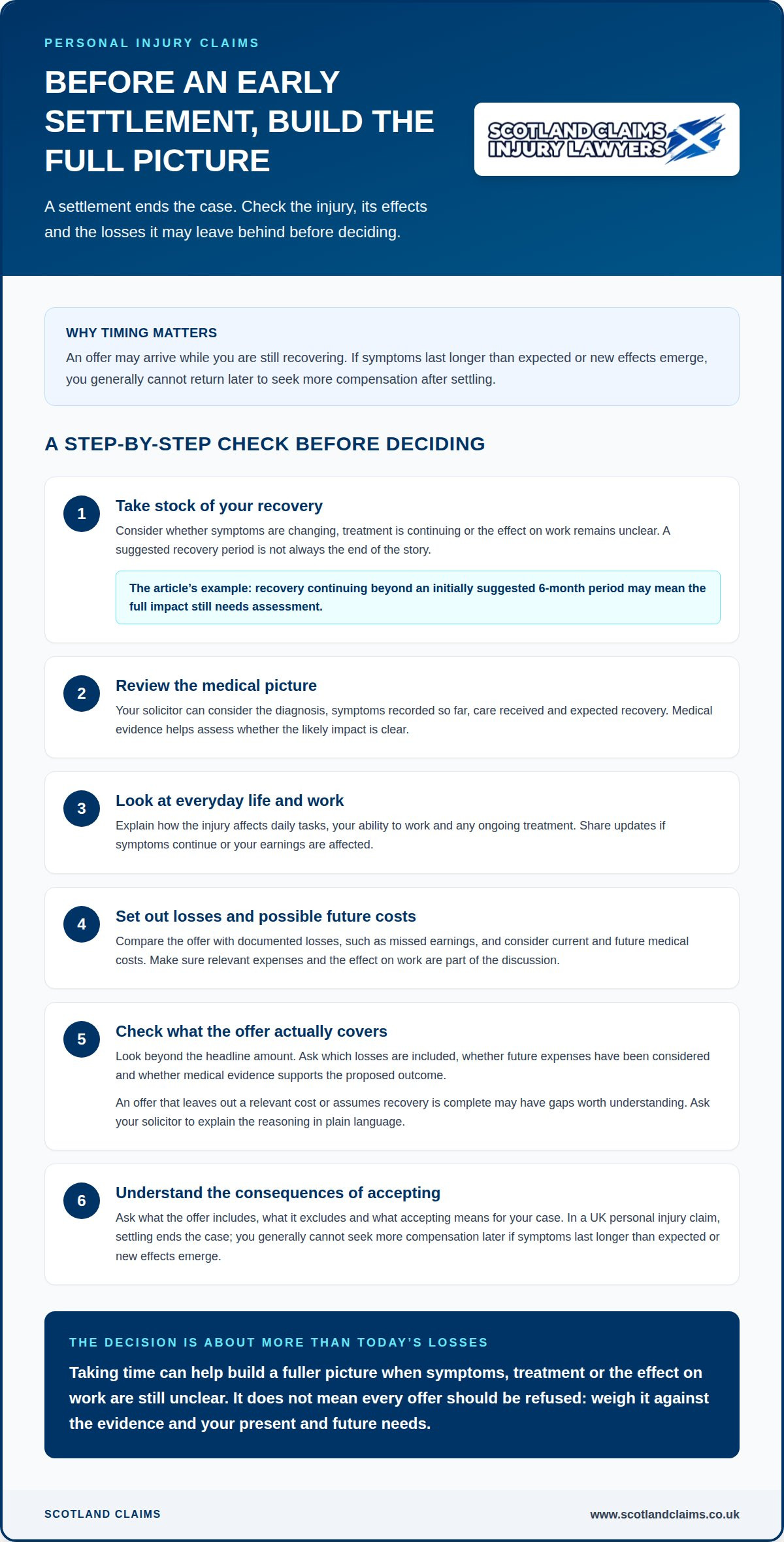
An offer can arrive before you know how far your recovery will go. Take care before accepting: in a UK personal injury claim, settling ends the case. You generally can’t return later to seek more compensation if symptoms last longer than expected or new effects emerge. That makes an early settlement a decision about your future as well as your immediate losses.
Your solicitor can assess the medical evidence and ask how the injury affects daily life, work and treatment. They can consider the diagnosis, symptoms recorded so far, care received and the expected recovery. A suggested recovery period is not always the end of the story. If recovery continues beyond an initially suggested 6-month period, the injury’s full impact may still need assessment before settlement.
For example, an offer made while you’re still experiencing pain may not reflect the effect on your ability to work or manage ordinary tasks. Your solicitor can compare the offer with documented losses, such as missed earnings, and consider current and future medical costs. They can also examine whether the available evidence gives a clear picture of the injury’s likely long-term impact.
Assessing an offer means looking beyond its headline amount. Your solicitor can review which losses it appears to cover, whether future expenses have been considered, and whether medical evidence supports the proposed outcome. If an offer leaves out a relevant cost or assumes recovery is complete, those gaps deserve attention before you decide. Ask your solicitor to explain the reasoning in plain language.
Taking time can be sensible when symptoms are changing, treatment is continuing or the effect on work remains unclear. It gives your solicitor a chance to build a fuller picture instead of relying only on what is known soon after the incident. This does not mean every offer should be refused. It means weighing it against the evidence and your present and future needs before accepting.
Before making a decision, ask your solicitor to set out what the offer covers, what it excludes and what accepting would mean for your case. Share updates about continuing symptoms, changes to treatment and any effect on your earnings. Clear details help your solicitor assess whether the proposed settlement reflects the injury and its consequences, rather than simply the losses visible when the offer was made.
A personal injury compensation estimate can help you consider what questions to raise about an offer. Treat it as a starting point for discussion, not a substitute for assessing your medical evidence, documented losses and future needs before settlement.
A delay in seeking medical treatment doesn’t automatically mean you can’t make a personal injury claim. It can make the connection between the accident and your injury harder to establish, so arrange medical attention as soon as possible. Explain when symptoms began, why you waited and whether they changed. A GP or hospital record can help show your condition and when you sought care.
Give your solicitor copies of medical records, appointment details and treatment notes. These can show how symptoms developed and what care you received. Follow the treatment plan and attend scheduled appointments where possible. If pain, restricted movement or another symptom affects daily activities, record what happened and when. For example, note if an injury made walking, sleeping or work tasks difficult.
A clear symptom record adds detail between appointments. Write down changes in pain, mobility, sleep and routine, along with treatment dates and recovery milestones. Tell your solicitor about improvements as well as difficulties. They can organise your account alongside medical evidence, helping explain how the injury developed rather than relying on a single description made soon after the accident.
Keep receipts, invoices and transaction details for expenses caused by the injury. Examples include travel to appointments, prescribed items or paid help with tasks you could previously manage. Your solicitor can organise these records and connect each expense to the accident. Tell them about care provided by family or friends too, including the tasks they helped with and how the injury affected your usual routine.
Lost earnings need a clear record too. Give your solicitor relevant work records showing time away, reduced hours or changes to duties, alongside details of how the injury affected your ability to work. They can use this information with medical records to document the impact on income. Keep communications about absence or changed duties, such as an email to your manager confirming dates away from work.
Share accident-related communications with your solicitor, including emails, letters and messages from an employer, property manager or insurer. They can record who contacted you, when it happened and what was discussed. If the other party’s insurer contacts you, remember that it acts for the opposing party. Get legal advice before giving a detailed account or discussing a settlement, and pass the insurer’s contact details to your solicitor.
Your solicitor can bring these strands together: medical treatment, symptoms, expenses, lost earnings and communications. Give them accurate information, including any gap between the accident and treatment. A dated note explaining the delay can help them understand the sequence of events and address questions about it. Prompt care and organised records can make the evidence of your injury and its effects clearer.
Reporting accidents
Report an accident promptly to the person or organisation responsible for recording it. At work, tell your employer and ask for the incident to be entered in the accident book or equivalent record. If you’re injured in a shop or other public place, notify the property owner or manager. After a road traffic accident, consider notifying the relevant people about what happened. These steps help establish when and where the incident happened.
Safety comes first at the scene. Once it’s safe, your solicitor can help gather details about what happened, where it occurred and who was present. They can use your account to identify relevant witnesses and records, then compare the information with the accident report and medical evidence. Ask for a copy of any report filed. If details are missing or inaccurate, tell your solicitor what needs clarification.
A solicitor can help create a clear timeline from the accident through treatment and recovery. This may include the date and location, when symptoms began, medical appointments attended and how the injury affected daily life. For example, a note that pain worsened after a particular event can be considered alongside treatment records. Keeping these details together helps your solicitor present a consistent account throughout the claims process.
There are also time limits, so reporting an accident and getting advice promptly matter. Most UK personal injury claims must be made within three years of the accident or the date you became aware of the injury, according to The National Archives. The deadline can depend on when the injury became apparent, not simply when symptoms first felt severe. A solicitor can help establish which date applies to your circumstances.
Criminal injury claims have a different deadline. The Criminal Injuries Compensation Authority says these claims must be made within 2 years of the attack. Don’t assume this period applies to a road traffic accident, workplace injury or fall. The relevant deadline depends on the type of claim, and waiting to report or seek advice can leave less time to act.
When you speak to a solicitor, provide the accident report, details of the people you notified and any correspondence about the incident. Include dates of medical appointments and changes in your condition. If you delayed reporting, explain when you did report it and why. Your solicitor can record that explanation, identify any gaps and assess what evidence may help address them.
Accurate reporting supports more than a formal record. It can help connect the location, event, injury and treatment in a clear sequence. For example, an employer’s accident book entry may be considered alongside your account and medical records. A solicitor can advise on reporting steps for your circumstances and help organise the evidence, while keeping the applicable deadline in view.
5. Personal injury claim filing deadlines
For most personal injury claims in England and Wales, Scotland, and Northern Ireland, the deadline is three years from the accident or the date you became aware of the injury, according to The National Archives. The period can therefore depend on when you knew an injury was connected to the accident, not only the accident date. If you’re unsure which date matters, get legal advice promptly.
A limitation period is a deadline for making a claim. Don’t assume that reporting an accident, contacting an insurer or beginning discussions means the deadline has been met. These steps may help document events, but they aren’t a reason to delay advice about formally making a claim. A solicitor can consider the relevant dates and explain what action your situation requires.
Write down the accident date and when you first understood that an injury might be related to it. For example, symptoms may become apparent after the incident rather than immediately. Keep dates of medical appointments and relevant communications together. These details can help a solicitor assess the timeline and identify which deadline may apply.
Deadlines can vary with the type of claim and the circumstances. The three-year period is described as applying to most UK personal injury claims, not every possible claim. Criminal injury claims, for instance, follow a separate deadline. The Criminal Injuries Compensation Authority says those claims must be made within 2 years of the attack. Don’t apply that period to an accident claim.
Failing to act within the applicable time limit can mean losing the opportunity to seek compensation. That’s why waiting until treatment ends or settlement discussions finish can be a serious pitfall. Assuming there will be time to deal with the deadline later is one of the mistakes to avoid in a personal injury claim. A successful claim depends on more than meeting a deadline, but missing it can prevent the claim from progressing.
Common mistakes include treating the accident report as the start and end of the process, relying on memory for dates, or assuming the same deadline covers every claim. These are further mistakes to avoid in a personal injury claim, especially if symptoms appeared later or an insurer has already contacted you. Give your solicitor a timeline covering the incident, first symptoms, diagnosis and relevant correspondence. They can identify unanswered questions and explain how the limitation period affects your next steps.
Acting early gives your solicitor more time to consider the applicable deadline and organise the information needed for your claim. Share any history of insurer contact or discussions, even if you believe the matter has already started. Don’t wait for a reminder. Ask for legal advice as soon as you’re considering a personal injury claim, so the relevant dates can be assessed while there’s time to act.
Scotland Claims Injury Lawyers: Personal Injury Compensation Calculator
Scotland Claims Injury Lawyers can help you understand your options after an injury in Scotland. Its Personal Injury Compensation Calculator offers a starting point for considering potential compensation, while a solicitor can assess the evidence and circumstances of your claim.
Turn to the firm for support with a road traffic accident, workplace injury or slip or trip claim that happened in Scotland within the past three years. Its no-win, no-fee arrangement includes a 100% compensation promise: fees are recovered from the at-fault party, and the entire settlement is passed to you.
If you want to discuss your situation and the next steps, contact Scotland Claims Injury Lawyers.
Take the next step with confidence
A claim is easier to assess when a solicitor understands your circumstances, concerns and priorities from the outset. Be open about anything that may seem difficult to explain, including uncertainty over how the accident happened or changes in your symptoms. Clear, honest information helps shape the advice around your situation.
One of the mistakes to avoid in a personal injury claim is assuming you must handle every decision alone. If your injury followed a road traffic accident, workplace incident or slip or trip in Scotland, Scotland Claims Injury Lawyers can help with the relevant claim. Its Personal Injury Compensation Calculator can also offer a starting point for considering compensation, while legal advice can address the evidence and circumstances behind your case.
You can take the next step by discussing what happened and what support you need. Scotland Claims Injury Lawyers offers free, no-obligation claim assessments, so you can understand your options without pressure to decide before you’re ready.
You deserve clear information as you decide what comes next. Start with the facts of your situation and take the process one step at a time.
Frequently Asked Questions
Need support with your personal injury claim?
Yes. Scotland Claims Injury Lawyers handles road traffic accident, workplace injury and slip or trip claims for people injured across Scotland. The firm is regulated by the Law Society of Scotland. Share where and how the accident happened, what injury you suffered and whether an insurer has contacted you. This helps the firm understand what claim support may fit your circumstances.
Can social media posts really affect my claim?
Yes. Public posts can be considered alongside other evidence, particularly if a photograph or comment seems inconsistent with the effects you describe. A picture from a day out, for instance, may not show pain or limitations afterwards. Avoid discussing your claim publicly, and be honest with your solicitor about relevant posts. Explain the context rather than assuming a post speaks for itself.
Can I still claim if I didn’t seek immediate medical attention?
A delay doesn’t automatically prevent you from making a claim, but it can make the link between the accident and your injury harder to establish. Arrange medical treatment as soon as possible and explain when symptoms began and why you waited. Tell your solicitor about the delay and any changes in your condition. A GP or hospital record can help document your injury and treatment.
How Can Communication With Your Lawyer Affect Your Claim’s Success?
Clear, honest communication gives your solicitor a fuller account to assess. Tell them about pre-existing conditions, details you’re unsure of and any change in your symptoms or ability to work. If you don’t remember something, say so rather than guessing. Forward letters or messages from an insurer, employer or property manager promptly, so your solicitor can understand what was said and keep the correspondence with your case records.
How Can Failing To Document Injuries & Evidence Reduce Your Settlement?
Missing records can make it harder to show how an injury developed or affected your routine. For example, without dated treatment information, it may be less clear when symptoms changed or which appointments followed the accident. Keep copies of documents you receive, including appointment letters and work correspondence. If a record is missing, tell your solicitor what happened and when, so they can assess the available evidence.
How long do I have to report an accident?
Report it promptly to the relevant person, such as your employer or the manager of the premises where you fell. Reporting creates a record, but it’s separate from formally making a compensation claim. The National Archives says most UK personal injury claims must be made within three years of the accident or when you became aware of the injury. Ask a solicitor to assess which date applies to your case.
Should I accept the first offer from an insurance company?
Don’t accept simply because an insurer made an offer quickly. Ask your solicitor to explain what the proposed settlement covers and whether it reflects the evidence about your injury and losses. Consider whether treatment is continuing or your ability to work has changed. Once you accept a personal injury settlement, the case ends, so you can’t later seek more compensation if the injury lasts longer than expected.
What Can Go Wrong If You Accept a Quick Settlement Offer?
Accepting a quick settlement closes your case, even if symptoms continue or the injury later affects work and daily activities. You can’t reopen it to seek more compensation for those later effects. Before agreeing, ask your solicitor to explain what losses the offer addresses and whether your recovery is sufficiently clear. A rushed decision can leave future treatment needs or longer-term impacts outside the settled claim.