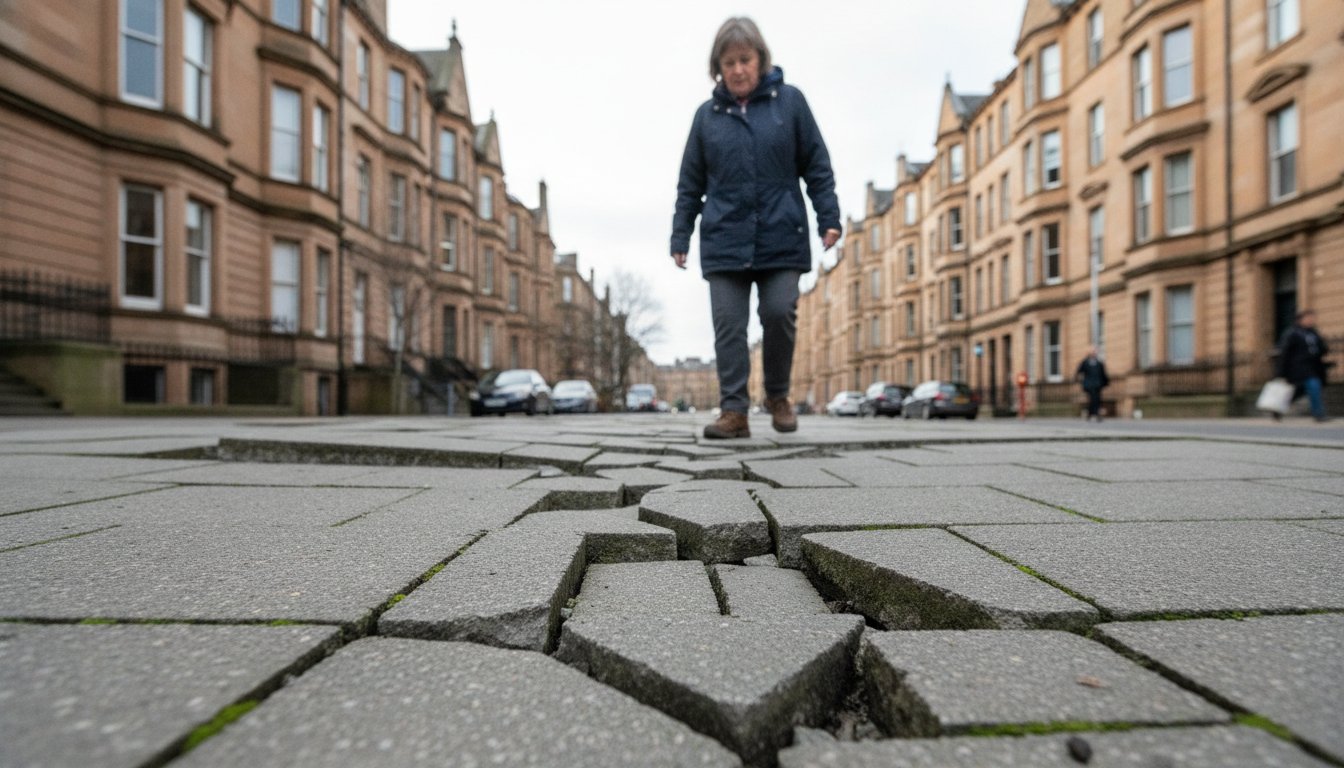
Did you know that 29% of local 'A' roads in Scotland require maintenance, compared to just 5% in England? This neglect frequently leads to serious injuries, forcing many people to consider a pavement trip claim scotland after a painful fall. If you are currently dealing with a broken wrist or a twisted ankle, you likely feel the weight of financial stress from time off work. You may also feel unsure if the pavement defect was significant enough to hold the council responsible for your suffering.
We are here to tell you that you don't have to face this alone or settle for less than you deserve. This guide explains how to hold negligent councils or landowners accountable whilst ensuring you keep 100% of your settlement. You will learn how to secure full compensation for your injuries and lost earnings without the burden of traditional success fees. Our approach prioritises your financial recovery, ensuring the law works for you rather than against you.
We will walk you through the updated 2026 compensation guidelines and provide a clear, risk-free path to getting your life back on track through a straightforward no-win-no-fee process.
Key Takeaways
- Identify the '25mm rule' used by Scottish councils to determine if a pavement defect is legally actionable.
- Understand your rights under the Roads (Scotland) Act 1984 and how to launch a pavement trip claim scotland against those responsible.
- Learn how to gather critical evidence, such as scaled photographs and witness statements, to overcome council inspection defences.
- Distinguish between general and special damages to ensure you are fully compensated for both physical pain and financial losses.
- Discover how to secure 100% of your compensation by using a specialist solicitor who charges zero success fees.
Pavement Trip Claims in Scotland: Knowing if You Have a Case
A pavement trip claim scotland is a formal legal process designed to hold councils or private landowners accountable for negligence. It is rooted in the Scots law of delict, which ensures that those who fail in their duty of care must compensate the injured party. If a walkway is poorly maintained and causes you to fall, you have a right to seek justice. This is not about 'easy money'. It is about recovering the costs of your medical care and lost wages whilst ensuring the hazard is fixed for others.
Most Scottish local authorities apply a specific threshold known as the '25mm rule'. This means that for a defect to be legally actionable, the trip hazard must be at least one inch (25mm) high or deep. If a paving slab is raised by less than this, councils often argue it is a minor imperfection rather than a danger. However, we know that even smaller defects can cause catastrophic falls depending on the lighting or the age of the pedestrian. You should never assume your case is too small without an expert assessment.
Common hazards that lead to successful claims include protruding tree roots, missing utility covers, and uneven paving slabs. These incidents are rarely minor. We frequently represent clients suffering from complex wrist fractures, broken ankles, or head injuries. A fall on hard concrete is a violent event. It often leads to long-term pain and significant time off work, making it essential to secure the full 100% compensation you deserve.
Common Pavement Defects That Warrant a Claim
Potholes in pedestrianised areas or tarmac footpaths are a constant issue across Scotland. Loose or rocking paving stones are equally dangerous, creating a 'see-saw' effect that catches walkers off guard. You may also encounter unmarked roadworks or missing manhole covers amongst busy high streets. If you have been injured by any of these hazards, you can find more detailed information on our slip or trip claims page. We specialise in identifying exactly which party is responsible for the maintenance of that specific stretch of ground.
The 3-Year Time Limit for Scottish Injury Claims
In Scotland, you generally have a strict three-year window to raise a court action. This period is known as the 'triennium'. The clock starts ticking from the date the accident occurred. Waiting until the final months of this period is a mistake. Fresh evidence, such as CCTV footage or clear photographs of the defect, is much harder to obtain as time passes. Witnesses may also move away or forget specific details of the event.
Exceptions to this rule apply in specific circumstances. For children, the three-year limit does not begin until their 16th birthday. There are also different rules for those who lack the mental capacity to manage their own affairs. Regardless of your situation, acting quickly gives your solicitor the best chance to build a robust case and secure your settlement.
Who is Liable for a Defective Pavement in Scotland?
Liability for a pavement trip claim scotland depends entirely on where the accident happened. For most public walkways, the responsibility lies with your local authority. Under the Roads (Scotland) Act 1984, councils have a statutory duty to manage and maintain public roads and pavements. This is not a suggestion; it is a legal requirement. If they fail to keep these areas safe, they are liable for the resulting injuries. We ensure they don't ignore this obligation.
However, councils often use a specific legal shield known as the 'Reasonable System of Inspection'. This defence allows them to escape liability if they can prove they have a regular schedule for checking the area. If a council inspected a street three months ago and found no issues, they may argue they were not negligent, even if a defect appeared later. To win, your solicitor must prove the council either knew about the hazard or their inspection system was inadequate. This is why specialist expertise is vital to your success.
Claims Against Local Councils
Identifying the correct local authority is the first step. Whether it is Glasgow City Council or a smaller regional body, each has its own maintenance records. Your solicitor will recover these inspection logs to see exactly when the pavement was last checked. If the records show the council ignored a reported fault, your case becomes significantly stronger. We hold them to the standards the law demands.
Sometimes a council claims the defect was 'new' and they had no way of knowing it existed. We counter this by looking for historical evidence. If residents had previously complained or if the defect shows signs of long-term weathering, the council's defence often crumbles. We don't let them hide behind paperwork when their negligence has caused you physical pain.
Trips on Private Property or Business Premises
Not every walkway is the council's responsibility. Supermarket car parks, retail park pavements, and shop entrances fall under the Occupiers' Liability (Scotland) Act 1960. This legislation requires business owners to ensure their premises are reasonably safe for visitors. If you trip on a cracked tile in a shopping centre, the business owner is the party we hold accountable. These claims often settle faster than those involving local authorities.
Private businesses rely on public liability insurance to handle these incidents. Because their insurers want to avoid costly court battles, they are often more willing to settle valid claims quickly. If you are unsure who owns the land where you fell, you can use our slip or trip claims service to get a definitive assessment of your situation. This insurance ensures that when we win your case, the money is available to pay your settlement in full. You are accessing the insurance cover they are legally required to hold, providing a guaranteed route to the 100% compensation you deserve.
Essential Evidence: Building a Strong Pavement Trip Claim
Success in a pavement trip claim scotland depends entirely on the quality of your evidence. Whilst the council relies on its internal inspection logs, you must have proof of the hazard as it existed at the moment of your fall. This evidence is the foundation of your case. Without concrete data, a claim becomes your word against theirs. We help you build a file that is impossible for insurers to ignore.
Photographs are your most powerful tool. A simple picture of an uneven slab is rarely enough to win a case. You must include a scale to show the exact height or depth of the defect. Placing a 50p coin, a ruler, or even a standard door key next to the hazard provides a visual reference for the court. This proves the defect meets the actionable threshold discussed earlier. Take photos from multiple angles: close-ups for detail and wide shots to show the defect's location relative to landmarks like shop fronts or street signs.
Witnesses and technology provide the independent verification needed to secure your settlement. CCTV footage from nearby businesses is often deleted within 14 to 30 days. Your solicitor can act quickly to request that this footage is preserved before it is lost forever. Similarly, witness statements from people who saw you fall, or neighbours who know the defect has been there for months, are invaluable. Their testimony can dismantle a council's 'reasonable inspection' defence instantly.
The 5-Step Evidence Checklist
- Step 1: Capture clear photos of the defect from at least three different angles, always using a scale for depth.
- Step 2: Document the exact time, date, and weather. Note if rain or poor lighting made the hazard harder to spot.
- Step 3: Report the incident to the local council or landowner immediately. This creates an official paper trail they cannot deny later.
- Step 4: Collect the names and telephone numbers of anyone who witnessed the fall.
- Step 5: Keep a log of all expenses, including taxi receipts for hospital trips and records of missed shifts at work.
The Importance of Professional Medical Assessment
You might feel tempted to 'power through' a twisted ankle or a sore wrist. This is a mistake that can jeopardise your legal case. If you do not seek medical attention immediately, the at-fault party will argue that your injuries were not caused by the trip. A GP or hospital visit creates a permanent record that links your physical trauma directly to the accident site.
Specialist medical reports are used to calculate 'Solatium', the legal term for your pain and suffering. These reports determine the baseline value of your claim. To see where you stand, you can calculate your potential payout using our specialist tool. This ensures you are pursuing a figure that reflects the true impact on your life, moving you closer to a full recovery.

Compensation Payouts: How Much is Your Claim Worth?
Your compensation reflects the physical and financial impact of your fall. In Scotland, we divide this into General Damages and Special Damages. General Damages, known as 'Solatium', cover the actual pain and suffering you endured. Special Damages cover your tangible financial losses. This includes everything from taxi fares to the hospital to the wages you lost whilst recovering at home. We ensure every penny is accounted for so you aren't left out of pocket after a pavement trip claim scotland.
Calculating these losses requires precision. We look at your pre-accident earnings and project any future losses if you cannot return to work immediately. Rehabilitation fees, such as private physiotherapy to speed up your recovery, are also included. By gathering this data, we build a comprehensive valuation that forces insurers to pay the true cost of their negligence.
Average Payouts for Common Pavement Injuries
The Judicial College Guidelines (18th Edition), published on 9 April 2026, provide the framework for assessing injury values in Scotland. These figures have been updated by approximately 8.2% to account for inflation. For a modest ankle injury, such as a sprain or minor fracture, you could receive up to £18,150. If the injury is moderate, the range increases to between £18,150 and £35,130. Severe ankle injuries can reach up to £92,090. Wrist fractures typically settle between £4,670 and £13,670 depending on the severity. These figures only cover the 'pain and suffering' element. Your final settlement will be higher once your financial losses are added.
Head and facial injuries are also common when tripping forward onto hard concrete. These often result in significant scarring or dental damage. The 2026 guidelines ensure these life-altering impacts are reflected in your final payout. We use specialist medical experts to document every detail of your injury, ensuring no aspect of your suffering is overlooked.
The 100% Model vs. Traditional Law Firms
Most law firms in Scotland deduct up to 20% of your settlement as a 'success fee'. On a £10,000 payout, you would lose £2,000 instantly to your own solicitor. We believe this is unfair. Our model ensures you receive 100% of your compensation because we recover our fees directly from the at-fault party's insurance company. You get the full value of your claim without any deductions. This transparency removes the financial anxiety often associated with legal action. You can learn more about our 100% compensation promise to see how we protect your interests.
We challenge the industry standard to prioritise your recovery. Keeping the full amount is critical for long-term healing, especially if you require ongoing care or adaptations to your home. Our approach ensures that the money meant for your future stays in your pocket.
Calculate your potential payout today
Starting Your No-Win-No-Fee Claim with Scotland Claims
You shouldn't have to pay for someone else's negligence. In Scotland, the no-win-no-fee framework exists to protect you from financial risk. It removes the barrier to justice by ensuring you don't face upfront legal costs. If your pavement trip claim scotland is unsuccessful, you pay nothing. This risk-free approach allows you to hold powerful councils or private landowners accountable without worrying about your bank balance. It is a system built on fairness and transparency.
We take this protection further than traditional firms. Whilst many solicitors advertise no-win-no-fee, they often deduct a significant 'success fee' from your final payout. We don't. We recover our costs directly from the at-fault party's insurance company. This ensures you keep 100% of the compensation awarded for your pain and financial losses. It is a straightforward, results-oriented process designed to put your recovery first. You focus on healing whilst we handle the legal heavy lifting.
The process of lodging a claim is fast-paced and methodical. Once we accept your case, we immediately notify the responsible party. We demand their maintenance records and challenge any defences they might raise. Most valid claims settle through negotiation because insurers recognise our expertise and specialist knowledge. If a fair settlement isn't offered, we are fully prepared to take court action to protect your interests. You are never alone in this process.
How We Handle Your Claim
Your journey begins with a free initial assessment. We determine the likelihood of your success within minutes, giving you an honest appraisal of your case. Our solicitors are authorised by the Law Society of Scotland and possess deep expertise in the Roads (Scotland) Act 1984. We manage all correspondence with the council or insurers on your behalf. You receive direct updates without any confusing legal jargon. We prioritise clarity and efficiency, ensuring your case moves forward as quickly as possible.
Taking the First Step Today
Evidence can disappear in a matter of days. Councils often repair defects once a fall is reported, and witnesses may move away or forget details. Our 24-hour freephone helpline ensures you get expert advice whilst the details are still fresh in your mind. Speaking to us immediately can significantly strengthen your case. You can call our helpline on 0800 611 8132 at any time of the day or night. If you prefer to start the process online, we offer a fast, no-obligation callback service.
Start your 100% compensation claim now
Secure Your Full Settlement and Move Forward
You now understand how to navigate the complexities of the Scottish legal system to secure justice. Success relies on acting quickly to gather scaled evidence and professional medical reports before the council can repair the defect. A pavement trip claim scotland is your right when negligence leads to injury, and you deserve every penny of the resulting settlement.
We provide over 20 years of specialist expertise to ensure your case is handled with precision. Our 100% Compensation Guarantee means you never lose a portion of your payout to success fees. We are regulated by the Law Society of Scotland, offering you a reliable and transparent path to recovery whilst prioritising your financial integrity.
Start your pavement trip claim and keep 100% of your payout
Don't let financial stress or legal confusion stop you from getting your life back on track. We are ready to stand as your advocate and ensure you receive the full compensation you are owed. Take the first step toward a stress-free recovery today.
Frequently Asked Questions
Can I claim for a pavement trip if I wasn't looking where I was going?
Yes, you can still pursue a claim even if you were distracted. The council has a legal duty to keep walkways safe for all pedestrians. If you were partially responsible, such as looking at a phone, a court might apply 'contributory negligence'. This reduces your payout by a specific percentage, but it does not stop you from holding the council accountable for their maintenance failure.
How deep does a pavement hole have to be to make a claim in Scotland?
A defect usually needs to be at least 25mm deep to trigger a successful pavement trip claim scotland. This one-inch threshold is the standard used by most local authorities across the country. If the hazard is shallower but creates a significant risk in a high-traffic area, we can still investigate your case to see if the council breached its duty of care.
Will I really receive 100% of my compensation payout?
You will receive 100% of your compensation award without any deductions for legal fees. Unlike traditional firms that take a success fee of up to 20%, we recover our costs directly from the opponent's insurer. This ensures you retain the full value of your settlement to cover your medical costs and lost earnings.
How long does a pavement trip claim against the council take to settle?
Most pavement trip claims against a council settle within 6 to 12 months. The duration depends on how quickly the local authority admits liability and the time needed for your injuries to stabilise. Serious fractures often require longer monitoring to ensure your medical report captures the full future impact on your life.
What happens if my pavement trip claim is unsuccessful?
You pay nothing if your claim is unsuccessful. Our no-win-no-fee framework means we absorb the financial risk of the litigation. You won't be responsible for our legal fees or any upfront costs, allowing you to seek justice for your injuries with total peace of mind and zero financial downside.
Can I claim for a fall on a pavement if it was icy or snowy?
Claims for falls on ice are possible if the council failed to follow its published gritting plan. You must prove the area should have been treated but was neglected. Alternatively, if ice obscured a pre-existing 25mm defect, the council remains liable for the underlying maintenance failure. We check the weather records for you.
Do I need to go to court for a pavement accident claim?
Very few pavement accident claims require a court appearance. We settle the vast majority of cases through direct negotiation with the council's insurance team. If they refuse to offer a fair amount that reflects your suffering, we are fully prepared to raise an action in court to protect your interests.
How much does it cost to start a pavement trip claim in Scotland?
It costs zero pounds to begin your pavement trip claim scotland. We offer a free initial consultation to assess your case and determine the likelihood of success. Because we work on a no-win-no-fee basis, you face no upfront charges or hidden legal costs throughout the entire process.