
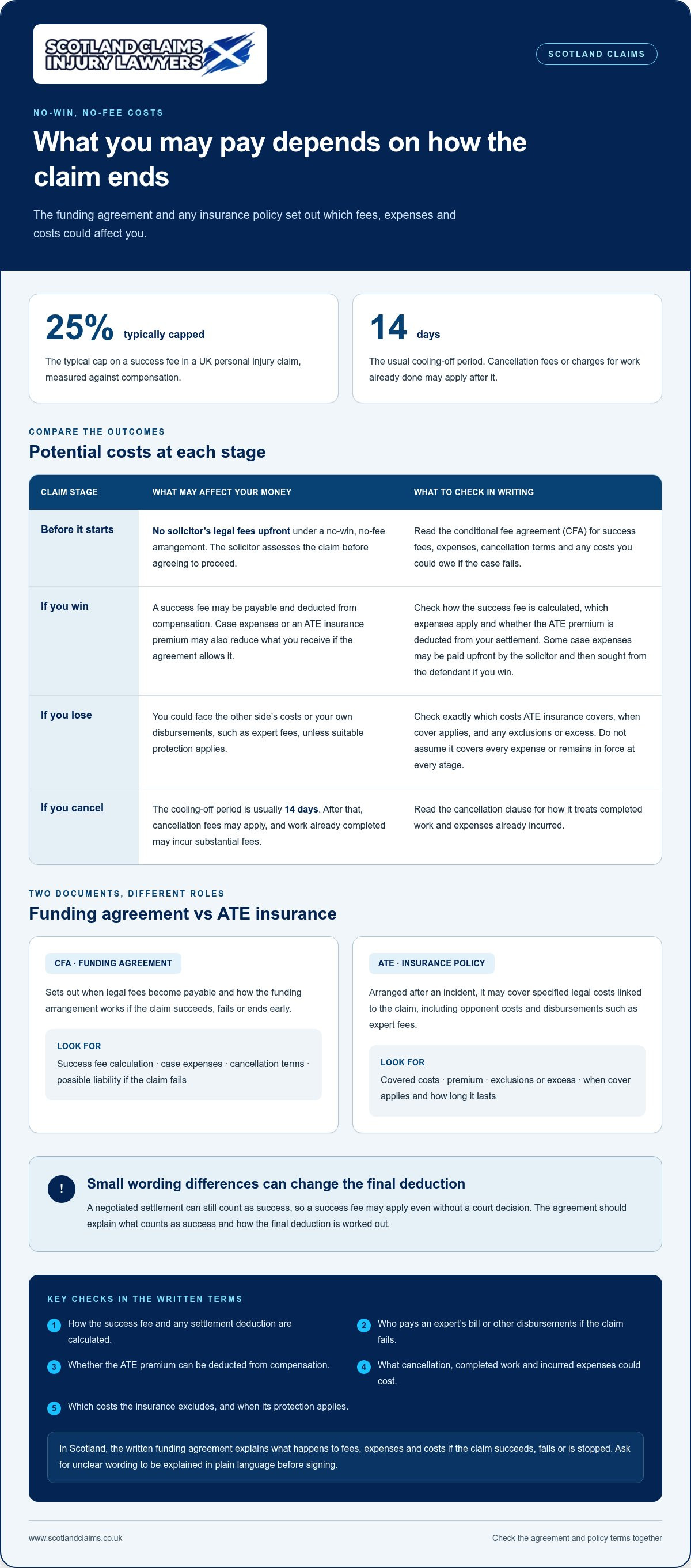
No win, no fee doesn’t always mean no costs. The hidden costs of no win no fee claims can include a success fee or case expenses deducted from compensation if you win, and liability for the other side’s costs if you lose unless suitable protection applies. According to UK Parliament, the success fee in a personal injury claim is typically capped at 25% of your compensation.
It’s reasonable to want a clear picture of what you could pay before starting a claim. In Scotland, the written funding agreement explains what happens to fees, expenses and costs if your claim succeeds, fails or you stop pursuing it.
This article explains how no-win, no-fee agreements work, which deductions may come from compensation, what you could owe if a claim is unsuccessful, and what to look for when choosing a solicitor. The agreement’s wording and any insurance cover can make a real difference to your financial risk.
Key Takeaways
- Understand what a no-win, no-fee agreement covers before you commit, including what may happen if you end the agreement early.
- Learn which fees and case expenses could be deducted from compensation after a successful claim.
- See how After the Event insurance may help protect you from certain costs if your claim fails.
- Know what to look for in a solicitor’s explanation of fees, expenses and any potential shortfall.
- Compare the funding terms carefully so you can understand your financial responsibilities before a claim proceeds.
What is a 'no win, no fee' agreement and how should it work?
A no-win, no-fee arrangement lets you pursue a claim without paying your solicitor’s legal fees upfront. In Scotland, funding advice and the funding agreement are separate, so the written terms deserve careful attention.
Conditional fee agreement terms
A conditional fee agreement, or CFA, sets out when legal fees become payable, usually depending on whether your claim succeeds. Before signing, read the clauses covering success fees, expenses, cancellation and any costs you might owe if the case fails. Check how each term applies to your circumstances, rather than relying on the phrase “no win, no fee” alone.
Upfront legal fees
With a no-win, no-fee agreement, you don’t pay your solicitor’s legal fees upfront. The solicitor assesses your claim before agreeing to proceed under a CFA. The agreement should explain when fees could become payable and what happens if the claim succeeds or fails. Keep a copy so you can refer to its terms throughout the claim.
Success fees and cost transparency
A success fee is an amount agreed in advance that may be payable if your claim succeeds. The fee agreement should explain how it is calculated and whether it will be deducted from compensation. It should also distinguish the success fee from other case expenses, so you can understand what could reduce your settlement before proceeding.
Read the whole agreement before signing, not just the section about your solicitor’s fee. Look for separate terms covering expenses during the claim, costs recovered from the other side and any shortfall you could owe. For example, check whether it explains who pays an expert’s bill if the case is unsuccessful. Clear wording gives you a fuller picture of your financial responsibilities.
Ask for any unclear clause to be explained in plain language before you sign. In particular, check how the agreement treats a settlement offer: a claim can end through negotiation rather than a court decision, and the success fee may still apply if the case succeeds. The written terms should explain what counts as success and how the final deduction is calculated.
Ending the agreement can also affect what you owe. According to UK Parliament, the cooling-off period is usually 14 days; if you cancel after it, you may be charged cancellation fees, and work already done may incur substantial fees. Read the cancellation clause before signing, including how it treats work completed and expenses incurred. That step can prevent an unexpected bill if you later decide not to pursue the claim.
Are There Hidden Costs in No Win No Fee Claims?
Yes. The hidden costs of no win no fee claims can include case expenses, insurance premiums and liabilities set out in the funding terms. After the Event insurance, or ATE insurance, may cover specified costs, but the policy’s terms and premium can affect what you ultimately receive.
Funding and insurance for claims
ATE insurance is a policy arranged after an incident to cover specified legal costs linked to a claim. It matters because insurance and a conditional fee agreement cover different risks. A solicitor may pay case expenses upfront, then seek recovery from the defendant if you win. ATE cover can include the opponent’s legal costs and your disbursements, such as expert fees.
Check which expenses the policy covers and when its protection applies. For example, a private medical examination may generate a third-party charge during a personal injury claim. The insurance terms should show whether that expense is covered if the claim fails, and whether any excess or exclusion applies. Don’t assume “no win, no fee” automatically includes every expense or the other side’s costs.
After the Event insurance premiums
An ATE premium is the amount charged for the insurance policy, and how it is handled depends on the agreement. It matters because the premium may reduce your compensation after a successful claim. Some arrangements require payment only if you win, with the premium deducted from your settlement. ATE premiums can amount to hundreds of pounds, so check any potential deduction before signing.
Ask how the premium is calculated, whether it changes during the claim and what happens if you lose. A solicitor may deduct it from compensation only when the agreement specifically allows that deduction. Compare the policy schedule with the fee agreement: one describes the insurance cover, while the other should explain how its cost affects your settlement. This can reveal deductions beyond the success fee.
Cover if a claim fails
ATE insurance can cover specified opponent costs and disbursements if a claim fails, reducing the risk of an unexpected bill. Losing a claim may still leave you exposed to costs, depending on the agreement and policy. Check that the policy covers the relevant risks and remains in force for the stage your case reaches.
UK solicitors must have insurance in place, and a client may be able to claim under a provider’s insurance if poor claim management leaves them liable for costs. That protection is distinct from ATE cover: one relates to the provider’s insurance, while the other insures defined claim costs. To identify hidden costs of no win no fee claims, read both sets of terms and check what each policy excludes.
In Scotland, separate funding advice can clarify how the agreement and insurance work together. Scottish personal injury legal representation can help explain the funding structure relevant to your claim.
Fees deducted from compensation
A claimant may owe a success fee if the claim succeeds, plus expenses or other deductions set out in the agreement. For personal injury claims in the UK, the success fee is typically capped at 25% of the claimant’s compensation, according to UK Parliament.
Success fee deductions from compensation
A success fee becomes payable when a claim succeeds and is often deducted from compensation. The amount left for you depends on the agreed calculation and any other permitted deductions. Check whether the fee applies to all compensation or only specified parts, and how the final figure will appear in the settlement breakdown.
For example, a settlement may include compensation for an injury and financial losses. The agreement should explain which parts form the basis for calculating the success fee. A solicitor may also recover costs from the party responsible for the injury, but your agreement should clarify any amount that could remain unrecovered and be deducted from compensation.
Solicitors’ and claims management fees
A solicitor’s fee pays for legal work, while a claims management company may charge for managing or referring a claim. If more than one organisation is involved, their roles can affect how fees and disbursements are handled. Read the agreement to identify who provides representation, who receives each fee and whether a separate charge applies to case expenses.
Disbursements are costs paid to third parties during a claim, such as fees for an expert or legal checks. The agreement should say whether these are repayable from compensation and how they differ from the solicitor’s success fee. In a medical negligence claim, for example, specialist evidence may be needed, so the funding terms should explain how related costs are handled.
Choosing transparent fees
A transparent fee agreement describes each deduction and when it may apply. A clear written breakdown lets you compare the likely settlement with the amount you would receive after fees. Ask for an explanation in plain language, including how any success fee is calculated and whether insurance premiums or unrecovered legal costs could also be deducted.
Look for a worked example using a hypothetical compensation award, not a promised outcome for your case. It should show the success fee, any insurance premium, disbursement repayments and other permitted deductions as separate items. If a claims management company is involved, the paperwork should make its role and any charge clear alongside the solicitor’s fees.
Before signing, compare the fee agreement with any separate funding or insurance documents. Check that each deduction appears once, that the calculation is clear, and that the agreement explains what happens if the case settles through negotiation. These details help you see whether “no win, no fee” covers only legal fees or also other costs affecting your compensation.
Costs if a claim is unsuccessful
If a properly structured no-win, no-fee claim fails, you don’t pay your solicitor’s fees. Depending on your agreement and insurance, you could still face other costs, including the opponent’s legal costs or expenses.
The phrase “no win, no fee” describes the solicitor’s fees, not necessarily every cost connected with a claim. An unsuccessful injury case may involve fees for medical evidence, court costs or other disbursements. Your funding agreement should explain whether you must repay expenses advanced during the case and what happens if the claim ends without compensation.
The other side may seek its legal costs if you lose. That potential financial risk is why it’s important to understand your protection before a solicitor starts work. After the Event (ATE) insurance can cover specified opponent costs and your disbursements, subject to the policy’s terms. Check whether the policy covers your type of claim, the stage reached and the costs that could arise. ATE insurance does not promise that every possible expense will be covered.
Read the agreement and insurance schedule together. The agreement explains your responsibilities to the solicitor; the policy sets out insured risks, exclusions and conditions. If an expert’s medical report has been commissioned, for instance, check whether its cost is insured if the claim is unsuccessful. Also check whether the premium is payable only after a successful claim or under different terms.
Some people have legal expenses insurance through household or car insurance. A policy may help with legal costs, but its cover depends on the terms and the claim involved. Check the policy documents for the relevant legal expenses section and any requirements for using that cover. Don’t assume household insurance automatically protects you from an opponent’s costs in a personal injury case.
Ask for a written explanation of what happens if the claim fails, the insurer refuses cover, or the case ends before a decision. The answer should distinguish solicitor fees from third-party expenses and opponent costs. This breakdown lets you assess your exposure before agreeing to pursue a claim, rather than discovering a separate liability after an unsuccessful result.
In Scotland, funding arrangements involve separate funding advice and an agreement. Read those terms alongside any ATE policy so you can see who pays each cost if your claim fails. A solicitor’s professional indemnity insurance is distinct from cover for the opponent’s costs; it may be relevant if poor claim management leaves you liable, but it does not replace checking your own funding protection.
Choosing a No Win No Fee solicitor
Choose a solicitor whose experience matches your injury claim and whose funding arrangement is clear. A specialist handling road traffic, workplace or slip and trip injuries can explain how evidence, responsibility and financial losses shape your case. Before agreeing to representation, establish who will manage the claim, how you’ll receive updates and what costs could remain your responsibility. Understanding the hidden costs of no win no fee claims starts with knowing who is responsible for each part of the work.
Ask for the fee agreement and funding documents to be explained in plain English. Check how the solicitor assesses the claim, what happens if it fails and whether a shortfall could arise. A shortfall is the difference between the solicitor’s actual legal costs and the amount recovered from the defendant. Your agreement should explain whether you could owe that difference and how any amount would be calculated.
Solicitors must act in your best interests and keep you informed about progress and developments. Look for a clear process for updates after a medical assessment, a change in evidence or a settlement offer. The explanation should distinguish legal fees from disbursements and insurance costs, and show how each item affects your compensation if the claim succeeds.
You can pursue some complaints through an Ombudsman without hiring a provider, and some such routes can be free. That option differs from legal representation for a personal injury claim. Managing an injury claim yourself means handling correspondence, evidence and settlement discussions directly. Consider the practical work involved, such as obtaining medical records and responding to the other party’s arguments.
A claims management company may manage a claim itself or refer it to another company or lawyer. If one is involved, establish who will handle your case and explain the fees. The arrangement should identify the solicitor providing representation, any management charge and how to raise concerns. Clear roles help prevent confusion when you receive advice or updates.
Specialist knowledge matters when a claim involves disputed responsibility, complex medical evidence or several types of financial loss. Ask how the solicitor will assess those issues and explain what evidence your case needs. For example, a workplace injury claim may require details about the incident, treatment and effects on your ability to work. The proposed case plan should address your circumstances, rather than rely on general assurances.
Compare the written terms, not just a headline fee. To assess the hidden costs of no win no fee claims, look at how the solicitor identifies possible shortfalls and explains costs if your case changes direction. Clear answers help you choose representation with a funding arrangement you understand.
Discuss your personal injury claim
Scotland Claims Injury Lawyers: Road Traffic Accident Claims
Scotland Claims Injury Lawyers can help with a personal injury claim after a road traffic accident in Scotland. The firm also handles slip or trip claims and work injury claims, offering legal support for these types of accidents.
The firm works on a no-win, no-fee basis and promises 100% compensation: it recovers its fees from the at-fault party and passes the entire settlement to you. This approach is relevant if you want to understand how fees affect your compensation before pursuing a claim. Claims must relate to an incident in Scotland within the past three years.
The Personal Injury Compensation Calculator can help you explore potential compensation based on your circumstances. For guidance on a road traffic accident, slip or trip, or workplace injury in Scotland, contact Scotland Claims Injury Lawyers.
Make your next step with confidence
Use what you’ve learnt to make a decision that fits your circumstances. Before moving forward, consider what you need from legal representation: a clear explanation of the agreement, straightforward communication and funding terms you can understand. Knowing the potential hidden costs of no win no fee claims can help you focus on the terms that apply to your case and the support you want through the process.
Scotland Claims Injury Lawyers handles road traffic accident claims, slip or trip claims, and work injury claims in Scotland. If your injury happened in Scotland and you’re considering one of these claims, the firm can help you take the next step.
Take the next step when you’re ready, with a clearer understanding of what to ask and what to expect.
Frequently Asked Questions
What Does No Win No Fee Mean?
No win, no fee means your solicitor’s legal fees are conditional on your claim succeeding. It lets you pursue a claim without paying those fees upfront. The written agreement still matters: it sets out what counts as success and whether expenses, insurance premiums or other deductions apply. For example, a claim settled through negotiation may count as successful, depending on the agreement’s wording.
How are these costs paid?
Costs may be paid in different ways, depending on the agreement and whether the claim succeeds. A solicitor might pay case expenses upfront and seek recovery from the defendant after a successful claim. Other costs, such as an insurance premium or expert’s fee, may be deducted from compensation if the agreement allows. Check the settlement breakdown to see who receives each payment and what amount reaches you.
Is No Win No Fee Worth It?
It can suit someone who wants legal representation without paying solicitor’s fees upfront, particularly when an injury has affected their ability to work or manage daily life. Its value depends on the case’s likely costs, possible deductions and the protection in place if it fails. Compare those terms with the practical demands of handling correspondence, evidence and settlement discussions yourself before deciding.
Is it really free?
Not always. “No win, no fee” generally means solicitor’s legal fees are conditional, not that every possible expense disappears. A successful claim could involve a success fee, insurance premium or repayment of disbursements, according to the agreement. Scotland Claims Injury Lawyers states that a successful claim incurs a 15% success fee plus VAT, while an unsuccessful claim leaves the client owing nothing.
What happens if you lose a no win no fee case?
If the claim is unsuccessful, a properly structured agreement means you don’t pay your solicitor’s fees. You could still face opponent costs or case expenses unless your funding arrangement or insurance covers them. For instance, ATE insurance may protect against specified opponent costs and disbursements. The policy wording determines its limits, so identify exclusions and which costs it covers before proceeding.
What is the catch with No Win No Fee?
The main point is that the agreement may still permit deductions or costs in particular circumstances. A success fee may reduce compensation after a win; ending the agreement or facing uncovered expenses could also create liability. Read the clauses on settlement, cancellation, insurance and disbursements. If a term doesn’t make clear who pays, ask for its practical effect to be explained before signing.
What percentage do No Win No Fee solicitors take?
For personal injury claims in the UK, the success fee is typically capped at 25% of the claimant’s compensation, according to UK Parliament. The amount in an individual agreement may be lower, and other deductions can be separate. Scotland Claims Injury Lawyers states that its success fee is 15% plus VAT on a successful claim. Check whether the quoted percentage includes VAT and what compensation it applies to.
What does no win no fee mean in the UK?
In the UK, the arrangement is commonly set out in a Conditional Fee Agreement, which makes payment of solicitor’s fees dependent on the claim’s outcome. Funding arrangements differ in Scotland, where claimants receive separate funding advice and a separate agreement. If your injury happened in Scotland, read the Scottish funding terms rather than assuming arrangements elsewhere in the UK apply unchanged.