Based on reporting by STV News, 18 November 2026. All rights in the original report remain with the publisher.
What was reported
According to STV News, emergency services were called to the A71 near the Bellfield Interchange in Kilmarnock at around 11.30am on Monday 18 November 2026. The incident involved multiple vehicles, with two cars reportedly becoming crushed between lorries as traffic slowed on the approach to a busy roundabout.
As reported by STV News, a woman involved in the collision described her car being struck from behind by a lorry, forcing her vehicle into the car ahead. Both cars were reportedly pushed together until they came to rest at an angle. The woman and a passenger escaped with whiplash and bruising. One man was taken to Crosshouse Hospital, and a further four people were assessed by paramedics at the scene. A Scottish Ambulance Service spokesperson confirmed that one ambulance, a special operations team, and a critical care team all attended.
The driver told STV News she believed the lorry driver may have suffered a medical emergency prior to the collision, though Police Scotland had not issued a formal statement on the cause at the time of reporting. No findings of fault or liability have been established.
Road traffic accident claims in Scotland
Multi-vehicle collisions of this kind can give rise to personal injury claims under Scots law. Where one vehicle strikes another from behind, or a chain reaction results in occupants being injured, those injured may be entitled to pursue compensation through a civil claim, entirely separately from any criminal or police investigation.
In incidents of this type, liability often rests with the driver or drivers whose actions, or whose vehicle's condition, directly caused or contributed to the collision. Where a commercial vehicle such as a lorry is involved, the employer or operator of that vehicle may also carry a degree of responsibility under the principles of vicarious liability, depending on the circumstances. If a medical episode is later confirmed as a contributing factor, this can affect how liability is assessed, and specialist legal advice will be needed.
All motor vehicles on Scottish roads must be covered by insurance. Where a liable driver is insured, claims are typically brought against their insurer. If a driver is uninsured or cannot be traced, the Motor Insurers Bureau scheme provides a route to compensation for innocent parties. Claims are handled on a no win, no fee basis. If you win, our success fee is capped at 18% including VAT, below the Scottish statutory maximum, with no hidden extras, and legal costs are recovered from the other side.
Time limits
In Scotland, the Prescription and Limitation (Scotland) Act 1973 sets a three-year time limit for personal injury claims. The clock generally begins on the date of the accident itself. Missing this deadline will ordinarily bar a claim entirely, regardless of its merits.
There are limited exceptions. Where an injured person lacks legal capacity, for example because they are a child or have a relevant cognitive impairment, different rules apply and the period may run from a later date. Courts also retain a discretion to allow a claim outside the three-year window in exceptional circumstances, though this is not guaranteed. Anyone involved in a collision of this kind is strongly advised to seek legal advice well within the three-year period, and ideally as soon as possible after the incident.
What compensation can cover
A successful road traffic accident claim in Scotland can include several distinct heads of loss, depending on the injuries and their consequences. These typically include:
- Solatium - a payment for pain, suffering, and loss of amenity. This covers both physical injuries such as whiplash, bruising, and soft tissue damage, and recognised psychological effects such as post-traumatic stress, anxiety, or flashbacks following a frightening incident.
- Loss of earnings - where injuries prevent someone from working, either in the short term or longer term, lost income can be claimed, including future losses where appropriate.
- Care and assistance - if an injured person requires help at home during recovery, whether provided by a family member or a paid carer, the reasonable value of that care can be included.
- Medical treatment costs - physiotherapy, psychological therapy, and other reasonable private treatment costs can be recovered.
- Travel expenses - the cost of attending medical appointments, GP visits, or hospital appointments arising from the injury can also form part of a claim.
The value of any claim will depend on the nature and severity of the injuries, the period of recovery, and the individual impact on the person's daily life and work. Even injuries that appear minor at first, such as whiplash or bruising, can in some cases have a lasting effect and may be worth more than people initially expect.
Frequently asked questions
Can I claim if I was a passenger in one of the cars involved?
Yes. Passengers injured in a road traffic accident in Scotland are generally entitled to claim compensation from the insurer of the driver or drivers responsible for the collision. As a passenger, you are not considered to have contributed to the accident, which can simplify the claims process.
What if the collision was partly caused by a medical emergency suffered by a driver?
This is a complex area. Where a driver suffers a sudden and unforeseeable medical episode, it may affect how liability is determined. However, innocent parties who are injured do not necessarily lose their right to compensation. Legal advice specific to the facts is essential in these circumstances.
Can I claim for psychological effects as well as physical injuries?
Yes. Recognised psychological conditions arising from a traumatic accident, including post-traumatic stress disorder, anxiety, and sleep disturbance, can form part of a compensation claim under the head of solatium. Medical evidence from a GP or psychologist will normally be required to support this element of the claim.
How long does a road traffic accident claim in Scotland typically take?
Straightforward claims involving clear liability and modest injuries can sometimes settle within several months. More complex cases involving disputed liability, serious injuries, or multiple parties can take considerably longer. Your solicitor will be able to give a more accurate estimate once the full circumstances are known.
What evidence should I gather after a road traffic collision?
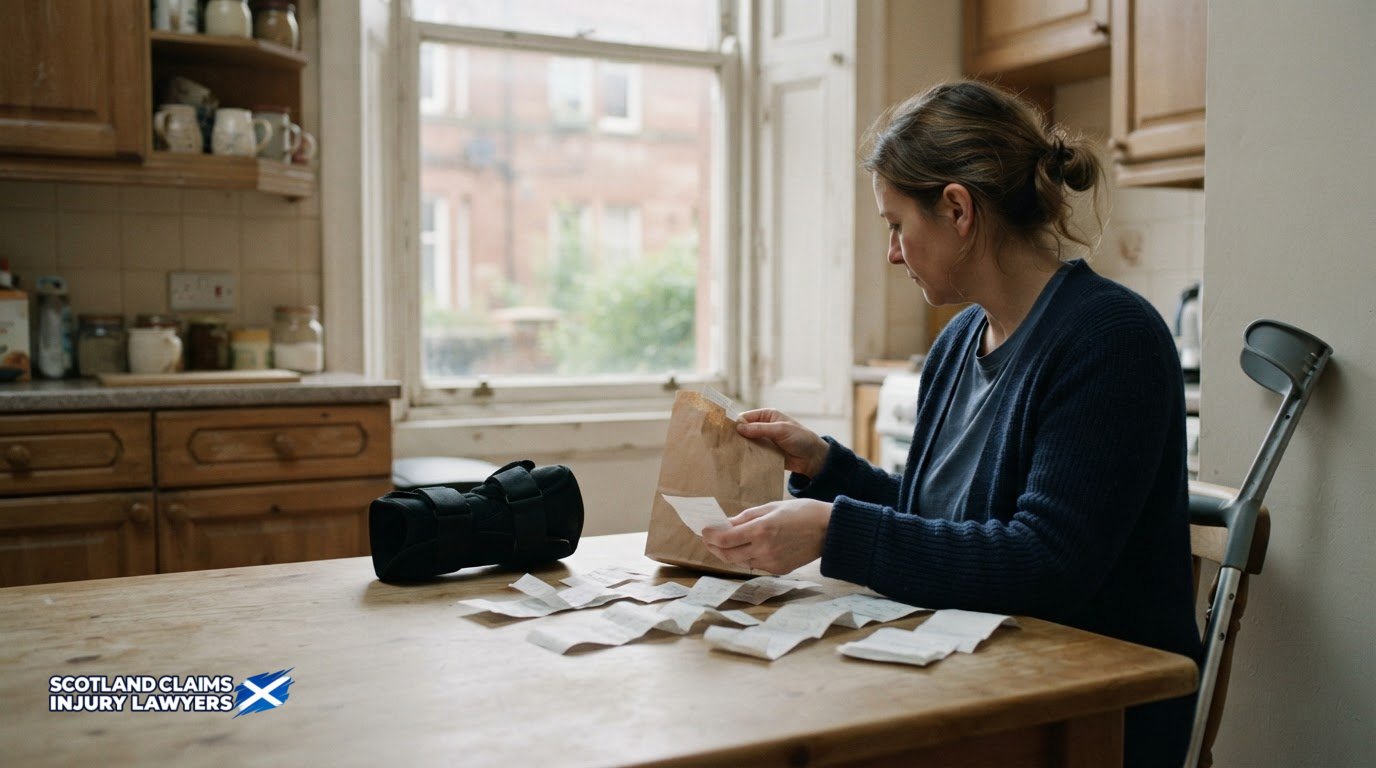
Where it is safe to do so, photographs of the vehicles and the scene, witness contact details, a note of any police reference number, and records of any medical treatment are all valuable. Keep receipts for any expenses incurred as a result of your injuries. The more contemporaneous evidence available, the stronger your claim is likely to be.
Based on reporting by STV News, 18 November 2026. All rights in the original report remain with the publisher.