Table of Contents
Last Updated: August 22, 2026
Loss of Society vs Bereavement Award: The Key Difference
In Scotland, families who've lost a loved one through negligence or accident face a complex legal landscape that differs significantly from the rest of the UK. The distinction between loss of society and bereavement awards isn't merely technical, it fundamentally determines who can claim, how much they might receive, and whether their grief carries legal weight. According to [RTA Law LLP analysis of fatal accident(/blog/how-to-make-fatal-accident-claim-scotland.aspx) compensation | rtalaw.com], awards for loss of society in Scotland have historically ranged from tens of thousands to over £100,000, vastly outpacing the fixed bereavement award available in England and Wales.
This guide from Scotland Claims Injury Lawyers explores exactly what separates these two forms of compensation, why Scottish law treats them so differently, and what families in Glasgow and across Scotland actually need to know when pursuing a claim. The differences matter enormously, not just in principle, but in pounds.
Loss of society is a Scottish legal concept that compensates relatives for the emotional and relational loss following a death caused by negligence. It recognises the genuine pain of losing companionship, support, and the everyday presence of a loved one. Bereavement award, by contrast, is a fixed statutory sum available in England and Wales, currently set at £15,120, designed to provide a standardised payment regardless of individual circumstances.
The real divide isn't semantic. It's about fairness. According to YouGov poll commissioned by APIL, 69% of British adults believe that £15,120 is too little compensation for losing a loved one. In Scotland, the courts have rejected this one-size-fits-all approach entirely, instead allowing juries and judges to assess each case individually. This means a widow in Edinburgh might receive £140,000 for loss of society, whilst the same loss in England would trigger a fixed £15,120 payment.
Pro Tip
The key distinction: Scotland uses individual assessment based on the depth of the relationship and circumstances; England and Wales use a fixed statutory amount. This difference can result in compensation awards that differ by more than £100,000 for comparable losses.
Who Can Claim for Loss of Society in Scotland
The breadth of eligibility for loss of society claims in Scotland is significantly wider than most people realise. Under the Damages (Scotland) Act 2011, the law recognises that grief isn't confined to spouses and children, it extends across a much fuller spectrum of family relationships.
Eligible claimants include:
- Spouses and civil partners
- Cohabitees (those in long-term cohabiting relationships)
- Parents of deceased children
- Children of the deceased
- Grandparents
- Grandchildren
- Siblings
- Anyone treated as a family member (step-relations, close family friends)
This breadth reflects a fundamental recognition that loss radiates outward. According to [Scotland Claims Injury Lawyers(/blog/no-win-no-fee-injury-lawyers-how-to-secure-100-compensation-in-scotland.aspx) guidance on eligible relatives | scotlandclaims.co.uk], a parent claiming for a deceased child, a sibling mourning a brother or sister, or even a grandparent who was actively involved in their grandchild's life can all pursue loss of society compensation.
The eligibility criteria hinge on demonstrating a genuine, close relationship with the deceased. The courts examine whether regular contact occurred, whether emotional support was provided, and whether the relationship held real significance in both parties' lives. A distant cousin with minimal contact would struggle; a step-parent who raised the deceased from childhood would succeed.
Recent case law has expanded recognition of these broader relationships. In one notable Scottish case, a step-father was awarded £70,000 alongside the parents' awards, recognising the genuine familial bond he'd developed. This reflects how Scottish courts assess relationships based on actual connection rather than bloodline alone.
Key Takeaway
Scottish law recognises loss of society claims from a far wider circle of relatives than English law permits. This inclusivity means more families can pursue compensation, but it also requires demonstrating genuine closeness to the deceased.
Understanding the Damages (Scotland) Act 2011
The Damages (Scotland) Act 2011 fundamentally reshaped how Scottish law approaches compensation for death caused by negligence. Enacted to modernise and clarify the legal framework, this Act established the statutory foundation for loss of society claims and significantly broadened who could claim.
Prior to 2011, Scottish law was inconsistent and fragmented. Different courts applied different standards, and many potential claimants, grandparents, siblings, extended family, existed in legal grey areas. The Act swept away this ambiguity by creating a clear statutory framework that explicitly lists eligible relatives and establishes loss of society as a recognised head of damages.
The Act defines loss of society as "the loss of society, guidance, instruction, companionship, support, assistance or services" that would have been provided by the deceased had they lived. This definition is deliberately broad, recognising that relationships involve far more than financial support. It encompasses emotional presence, practical help, advice, and the simple comfort of knowing someone is there.
Critically, the Act removed the requirement to prove financial dependency. In England and Wales, bereavement awards are fixed regardless of circumstances. In Scotland, the Act created space for courts to assess each relationship individually, considering factors like the length of the relationship, the closeness of the bond, and the role the deceased played in the claimant's life.
The Act also established that multiple relatives can claim simultaneously. A widow, adult children, and parents can all pursue loss of society claims arising from the same death. Each receives their own assessment based on their individual relationship with the deceased, there's no pooling of compensation or hierarchy that reduces later claims.
Since 2011, Scottish courts have used this framework to award increasingly generous sums. Juries, in particular, have proven willing to recognise the genuine emotional toll of bereavement, awarding amounts that far exceed what many legal professionals initially anticipated.
Award Ranges: What Families Actually Receive
Understanding what families in Glasgow and across Scotland actually receive in loss of society compensation requires looking at real cases and current award trends. The figures tell a clear story: Scottish courts recognise bereavement as a genuine loss worthy of substantial compensation.
Parents claiming for the loss of a child typically receive the highest awards. According to RTA Law LLP analysis of Scottish compensation trends, parents in loss of society claims trend towards the £100,000+ mark. In one significant case, a mother was awarded £100,000 following the death of her 35-year-old son due to negligent post-discharge care from hospital. In another, parents received £100,000 each after losing their 26-year-old son in a work equipment accident.
Spouses and partners also receive substantial awards, reflecting the depth of spousal relationships. One widow received £140,000 for loss of society, the largest civil damages award in Scottish legal history at the time, following the death of her husband in circumstances involving negligence.
Adult children claiming for deceased parents typically receive lower awards than parents claiming for deceased children, though amounts remain significant. Awards in this category commonly range from £40,000 to £80,000, depending on the closeness of the relationship and the role the parent played in the adult child's life.
Siblings receive recognition that's entirely absent in English law. According to RTA Law LLP, siblings in Scotland can receive awards trending towards £50,000 for loss of society. This reflects the courts' understanding that sibling relationships, particularly close ones, involve genuine emotional bonds and mutual support.
Grandparents claiming for deceased grandchildren typically receive lower awards than parents, though amounts remain meaningful. RTA Law LLP notes that grandparents can receive awards trending towards £25,000 for loss of society, particularly where the grandparent was actively involved in the grandchild's upbringing.
Step-relations and extended family are increasingly recognised. In one case, a step-sister aged 12 at the time of her step-brother's death received £45,000, whilst a step-father received £70,000 alongside the biological parents' awards.
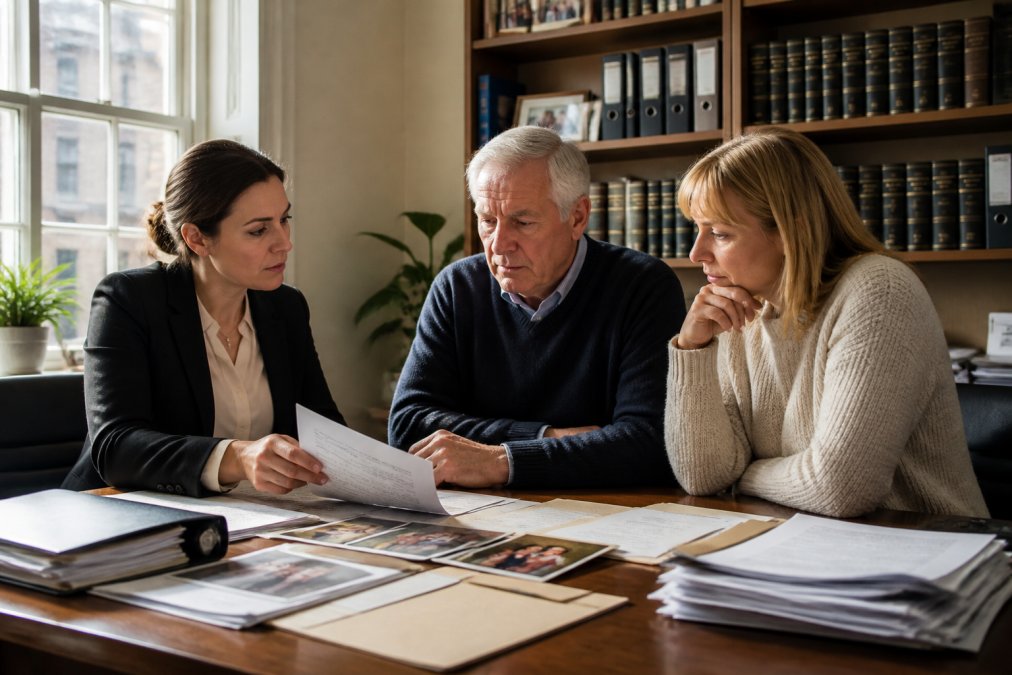 Legal professional in a Glasgow law office reviewing case files and family photographs on desk, with morning light streaming through windows, conveying empathy and expertise in handling bereavement claims
The variation in awards reflects the courts' commitment to individual assessment. Two widows might receive different amounts based on the length of their marriages, the roles they played in each other's lives, and the specific circumstances of the death. This flexibility is what makes Scottish law fairer than the fixed approach, but it also means there's no simple formula.
Watch Out
Award amounts vary significantly based on relationship type and individual circumstances. Whilst these ranges represent typical outcomes, your specific case may result in a different award. Consulting with a specialist solicitor is essential to understand your particular situation.
Factors That Influence Compensation Awards
Scottish courts don't award loss of society compensation in a vacuum. Instead, they carefully weigh multiple factors to determine what constitutes fair compensation for the specific relationship that's been lost. Understanding these factors helps families grasp how courts reach their decisions.
The closeness and nature of the relationship sits at the heart of every assessment. Courts examine how frequently the claimant and deceased spent time together, what roles they played in each other's lives, and whether the relationship involved mutual support and affection. A parent who was actively involved in daily parenting receives higher compensation than one who had minimal contact. A sibling who provided practical and emotional support receives more than one who saw the deceased rarely.
The length and history of the relationship matters significantly. A marriage of 30 years carries different weight than one of three years. A grandparent who'd been involved throughout a grandchild's life receives different consideration than one who'd only recently become close. Courts look at whether the relationship was established and meaningful, not whether it was new or developing.
The age and life expectancy of the deceased influences calculations of future loss. Losing a 26-year-old represents a longer period of lost companionship than losing an 85-year-old. The courts consider how many years of relationship the claimant has been deprived of.
The role the deceased played in the claimant's life determines the scope of loss. A parent who provided financial support, guidance, and emotional stability represents a different loss than a parent who was less involved. A spouse who was a primary source of companionship and support represents greater loss than a more distant relationship.
The circumstances of the death can influence awards, though not in the way many assume. The courts aren't assessing blame or punishing negligence through higher awards, that's the role of damages for pain and suffering. Instead, circumstances matter insofar as they affect the nature of the loss. A sudden, unexpected death might carry different emotional weight than one following a long illness.
The impact on the claimant's life going forward receives consideration. How has the death affected the claimant's emotional wellbeing, their ability to function, their support network? Courts recognise that some losses are more profoundly destabilising than others.
Recent case law has also shown that juries tend to award higher amounts than judges. According to analysis by Andrew Hajducki QC cited in Law Society of Scotland guidance, juries are willing to award significantly higher sums than judges, and the traditional hierarchy of awards between different classes of claimants has been substantially eroded. This reflects jurors' willingness to recognise the genuine emotional toll of bereavement.
Scottish Law vs England and Wales: A Crucial Comparison
The contrast between Scottish law and English law on bereavement compensation reveals fundamentally different approaches to recognising grief. Understanding these differences is essential for families in Scotland, and it explains why Scottish compensation can be dramatically higher.
| Aspect |
Scotland (Loss of Society) |
England and Wales (Bereavement Award) |
| Assessment Method |
Individual, case-by-case evaluation |
Fixed statutory amount |
| Current Award Amount |
£25,000-£140,000+ depending on relationship |
£15,120 (fixed) |
| Eligible Claimants |
Spouses, partners, parents, children, grandparents, siblings, step-relations, those treated as family |
Spouse, civil partner, parents (if child), children (if under 18 at death) |
| Legal Basis |
Damages (Scotland) Act 2011 |
Administration of Justice Act 1982 |
| Flexibility |
High, courts assess individual circumstances |
None, amount is standardised |
| Role of Juries |
Juries often award higher amounts than judges |
No jury involvement in bereavement awards |
The philosophical divide runs deeper than the numbers. English law treats bereavement as a standardised loss, the same regardless of whether the deceased was a beloved spouse of 40 years or a parent with whom the claimant had minimal contact. The fixed award reflects a policy choice: simplicity and certainty over individualised fairness.
Scottish law rejects this approach. By recognising loss of society as a distinct head of damages and allowing individual assessment, Scottish courts acknowledge that grief isn't standardised. The loss of a spouse differs from the loss of a sibling, which differs from the loss of a grandparent. The closeness of the relationship matters. The role the deceased played matters. The individual circumstances matter.
Get Started Today →
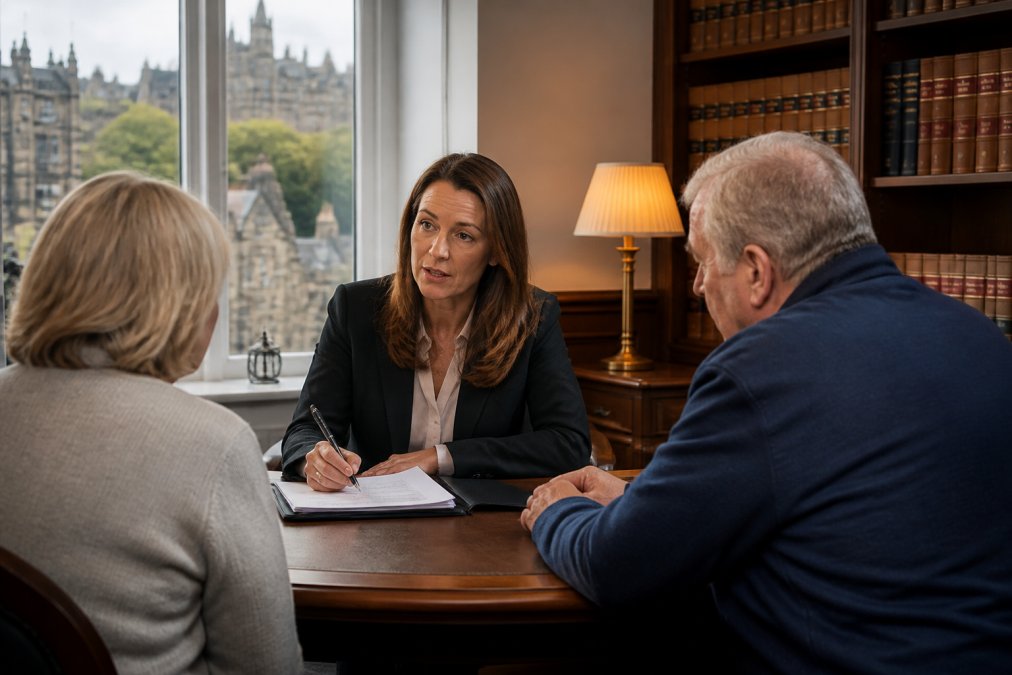 Solicitor in a modern Scottish law office conducting a consultation meeting with a grieving family member, showing compassionate professional guidance with natural window lighting
The practical impact is substantial. A widow in Glasgow might receive £100,000-£140,000 for loss of society. The same widow in Manchester would receive £15,120. A sibling in Edinburgh might receive £40,000-£50,000. The same sibling in London would receive nothing, English law doesn't recognise sibling relationships as grounds for bereavement claims.
This disparity has prompted criticism of English law as a "postcode lottery" in reverse, families in Scotland receive fairer treatment simply by virtue of geography. According to the Association of Personal Injury Lawyers (APIL) report 'Bereavement Awards: Rigid, Discriminatory and Woefully Out of Date', 73% of British adults believe that compensation for grief and trauma should vary according to the circumstances of each case, suggesting public opinion increasingly favours the Scottish approach.
The differences also reflect different legal traditions. Scottish law has historically emphasised equitable individual assessment. English law has emphasised certainty and standardisation. Neither approach is inherently wrong, but they produce vastly different outcomes for grieving families.
Key Takeaway
Scottish law provides substantially higher compensation for bereavement through individual assessment of loss of society. English law provides a fixed, standardised amount that's considerably lower. The difference can exceed £100,000 for the same loss.
Using a Personal Injury Claim Calculator for Loss of Society
A personal injury claim calculator designed for Scottish loss of society claims provides families with an initial estimate of potential compensation. These tools use established award ranges and case law to generate realistic figures, though they cannot replace individual legal assessment.
How these calculators work:
The most reliable calculators ask specific questions about the claimant's relationship to the deceased. They typically inquire about the type of relationship (spouse, parent, child, sibling, etc.), the length of the relationship, the closeness of the bond, and the age of the deceased. Based on these inputs, they cross-reference established case law and award ranges to generate an estimated compensation figure.
Scotland Claims Injury Lawyers provides a compensation calculator specifically designed for loss of society claims. By entering details about your relationship to the deceased and the circumstances of the death, you receive an initial estimate of potential compensation. This figure is based on real case outcomes and current award trends, though your actual compensation may differ based on factors specific to your case.
What these calculators can and cannot do:
Calculators excel at providing a realistic range. They prevent the common mistake of underestimating potential compensation, many families assume they'll receive far less than they're actually entitled to. They also help families understand whether their case is worth pursuing, which is particularly important when considering whether to instruct a solicitor.
However, calculators cannot assess the specific strength of your case, the quality of evidence available, or factors unique to your circumstances. They cannot evaluate whether negligence can be established, whether causation is clear, or whether defences might apply. They provide an estimate of quantum (the amount of compensation if liability is established), not an assessment of your actual prospects of success.
Using the estimate effectively:
An estimate from a calculator should prompt consultation with a specialist solicitor. If the estimate suggests potential compensation of £50,000 or more, pursuing a claim is likely worthwhile. If the estimate is considerably lower, you might still have a valid claim, but you should discuss prospects carefully with a lawyer before incurring costs.
Remember that these estimates assume liability will be established. If negligence cannot be proven, compensation is zero regardless of the emotional loss involved. A solicitor's role includes assessing not just quantum but also liability, whether you have a realistic prospect of proving that someone's negligence caused the death.
The Role of Negligence in Fatal Accident Claims
Loss of society compensation cannot exist without negligence. This is the crucial threshold that separates a valid claim from a sympathetic situation with no legal remedy. Understanding what negligence means in the context of fatal claims is essential.
Negligence requires three elements:
First, the defendant must owe the claimant a duty of care. This is often straightforward in fatal accident cases. A hospital owes a duty of care to patients. An employer owes a duty to employees. A driver owes a duty to other road users. In most circumstances, establishing a duty of care is uncontroversial.
Second, the defendant must breach that duty through careless or reckless conduct. The conduct must fall below the standard expected of a reasonable person in the defendant's position. This might involve a surgeon operating whilst impaired, an employer failing to provide safe equipment, or a driver speeding through a residential area. The breach must be material, minor lapses don't constitute actionable negligence.
Third, the breach must have caused the death. This requires establishing a causal link: "but for" the defendant's negligence, the deceased would likely still be alive. If the death would have occurred regardless of the negligence, causation fails and no claim exists.
Why negligence matters for loss of society:
Loss of society compensation is not available for deaths that occur naturally, even if they're tragic. If a loved one dies of cancer, a heart attack, or another natural cause, there's no claim, regardless of how much they're missed. The law recognises that some losses, however genuine and painful, are not the responsibility of any individual or organisation.
Negligence is what transforms a personal tragedy into a legal claim. It's the mechanism by which the law says: "Someone's carelessness caused this death. That person or organisation should compensate the family for the loss they've inflicted."
This is why establishing negligence is the crucial first step. A solicitor's initial assessment focuses on whether negligence can be proven. If it cannot, no amount of emotional loss justifies a claim. If it can, then loss of society compensation becomes available to eligible relatives.
Conclusion
The distinction between loss of society and bereavement award in Scotland reflects a fundamental commitment to recognising individual grief as a legitimate legal concern. Scottish courts reject the notion that all bereavement is equivalent, instead assessing each case individually and awarding compensation that reflects the genuine relationship that's been lost.
For families in Glasgow and across Scotland facing the death of a loved one through negligence, understanding these differences is essential. Loss of society claims can provide substantial compensation, often far exceeding what families might initially expect. But pursuing a claim requires establishing negligence, demonstrating eligibility, and gathering evidence of the relationship with the deceased.
Scotland Claims Injury Lawyers specialises in helping families navigate this complex process. Operating on a No Win No Fee basis, the firm provides free initial consultations and ensures clients keep 100% of their compensation if successful. The team understands the emotional weight of these claims and the legal framework that governs them, combining specialist knowledge of Scottish law with genuine compassion for families in difficult circumstances. Contact Scotland Claims Injury Lawyers for a free assessment of your potential claim and guidance on the next steps.
=== FAQ ANSWERS (audit these too, same rules) ===
[1] Q: What is the difference between loss of society and bereavement award in Scotland?
A: Loss of society is a claim for the emotional loss and companionship lost following a death due to negligence. In Scotland, awards are assessed individually and can range from tens of thousands to over £100,000 depending on the relationship and circumstances. Bereavement awards in England and Wales are fixed at £15,120 regardless of circumstances. Scottish law recognises that grief and loss vary greatly between families, which is why individual assessment applies.
[2] Q: Who can claim for loss of society in Scotland under the Damages (Scotland) Act 2011?
A: The Damages (Scotland) Act 2011 allows a broad range of relatives to claim: spouses, civil partners, cohabitees, parents, grandparents, children, grandchildren, siblings, and those treated as family members. This is significantly wider than England and Wales, where only spouses, civil partners, parents of unmarried children, and children can claim. The Act recognises that close relationships take many forms, and awards reflect the strength and nature of each relationship.
[3] Q: How much compensation can parents expect for loss of society in Scotland?
A: Parents in Scotland typically receive awards trending towards the £100,000+ mark, according to recent legal data. For example, in one case a mother was awarded £100,000 following the death of her 35-year-old son due to negligent hospital care. Awards depend on factors including the closeness of the relationship, the age of the deceased, and the circumstances of the death. A personal injury claim calculator can provide an initial estimate, but individual assessment by a court determines the final figure.
[4] Q: Why are Scottish loss of society awards higher than English bereavement awards?
A: Scotland's approach allows judges and juries to assess each case individually, recognising that emotional loss cannot be reduced to a fixed sum. England and Wales applies a statutory fixed award of £15,120 to all eligible claimants. 73% of British adults believe compensation should vary according to circumstances. Scottish juries have demonstrated willingness to award substantially higher sums, with awards reflecting the true emotional and relational impact of losing a loved one. This individual assessment is considered fairer by many legal professionals.
Frequently Asked Questions
What is the difference between loss of society and bereavement award in Scotland?
Loss of society is a claim for the emotional loss and companionship lost following a death due to negligence. In Scotland, awards are assessed individually and can range from tens of thousands to over £100,000 depending on the relationship and circumstances. Bereavement awards in England and Wales are fixed at £15,120 regardless of circumstances. Scottish law recognises that grief and loss vary greatly between families, which is why individual assessment applies.
Who can claim for loss of society in Scotland under the Damages (Scotland) Act 2011?
The Damages (Scotland) Act 2011 allows a broad range of relatives to claim: spouses, civil partners, cohabitees, parents, grandparents, children, grandchildren, siblings, and those treated as family members. This is significantly wider than England and Wales, where only spouses, civil partners, parents of unmarried children, and children can claim. The Act recognises that close relationships take many forms, and awards reflect the strength and nature of each relationship.
How much compensation can parents expect for loss of society in Scotland?
Parents in Scotland typically receive awards trending towards the £100,000+ mark, according to recent legal data. For example, in one case a mother was awarded £100,000 following the death of her 35-year-old son due to negligent hospital care. Awards depend on factors including the closeness of the relationship, the age of the deceased, and the circumstances of the death. A personal injury claim calculator can provide an initial estimate, but individual assessment by a court determines the final figure.
Why are Scottish loss of society awards higher than English bereavement awards?
Scotland's approach allows judges and juries to assess each case individually, recognising that emotional loss cannot be reduced to a fixed sum. England and Wales applies a statutory fixed award of £15,120 to all eligible claimants. 73% of British adults believe compensation should vary according to circumstances. Scottish juries have demonstrated willingness to award substantially higher sums, with awards reflecting the true emotional and relational impact of losing a loved one. This individual assessment is considered fairer by many legal professionals.