A personal injury claim should account for more than the injury itself. The benefits of using a local injury solicitor in Glasgow include having someone nearby to discuss your claim and help identify the losses you may be able to pursue. In Scotland, most personal injury claims must be raised within three years from the accident date, according to The National Archives (legislation.gov.uk).
An injury can affect your income, bring extra costs and disrupt day-to-day life. A solicitor can assess how the injury and its financial effects fit into a compensation claim, then explain the steps involved in pursuing it.
This guide explains what local knowledge can mean in practice, which financial losses may be relevant and how a solicitor can support your claim. It also covers practical meeting arrangements if you’re recovering at home or in hospital and travelling is difficult.
Key Takeaways
- A solicitor acting for you can focus on your interests rather than an insurer’s priorities.
- A claim may account for financial effects as well as physical and psychological injury, with evidence helping to support the losses pursued.
- Local support can make it easier to discuss practical arrangements, including meetings at home or in hospital when travelling is difficult.
- A solicitor can assess evidence, value a claim and manage the steps involved in pursuing compensation.
- Knowledge of Scottish claims procedures can help keep a case on track and clarify what happens before court proceedings.
Choosing a solicitor rather than an insurer-nominated solicitor
Your choice determines who advises you, explains the claim and represents your interests. In Scotland, check the solicitor’s role, experience with your type of injury and approach before agreeing to representation.
A solicitor offered through an insurer may seem convenient, but convenience doesn’t tell you whose interests shape the advice. Ask who the solicitor acts for, who will handle your case and how you can raise concerns. A solicitor you choose can explain their role and discuss the accident, injury and losses involved.
A local Glasgow solicitor may offer face-to-face discussions and familiarity with the area, while national firms may handle claims across Scotland. The right choice depends on the service and expertise your claim needs, not the firm’s size. One benefit of using a local injury solicitor in Glasgow may be having a nearby point of contact who can discuss your case in context.
Time limits matter. Most personal injury claims in Scotland must be raised within three years from the accident date, according to The National Archives (legislation.gov.uk). An injured child has until their 19th birthday to make a personal injury claim. A solicitor can assess how the relevant deadline applies to your circumstances and explain the next steps.
A claims management company may help with the initial process, but it isn’t the same as having a solicitor conduct court proceedings. In Scotland, only solicitors can initiate proceedings and represent clients in court. Establish who will manage each stage and advise you if court action becomes necessary, so you understand what representation your claim may require.
Experience and Reputation Checks
Look for experience with the type of incident involved, such as a road collision, workplace injury or slip or trip. Ask who will handle your claim and how they will explain progress, evidence and settlement decisions. Check the solicitor’s professional details and look for specific examples of communication and case management in reviews, rather than relying only on general praise.
Choosing and Contacting a Solicitor
Give a Glasgow personal injury solicitor a concise account of the accident, when it happened and how you were injured. Mention any insurer contact and the effect on work or daily activities. Ask who will advise you, what information they need to assess your claim and how the fee arrangement works. Compare the answers with your priorities before deciding.
Compensation for injury and financial losses
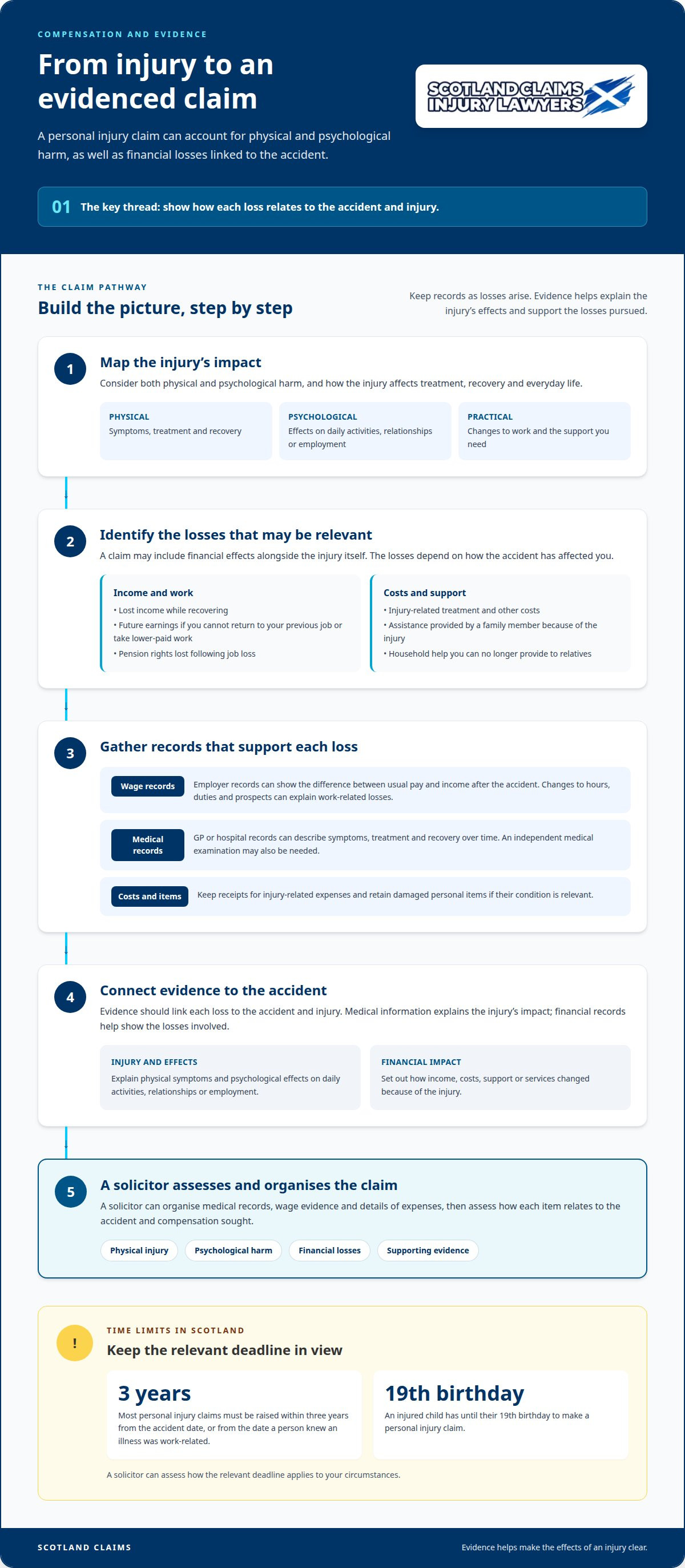
Compensation can address more than the immediate physical injury. A personal injury claim may include physical and psychological harm, alongside financial losses linked to treatment, work and everyday support. For example, a traffic collision could leave someone unable to earn their usual wages while recovering. Evidence needs to connect each loss to the accident and injury.
Time limits affect when a claim can be raised. According to The National Archives (legislation.gov.uk), most personal injury claims in Scotland must be raised within three years from the accident date, or from the date a person knew an illness was work-related. An injured child has until their 19th birthday to make a personal injury claim. These deadlines make early legal advice relevant.
Lost income is one financial loss to assess. Wage records from your employer can help show the difference between your usual pay and your income after the accident. If your injury prevents you returning to your previous job or means taking lower-paid work, a claim can also consider lost future earnings. Changes to your hours, duties and prospects help explain the loss.
Some losses continue beyond wages. If an injury causes job loss and lost pension rights, those rights may form part of the claim. Support from a family member may also be relevant if they provide assistance you need because of the injury. A claim may account for services you once provided to relatives but can no longer manage, such as regular household help.
Medical evidence connects the injury to the accident and explains its impact. GP or hospital records can describe symptoms, treatment and recovery over time. An independent medical examination may also be needed to assess the injury’s effects. Psychological harm matters too: evidence should explain its impact on daily activities, relationships or employment, not just physical symptoms.
Keep clear records of expenses and losses as they arise. Receipts can support injury-related costs, and you may need to retain damaged personal items if their condition is relevant. A solicitor can organise these details alongside wage evidence and medical records, then assess how each item relates to the accident and compensation sought.
For an initial estimate based on your injury and circumstances, use the personal injury compensation calculator. It can help you understand the factors that may affect a payment, while a solicitor can assess the evidence and losses relevant to your claim.
Local coverage and home or hospital visits
A local Glasgow solicitor can make discussions more practical when an injury affects travel, work or daily routines. They can arrange a meeting at home or in hospital, so you can explain the accident without travelling to an office. For example, someone recovering after a road collision may be able to discuss the claim from their ward, with a family member present if helpful.
A Glasgow solicitor can represent you if your accident happened elsewhere in Scotland. What matters is that the incident and injury fall within the Scottish personal injury claim they handle, not that the accident happened near their office. An accident in Stirling or Inverness may still involve a Scottish claim. Its location can help identify potential witnesses, records and other relevant evidence.
For a home or hospital meeting, the solicitor can focus on practical essentials: where and when the incident happened, what took place and how it affects your routine. If speaking for long is difficult, a relative can help provide basic information with your agreement. The solicitor can explain what information is needed next and how it supports the claim.
Local knowledge can also make arrangements around Glasgow more straightforward. If you live in the city but are receiving treatment elsewhere, explain where you are staying and what travel is manageable. The solicitor can discuss a suitable meeting arrangement, rather than making an office visit the only way to start a conversation. Clear communication about access, visiting times and mobility needs helps make the meeting useful.
Some details depend on where the accident happened. For a collision, the road layout, nearby junctions and direction of travel can help describe the scene. For a fall, the location within a building or public area may matter. A solicitor can use your account to identify useful evidence, then take steps to obtain relevant records or statements.
Local support can also make the process accessible as your recovery changes. You might begin in hospital, then continue discussions from home or by telephone. If treatment means a meeting needs to be rearranged, tell the solicitor promptly. Agreeing a practical next step, such as recording further details when you’re comfortable speaking, can keep the claim moving.
A Scottish injury claim may involve formal legal proceedings if it cannot be resolved through earlier steps. A solicitor can explain whether court action is relevant and what representation involves. A tribunal is not the usual forum for a personal injury compensation claim, so the legal route should match the case. Practical support should help you follow that route without unnecessary travel or confusion.
What solicitors can do
A solicitor can assess the circumstances of an accident, explain your options and manage the legal work. This includes organising evidence, communicating with insurers and preparing for court if required.
Support with a Personal Injury Claim
A personal injury solicitor can help gather medical records, employer wage records, receipts and information about damaged belongings. GP or hospital records are described as the most useful evidence in a personal injury claim. A solicitor can use them to understand your symptoms, treatment and the effects on work or daily life.
A solicitor can also arrange an independent medical examination when needed to value the claim. The assessment can explain the injury and its impact in more detail than a brief account of symptoms. For example, a hospital record and examination findings can help show how an injury developed after an accident.
Legal advice also covers the connection between the accident, injury and claimed losses. A solicitor can organise supporting material and identify gaps, such as missing wage details or receipts. They can communicate with insurers on your behalf, explain responses and advise you about decisions during settlement discussions.
Knowledge of Scottish Personal Injury Law
Scottish procedure matters if a claim moves beyond early discussions. A voluntary pre-action protocol for personal injury claims sets out timescales for insurers to investigate and respond before court proceedings are needed. A solicitor can use this process to present the claim, manage correspondence and explain what an insurer’s response means.
In Scotland, only solicitors can initiate court proceedings and represent clients in court. If an insurer disputes responsibility or the proposed compensation, a solicitor can advise whether court action is appropriate and prepare the case, setting out the evidence and legal arguments clearly.
Practical case management brings these tasks together. A solicitor can collect medical evidence, employment records and expense information, then assess how each supports the claim. If an injury affects income or requires ongoing assistance, the evidence can explain those consequences. Clear legal advice helps you understand your options before deciding how to proceed.
The Legal Services Agency provides advice and representation in relevant courts and tribunals in Scotland. When considering that support, clarify what you need: an explanation of your position, or representation in a relevant court or tribunal. Set out the accident, injury and issues that remain unresolved, then ask what advice or representation may be relevant. A focused account can make the discussion easier to follow, particularly when you need to understand how evidence relates to the claim or what steps are open to you. If you’re unsure what support is appropriate, describe the decision or difficulty you face and ask for advice. This gives you a starting point for considering whether representation is also needed.
How does a Glasgow solicitor’s knowledge of Scottish personal injury law help a claim?
Scottish procedure shapes a personal injury claim, from early insurer contact to court action. A solicitor familiar with Scotland’s claims process can apply the relevant steps to your accident and explain what each stage requires.
For many claims, the voluntary pre-action protocol sets out timescales for insurers to investigate and respond before court proceedings are needed. A solicitor can prepare the claim information, manage correspondence and assess the insurer’s response against the evidence. This gives the process structure before you decide whether further legal action is appropriate.
Road traffic claims have a specific process. In Scotland, solicitors and claims handlers use the Compulsory Pre Action Protocol for road traffic accident claims. Understanding how it applies helps a solicitor organise the information insurers need and address responses in context. For example, they can connect the collision account with medical evidence and records of financial loss.
Court procedure also matters if a claim cannot be resolved earlier. Since 2015, most Scottish personal injury actions above the small-claims level can be raised in the All-Scotland Personal Injury Court in Edinburgh. A solicitor can assess whether court proceedings may be needed, explain the relevant route and prepare the case for that forum.
Preparing a claim involves more than filing documents. A solicitor can set out what happened, the basis for responsibility, the injury evidence and the losses claimed. If an insurer disputes an important point, the legal arguments and supporting records need to address it directly. For instance, a disagreement about how an accident happened requires evidence about the circumstances, not simply a summary of the injury.
Knowledge of Scottish law can help identify which details need attention early. A solicitor can consider whether the claim concerns a road accident, workplace injury or another incident, then organise the relevant records and communications. This keeps the case focused on issues affecting responsibility, injury and financial loss.
Ask a solicitor to explain the procedure they expect to follow, the information they need and how they will keep you updated. Clear advice should distinguish early negotiations from court proceedings, so you understand each step before making decisions about your claim.
A solicitor can help identify and organise practical evidence for a claim. Retain damaged personal items and receipts, as the defendants may wish to inspect them. Wage records from your employer can support a claim for lost wages after an accident. A personal injury claim may also include assistance provided by relatives and services you can no longer provide to them.
Cost and employment concerns may also need clear advice. In Scotland, civil legal aid does not cover representation for simple procedure claims in the sheriff court with a value up to £3,000. Workers concerned about the effect of a personal injury claim on their employment may wish to seek advice about their rights. The Legal Services Agency can help obtain medical evidence to support benefits claims and may assist with appeals against benefits decisions.
Scotland Claims Injury Lawyers
Scotland Claims Injury Lawyers can assess your personal injury claim in Scotland and explain the next steps. The firm handles road traffic accidents, slips or trips, and workplace injuries. Its Personal Injury Compensation Calculator can also help you explore factors that may affect compensation.
If you’re considering a claim, the firm’s 100% compensation promise means it recovers its fees from the at-fault party and passes your entire settlement to you. This may help clarify what happens to compensation under its arrangement. If an injury has affected your income, daily life or ability to travel, raise those concerns when discussing your circumstances and any meeting arrangements.
Contact Scotland Claims Injury Lawyers to discuss your injury claim.
Take the next step with confidence
The right legal support should clarify your next decision, not add uncertainty. If you’re weighing the benefits of using a local injury solicitor in Glasgow, consider whether you can explain your priorities, understand the proposed approach and feel informed about decisions affecting your claim. You should know who is advising you and what happens next.
Scotland Claims Injury Lawyers handles Road Traffic Accident Claims, Slip or Trip Claims and Work Injury Claims across Scotland. If your injury followed one of these incidents, you can discuss what happened and the questions you need answered. The firm offers free, no-obligation claim assessments, so you can understand your options before deciding whether to proceed.
Taking the first step can help you understand your options and decide what to do next.
Frequently Asked Questions
What are the benefits of hiring a local personal injury solicitor in Glasgow?
A Glasgow solicitor can make it easier to discuss your case locally and understand how a Scottish injury claim may proceed. You can explain practical concerns, such as difficulty travelling after an accident, and discuss suitable meeting arrangements. Local familiarity can also put details of an incident in context. Scotland Claims Injury Lawyers handles personal injury claims across Scotland and is regulated by the Law Society of Scotland.
How does a Glasgow injury solicitor handle medical assessments and claim negotiations?
A solicitor can arrange an independent medical examination when needed to help value your claim. They can review the report alongside your medical history, then use relevant evidence in discussions with the insurer. For example, if the report describes ongoing symptoms affecting your work, the solicitor can explain how this evidence relates to the losses claimed and respond to the insurer’s position.