
Leg injury compensation amounts in Scotland vary with the injury: guideline awards are £23,680 to £33,450 for moderate leg injuries and £82,110 to £115,940 for the most serious injuries short of amputation. The figures reflect the injury itself; lost wages and other losses may also affect the total claim. Severity, recovery time and lasting effects all matter.
A fracture, knee injury or Achilles tendon injury can affect your mobility and daily life in very different ways. The circumstances of the accident also matter, particularly when establishing how a workplace, road or slip-or-trip injury happened and who was responsible.
This article explains how leg injury compensation is assessed, what guideline figures can show and why they do not guarantee a payout. You’ll also learn how serious and Achilles tendon injuries are considered, which financial losses may be included, and how claims can differ depending on the accident. The aim is to explain the factors that shape a claim, rather than leave you relying on a single headline figure.
Key Takeaways
- Leg injury awards depend on severity, recovery and lasting effects, so a guideline figure is only part of the assessment.
- Severe knee injuries have indicative guideline ranges, with long-term pain and reduced mobility influencing where an injury falls.
- Fracture and amputation awards vary widely according to the injury and its lasting impact on everyday life.
- Achilles tendon compensation reflects the extent of damage and ongoing symptoms such as weakness, restricted movement or limping.
- Workplace, road and slip-or-trip claims each turn on how the accident happened and the evidence connecting it to your injury.
What Affects the Value of a Leg Injury Claim?
Leg injury compensation amounts in Scotland depend on the injury’s severity, recovery and effects on daily life. Guideline figures provide a useful comparison, but a claim may also include financial losses and can be affected by responsibility for the accident.
Injury Severity and Recovery
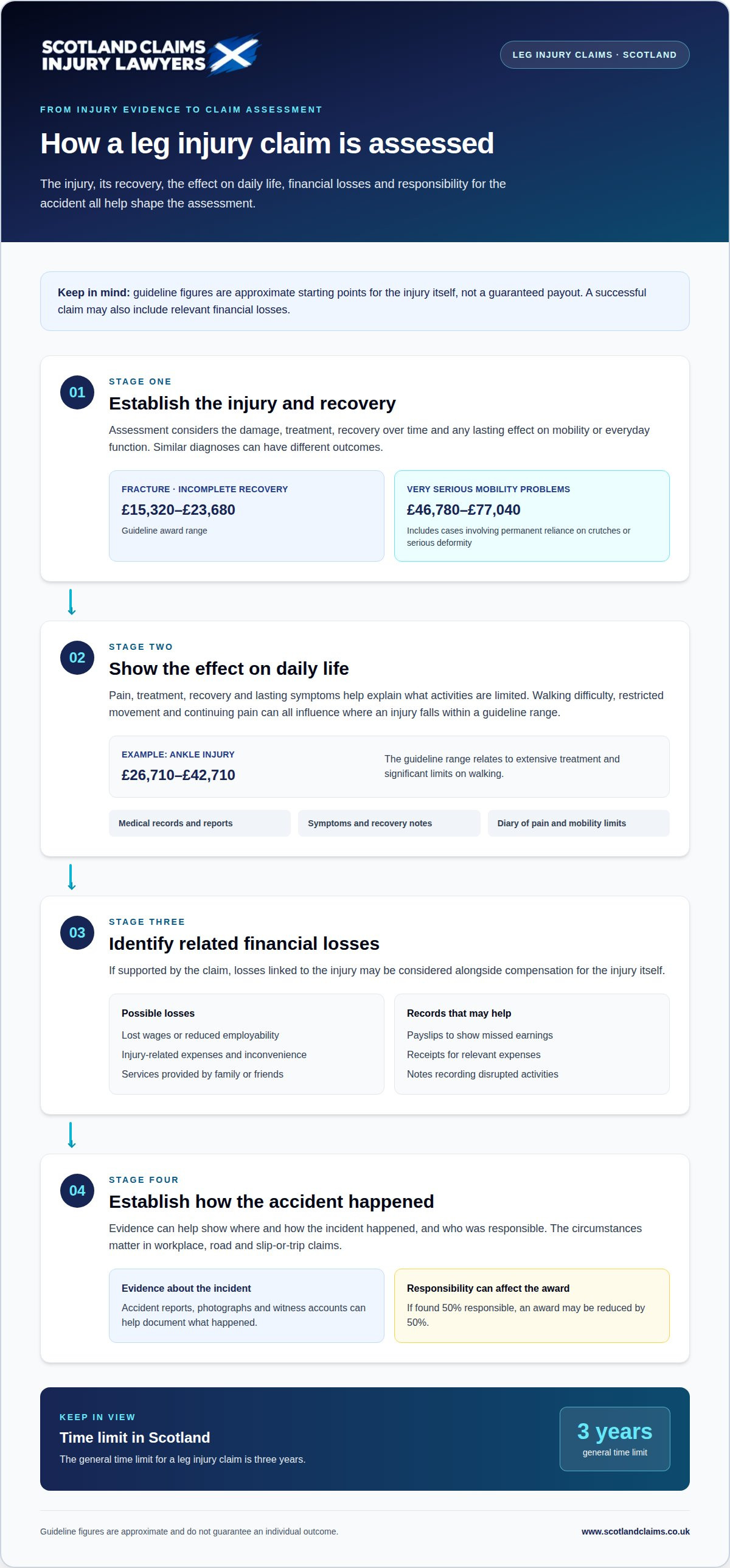
Injury severity and recovery describe the damage caused and how far you regain function over time. A fracture that heals fully can have a different value from one that leaves a limp, an implant or lasting pain. For example, guideline awards for leg fractures with incomplete recovery range from £15,320 to £23,680. Very serious injuries causing mobility problems, permanent reliance on crutches or serious deformity range from £46,780 to £77,040.
Recovery evidence shows how symptoms and restrictions change over time. Prolonged rehabilitation, continuing mobility problems or difficulty returning to usual activities can demonstrate effects beyond initial treatment. These details help distinguish claims involving similar diagnoses.
Claim Valuation Factors
Claim valuation considers the injury’s effects, related financial losses and the circumstances of the accident. If an injury prevents you from working, lost wages may form part of a successful claim. Other possible losses include reduced employability, expenses, inconvenience and services provided by family or friends. Keep records linking each loss to your injury, such as payslips or receipts.
The general time limit for a leg injury claim in Scotland is three years. Responsibility also affects compensation: if you’re found 50% responsible for the accident, your award may be reduced by 50%. Evidence about how the incident happened can therefore affect both responsibility and valuation.
Compensation for Pain and Loss of Amenity
Compensation for pain, suffering and loss of amenity reflects physical effects and activities that an injury prevents or limits. The assessment considers pain, treatment, recovery and lasting symptoms. An ankle injury requiring extensive treatment and significantly limiting walking has a guideline range of £26,710 to £42,710. The range illustrates how restrictions and recovery influence the assessment.
The Judicial College Guidelines provide approximate figures, including the fifteenth edition published in 2019. They are starting points, not an automatic calculation of an individual award. For example, continuing difficulty walking has a different practical effect from temporary discomfort. This context helps explain why leg injury compensation amounts in Scotland vary between claims.
Evidence Supporting a Claim
Evidence supports a claim by documenting the injury, its effects and its connection to the accident. Medical records and reports can describe diagnosis, treatment, symptoms and recovery. Accident reports, photographs and witness accounts can help explain where and how the incident happened. Together, these records give a clearer picture of the injury and its consequences.
Keep relevant paperwork together. Payslips can show missed earnings, while receipts support injury-related expenses. A diary recording pain, mobility limits and disrupted activities can add practical detail about daily effects. For information relevant to Scotland, see personal injury claims in Scotland.
Serious Injuries: How much compensation will you receive?
Serious injury figures vary according to the damage, treatment and lasting effects on movement. Guideline ranges provide a comparison, not a single figure for every claim.
Severe Knee Injury Awards
A severe knee injury award reflects joint damage, pain, treatment and reduced function. The guideline range is £59,490 to £82,080 for a severe knee injury involving joint disruption, gross ligament damage, lengthy treatment, considerable pain and loss of function.
A fracture extending into the knee joint, causing constant permanent pain and limited movement, has a separate guideline range of £44,470 to £59,490. Serious joint or ligament injuries causing instability and requiring prolonged treatment are listed at £33,450 to £46,780. These distinctions show why a knee diagnosis alone does not define the value: the effects on walking and function matter.
An assessment of your circumstances considers the injury’s documented effects and recovery, rather than relying on its label alone. Solicitors use the relevant evidence to distinguish a severe knee injury from less serious damage.
Severe Leg Injury Awards
Severe leg injury awards cover substantial damage and long-term consequences, including major restrictions on mobility. A guide to Scottish compensation lists severe leg injuries at £47,840 to £165,860, while moderate injuries are listed at £33,880 to £47,840.
The range within the severe category reflects how differently injuries can affect people. A lasting problem with walking, ongoing pain or reduced independence has a different impact from an injury followed by a stronger recovery. The assessment also separates compensation for the injury itself from financial losses and expenses, which may be additional parts of a successful claim.
Use these ranges as context, not as a promise of an outcome. The facts of your serious injury, its ongoing effects and the supporting evidence shape how the relevant category applies.
Comparing Injury Severity
Severity describes the extent of damage and the recovery outcome, helping distinguish severe injuries from moderate or less serious ones. Moderate leg injuries are listed at £33,880 to £47,840, compared with £47,840 to £165,860 for severe injuries. The matching figure depends on the injury’s characteristics and consequences, not just the category name.
A complicated fracture involving time off work, muscle wasting or scarring is an example of a moderate injury description. By contrast, a severe knee injury involving major ligament damage, lengthy treatment and loss of function fits a more serious profile. These examples show why claims involving the leg can differ.
The fifteenth edition of the Judicial College Guidelines, published in 2019, provides approximate injury figures. A personal injury compensation calculator can help you explore indicative figures alongside the factors that make each claim distinct.
What Is the Average Leg Injury Compensation Amount (UK)?
There is no single average that describes every leg injury, as compensation can vary with the injury and its consequences. The figures are UK guideline ranges, and the Judicial College Guidelines provide approximate compensation figures for Scottish personal injury claims.
Fracture and Amputation Compensation
Fracture and amputation compensation reflects the injury’s severity and its lasting effects. A fractured femur has an indicative range of £7,780 to £12,010, while moderate leg injuries, including complicated fractures, range from £23,680 to £33,450. A fracture that leaves an incomplete recovery, such as a metal implant or limp, is listed at £15,320 to £23,680.
These examples show why the word “fracture” alone does not determine an award. The type of damage, recovery and lasting symptoms distinguish one claim from another. Compensation for the injury itself is separate from possible additional losses, such as expenses or lost earnings, if the claim succeeds.
Leg Amputation Awards
Leg amputation awards vary according to the level and extent of the amputation. The UK guideline range for an above-knee amputation of one leg is £89,440 to £117,280. For below-knee amputation of one leg, the range is £83,590 to £113,450.
For both legs, total loss is listed at £205,420 to £240,590. Below-knee amputation of both legs is listed at £171,920 to £230,440. These figures help show how the type of amputation changes the indicative award; they don’t include separate losses and expenses that may form part of a successful claim.
Comparing Awards Across the UK
UK guideline figures can offer a point of comparison, but they do not determine the value of an individual Scottish claim. For example, the guideline range for above-knee amputation of one leg is £89,440 to £117,280, while below-knee amputation of one leg is £83,590 to £113,450.
These ranges provide a common point of reference, not a fixed amount for every claim across the UK. The individual injury, recovery and lasting consequences affect where an award falls within a range. Averages can obscure important differences between claims.
Scottish Compensation Guidelines
The Judicial College Guidelines for the Assessment of General Damages in Personal Injury Cases are the source of approximate injury compensation figures, with the fifteenth edition published in 2019. They organise awards by injury type and severity, helping compare a fracture with an amputation or other leg injury.
Use a category that matches the injury’s actual effects, not just its name. For instance, a femur fracture has a listed range of £7,780 to £12,010, while a single above-knee amputation has a much higher range. A personal injury compensation calculator can help you explore indicative figures for different injury types.
Achilles tendon injury compensation
Achilles tendon compensation depends on the injury’s severity and any lasting effects. The indicative ranges distinguish minor damage, partial rupture and serious injury with ongoing symptoms.
Indicative compensation ranges
A minor Achilles tendon injury has an indicative compensation range of £6,200 to £10,750. A partial rupture or significant tendon damage is listed at £10,750 to £17,970. These ranges help show how the injury’s type and extent affect the starting point for assessing a claim.
A repaired serious Achilles injury that leaves weakness, limited movement, limping and scarring has a UK guideline range of £21,320 to £25,670. The symptoms in this description matter. A claim involving persistent weakness and a limp is assessed against a different injury profile from a minor injury with less lasting impact.
How the injury and recovery affect an award
The circumstances of the accident help explain how the tendon was damaged, while medical records describe the diagnosis and treatment. Evidence of ongoing weakness, restricted movement, limping or scarring can show the injury’s continuing effects. For example, records documenting limited movement after treatment add detail to a claim involving a serious injury that required repair.
Recovery matters because the listed ranges distinguish minor injury from partial rupture and serious injury with lasting symptoms. A personal injury solicitor can use the medical evidence and account of the accident to present the injury clearly. Keep appointment records and note changes in mobility or daily activities as you recover.
Injury compensation and other losses
The Achilles guideline figures relate to compensation for the injury itself. If a personal injury claim succeeds, possible additional losses include lost wages, other expenses, inconvenience and services provided by family or friends. Each loss must relate to the injury. Payslips can help explain missed earnings, while receipts record expenses incurred during recovery.
These financial losses are separate from the injury award. A claim involving time away from work may therefore include more than the guideline figure for tendon damage. Keep documents showing each loss and its connection to the accident, such as wage records and relevant receipts.
Making the injury profile clear
Use the listed categories to understand how specific symptoms relate to indicative ranges. Minor tendon damage is listed at £6,200 to £10,750; a partial rupture or significant damage at £10,750 to £17,970; and a repaired serious injury with weakness, limited movement, limping and scarring at £21,320 to £25,670.
These descriptions distinguish the examples, but the evidence should explain your own symptoms and recovery. Set out the accident, treatment and continuing effects in a clear timeline. This gives a personal injury solicitor concrete information to connect the tendon injury with its consequences and related losses.
Workplace, road, and slip-or-trip leg injuries
The accident setting affects the evidence needed to explain how your leg was injured and who was responsible. The injury’s severity and effects still matter, while workplace, road and slip-or-trip claims each involve different circumstances to establish.
Workplace leg injuries
A workplace claim centres on the work activity, location and events leading to the injury. For example, a leg fracture after a fall at work calls for evidence showing where the fall happened and what caused it. An incident report, photographs of the area, witness accounts and relevant work records can help establish what happened.
Keep records of the injury’s effect on your work, too. Payslips can help document lost wages, while details of altered duties or time away can show practical consequences. In a successful personal injury claim, possible losses may also include reduced employability, expenses, inconvenience and services provided by family or friends.
Road traffic leg injuries
A road claim must connect the circumstances of the collision with the leg injury. Whether you were a driver, passenger, cyclist or pedestrian, useful evidence may include scene photographs, witness details and incident records. For example, images showing a vehicle’s position can help explain how the collision happened.
Medical records can then describe the fracture, treatment and recovery. Keep receipts and wage records alongside them, documenting injury-related expenses and lost earnings separately from compensation for the injury itself. The key is not simply that a collision occurred, but how the available evidence supports your account and losses.
Slip-or-trip leg injuries
A slip-or-trip claim focuses on the place where you fell and its condition. A photograph showing a wet floor, uneven surface or obstruction can help explain the hazard. An incident report and witness account may add context, including where you were walking and what happened just before the fall.
Record the date, location and circumstances while they are clear. For example, note whether an obstruction affected your route, then keep the medical records describing the leg injury. These records help connect the accident, injury and claimed losses without assuming every fall has the same cause.
What the different settings mean for your claim
Workplace, road and slip-or-trip claims differ mainly in the evidence needed to establish what happened and who was responsible. A work record may be relevant after an incident at work; scene photographs may help after a road collision or fall. In each case, medical evidence explains the injury, while wage records, receipts and details of care can support additional losses.
Make a simple record of the incident, preserve relevant photographs and accounts, and keep injury and financial documents together. This gives a clearer picture of the accident and its consequences. The injury category alone cannot explain every part of a claim.
Explore the personal injury compensation calculator
Scotland Claims Injury Lawyers: Road Traffic Accident Claims
Scotland Claims Injury Lawyers handles road traffic accident claims involving leg injuries, as well as workplace and slip-or-trip claims across Scotland. Contact the firm when an accident has caused an injury and you need help understanding your claim, the evidence and related losses. Its Personal Injury Compensation Calculator can help you explore indicative figures alongside the factors discussed above. The firm is regulated by the Law Society of Scotland.
The firm’s 100% Compensation promise means it recovers its fees from the at-fault party and passes your entire settlement to you. Ask the firm to explain the fee arrangements for your claim before proceeding.
Contact Scotland Claims Injury Lawyers to discuss a leg injury claim arising from an accident in Scotland.
Take your next step with clarity
Understanding leg injury compensation amounts in Scotland is a starting point. A figure becomes meaningful when considered alongside your circumstances, priorities and the effect the injury has had on your life.
Before deciding how to proceed, consider what you want a claim to address. You may want a clearer picture of the process or guidance on the questions you still have. You do not need every answer before starting a conversation.
A clear discussion can help you understand your options and choose your next step. Keep your priorities at the centre, and move forward when you feel ready.
Frequently Asked Questions
How Much Compensation Could I Claim for a Broken Leg?
A broken leg’s compensation depends on the fracture, treatment, recovery and lasting effects. A fractured femur has an indicative guideline range of £7,780 to £12,010. Complicated fractures with effects such as time off work, muscle wasting or scarring fall within a moderate leg injury range of £23,680 to £33,450. These examples show why the bone affected and the outcome of recovery both matter.
What Losses Can Be Included Alongside the Leg Injury Itself?
A successful claim may include financial and practical losses connected to the injury, in addition to compensation for the injury itself. Examples include lost wages, reduced ability to earn, expenses, inconvenience and help provided by family or friends. Keep evidence linking each loss to your injury. Wage records can demonstrate missed earnings, while receipts can document expenses incurred during treatment or recovery.
What Types of Leg Injuries Can Affect Compensation?
Compensation can reflect fractures, knee and ankle injuries, foot injuries, tendon damage and amputations. The nature and effects of each injury shape its assessment. For instance, a serious knee injury involving joint disruption, considerable pain and loss of function has a different guideline range from a minor foot injury. Lasting symptoms, treatment needs and mobility restrictions help distinguish injury categories and their indicative awards.
What if My Leg Injury Resulted in an Amputation?
Amputation awards depend on whether one or both legs were affected and the amputation level. Indicative UK guideline ranges are £89,440 to £117,280 for an above-knee amputation of one leg, and £83,590 to £113,450 for a below-knee amputation of one leg. Loss of both legs has a listed range of £205,420 to £240,590. A successful claim may also include related losses, such as lost earnings and expenses.
What is the average payout for a broken leg?
There is no single average payout that represents every broken leg claim. A fractured femur has an indicative range of £7,780 to £12,010, while complicated fractures with time off work, muscle wasting or scarring are included in a moderate leg injury range of £23,680 to £33,450. The difference reflects the injury’s consequences, not simply the fact that a bone was broken.
How much compensation can you claim for a broken leg in Scotland?
In Scotland, guideline figures for leg injuries provide useful comparisons rather than one fixed amount for every broken leg. A fracture that leaves incomplete recovery, such as a metal implant or limp, is listed at £15,320 to £23,680. The effect on mobility and recovery helps distinguish this example from a fracture that heals without lasting problems or a more complex injury.
What compensation ranges apply to fractures of the femur, tibia, fibula or kneecap in Scotland?
A fractured femur has an indicative range of £7,780 to £12,010. Other fracture assessments depend on features such as whether the break is complicated, treatment required, recovery and ongoing symptoms. For example, a fracture extending into the knee joint with constant permanent pain and limited movement has a guideline range of £44,470 to £59,490. The injury’s effects help determine the relevant comparison.
How much compensation is typical for a leg injury causing permanent disability or amputation in Scotland?
Indicative figures vary with the lasting disability and the type of amputation. Very serious leg injuries causing mobility problems, permanent reliance on crutches or serious deformity have a guideline range of £46,780 to £77,040. An above-knee amputation of one leg is listed at £89,440 to £117,280. These figures concern the injury itself; successful claims may also include relevant financial losses and expenses.