Table of Contents
Last Updated: July 13, 2026
How to Choose the Best Personal Injury Lawyer in Glasgow: Key Criteria
Choosing the best personal injury lawyer in Glasgow requires evaluating specialisation, experience, fee transparency, and communication style. The right solicitor can mean the difference between fair compensation and an undervalued settlement. Research from the Law Society of Scotland shows that clients who thoroughly vet their solicitor before hiring are significantly more likely to feel confident throughout their case.
Pro Tip
The most common mistake claimants make is choosing a solicitor based on advertising rather than credentials. Verify registration with the Law Society of Scotland and ask specific questions about their experience with your injury type before committing.
Specialisation in Personal Injury Law
A solicitor handling personal injury claims alongside wills, property sales, and family law will rarely deliver the focused expertise your case deserves. When you meet with a solicitor, ask directly: "What percentage of your practice is personal injury work?" A specialist should confidently state that personal injury claims comprise at least 50-75% of their caseload.
Specialised firms in Glasgow often belong to professional bodies like the Law Society of Scotland's Accident and Injury section. The difference becomes apparent during settlement negotiations. A specialist knows what similar cases have settled for, understands common insurer tactics, and can spot undervalued offers immediately.
Key Takeaway
Choose a solicitor who specialises in personal injury law, not one who fits it in between other legal services. This single decision dramatically improves your chances of receiving fair compensation.
Experience and Track Record in Glasgow Courts
Scottish court procedures differ from English law, and Glasgow Sheriff Court has its own local practices and judge preferences. A solicitor with deep Glasgow experience understands these nuances. Ask potential solicitors: "How many cases have you taken to trial in Glasgow Sheriff Court?" A strong answer involves specific numbers and recent examples.
Request case results and client testimonials related to similar injuries to yours. A solicitor should be able to provide anonymised examples of successful outcomes. Local knowledge extends beyond courtroom procedure, experienced Glasgow solicitors understand which insurers operate in the region, their settlement patterns, and their typical defences.
Understanding No Win No Fee Solicitors in Glasgow
The "no win, no fee" arrangement removes financial risk from your claim. If your case fails, you pay nothing. However, not all agreements are identical. Some solicitors charge a "success fee", a percentage of your compensation if you win. Scotland Claims Injury Lawyers operates differently: they recover fees from the liable insurer rather than deducting from your settlement, meaning you keep 100% of your compensation.
Understanding the distinction matters enormously. A solicitor charging 20% of your settlement as a success fee reduces your net recovery substantially. If your case is worth £10,000, a 20% success fee costs you £2,000 in legal fees.
Watch Out
Many solicitors charge success fees as a percentage of your settlement. This directly reduces your compensation. Always confirm whether fees are recovered from the liable insurer or deducted from your award before instructing a solicitor.
Fee Structures and Transparency
Transparency about fees separates trustworthy solicitors from those prioritising profit over client welfare. A solicitor should explain their fee structure in writing before you sign anything. This document should cover:
- Whether they charge upfront costs
- How success fees are calculated (if applicable)
- Whether additional expenses (court fees, expert witness costs) are your responsibility
- What happens if your case settles versus goes to trial
Some solicitors charge for preliminary advice; others provide free initial consultations. Free consultations allow you to evaluate multiple solicitors without financial commitment. A solicitor should never pressure you into accepting a settlement quickly. Request a written fee agreement before instructing any solicitor. If a solicitor resists providing written terms, that's a strong warning sign.
Questions to Ask a Personal Injury Lawyer Before Hiring
Preparation ensures you ask the right questions during your consultation.
About their experience: "How many years have you handled personal injury claims? How many cases similar to mine have you dealt with? What were the outcomes?" Their answers should be specific, not vague.
About your claim: "Based on what I've told you, what's your initial assessment of my case strength? What's a realistic compensation range?" Avoid solicitors who guarantee specific outcomes.
About the process: "What are the typical steps from now until settlement? How long does this usually take? How often will you update me?"
About fees: "How are you paid? Will any costs come from my settlement? What expenses might I be responsible for?"
About alternatives: "Could this settle without going to court? What happens if the other side won't settle?"
About their team: "Who will handle my case day-to-day? Will I speak with you directly or an assistant? What's your typical response time to client queries?"
Listen carefully to how they answer. Do they explain things clearly or use jargon without clarifying? Do they seem genuinely interested in your situation or rushing through a standard pitch?
Client Reviews and Communication
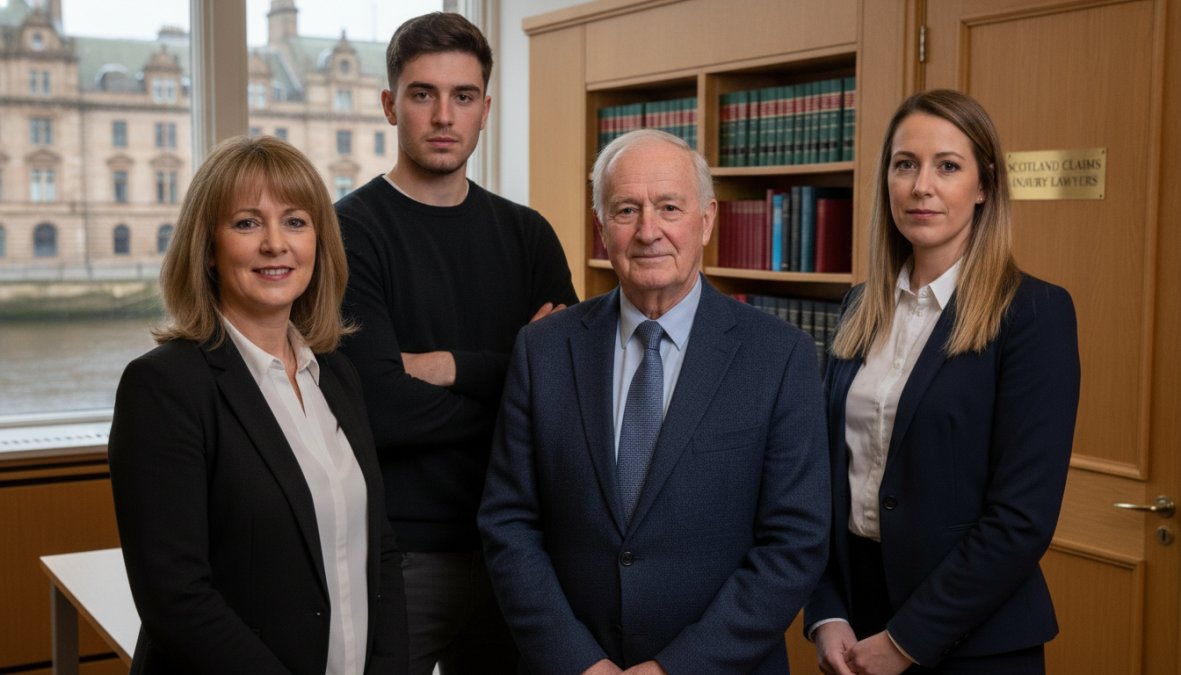
 Professional solicitor meeting with a client in a modern Glasgow law office, discussing documents and case details across a desk with natural light from large windows
Client testimonials reveal what it's actually like to work with a solicitor. Look beyond star ratings and read detailed reviews explaining specific experiences. Pay attention to patterns: if multiple clients mention slow response times, that's a legitimate concern. If clients consistently praise transparency and regular updates, that's a strong positive signal.
Responsive solicitors answer queries within 2-3 working days. Client-focused solicitors explain decisions clearly and won't pressure you into accepting settlements.
Best For
Clients who value regular communication and transparent explanations should prioritise solicitors with strong reviews mentioning responsiveness and clear case updates throughout the process.
Personal Injury Claim Time Limits in Scotland
Scotland's legal system imposes strict time limits on personal injury claims. Missing the deadline means losing your right to claim entirely, regardless of claim merit. The primary deadline is three years from the date of injury. This applies to most personal injury claims, whether from road traffic accidents, workplace injuries, or slips and trips.
Important exceptions exist. Claims involving children have different timescales; the three-year limit typically begins when they turn 16. Claims for occupational diseases may have different limitation periods depending on when the disease manifested.
Why Scottish Time Limits Matter When Choosing Your Solicitor
Your solicitor's understanding of Scottish limitation law directly affects how they manage your case timeline. A solicitor experienced in Scottish law understands that the clock starts on the date of injury, not when you became aware of its full consequences. Because Scottish solicitors can only recover fees from the liable insurer under speculative fee agreements, not from your settlement, they have a strong incentive to lodge claims well before deadline pressure mounts. A solicitor operating under this model will typically lodge your claim within 6-12 months of injury, protecting your legal position and avoiding the negotiating disadvantage that comes from approaching the three-year deadline.
Court-Specific Timelines: Sheriff Court vs. Court of Session
Scotland has two main civil courts handling personal injury claims: the Sheriff Court (for claims up to £100,000) and the Court of Session (for larger claims). A solicitor with Glasgow-specific experience understands Sheriff Court procedures intimately, the typical time from lodging to settlement or trial, the court's case management approach, and local judge preferences.
| Claim Type |
Time Limit |
Starts When |
Court Likely Venue |
| Standard personal injury (under £100k) |
3 years |
Date of injury |
Sheriff Court (Glasgow) |
| Standard personal injury (over £100k) |
3 years |
Date of injury |
Court of Session |
| Injury to child |
3 years |
Child turns 16 |
Sheriff Court or Court of Session |
| Occupational disease |
3 years |
Disease diagnosed |
Sheriff Court or Court of Session |
| Fatal accident |
3 years |
Date of death |
Sheriff Court or Court of Session |
Practical Implications for Your Solicitor Selection
When you meet with potential solicitors, ask: "How do you manage the three-year deadline in your case workflow? At what point do you lodge claims, and why?" Solicitors who lodge claims proactively (within 12 months) demonstrate confidence in their case assessment and protect you from deadline pressure. Also confirm: "If my case is still settling as we approach the three-year deadline, what happens? Do you have contingency plans?"
Your solicitor should never use the deadline as an excuse to pressure you into accepting inadequate compensation.
Red Flags to Avoid When Selecting Your Lawyer
Certain warning signs suggest a solicitor isn't right for you. Trust these instincts and keep looking if you encounter them.
Guaranteed Outcomes or Unrealistic Assessments
No legitimate solicitor can promise specific results. If someone guarantees you'll win or receive a particular amount, they're either inexperienced or deliberately inflating expectations. Be equally wary of unrealistic assessments. If a solicitor claims your minor whiplash injury will settle for £50,000 when similar cases typically settle for £3,000-£5,000, they're either deluded or deliberately overpromising.
Pressure to Decide Quickly or Accept Settlements Without Proper Consideration
Reputable solicitors give you time to consider your options. If they pressure you into instructing them immediately or rush you into accepting a settlement without allowing proper review, they're prioritising case closure over your welfare. A legitimate solicitor will say: "Take time to think about this. Call me back when you're ready."
Vague or Evasive Fee Explanations
Solicitors should explain fees clearly in writing before you instruct them. If they're evasive about costs, refuse to provide written terms, or give vague answers, move on immediately. Watch for solicitors who won't confirm whether fees are recovered from the liable insurer or deducted from your settlement, or who mention "additional expenses" vaguely without itemising them.
Lack of Personal Injury Specialisation or Vague Experience Claims
A solicitor handling everything alongside personal injury work likely lacks focused expertise. During your consultation, ask directly: "What percentage of your practice is personal injury work?" A specialist should confidently state at least 50-75%. Also ask: "How many cases similar to mine have you handled in the last two years?" Vague answers suggest they don't track their work systematically.
Poor Communication or Inaccessibility During the Initial Consultation
If they're hard to reach, slow to respond, or dismissive of your questions during the initial consultation, that's how they'll treat you throughout your case. Test their responsiveness: If you email them a follow-up question after the consultation, how long does it take them to reply? Responsive solicitors answer within 2-3 working days.
No Track Record Information or Reluctance to Discuss Results
Solicitors should be able to discuss their experience with cases similar to yours and provide anonymised examples of successful outcomes. Ask: "Can you show me examples of cases similar to mine that you've settled? What were the outcomes?" Also ask about their success rate: "What percentage of your cases settle versus go to trial? What's your average settlement value for cases like mine?"
Unwillingness to Provide References or Client Testimonials
A solicitor confident in their work will encourage you to read client reviews. Check reviews on the Law Society of Scotland's website, Google, and Trustpilot. Look for patterns: Do multiple clients mention slow communication? Do they praise transparency?
Pressure to Accept a Settlement Quickly or Dismissal of Your Concerns About an Offer
If your solicitor recommends accepting a settlement but dismisses your concerns or pressures you into deciding immediately, that's a red flag. Your solicitor works for you, not the insurer. They should explain the settlement calculation in detail, discuss whether the offer is fair, explore negotiating a higher amount, and give you time to consider before accepting.
Watch Out
Trust your instincts. If something feels off during the initial consultation, whether it's pressure, vagueness, dismissiveness, or poor communication, that feeling is usually accurate. There are plenty of trustworthy solicitors in Glasgow; don't settle for one who makes you uncomfortable.
How to Choose the Best Personal Injury Lawyer: Your Next Steps
You now understand the key criteria for selecting the best personal injury lawyer in Glasgow. Start by listing three to five potential solicitors. Check their Law Society of Scotland registration, review client testimonials, and request initial consultations. Most offer free consultations; use them to ask the questions outlined above and assess compatibility.
Take notes during each consultation. How did they explain your case? Did they seem genuinely interested or rushed? Were they transparent about fees and timescales? Compare your notes across all consultations before deciding.
Remember that the cheapest option rarely delivers the best outcome. A solicitor charging slightly higher success fees might secure significantly better settlements, resulting in higher net compensation. Focus on value, not just cost. Trust your instincts. If you feel comfortable, heard, and confident in a solicitor's expertise, that's your sign.
Selecting the right personal injury lawyer in Glasgow determines whether you receive fair compensation or settle for less than you deserve. Scotland Claims Injury Lawyers specialises in helping claimants make this decision through transparent guidance, no upfront costs, and fees recovered from the liable insurer rather than deducted from your settlement. You'll keep 100% of your compensation when you win. Start with a free consultation to discuss your claim and understand how specialist representation can strengthen your case.
Frequently Asked Questions
What is a 'no win, no fee' agreement and how does it work in Scotland?
A 'no win, no fee' agreement means you pay no legal fees if your personal injury claim is unsuccessful. If your claim succeeds, your solicitor's fees are typically recovered from the liable party's insurer, not from your compensation. This arrangement removes financial risk and ensures you keep the full amount of your settlement. It's a common arrangement among Scottish personal injury solicitors and offers peace of mind for claimants.
What questions should I ask a personal injury lawyer before hiring them?
Key questions include: How many similar cases have you handled? What is your success rate? How will you communicate progress? What are your fee arrangements? Do you have experience in Sheriff Court proceedings? Will you handle my case personally or pass it to a junior? Can you provide references from previous clients? Ask about their experience with your specific injury type and their familiarity with Glasgow court procedures to ensure they're the right fit.
What is the time limit for making a personal injury claim in Scotland?
In Scotland, the standard time limit for personal injury claims is three years from the date of the accident or when you became aware of your injury. However, this can vary depending on circumstances. If you were a minor at the time of the accident, the clock may start from your 16th birthday. It's crucial to act quickly and consult a solicitor early to ensure you meet these deadlines and preserve evidence for your claim.
How do I verify a personal injury solicitor's credentials and registration in Glasgow?
You can verify a solicitor's credentials through the Law Society of Scotland website, which maintains a searchable register of all accredited solicitors. Check that they're registered, insured, and have no disciplinary history. Look for specific accreditation in personal injury law and confirmation they're regulated by the Law Society. This verification protects you from unqualified practitioners and ensures your solicitor meets professional standards required to practise in Scotland.