Act Within 48 Hours to Keep 100% After a Hit and Run in Scotland
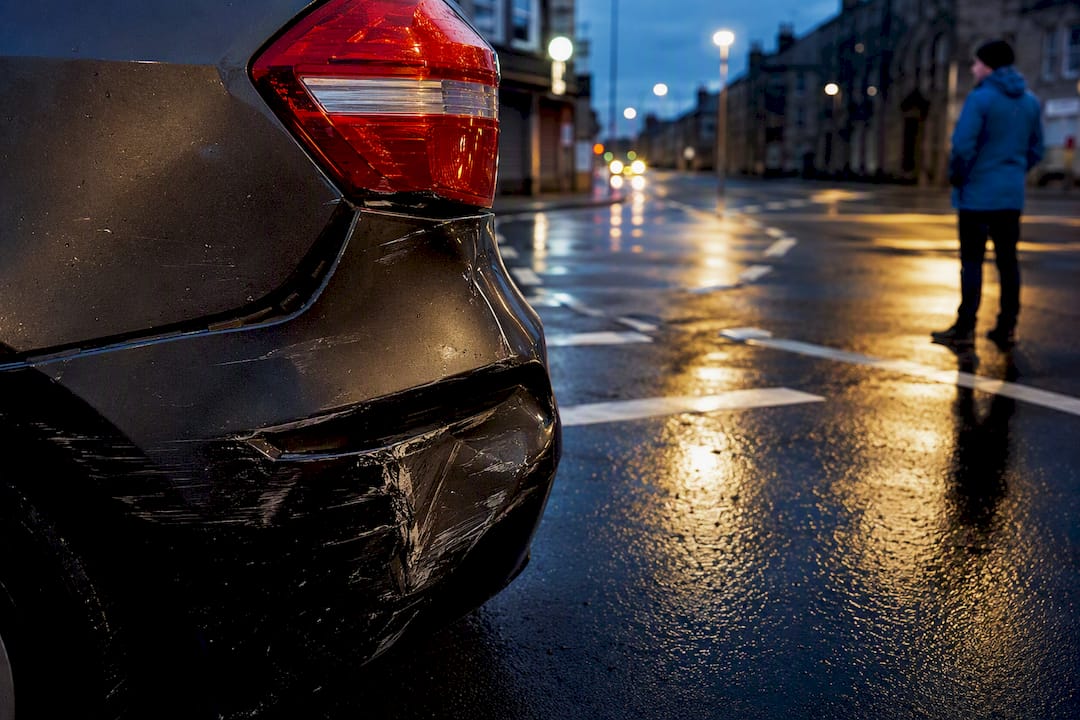
Yes, you can claim compensation after a hit-and-run in Scotland. Report the incident to Police Scotland and your own insurer immediately, then pick the right route: the other driver’s insurer if traced, the Motor Insurers’ Bureau (MIB) if not, or court if liability is disputed. You have three years to act under Scottish law, so speed protects both your evidence and your rights.
TL;DR:
- Reporting to police within 14 days is essential, as delays can weaken the claim and affect the likelihood of tracing the driver.
- Most hit-and-run claims in Scotland are handled through the Motor Insurers’ Bureau, especially when the driver remains untraceable.
- Evidence collection in the first 48 hours, including photographs, witness contacts, and medical records, is crucial for building a strong case.
- The three-year limitation period starts from the accident date, making early action vital for preserving the right to claim.
- Compensation varies based on injury severity and documented losses, with general damages for pain and suffering and special damages for financial costs.
Scotland Claims Injury Lawyers
Get Help With Your Hit And Run Claim
Scotland Claims Injury Lawyers connects people injured in Scotland with specialist lawyers for personal injury claims through a straightforward platform.
Table of Contents
What to do at the scene and in the first 24 to 48 hours
The decisions you make in the first two days often determine whether a hit-and-run claim succeeds or stalls. Evidence degrades fast: dashcam footage gets overwritten, witnesses forget number plates, bruising fades before a doctor sees it.
Report to Police Scotland as soon as you can, even if you intend to claim rather than pursue a prosecution. This matters more than most people realise: the MIB explicitly checks whether police were notified, and it expects that notification within 14 days. Miss that window and an untraced-driver claim can be weakened before it starts.
- Call the police and get a reference number, whether you report at the roadside or later at a station.
- Photograph the scene, your vehicle, any damage, and your injuries before they’re treated or repaired.
- Note the registration plate, make, colour, and direction of travel, even partial details.
- Ask nearby shops, homes, or businesses whether they have CCTV, and get names and numbers from any witnesses.
- Contact your insurer promptly, stick to the facts, and avoid speculating about blame or fault.
- Get checked by a GP or A&E even for minor symptoms, and keep every letter, prescription, and receipt.
Pro Tip: Take a voice note on your phone straight after the accident describing exactly what happened while it’s fresh. Enquiry agents working for the MIB often ask for a detailed timeline weeks later, and a same-day recording is far more reliable than memory.
Which claims route applies to your accident?
Three routes exist for a Scotland road accident claim, and picking the right one from the outset saves months of delay.
- The other driver’s insurer: use this when the driver is identified and insured. Your solicitor pursues their insurer directly for full compensation.
- Your own insurer: sometimes faster if you have relevant cover, though this can affect your no-claims record depending on your policy.
- The Motor Insurers’ Bureau (MIB): the route for an untraced driver, an uninsured driver, or certain foreign vehicles. This is the standard path for genuine hit-and-run cases where nobody was caught.
- Court action: needed when liability is disputed, when an insurer denies the claim outright, or when you reject an MIB Formal Award and want to challenge it.
Most straightforward hit-and-run personal injury claims in Scotland end up with the MIB, simply because the defining feature of a hit-and-run is that the driver isn’t there to identify. Knowing this early stops wasted time chasing an insurer that was never going to pay.
How does an MIB hit-and-run claim actually work?
Registering as a direct claimant through the MIB’s online portal is the practical starting point. From there, the MIB runs its own enquiries rather than simply taking your word for it.
- Tracing attempts: the MIB tries to identify the driver and their insurer before treating the claim as untraced.
- An enquiry agent statement: someone acting for the MIB will take a detailed recorded account of the incident.
- An independent medical examination and, where relevant, vehicle engineering evidence to assess damage and injury.
- A decision: tracing to an insurer, an MIB Formal Award, or an option to appeal through arbitration if you disagree with the outcome.
Claimants who arrive with a clear chronological timeline and collated receipts and witness contacts typically move through this process faster, since the enquiry agent has less to chase and fewer gaps to query. The MIB’s own guidance is blunt about the 14-day police reporting expectation feeding directly into how quickly and favourably a claim is assessed.
How long do you have to make a claim in Scotland?
Scottish law gives you three years, not five, not indefinitely, and that clock starts ticking from the date of the accident.
- The Prescription and Limitation (Scotland) Act 1973 sets a three-year limitation period for personal injury actions, including hit-and-run claims.
- For children, the clock generally doesn’t start until they turn 16, giving them until age 19 to raise an action.
- For someone lacking legal capacity, the three-year period is paused until capacity is regained.
- Missing the deadline usually means losing the right to claim altogether, regardless of how strong the underlying evidence was.
Three years sounds generous until you consider how MIB enquiries actually unfold: tracing attempts, medical examinations, and engineering reports all take time. Starting early isn’t just about the legal deadline; it’s about giving your solicitor room to build the case properly before evidence disappears.
What compensation can you actually claim?
Compensation in a Scotland road accident claim usually splits into two categories, and understanding both helps you see what a fair settlement should cover.
- General damages: payment for pain, suffering, and loss of amenity, covering how the injury has affected your life and wellbeing.
- Special damages: quantifiable financial losses, including past and future care costs, medical treatment, travel expenses to appointments, lost earnings, and vehicle repair or replacement.
- MIB awards follow their own scheme rules and won’t cover every loss an insurer might, particularly around subrogated losses where your own insurer has already paid out on the vehicle.
- Amounts vary enormously depending on injury severity, how well documented your losses are, and whether medical evidence backs up what you’re claiming.
Citizens Advice notes that valuation depends heavily on the evidence you can produce for both general and special damages, which is exactly why the first 48 hours matter so much. A solicitor builds a compensation estimate from your medical records, wage slips, and receipts, not from guesswork.
Why use a solicitor for a hit-and-run claim?
A solicitor’s job in a hit-and-run case is largely about managing the MIB or insurer relationship so you don’t have to fight it alone while recovering from an injury.
- Collecting and organising medical and financial evidence into a format the MIB or insurer actually expects.
- Preparing and submitting the claim, including the enquiry agent statement and supporting documentation.
- Negotiating directly with the MIB or insurer to challenge low offers.
- Representing you in court if liability is disputed or a Formal Award is rejected.
Specialist Scottish experience matters here more than generic UK-wide knowledge, because the MIB’s Untraced Drivers’ Agreement has its own procedural quirks that catch out claimants who go it alone. Scotland Claims Injury Lawyers operates on a no win no fee basis and takes no success fee from a client’s compensation, which stands apart from the maximum 20% (including VAT) that many larger solicitor firms charge successful claimants.
Before a first meeting, gather your police reference number, any photographs, medical letters, witness details, and a note of financial losses. A solicitor will ask what happened, when, what injuries you sustained, and what evidence you’ve already collected.

Pro Tip: Ask your solicitor directly whether they’ve handled MIB untraced-driver claims before, not just general road traffic cases. The process has different paperwork and timescales, and experience with it shows in how quickly your claim moves.
Common mistakes claimants make after a hit-and-run
Delay is the biggest one. People wait days to report to the police, hoping the driver will come forward, and lose the evidential advantage that comes with a quick report. A close second is talking too freely to insurers, offering casual opinions on fault that later get used against the claim.
Photograph everything, chase witnesses before they forget, and get medical attention even for symptoms that feel minor at the time. If you’re unsure which route applies, a free solicitor review early on tends to save far more time than it costs.
— Roger
Get a free claim assessment from Scotland Claims Injury Lawyers
Start by using the compensation calculator to get an early estimate of what your claim might be worth, or request a callback to speak with a specialist. After you get in touch, expect an initial review of your case, a checklist of evidence to gather, and assignment to a solicitor experienced in no win no fee claims across Scotland. There’s no cost to find out where you stand.
Official guidance and organisations to consult
This article is general information, not a substitute for advice from a qualified lawyer. Consult a qualified legal professional about your own circumstances before acting on anything here.
Sources
FAQ
How much can you claim from a hit-and-run?
There’s no fixed figure. It depends on injury severity, financial losses like lost earnings and vehicle damage, and how well the claim is evidenced, so amounts range from a few thousand pounds for minor whiplash to substantial sums for serious or long-term injuries.
What happens if you hit someone’s car and drove off?
Leaving the scene of a road accident without reporting it is an offence, and the injured party can still pursue compensation through the MIB if the driver responsible is never traced or identified.
What is the average payout for whiplash in Scotland?
Whiplash payouts vary depending on severity and recovery time, and no single average applies across all cases; a solicitor assesses your specific medical evidence and recovery timeline to give a realistic estimate. Scotland Claims Injury Lawyers reviews these details for free before any claim begins.
What is the minimum punishment for a hit-and-run?
Criminal penalties for failing to stop or report an accident are a matter for the police and courts, not the civil compensation claim itself, so this article focuses on your route to compensation rather than criminal sentencing outcomes.
How long do I have to make a hit-and-run claim in Scotland?
Three years from the date of the accident under the Prescription and Limitation (Scotland) Act 1973, with different rules applying for children and those lacking legal capacity.
Recommended