Last Updated: 29 October 2026
Quick Summary
The best ergonomic pillows for whiplash recovery are supportive, height-adjustable options that hold the head and neck in a neutral position, not products that promise to cure the injury. No pillow is backed by evidence as a whiplash treatment, so judge them on shape, material, adjustability and fit.
- The RECOVER Injury Research Centre states cervical pillows cannot be recommended following whiplash because of a lack of research evidence.
- Sleep on your back or side with the head and neck in a neutral line, and avoid stomach sleeping.
- For side sleeping, choose a medium to higher loft equal to the distance from shoulder to ear.
- An overly firm pillow pushes the head forward and strains the neck, so medium-firm support usually works better.
- Buy adjustable or medium-loft first, as a pillow that suits the acute stage may be wrong two months later.
Table of Contents
Ergonomic Pillows for Whiplash Recovery: What the Evidence Actually Says
Whiplash is a neck injury caused by a sudden forced movement of the head, most often in a rear-end collision, and pillows marketed as recovery aids deserve far more scepticism than they usually get. The best ergonomic pillows for whiplash recovery are supportive, height-adjustable options that hold the head and neck in a neutral position, not products that promise to "cure" the injury. This guide examines seven pillows sold in the UK, separates marketing claims from evidence, and explains what genuinely helps sleep after a whiplash injury.
Here is the uncomfortable truth most buying guides skip. The RECOVER Injury Research Centre at the University of Queensland states plainly that cervical pillows cannot be recommended following whiplash because of a lack of research evidence, and calls for more research. That does not mean a good pillow is useless. It means no pillow should be sold to you as a treatment.
Below, this guide covers how to sleep with whiplash, pillow height for neck pain, what a memory foam pillow for neck pain can and cannot do, and which of the seven options suit which sleeper. The clinical boundaries come first, because they change how you should read every product claim that follows.
Quick Comparison: Seven Ergonomic Pillows at a Glance
No single pillow wins for every sleeper, but the table below shows how the seven options differ on shape, material, intended sleeping position and UK availability. Where a specification is not published by the manufacturer or retailer, that is stated plainly rather than guessed. Prices are given in GBP where a UK retailer publishes them; where a product is not sold directly in the UK, that is flagged so you can decide whether to import or choose an alternative.
| Pillow |
Shape |
Material |
Best For |
UK Availability |
Key Limitation |
| Tempur-Neck |
Ergonomically shaped |
Pressure-relieving foam |
Shaped foam support |
Sold via Tempur UK and selected retailers; check current price and dimensions on the Tempur UK site |
Fixed loft; higher price point |
| Eli & Elm Side-Sleeper |
Recessed shoulder section |
Not specified |
Side sleepers |
UK availability unconfirmed; may require import |
Limited UK returns options |
| Original Groove Pillow |
Ergonomic contour |
Not specified |
Neck discomfort |
UK availability unconfirmed; check retailer delivery |
Specs not verified |
| Dunelm Comfortzone Contour |
Contour |
Not specified |
Value shoppers |
Dunelm stores across Glasgow and UK delivery |
Stock and specs vary by store |
| Saatva Latex |
Standard |
Latex fill |
Latex over foam |
UK delivery unconfirmed |
Import and returns complexity |
| Dosaze Contoured Orthopedic |
Contoured |
Memory foam, medium firmness, medium loft |
Back and combo sleepers |
UK availability unconfirmed; price quoted in US Dollars |
Currency and delivery uncertainty |
| Coop Sleep Goods Adjustable |
Adjustable fill |
Not specified |
Fine-tuning loft |
UK availability unconfirmed |
Adjustment method unconfirmed |
The pattern worth noticing: shape and adjustability matter more than brand names, and several of these products do not publish UK-specific specifications or GBP pricing. That is a buying problem, not a recovery problem. Trying a pillow before buying, where a store allows it, removes much of the risk in pillow shopping. For everyone else, the sections below explain how to work around missing specifications using trial periods, returns policies and a simple fit test at home.
Pro Tip
Before ordering any pillow online, check the retailer's returns policy for used bedding. A pillow you have slept on may not be returnable, so a trial period or a store visit is worth more than a spec sheet.
Whiplash Recovery Sleeping Position: Back, Side or Stomach?
Sleeping on your back or side with the head and neck supported in a neutral line is the safest position during whiplash recovery, while stomach sleeping should be avoided because it twists the neck for hours at a time. The whiplash recovery sleeping position matters more than the pillow you choose, because no pillow can correct eight hours of poor head and neck positioning.
Back sleeping keeps the spine in its natural curve and lets a contoured pillow support the neck without forcing it. Side sleeping works well with a pillow tall enough to fill the gap between shoulder and ear, keeping the head level rather than tilted down. Stomach sleeping is the position to drop: the head stays rotated to one side, which loads the very structures whiplash has irritated.
If a work injury caused your neck pain, the process for claiming is separate from recovery, and the guide to a back injury at work in Scotland claim explains how these claims work.
Practical adjustments that help:
- Use a pillow that keeps the head level with the spine, not propped forward
- Support the gap under the neck, not just the back of the head
- Avoid stacking pillows to gain height; choose one with the right loft instead
- Give a new pillow a week before judging it, and stop if pain worsens
How to Sleep with Whiplash Without Waking in More Pain
Learning how to sleep with whiplash comes down to three things: neutral alignment, a pillow that holds its shape through the night, and a wind-down routine that reduces muscle guarding before bed. Most people wake in more pain because the pillow has flattened, the neck has drifted out of line, or they went to bed tense and stayed that way.
A common mistake is buying a very firm pillow assuming firmer means more support. In practice, an overly firm pillow pushes the head forward and strains the neck. Medium-firm support with a contour that follows the natural curve of the neck usually works better.
Try these before changing pillows:
- Take a warm shower or use a heat pack on the shoulders before bed to relax muscles
- Keep the pillow low enough that your chin does not tuck towards your chest
- Sleep on your back or side, never your stomach
- If you wake in pain, note the position you woke in; it tells you what to adjust
A pillow supports recovery; it does not drive it. Gentle movement during the day, as advised by your GP or physiotherapist, matters more than any product.
Pillow Height for Neck Pain: Finding Your Loft
Pillow height for neck pain is the single most important specification, and loft, the thickness of the pillow, decides whether your head sits level or tilts. A 2021 paper in the Journal of Physical Therapy Science on pillow height determinants and neck pain notes that foam is considered a suitable material for cervical-spine support and may relieve waking pain, though it does not establish that this applies specifically to whiplash.
Use this as a starting guide, then adjust:
- Back sleepers: a lower to medium loft that fills the gap under the neck without lifting the chin
- Side sleepers: a medium to higher loft equal to the distance from shoulder to ear
- Combination sleepers: an adjustable pillow, or one with two loft heights across its width
- Stomach sleepers: the position to stop, so loft is secondary to changing position
The fit test takes one minute. Lie on your side and have someone check whether your nose, chin and breastbone form a straight line. Lie on your back and check that your chin is level, not pointing at the ceiling. If either fails, the loft is wrong for you, whatever the product page says.
Memory Foam Pillow for Neck Pain: What It Does and Does Not Do
A memory foam pillow for neck pain provides pressure relief and keeps the head and neck positioned consistently, but it does not treat whiplash and it is not backed by evidence as a recovery device. Memory foam moulds to the shape of the head, which some sleepers find supportive and others find hot and unyielding. Achieving true comfort often depends less on the material of the pillow and more on adopting specific sleeping positions for neck pain that minimise strain on the cervical spine.
What memory foam genuinely offers:
- Even pressure distribution across the head and neck
- A contoured shape that can follow the natural curve of the neck
- Consistent support through the night, unlike fibre pillows that flatten
Where it falls short:
- It retains heat, which disrupts sleep for some people
- It can feel too firm for side sleepers who need more give at the shoulder
- It does not adjust itself; if the loft is wrong, the pillow stays wrong
The honest framing is that memory foam is one material among several. Latex feels springier and cooler; adjustable fill lets you change the loft yourself. None of them is a treatment.
The Seven Ergonomic Pillows Reviewed
The seven pillows below are the options most often recommended in UK-accessible buying guides, and each review states plainly what the supplied product information confirms and what it does not. None of these products has published evidence showing it speeds whiplash recovery, so judge them on shape, material, adjustability and fit. Where a product is not sold directly in the UK, that is flagged so you can weigh the hassle of importing against the benefit.
Get Started Today →
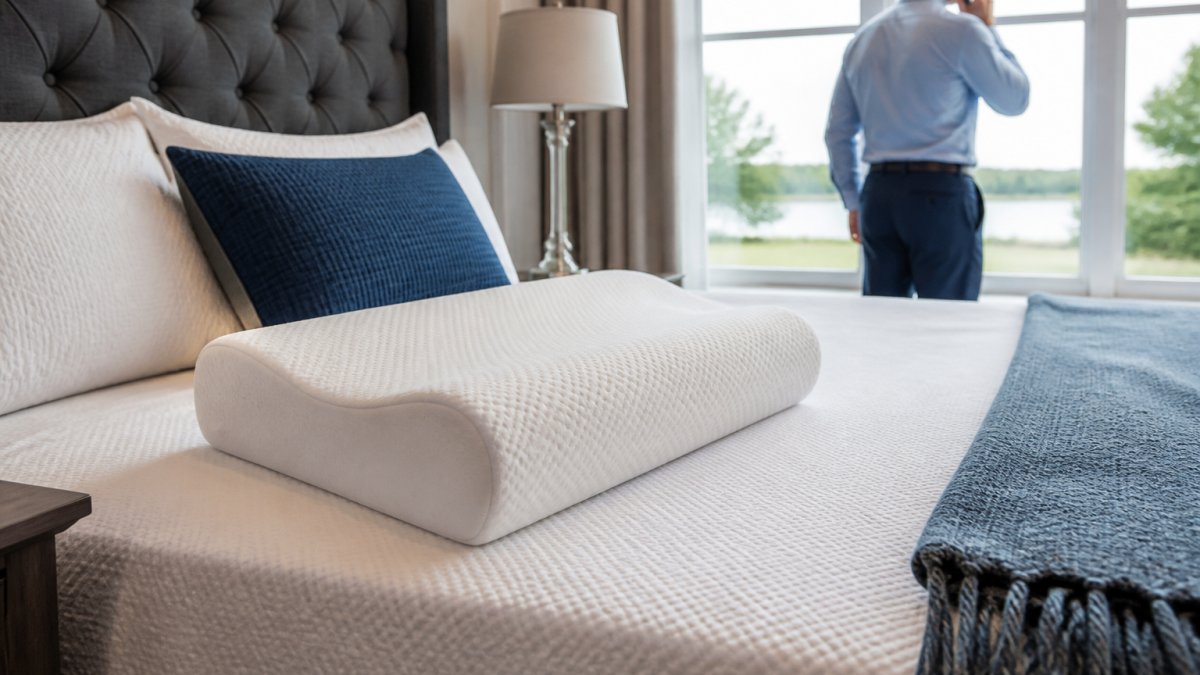 Contoured memory foam ergonomic pillows resting on a neatly made bed in a sunlit bedroom
Tempur-Neck Pillow. A shaped foam pillow with a contoured profile designed to support the neck. It suits sleepers who want a firm, moulded shape and are happy to commit to a fixed loft. Tempur sells directly in the UK and through selected retailers, so check the Tempur UK site for current GBP pricing, dimensions and delivery. The fixed loft is the main trade-off: if it does not match your shoulder-to-ear distance, there is no adjustment.
Eli & Elm Side-Sleeper Pillow. The recessed lower section is designed to make room for the shoulder, which addresses the main complaint side sleepers have about standard pillows. A genuinely distinct design feature. UK availability is unconfirmed, so check whether the retailer ships to Scotland and what the returns process involves before ordering.
The Original Groove Pillow. Positioned as an ergonomic pillow for neck discomfort and featured in more than one comparison. The supplied results mention a discount but not its amount, and detailed specifications are not verified. Treat the marketing claims with caution until dimensions and firmness are published.
Dunelm Comfortzone Contour Pillow. Named as a value pick in a national newspaper comparison, and the easiest of the seven to buy in Scotland because Dunelm has stores across Glasgow. The contour shape at a modest price makes it a sensible first purchase, and buying in store lets you feel the loft before committing. Stock and specifications vary by store, so check availability before travelling.
Saatva Latex Pillow. A latex option for sleepers who find memory foam too warm or too firm. Latex feels springier and returns to shape quickly. UK delivery is not confirmed in the supplied information, so check import costs and returns before ordering.
Dosaze Contoured Orthopedic Pillow. The supplied information gives the most detail of the seven: contoured memory foam, medium firmness and medium loft, which suits back and combination sleepers. The price is quoted in US dollars rather than GBP, so factor in exchange rates and delivery when comparing.
Coop Sleep Goods Adjustable Pillow. Adjustable fill lets you add or remove material to tune the loft, which is the single most useful feature for anyone who has never found the right pillow height. The adjustment method is not specified in the supplied results, so check the product page for how the fill is accessed.
Best for: readers who want a starting point without spending heavily should look at the Dunelm contour first, especially if they can visit a Glasgow store. Skip if: you need a confirmed UK specification and return policy, in which case buy from a retailer that publishes both.
Watch Out
A pillow that feels right in the first painful week of whiplash may be wrong two months later as mobility returns. Adjustable fill or a medium loft is the safer choice during recovery, because you can change it as your neck tolerates more movement.
Fit testing at home. Give any new pillow time before judging it, and stop if pain worsens. Lie on your side and check that your nose, chin and breastbone form a straight line; lie on your back and check that your chin is level, not pointing at the ceiling. If either fails, the loft is wrong for you, whatever the product page says. Adjustable pillows let you correct this yourself; fixed pillows do not.
Red Flags and Recovery-Stage Considerations Before You Buy
Any pillow marketed as a cure for whiplash is a red flag, and so is any product page that promises faster recovery without citing evidence. Recovery-stage considerations matter too: a pillow that feels right in the first painful week may be wrong two months later as mobility returns.
Watch out: buying a very high-loft pillow in the acute stage because it feels comforting can push the neck into flexion and increase morning stiffness. Buy adjustable or medium-loft first.
Other red flags:
- Claims of "clinically proven" recovery with no study named
- No published dimensions, loft or firmness rating
- No returns policy, or a short one, for a product you must sleep on to judge
- Prices quoted only in foreign currency with no UK delivery information
If your neck pain followed an accident that was not your fault, keep records from the start. The guide to the best evidence for an injury claim in Scotland explains what to keep after an accident and how good records protect the compensation you may be due.
See a GP or physiotherapist if pain worsens, spreads into the arms, or comes with numbness or weakness. A pillow is not a substitute for assessment.
Start Your Whiplash Claim with Scotland Claims Injury Lawyers
Recovering from whiplash is hard enough without worrying about the cost of legal advice, and Scotland Claims Injury Lawyers works on a No Win No Fee basis so there is nothing to pay upfront. The firm charges a 15% plus VAT success fee, and clients keep their compensation when the claim succeeds. Cases are handled for clients across Scotland, with impartial advice from the first call.
If someone else's negligence caused your injury, it is worth finding out where you stand. Readers who want to speak to Scottish injury lawyers about starting a claim can speak to injury lawyers in Scotland and get a clear view of their options.
Whiplash recovery takes time, and the legal side should not add to the stress. Scotland Claims Injury Lawyers offers a No Win No Fee arrangement, a 15% plus VAT success fee rather than the 20% many firms charge, and a 100% Compensation Guarantee, so clients keep what they are awarded when the claim succeeds. Get started with Scotland Claims Injury Lawyers and find out what your claim could be worth.
ergonomic pillowsbest ergonomic pillows for whiplash recoveryhow to sleep with whiplashpillow height for neck painmemory foam pillow for neck painwhiplash recovery sleeping position