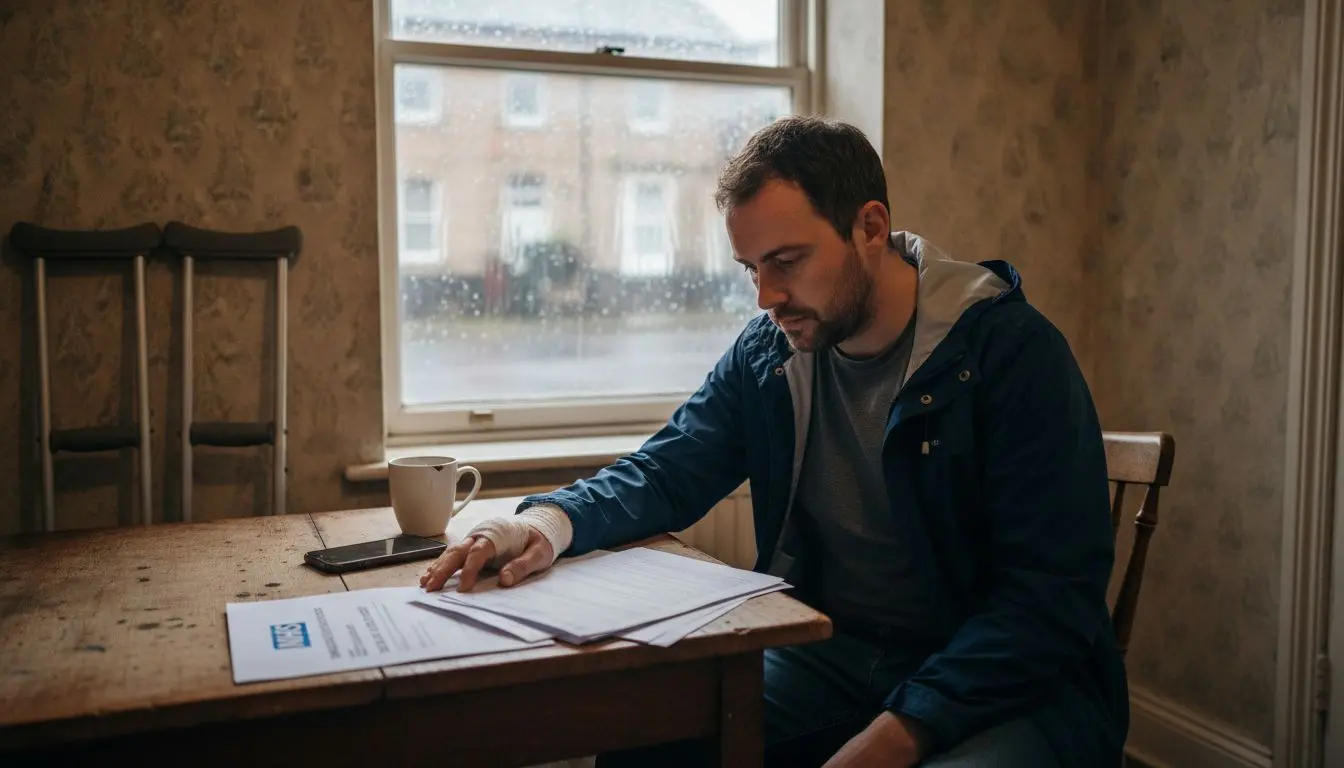
Based on reporting by STV News, 16 November 2026. All rights in the original report remain with the publisher.
What was reported
According to STV News, NHS Tayside has been fined £75,250 after pleading guilty at Perth Sheriff Court to a breach of health and safety regulations connected to the death of an elderly woman with dementia. The woman, who was in her eighties and a patient in a dementia assessment unit at Murray Royal Hospital in Perth, died in January 2024 after sustaining a head injury in a fall within her room.
As reported by STV News, the patient had been formally assessed as being at high risk of falls, and her care plan required two separate alarm systems to be active overnight. An investigation by the Health and Safety Executive found that a bed pad alarm had reportedly been removed owing to equipment shortages, and a movement sensor was damaged and failed to activate when the patient left her bed in the early hours. Staff discovered the patient had fallen only after hearing the incident directly.
STV News reports that a senior Crown Office official noted that the risk-reduction measures required by the care plan were not fully in place at the time. NHS Tayside has since introduced additional bed pad alarms and revised its alarm-checking procedures.
Fatal accident and clinical negligence claims in Scotland
When a patient dies in a hospital or care setting and there are questions about whether adequate safety systems were in place, close relatives may have grounds to pursue a civil compensation claim in Scotland. Such claims are separate from any criminal or regulatory proceedings, such as the health and safety prosecution described above, and they follow different legal tests.
In incidents of this kind, liability in a civil claim often rests with the organisation responsible for the patient's care, where it can be shown that the standard of care fell below what was reasonably expected and that this failure caused, or materially contributed to, the harm suffered. In cases involving NHS facilities, the relevant health board is typically the named defender in any civil action. The existence of a formal care plan setting out specific protective measures, and evidence about whether those measures were in place, can be relevant to how such a claim is assessed.
Claims of this nature in Scotland are governed by the principles of Scots delict law. Establishing liability requires independent medical or nursing expert evidence, and cases can take time to investigate thoroughly. Families are under no obligation to act quickly, provided they remain within the legal time limits set out below.
Time limits
Under the Prescription and Limitation (Scotland) Act 1973, there is generally a three-year time limit within which a civil claim must be raised. In cases involving a death, this three-year period typically runs from the date of death rather than the date of the incident that caused it, though the precise starting point can depend on the circumstances.
The court does retain a discretion to allow a claim to proceed beyond the three-year period in certain situations, but this is not guaranteed and should not be relied upon. Gathering medical records, expert reports and witness accounts becomes more difficult as time passes, so it is advisable to seek legal advice well within the limitation period, even if there is no immediate urgency to raise proceedings.
What compensation can cover
Under the Damages (Scotland) Act 2011, certain close relatives of a person who has died as a result of another party's wrongdoing may be entitled to claim compensation. Those relatives are defined in the legislation and include spouses or civil partners, children, parents and siblings, among others.
Compensation in a fatal case can cover a range of heads of loss, including:
- Loss of support, meaning the financial contribution the deceased made to the household or dependants.
- Reasonable funeral expenses incurred by the family.
- Grief and distress suffered by close relatives as a result of the death.
- Loss of society, which reflects the loss of the deceased person's companionship, care and guidance.
- In some circumstances, a claim may also be made on behalf of the deceased's own estate for pain and suffering experienced before death.
Each case is different, and the amount awarded depends on the specific facts, the closeness of the relationship and the financial impact on surviving relatives. Any fees agreed with a solicitor in a successful case are not deducted from the compensation itself.
Frequently asked questions
Can relatives claim compensation if a family member dies in an NHS hospital in Scotland?
Yes. Under the Damages (Scotland) Act 2011, certain close relatives may be entitled to bring a civil compensation claim if they believe that negligent or unsafe care contributed to a family member's death. This is a civil matter, entirely separate from any criminal prosecution or regulatory investigation that may also take place.
Does a guilty plea or fine against an NHS board mean a compensation claim will succeed?
Not automatically. A criminal or regulatory finding, such as a health and safety conviction, may be relevant background information, but a civil compensation claim requires the pursuer to establish liability under a different legal standard. Independent expert evidence is usually needed to support the claim.
How long do relatives have to bring a compensation claim after a death in Scotland?
In most cases, the Prescription and Limitation (Scotland) Act 1973 sets a three-year time limit, which generally runs from the date of death. While the court has a discretion to extend this in some circumstances, families should seek legal advice well before the three-year period expires, as evidence becomes harder to obtain over time.
What if the deceased had no income? Can a claim still be made?
Yes. Compensation in a fatal case is not limited to financial loss. Relatives may claim for grief and distress, loss of society and companionship, and reasonable funeral costs, regardless of whether the deceased was earning an income. The personal and emotional impact of bereavement is recognised in Scots law as a head of loss in its own right.
Is there any cost to families who wish to explore a compensation claim?
Many solicitors in Scotland handle cases of this kind on a no win, no fee basis, meaning families face no upfront legal costs. It is worth confirming the specific fee arrangement at the outset. Where a case is successful, any agreed fees are paid separately and are not deducted from the compensation awarded to the family.
Based on reporting by STV News, 16 November 2026. All rights in the original report remain with the publisher.