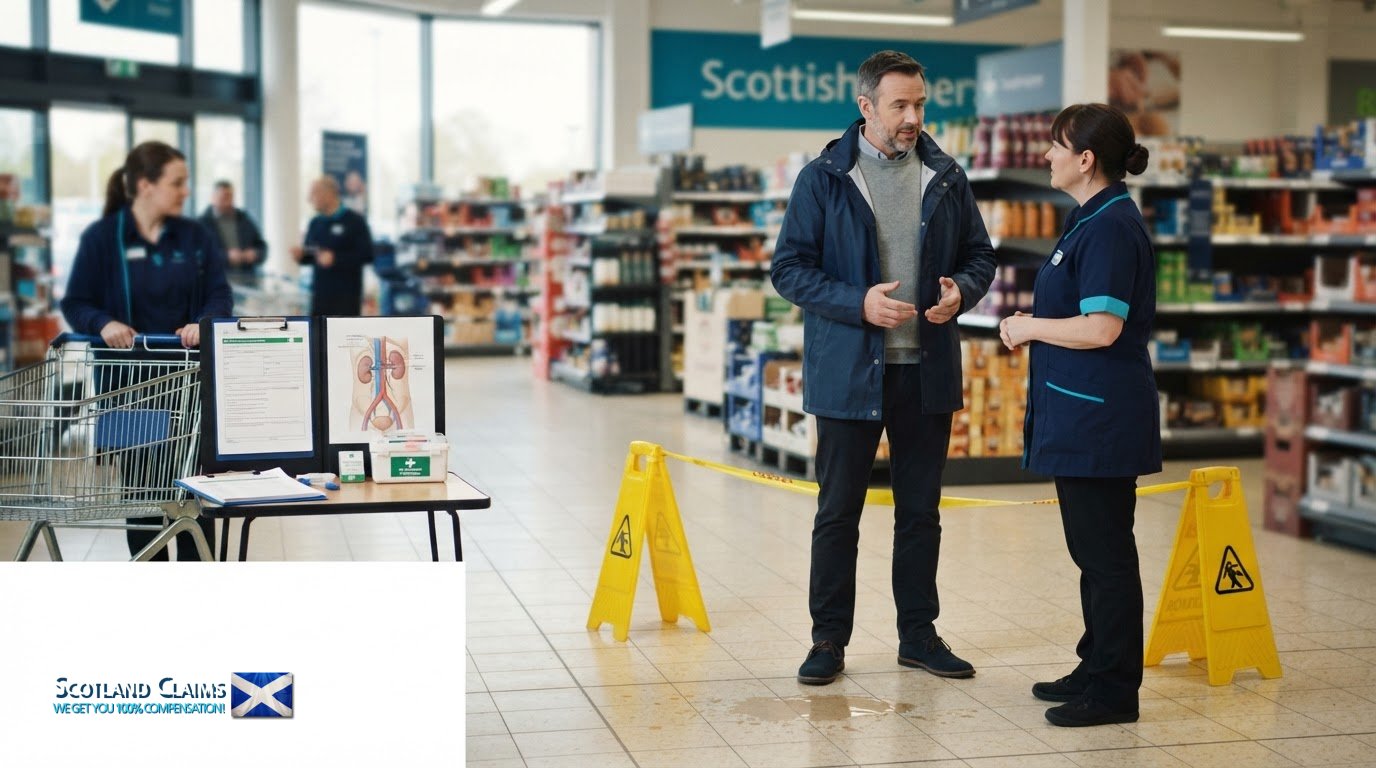
An abdominal aortic aneurysm (AAA) diagnosis does not, by itself, show that a supermarket caused a fall. When claiming for a fall in a supermarket in Scotland, the key questions are what caused the accident and what injuries followed. If an AAA is part of your medical history, it may help explain your health and treatment, but it is separate from how the fall happened.
It’s understandable to want clear answers when an injury, a pre-existing condition and medical care overlap. This article explains AAA risk factors and Scotland’s screening pathway, including the difference between referral for specialist assessment and the timing of surgery. Men are invited for AAA screening when they turn 65, and 90.5% of men referred after a large aneurysm was detected were seen within two weeks in the year ending 31 March 2025.
This article explains how medical records can clarify the timeline after a supermarket fall, and why screening or surgery figures do not determine responsibility for an accident. The key is to distinguish medical questions from evidence about the fall and its consequences.
Key Takeaways
- Learn which time limits matter for a personal injury claim in Scotland and why it’s important to understand the dates that apply to your situation.
- See what to prioritise after a supermarket fall, from getting medical attention to recording what happened.
- Find out how photographs, witness details and medical records can help build a clearer account of the accident and its effects.
- Understand how to report the incident and make a focused request for relevant records, including CCTV.
- Explore how injury impact and financial losses affect compensation, and how AAA referral and surgery timelines relate to the medical picture.
How long do I have to make a personal injury claim in Scotland?
In Scotland, a personal injury claim generally has a three-year time limit, usually running from the date of the supermarket accident. Court proceedings must be raised before the deadline. Telling the supermarket, completing an incident report or discussing settlement does not, by itself, stop time running.
For example, if you fell in a shop on 10 May, note that date and seek advice well before the corresponding third anniversary. Keep the date alongside your medical records, photographs and any correspondence with the supermarket. These details help establish the timeline and identify what needs action. Do not assume that an ongoing discussion means court proceedings have been started.
The date can be less straightforward if an injury or its cause becomes clear later. In some cases, the relevant period may depend on when you became aware of the injury and its connection to the accident. A doctor’s notes, scan results or referral letters can help establish when that knowledge arose. An AAA diagnosis, for example, does not automatically show when a separate supermarket injury became apparent.
Different rules can apply to children, people who lack legal capacity and claims following a death. These circumstances may affect how the time limit is calculated, so don’t rely on a general three-year calculation if one applies. Record the accident date, when symptoms began, and any significant diagnosis or change in treatment. These milestones help clarify when the deadline may fall.
Acting early can also help preserve practical evidence. A supermarket may retain CCTV for a limited period, and staff or witnesses can become harder to identify over time. Ask the store to preserve relevant footage and keep a copy of your written request. Note the incident reference, the manager’s name and the date you reported the fall. These steps support your account, but do not replace starting a claim in time.
Keep a simple timeline with the accident, medical appointments, work absences and communications. If the fall affected an existing condition, note when that effect began and tell your treating clinician. Accurate records can help distinguish the consequences of the accident from earlier health issues. A Scotland-focused guide to personal injury claims in Scotland can also help you understand the next steps.
Treat the third anniversary as a deadline, not a target date. Gathering evidence and taking legal steps can take time before court proceedings begin. Starting early gives you more time to establish how the accident happened, document your injury and address any question about when the time limit began.
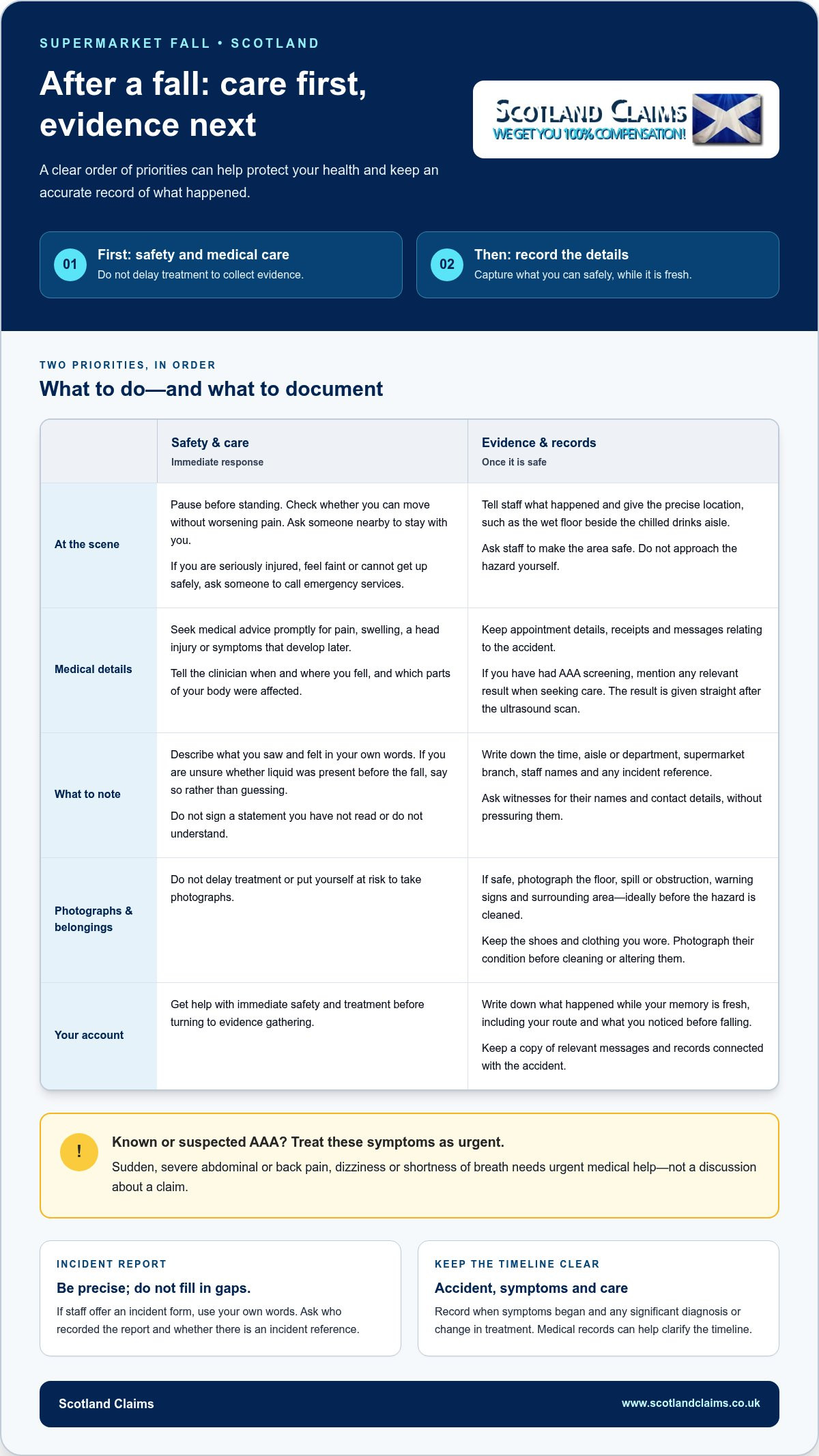
Your first priority is safety and medical care, not collecting evidence. If you’re on the floor, pause before standing and check whether you can move without worsening pain. Ask a nearby shopper or staff member to stay with you. If you’re seriously injured, feel faint or cannot get up safely, ask someone to call emergency services. Don’t try to walk through the shop to reach customer service.
Tell supermarket staff what happened as soon as you can. Give a precise location, such as “the wet floor beside the chilled drinks aisle”. Ask them to make the area safe without approaching the hazard yourself. If a staff member offers an incident form, describe what you saw and felt in your own words. Don’t guess at the cause. Ask for the name of the person recording the report and any incident reference.
Seek medical advice promptly if you have pain, swelling, a head injury or symptoms that develop later. Tell the clinician you fell in a supermarket, when it happened and which parts of your body were affected. If you have a known or suspected AAA and experience sudden, severe abdominal or back pain, dizziness or shortness of breath, seek urgent medical help. These symptoms need medical attention, not a discussion about a claim.
Before leaving, note the time, aisle or department, and names of any witnesses. If it is safe, photograph the floor, any spill or obstruction, warning signs and the surrounding area. Take pictures before staff clean the hazard, but don’t delay treatment or put yourself at risk. Keep the shoes and clothing you wore, and photograph their condition before cleaning or altering them.
- Write down what happened while your memory is fresh, including your route and what you noticed before falling.
- Record the supermarket branch, staff names and incident reference, if provided.
- Keep receipts, appointment details and messages relating to the accident.
- Ask witnesses for their names and contact details, without pressuring them.
Be accurate when speaking with staff or completing a report. If you’re unsure whether liquid was present before the fall, say so rather than filling gaps. Don’t sign a statement you haven’t read or don’t understand. Once you’ve dealt with immediate safety and treatment, these records can help clarify what happened. If the fall caused an injury, you can read about slip or trip claims and the information commonly needed to assess one.
If you have had an AAA screening, you are told the result straight after the ultrasound scan, so mention any relevant result when seeking care.
What evidence should I collect for a supermarket fall claim in Scotland?
Useful evidence helps show how the fall happened, what injury followed and what losses resulted. A photograph of a spill may show a hazard, but not how long it had been there. When claiming for a fall in a supermarket in Scotland, bring records together to create a clear timeline, from the shop floor through treatment and recovery.
Start with photographs of the exact location. Include the floor, nearby shelves, warning signs, lighting and any visible liquid or obstruction. A wide shot can show where the hazard was in relation to the aisle; close-ups may capture details such as a damaged tile or packaging. Keep original files where possible, with their date and time information intact. Don’t edit images in a way that changes what they show.
Write a separate account in your own words. Record what you were doing, the direction you were walking, what you noticed before falling and where your body landed. Note whether the surface looked wet, whether a sign was visible and what staff said afterwards. Distinguish what you saw yourself from what someone else told you. That makes your account clearer and more reliable.
Witness details can help explain what happened before you arrived or after you fell. Ask for names and contact details, then note where each person was standing. Someone who saw a spill before the accident may provide different evidence from a person who only saw you on the floor. Don’t suggest what witnesses should say; preserve their independent recollections.
Keep records showing the injury’s effects. Medical notes, appointment letters, prescriptions and referral correspondence can document symptoms and treatment. If you have an existing condition, such as an AAA, retain relevant records that help distinguish its symptoms from the effects of the fall. A clinician’s notes about when pain began can support the medical timeline.
- Keep the supermarket incident reference and copies of messages with staff.
- Save payslips, employer correspondence or rota details showing missed work.
- Retain receipts for reasonable expenses linked to the injury, such as travel to appointments.
- Keep damaged clothing or footwear, and photograph the damage before cleaning or repair.
Organise files by date and label photographs with their location. Note who created each record and when you received it. If the supermarket provides an incident report, check that it records the correct aisle, circumstances and injury. Ask for a factual detail to be corrected if needed, and keep your own copy. When claiming for a fall in a supermarket in Scotland, these materials help build a clear account of the accident and its consequences.
How do I report a supermarket accident and obtain the incident report or CCTV
Report the accident to the supermarket’s duty manager or customer service team. Give the branch, date, approximate time and precise location, such as the aisle beside the bakery. Describe the hazard and how you fell without guessing about details you didn’t see. Ask for the report reference and the name or role of the person recording it.
Follow up in writing with the branch or its customer service team. Include your contact details, the incident reference, your injury and a concise account of what happened. Ask for a copy of the incident report and explain if an entry is inaccurate. For example, if it gives the wrong aisle, identify the correct location and ask for your correction to be added to the file.
Ask the supermarket promptly to preserve any CCTV covering the area and time of the fall, as footage may be routinely overwritten or deleted. Identify the camera location if you know it, such as the entrance to aisle four, and give a focused time window. If you don’t know the exact time, provide your best estimate and explain what could help narrow it down, such as the time on your till receipt.
Keep the request factual. Ask the store to retain relevant footage while you pursue the matter, and keep a dated copy of your message. CCTV may show the floor, staff activity, warning signs or the moments before your fall. It may not capture every angle, so combine it with photographs, witness details and your own account.
If you want footage showing you, make a separate written request and describe your appearance and clothing. State the date, time range, branch and area where you were recorded. Other shoppers or staff may also appear, so the supermarket may protect their privacy by providing an edited or limited copy rather than an unaltered recording. Ask what format or viewing arrangement it can offer.
- Keep copies of your report request, CCTV request and any reply from the supermarket.
- Record when you sent each message and the name of any staff member you spoke with.
- If the branch says it cannot locate the report, give the incident date, manager’s name and reference again.
- If CCTV is unavailable, ask whether it was reviewed or retained, and note the response.
A clear paper trail helps distinguish the supermarket’s incident record from your own account. Keep original emails and letters rather than relying on phone conversations alone. If a reply disputes the location or timing, compare it with your receipt, photographs and medical appointment records. These details can clarify what the store recorded and what other evidence is available.
How much compensation could I receive for a supermarket slip or trip injury in Scotland
There is no single compensation amount for every supermarket fall. The assessment depends on the injury, its effects and the evidence connecting those effects to the accident. When claiming for a fall in a supermarket in Scotland, a sprained wrist with a short recovery has different consequences from a fracture requiring surgery and ongoing rehabilitation. Describe your actual injury and losses rather than relying on a headline figure.
Compensation may reflect the pain and impact of the injury, as well as financial losses caused by it. Medical records help show the diagnosis, treatment, recovery and any lasting symptoms. For example, hospital notes, physiotherapy records and a clinician’s comments about restricted movement can explain how a knee injury affected daily activities. A lasting limitation may have different consequences from symptoms that resolve quickly.
Keep a clear record of each loss. Save payslips and employer correspondence if the injury caused you to miss work or reduced your earnings. Keep receipts for travel to medical appointments, prescribed items or paid help with tasks you previously managed. Note the date, reason and amount for each expense. A receipt alone may not show why the cost resulted from the fall, so keep a related appointment letter or other supporting record too.
An existing condition needs to be distinguished carefully from a new injury or change. If you had an AAA before the fall, the diagnosis alone does not show that the supermarket accident caused it. Medical evidence can help explain your previous symptoms, what changed after the fall, and whether treatment or daily function was affected. Keep relevant referral letters and scan reports alongside records about injuries from the accident.
Responsibility for the accident also matters. Evidence must establish how the hazard arose and whether the supermarket’s actions contributed to the fall. A serious injury does not, by itself, prove that the store was at fault. Your account, witness evidence, photographs and the supermarket’s records can help establish what happened and connect the accident to the injury and losses being assessed.
To prepare a clear picture, organise your evidence under these headings:
- Injury: diagnosis, symptoms, treatment and recovery records.
- Work: absence dates, wage records and any change in duties.
- Expenses: receipts, dates and reasons for each cost.
- Daily impact: specific tasks affected, such as walking, cooking or dressing.
A personal injury compensation calculator can help you explore an estimate using details about your injury and losses. Evidence gathered when claiming for a fall in a supermarket in Scotland helps make those details more specific. You can use our interactive tool to estimate your personal injury compensation today with Scotland Claims Injury Lawyers.
Scotland Claims Injury Lawyers: Road Traffic Accident Claims
Scotland Claims Injury Lawyers helps people in Scotland pursue claims after supermarket slips or trips. If your fall caused an injury and you’re considering a claim, its Slip or Trip Claims service is the relevant next step. The firm can help explain how the accident, medical records and resulting losses fit together.
The firm operates on a no-win-no-fee basis and promises 100% compensation. This means it recovers its fees from the at-fault party and passes the entire settlement to you. It also offers a Personal Injury Compensation Calculator to help you explore an estimate based on your circumstances.
If you’d like to discuss a supermarket fall claim, contact Scotland Claims Injury Lawyers or visit Scotland Claims Injury Lawyers online.
Take the next step with confidence
When claiming for a fall in a supermarket in Scotland, keep the medical and accident timelines distinct. An AAA diagnosis does not, by itself, establish what caused your fall or which injuries resulted. Your records can help explain symptoms, treatment and changes in your health after the incident. A clear account of how the fall happened remains central to assessing responsibility.
Consider what still needs clarifying: whether the supermarket recorded the incident, whether relevant footage may exist, and how the injury affected your daily activities. Bringing these details together can make a discussion about your options more focused. Scotland Claims Injury Lawyers handles Slip or Trip Claims alongside its other personal injury services. Discuss the circumstances of your accident with the firm to take the next step.
Taking a considered next step can help you understand your position and move forward.
Frequently Asked Questions
What must I prove to claim compensation for a supermarket fall in Scotland?
You must show that the supermarket failed to take reasonable care, that this failure caused your fall, and that you suffered an injury or loss as a result. For example, a spill left on a busy aisle without suitable precautions may support a claim if it caused your fall and injury. A fall alone does not establish the store’s responsibility. The circumstances and evidence must connect the supermarket’s conduct to the harm you experienced.
Can I claim if the supermarket says I was partly responsible for my fall?
A supermarket’s view that you were partly responsible does not, by itself, establish what caused the fall. Photographs, witness details and your own account can help clarify the circumstances.
What happens if a supermarket denies responsibility for my fall?
Responsibility depends on evidence about what caused the fall and what injuries followed. Keep your photographs, witness details, medical records and supermarket correspondence. Remember that reporting the incident or discussing settlement does not stop the claim time limit.